





Jenny Adams and her husband, Fraser Mackay, are on a 12-month adventure that has taken them from their home in Brisbane to Europe. After a day of sightseeing, sampling local cuisine and swimming in the Adriatic Sea, Jenny and Fraser return to their rented apartment. And when it’s time for bed, they head to separate rooms. After 20 years, they’re still very much in love but have decided that sleeping separately – a “sleep divorce” – is best for their health and happiness.
“In the early throes of a relationship, you want to be with each other all the time,” says Jenny, 59. “Sometimes I’d sleep at Fraser’s place or he’d sleep at mine – so we’d have a few nights of disturbed sleep but then spend a few nights in our own beds where we could catch up on sleep.”
“But the rubber hit the road when Fraser moved into my house. We shared the same bed and within a week, we were both exhausted. Fraser’s snoring was quite bad and I’m a light sleeper, which was a deadly combination. I walked around all day feeling like my head was filled with candy floss. I found it hard to concentrate and function, and it was the same for Fraser.”
Their sleep cycles were also three hours out of sync. Fraser, who works in construction, is an early riser who gets up and goes to bed a couple of hours before Jenny, who works in corporate communications.
“We realised we weren’t going to do well sleeping in the same bed and because we both value our sleep and know how important it is, the obvious solution was to sleep in separate rooms,” says Jenny.
“Initially, we thought we’d sleep in our own beds weekdays and share a bed on the weekend. That arrangement lasted three weeks because we were then both exhausted all weekend.”

Fraser, 57, says that when they did share a bed, disrupted sleep left them tired and cranky. “We talked about what we could do to make our situation work and we had two bedrooms, so we decided to see how sleeping separately worked. Here we are, 20 years on, and we’re still together.
“We’re better people with each other when we are awake, because we both get a good night’s sleep. After all, sleep deprivation is a form of torture in some parts of the world!”
It’s not known how many couples in stable and happy relationships choose to sleep separately. Recently, some celebrities have spoken openly about their “sleep divorce” or “sleep retreat” arrangement.
David and Victoria Beckham have his and hers wings at their mansion in the English countryside and Cameron Diaz and Benji Madden – who’ve just celebrated 10 years of marriage – also have separate bedrooms. Donald and Melania Trump have their own bedrooms in the White House, and in the US, some builders are now designing homes with two master suites to accommodate couples who want to sleep separately.
There is also growing awareness of the key role sleep plays in physical and emotional health. Four in every 10 Australians don’t get the amount or quality of sleep they need, according to a report by the Sleep Health Foundation and the Australasian Sleep Association.
Poor sleep is associated with chronic health conditions, such as type 2 diabetes, obesity, hypertension, cardiovascular disease, dementia and depression, and tiredness is the cause of around 23 per cent of motor vehicle accidents on Australian roads.
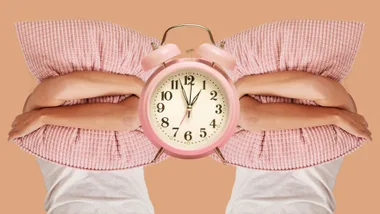

Dr Moira Junge, Sleep Health Foundation CEO, says initially it’s important to find out what’s behind sleep disturbance as many problems, such as sleep apnoea, insomnia, snoring or restless legs, can be treated.
“Sleeping in different rooms is more common amongst couples than we think, and that’s partly because people realise that sleep is a core pillar of health. They’re taking sleep more seriously,” says Dr Junge.
“If couples are on shift work and wake at different times, if they have different body clocks, if one person snores – those differences impact sleep. Menopause can disrupt sleep, and how we prefer to sleep and for how long changes as we age.
“If sharing the same bed is causing a lack of sleep, then sleeping in different spaces is a good idea, but both people need to be on the same page. There has to be a consensus, rather than one partner seeing it as a great idea and the other person interpreting the move to separate beds as being one step away from splitting up.”
Despite the endorsement of celebrities, there’s a lingering reluctance for couples to admit they share everything apart from a doona. “At first, I was less open than Jenny to discussing our sleeping arrangement. Working in construction, where there are a lot of macho egos, I felt it was best to say nothing!” says Fraser.
“But it’s just a practical solution. Quality of sleep massively impacts performance during the day. As humans, we have to sleep for a reason and this arrangement is about sleep, rather than sex. People always wonder how you have sex but you don’t have sex when you’re sleeping and this is about sleep. If you want to have sex, you make it happen.”
Jenny, who’s co-written A Sleep Divorce (How to Sleep Apart, Not Fall Apart) with Dr Neil Stanley, says people assume if a couple sleeps in separate beds, their relationship must be on the rocks.
“When people discovered Fraser and I had separate bedrooms, there were raised eyebrows and people thought our relationship was in trouble. But I’m mystified why people persist in sharing a bed with a partner who disrupts their sleep,” says Jenny.
“You develop ways of keeping your connection and intimacy. Fraser gets up before me and the first thing he does is come into my room and give me a kiss. If he goes to bed before me, I give him a kiss goodnight as I’m going to bed. We have routines and rituals that keep that connection.”

So, if you want to try a sleep divorce, how can you make it work?
“Be clear about why you’re doing this – it’s for your health and the health of your relationship,” says Jenny. “Reassure the other person you’re not rejecting them, it’s simply that you need better sleep. Explaining the why is crucial.”
If you don’t have the luxury of a spare bedroom, Jenny has met couples who’ve instead invested in a good quality sofa bed so they can still successfully “separate” at bedtime.
Dr Junge says a sleep divorce can also be part-time and something you do for a few nights each week. “Start bedtime by sharing a bed and sharing some closeness and pillow talk before you go your separate ways. Or reunite first thing in the morning, so while you don’t sleep together, you share some time in the same bed,” she suggests.
Jenny and Fraser have no regrets and say their sleep divorce has added to the quality of their 20 years together. “We value our sleep and our relationship and we don’t want to compromise either of those,” says Jenny. “We’re proof that you can be a happy couple and not share a bed.”
Thinking of a sleep divorce? Here’s how to make it work.
Start with the why – agree on the reason behind the change and reassure your partner it’s about sleep, not love.
Address health issues first – snoring, sleep apnoea or restless legs may be treatable.
Set the ground rules – decide if it’s full-time or just a few nights a week.
Keep the closeness – share pillow talk before separating, or reunite in the morning.
Be practical – if you don’t have a spare room, invest in a comfy sofa bed or trundle.
Ditch the stigma – focus on the benefits: better sleep, better moods, and potentially, a better relationship.

