




If you’ve been stressing about hitting 10,000 steps every day, science says you can relax. A new Australian study has found there’s more than one way to get the health benefits of walking.
Researchers from Monash University and the University of Sydney found that people who took fewer steps at a faster pace, as well as those who took more steps at a slower pace, had a lower risk of early death – by as much as 43 per cent.
The findings challenge one of the most entrenched health myths of the past two decades: that you need to hit 10,000 steps to get fit.
Instead, researchers say while how much you walk matters, how quickly you walk makes a difference too.
How many steps do you actually need?
The study, published in the British Journal of Sports Medicine, analysed data from more than 64,000 middle-aged adults who wore activity trackers for seven days and were then followed for around eight years. In that period, 1697 of the participants died from any cause and 502 from cardiovascular disease.
“We found that the risk was substantially lower among those achieving a higher stepping pace but fewer than 5000 daily steps,” lead author Professor Emmanuel Stamatakis said.
“Similarly, the risk of early death was substantially reduced among those clocking up 5000 to 7500 daily steps but at a lower stepping pace.”
It’s particularly reassuring if 10,000 steps a day simply isn’t realistic.
“The important message is that every step counts, and how you take those steps can also matter,” study co-author Dr Nicholas Koemel said. “Someone walking 4000 steps a day who walks them with more purpose is doing something worthwhile, and someone who cannot walk quickly can still benefit by gradually accumulating more steps at a slower pace.”
Why walking pace matters
The findings echo a 2025 study from Vanderbilt University Medical Centre in the US, which found that walking briskly for just 15 minutes a day is linked to a nearly 20 per cent lower risk of premature death.
Published in the American Journal of Preventive Medicine, the study tracked nearly 85,000 adults aged 40 to 79 over more than 16 years, analysing their self-reported walking habits. Participants were asked to estimate how much time they spent walking slowly (for example, pottering about, strolling, or walking the dog) versus walking briskly (such as climbing stairs or striding with purpose).
When researchers compared the two groups, the difference was striking. People who walked briskly for just 15 minutes a day had a 19–20 per cent lower risk of dying from any cause compared with non-walkers or slow walkers.
Slow walking – even for more than three hours a day – offered only a modest, non-significant benefit of around 4 per cent.


“Brisk walking offers a convenient, accessible and low-impact activity that individuals of all ages and fitness levels can use to improve general health and cardiovascular health specifically,” the study’s senior author, Dr Wei Zheng, explains.

The benefits of brisk walking
Brisk walking is classified as a form of moderate-intensity exercise, which is known to improve:
- Heart health – boosting circulation, strengthening your heart muscle and lowering blood pressure.
- Weight management – helping to maintain a healthy body mass and reduce visceral fat.
- Mental wellbeing – releasing feel-good endorphins that lift mood and ease stress.
- Chronic disease prevention – lowering the risk of type 2 diabetes, cardiovascular disease and certain cancers.
And unlike many forms of exercise, walking is low-impact, free, and can fit into even the busiest day.
What counts as ‘brisk’?
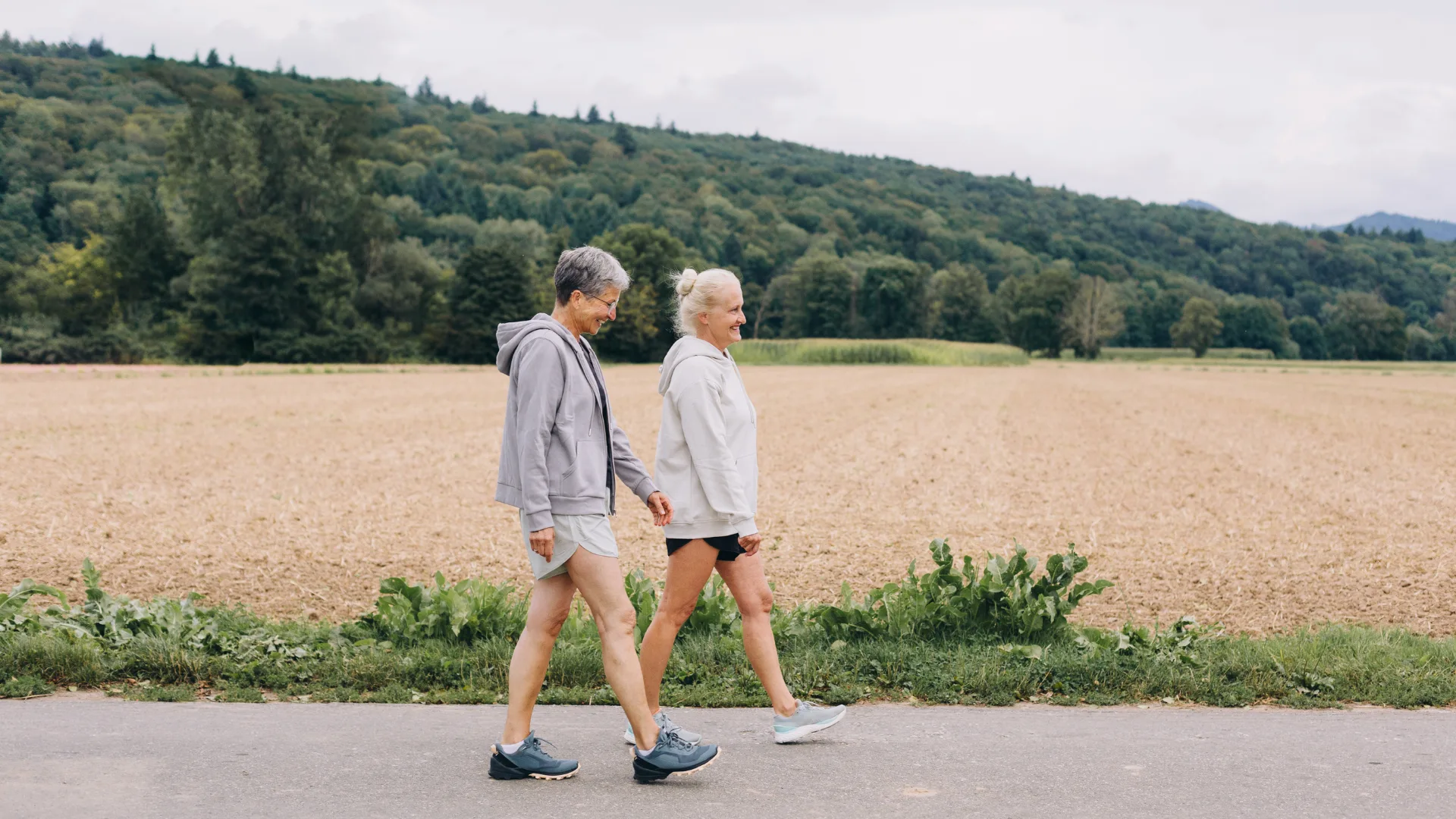
A good rule of thumb: you’re walking briskly if you feel slightly breathless but can still talk in short sentences. For most people, this is around 5–6 km/h.
You might notice your heart rate increase, your arms swinging more naturally, and your stride lengthening. Think of the pace you’d keep if you were running late to meet a friend or racing to catch the bus.
How to start your brisk walking habit
If you’re new to brisk walking or haven’t been exercising much lately, start small and build up:
- Begin with 10–15 minutes at a comfortable brisk pace.
- Warm up for a minute or two at a slower speed.
- Walk with purpose – pick a destination and time yourself.
- Incorporate it into your routine – walk to a café, take the long route to the shops, or swap one short car trip a day for a walk.
- Track your progress with a fitness watch or app if you enjoy the motivation.
The best part? No special clothes, equipment or gym membership is required. You can do it before work, during your lunch break, or while the kids are at sport. And because it’s not weather-dependent, it’s a year-round option.
So next time you lace up your runners, remember: every step counts – and adding a little more pace when you can could add years to your life.


