


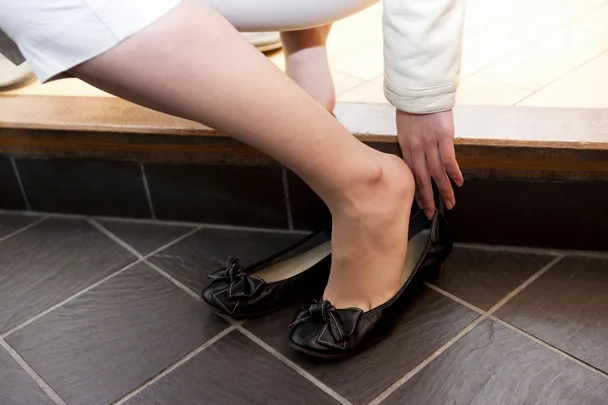
I’ve always thought I knew my shoe size. I’m a 39. Except sometimes I’m a 38. And every now and then, for reasons I can never quite work out, I need a 40.
Like jeans and bras, the perfect fit shoes are one of those things that can be frustratingly difficult to find.
Now, new Australian research suggests I’m far from the only one, with an RMIT University study finding that almost two-thirds of women are wearing the wrong sized shoes.
Published in the International Journal of Fashion Design, Technology and Education, the study of 107 Australian women found 72 per cent wore a different US shoe size to the one indicated by their foot length. Under European sizing, it was 65 per cent.
Study co-author Associate Professor Saniyat Islam, from RMIT’s School of Fashion and Textiles, tells The Weekly: “One possible explanation is that women may be adapting to differences in foot width and shape that are not reflected in conventional sizing systems.”
Finding a shoe that actually fits properly was a common problem. Sixty-eight per cent of women reported at least one recurring issue, with shoes being too narrow, too wide or inconsistent sizing between brands the biggest gripes.
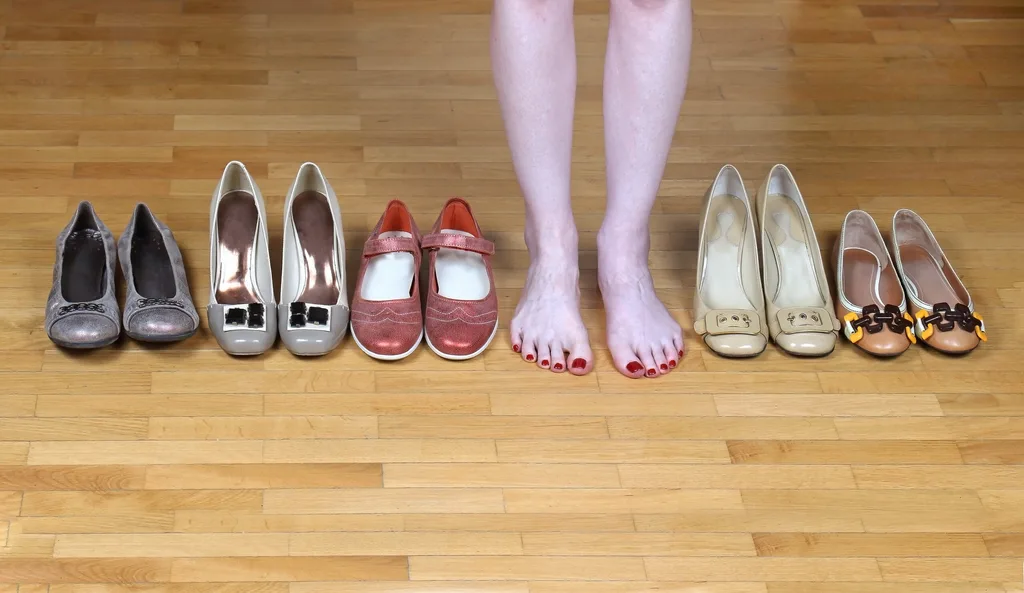
“Sizing can vary not only between brands but also between different styles within the same brand, making it difficult for consumers to predict fit with confidence,” Associate Professor Islam says.
“We don’t necessarily need a new sizing system, but we do need greater transparency and better information about fit.”
Your feet may not even be the same size
One of the most surprising findings? Of the 107 women studied, 93 had asymmetrical feet.
“This is completely normal,” stresses study co-author Associate Professor Carol Tan.
On average, there was a 6.3mm difference in girth between women’s left and right feet. And even among women who wore the same size shoe, researchers found up to 40mm difference in foot girth – the measurement around the widest part of the foot.
“This highlights that a shoe size is really just a starting point,” Associate Professor Tan says. “Finding a comfortable fit depends on much more than length alone, including the width and overall shape of the foot.”

What badly fitting shoes can do to your feet
We’ve all put up with shoes that pinch or rub a little, especially if we really like them (guilty!). But podiatrist Rachael Ferguson, founder of footcare brand SynxBody, points out that ill-fitting shoes can lead to problems with your feet.
“In the short term, shoes that don’t fit properly can cause toe cramps, blisters, corns, ingrown toenails and bruising or trauma to the nail bed, all of which can be genuinely painful, not just annoying,” she tells The Weekly.
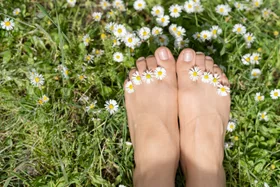


“Keep wearing them and the damage compounds. Over time, poor-fitting shoes can lead to retracted or deformed toes, hammer toes and bunions.”
And bigger shoes are not the answer. “Shoes that are too tight cause friction and deformity. Shoes that are too big cause overuse injuries in a different set of muscles, as your foot works to tighten and stabilise itself inside all that extra space,” Rachael says.
“That overcompensation shows up as muscular aches and pains, cramping, and a higher risk of injury.”
The wrong fit can affect the way you move. Shoes that are too big are more likely to make you trip, whereas shoes that are too tight can interfere with your balance.
“Either way, the wrong fit doesn’t stay contained to your feet,” she says.
How can you tell if a shoe actually fits?
Don’t just default to your usual shoe size and pay attention to how the shoe actually feels.
“Your heel slipping as you walk, feeling the end of the shoe with your toes, a cramped sensation or blisters and friction after wearing them, are all signs the fit is off,” Rachael notes.
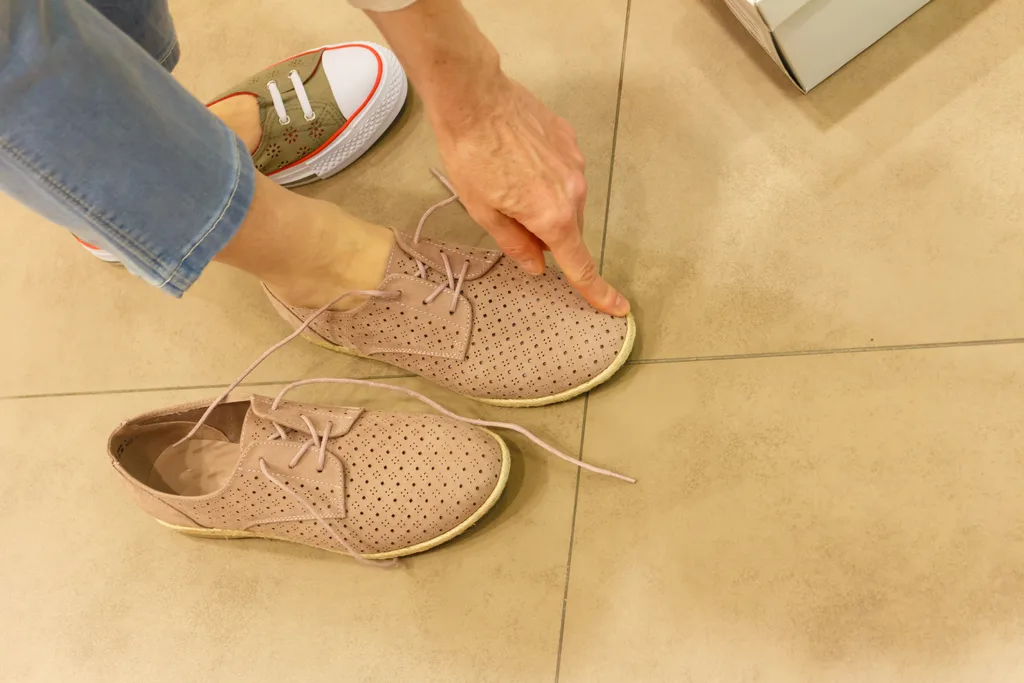
She recommends leaving about a thumb’s width between your longest toe and the tip of the shoe. And that isn’t always your big toe – for many people, it’s the second.
“If you’re feeling tightness across the top of your foot, it’s a sign you need a wider fitting,” she says. “A properly fitting shoe should feel comfortable to wear, let you move your toes freely, and never make you feel the end of the shoe.”
Associate Professor Tan agrees that feel should come before the number on the box.
“Length is important, but so are width, foot shape and overall comfort. A shoe should allow sufficient room for the toes and should not pinch, rub or feel excessively tight in any area.”
As for the biggest shoe faux paus Rachael sees? “Buying shoes that feel tight in the store and assuming they’ll break in is a huge mistake,” she says.
“Some materials, leather especially, will stretch with wear but the safest approach is to make sure there’s room from day one.”

