




At a glance…
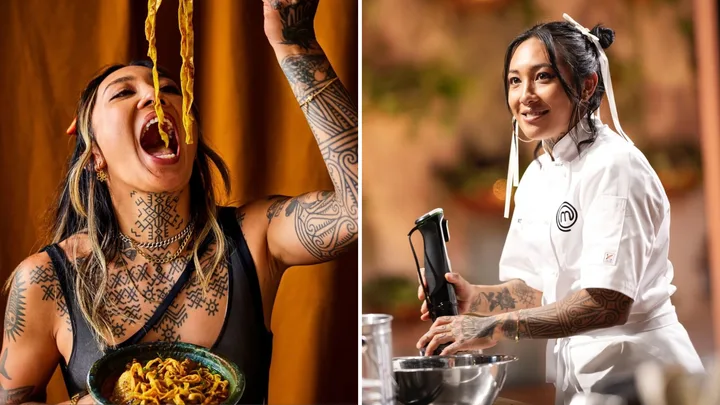
- MasterChef Australia winner Nat Thaipun wants native ingredients to become an everyday part of Australian cooking, rather than something reserved for high-end restaurants.
- The Thai-Australian chef reveals how her heritage has shaped her philosophy of cooking with what’s available and why she’s passionate about preserving food traditions at risk of disappearing.
- After a whirlwind few years that have included working with Jamie Oliver and releasing an award-nominated cookbook, Nat teases what could be coming next.
When Nat Thaipun talks about Australian food, one word keeps cropping up: lucky.
We’re lucky to live in a country with extraordinary produce. Lucky to have climates that stretch from the tropical reaches of Cape York to the cool waters of Tasmania. And lucky to have access to ingredients that are unlike those found anywhere else in the world.
The problem, according to the MasterChef Australia winner, is that many of us aren’t making the most of them.
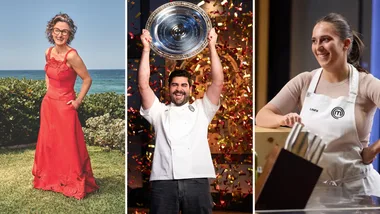
“Oh, so many. It’s just wild,” Nat says when I ask her about the local ingredients Australians are missing out on. Embracing native Australian ingredients was a hallmark of Nat’s journey on MasterChef Australia. Like other contestants, notably Laura Sharrad, showcasing the length and breadth of native Australian ingredients has become a mantra for the Thai-Australian chef.
Since winning MasterChef Australia, Nat has been carving out an identity as a chef that extends far beyond the competition. She has worked with Jamie Oliver in London, found a mentor in the celebrity chef, published her first cookbook and continued working in professional kitchens.
But underpinning much of her cooking is a deceptively simple idea: use what is around you. It’s a philosophy influenced by her Thai heritage, but one Nat believes makes perfect sense in Australia, too.
Rethinking what Australian food looks like
For Nat, one of the problems with native Australian ingredients isn’t that they don’t exist in our food culture. The problem is where we tend to encounter them.
“Native ingredients have shifted in Australian culture; they’re almost unattainable and not accessible because they’ve been given to high-end restaurants,” she tells me as we talk on the phone ahead of her appearance at the Good Food and Wine Show.
Nat has seen the possibilities firsthand through her work at Melbourne restaurant Vue De Monde, while restaurants such as Attica have also championed native produce.
“It’s beautiful how they can showcase it, but it also seems to be the common pattern that it only lands or is available or accessible in really expensive restaurants.”
While that can introduce international visitors to the produce that makes Australia distinctive, Nat believes Australians themselves need to become more familiar with what is available on their doorstep.
“I think it’s also really important for locals to understand the importance of native ingredients and the significance of using what is available in our country.”
Because, she explains, what is available is astonishingly diverse.
“We live in such a beautiful country, and we’re so lucky that we have so many different climates. So our access to ingredients is amazing,” she says.
While working in London, Nat remembers someone asking her whether Australia had rhubarb.
“I laughed at her and said, ‘We have everything,’” she says. “We have everything.”
It’s a misconception she has encountered elsewhere, too.
“People ask, ‘How do you make Thai food in the desert?’ and I’m like, ‘We don’t live in a desert’,” she laughs.
Instead, she points to the enormous variation between Australia’s regions.
“We have the most so many variations of climate from the very top of Australia at Cape York all the way down south to Tasmania,” she says. “We can get oysters so briny and delicious and cold, but then we can get beautiful crocodile up north.”
It’s why Nat wants native and local produce to move beyond the degustation menu and become something Australians actually cook with.
“I just really want to increase the demand for it so that it becomes a normal part of our culture, of our eating culture as well.”
Why Nat Thaipun wants us to eat kangaroo
There is perhaps no better example of that disconnect than kangaroo. Despite being uniquely Australian, the meat still isn’t a regular fixture on many Australian dinner tables. Nat wants to help change that.
At the Good Food and Wine Show, she makes kangaroo the centrepiece of her cooking demonstrations, pairing it not with a stereotypically “Australian” dish, but with the Thai flavours that have become a hallmark of her food.
“That’s why I found it so important to showcase kangaroo,” she says.
One dish reimagines khao muk, a Thai rice dish Nat likens to biryani, using kangaroo alongside Australian ingredients including macadamia and lemon myrtle. She also makes kangaroo satay skewers grilled over a barbecue or hibachi.
“It’s all just showing how creative you can be with Australian produce and with Thai flavours.”
It also illustrates a broader point about the way Nat cooks. Embracing local ingredients doesn’t mean simply swapping one ingredient for another and expecting an identical result.
“You can’t just like think of it like it’s the same ingredient,” she says. The same applies to replacing beef with kangaroo.
“Even though it’s a red meat, you can’t cook kangaroo like beef. It’s a close substitute, but you have to understand that there are flavour profiles that might come out if you overcook it.”
Instead, Nat argues, cooks need to understand an ingredient on its own terms. It’s an approach that feels Australian and Thai at the same time.

Cooking with what you have
Nat grew up learning to cook from her mother, and her understanding of Thai cuisine challenges the idea that “authentic” cooking requires a rigid list of ingredients.
In regional Thailand, she explains, cooks traditionally adapted to whatever was available.
“People constantly question authenticity, traditionalism, et cetera, once it’s outside of the country,” she says. “But, what my mom is doing in a way is way more authentic because she’s like using whatever is available, which is what rural people do in regional areas.”
If there are no limes, for example, another source of acidity can take their place.
“If you don’t have limes, people use tamarind leaves; they get really creative,” Nat explains.
It is a philosophy that translates naturally to her life in Australia. Instead of treating Thai and Australian food as two separate culinary identities, Nat allows the ingredients of one place to meet the techniques and flavours of another.
And, crucially, she doesn’t see that as making the resulting food somehow less authentic.
The recipes we’re at risk of losing
Nat’s passion for ingredients has also become connected to something bigger: preserving knowledge.
During a recent trip to Thailand, she was confronted by just how dramatically cooking habits were changing.
“In Thailand I didn’t realise this, but a lot of people just don’t cook anymore. So, that culture is dying. And not only is it dying, but the recipes are dying as they are not being passed on,” she says. In her own family, recipes weren’t traditionally recorded on paper. They were learned by watching and cooking alongside somebody else.
“With my whole family, there are no records of writing things down, so if you know a grandparent wants to pass something on, it has to be passed on visually and by learning together.”
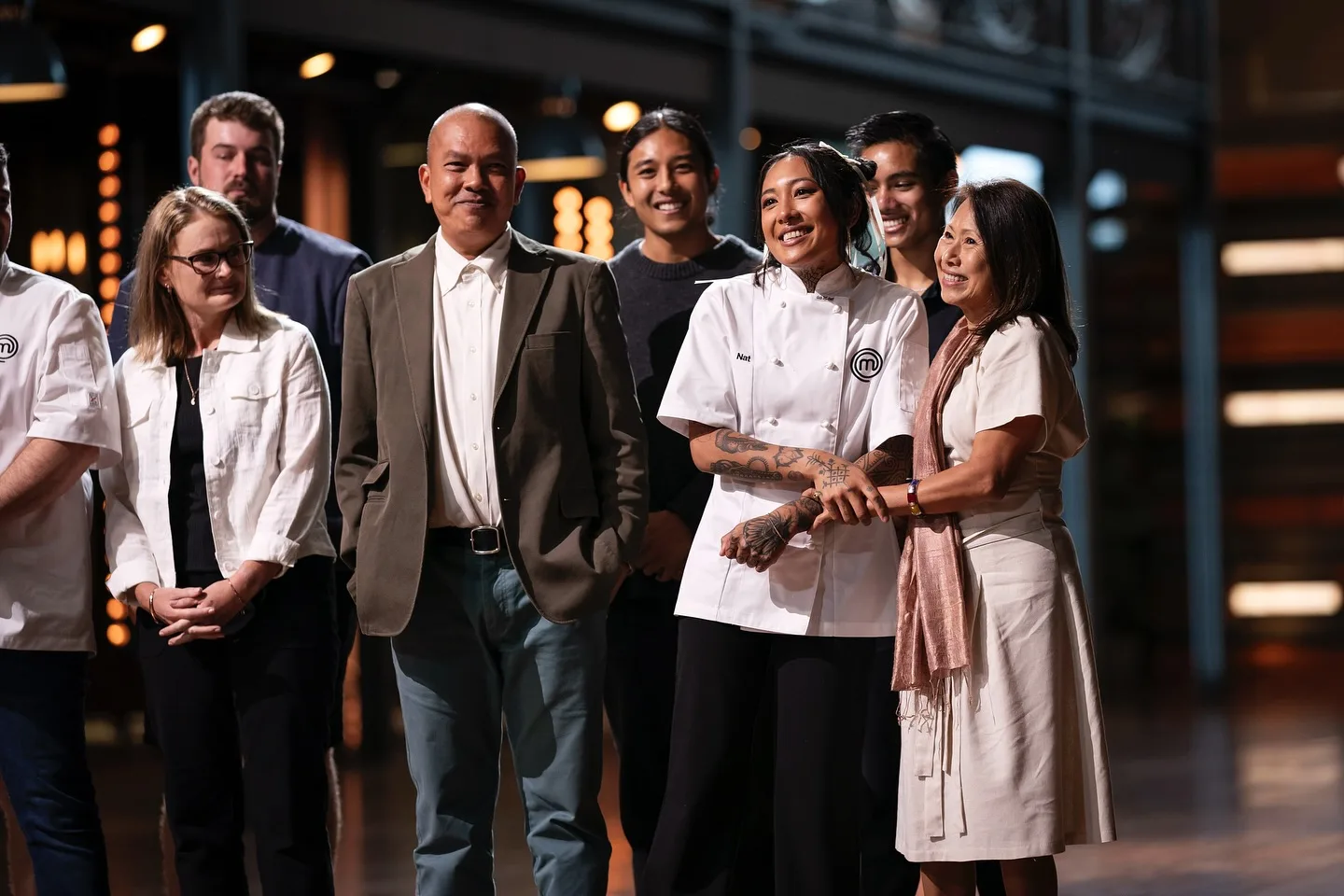
But when people leave regional areas for cities, that chain can be broken.
“What I found in Thailand is that when people move out of these rural and regional areas, they don’t take that knowledge with them; it dies in the city,” she says.
During events in Thailand, Nat began asking audiences how many of them knew how to cook Thai food.
“I asked the crowd, ‘Who here knows how to cook Thai food?’ And I was in Thailand, and I had one to two people put their hands up at every event, which is wild.”
The experience changed the way Nat viewed her own upbringing and the responsibility she felt to preserve what she had learned.
“It actually gave me the biggest culture shock ever,” she tells me. “It strengthened the things I’ve experienced, but it made me realise the importance of me spreading this knowledge.”
That belief has also reshaped her ambitions as a chef. Like many young cooks, Nat admits there was a period when accolades seemed like the obvious goal.
“I had a very small blip of like, really reaching for the stars literally,” she says. But that desire didn’t last.
“I realised very soon it was such a short sense of wanting that because I was like no food is like way more important than this.”
Instead, she has found herself increasingly interested in what food can preserve and create between people.
“As cheesy as it is and as cliché as it sounds, so much about food is bringing communities together, telling stories,” she says.
“It’s such an important part of being human, like that community, that the culture of eating together is very important.”
What’s next for Nat Thaipun?
Her MasterChef win may have opened extraordinary doors, but Nat is determined not to skip the less glamorous work required to establish herself as a chef.
She continues to work in a professional kitchen alongside her other commitments, deliberately taking on the everyday jobs that come with it.
“I don’t want to be perceived as someone who kind of skipped all those steps,” she says of her restaurant work. “I want to show that I’ve put in the hours and I will continue to put in the hours.”
That means practising knife skills, doing prep and, yes, even scrubbing floors.
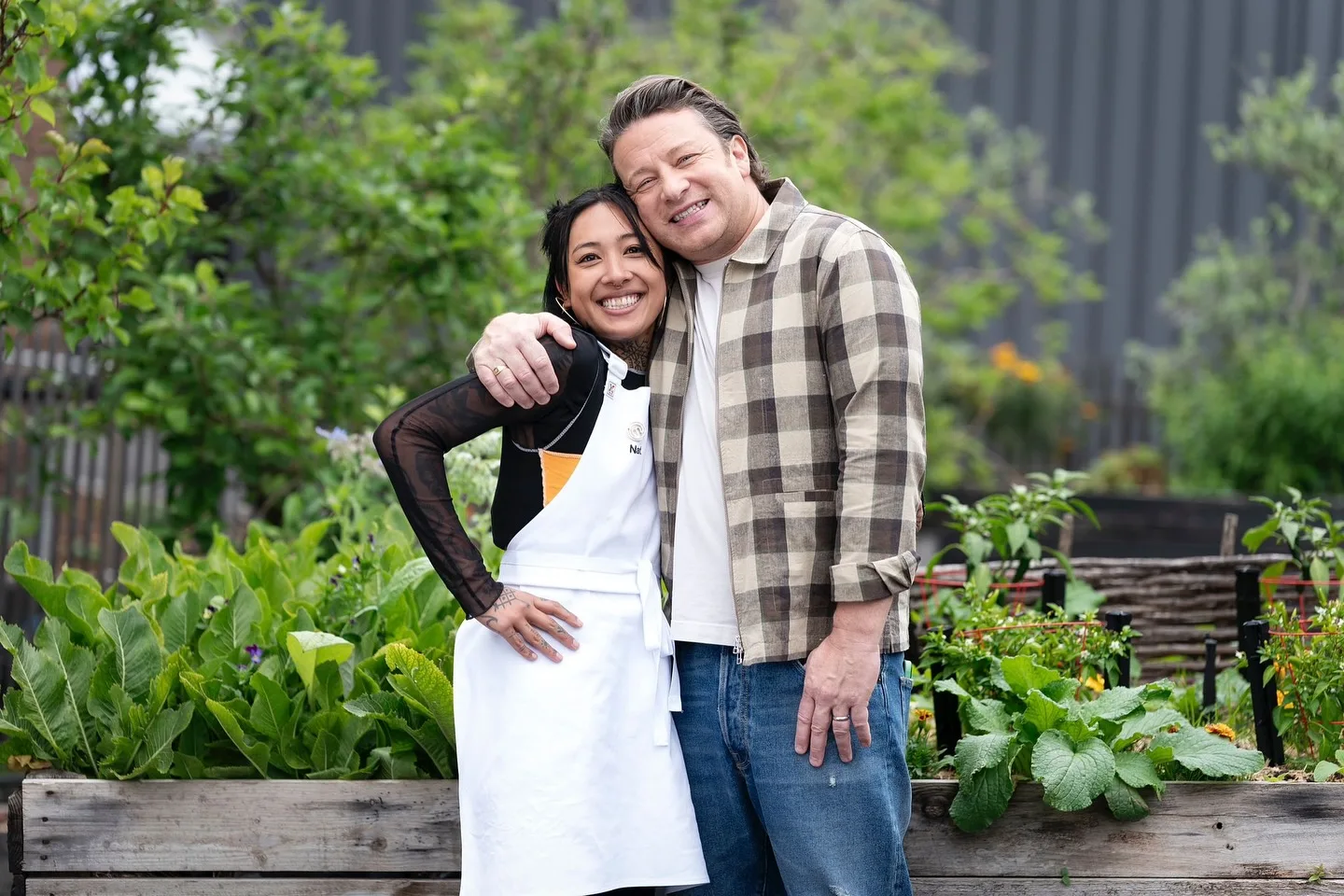
“I want to do the work, and I want to do the hours,” she says. She is incredibly grateful for everything her MasterChef Australia win has brought her, including her experience with Jamie Oliver, who pushed her to write her first cookbook. Jamie told her that she couldn’t see her own potential, but he was going to help her realise it.
“He gave me no choice,” she laughs about his encouragement for her to write a cookbook. “He gave me a date and a time. ‘You’ve got two days. You’re going to shoot however many recipes you think you will be able to. Then he got me David Loftus, the most well-known food photographer in the whole entire world, and we just clicked.”
That project eventually became her cookbook, THAI: Anywhere and Everywhere.
“Jamie is actually amazing,” she continues. “He just gives you so much more time than he should. His personal assistant had to pull him out of conversations because he kept stopping and talking to everyone.”
Nat Thaipun was nominated for a James Beard Award (the Oscars of the food world) in 2026 for her debut cookbook, Thai: Anywhere and Everywhere. It was a momentous feat for the blossoming new chef.
“That’s huge for me,” she shares. “I’ve never been to the States before, and being nominated for the James Beard Award is huge already!”
“I mean, to be one of three cookbooks in the international category is actually unbelievable,” she continues. “I just feel very grateful that this is happening.”
Her book was nominated alongside Eric Adjepong and Korsha Wilson’s Ghana to the World and Marie Mitchell’s Kin, which won the category.
There is another project occupying her time, too: Nat reveals she has been writing again!
“I’ve been writing a lot,” she admits. She isn’t giving too much away yet, but after a career-changing few years and a growing preoccupation with the recipes, ingredients and culinary knowledge at risk of disappearing, there is clearly plenty more she wants to say about food.
For now, though, Nat’s message to Australian cooks is refreshingly uncomplicated. Look at what we have and learn how to use it. And perhaps make a little more room on the dinner table for the ingredients that were here all along.
See Nat Thaipun in action at the Good Food and Wine Show Christmas Editions: 20–22 November (Sydney) and 4–6 December (Melbourne). Find out more information here.
Nat Thaipun’s cookbook THAI: Anywhere and Everywhere is available to purchase now.

