




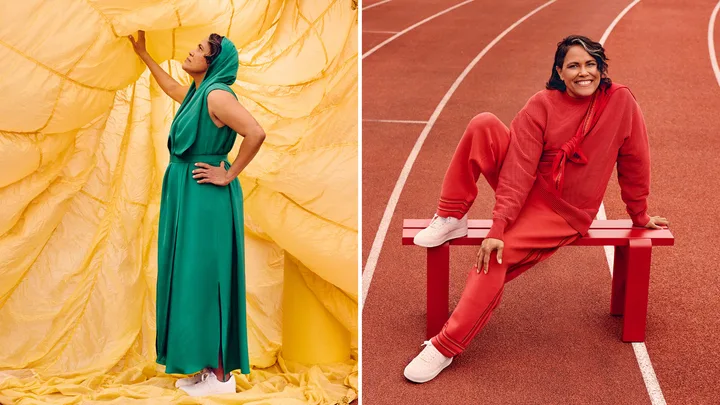
Cathy Freeman AC is an inspiration to many, both as a person, an Indigenous human being and, of course, as an athlete. In 2026, she was an inspiration for Indigenous artist Kaylene Whiskey’s latest exhibition at the National Portrait Gallery, in her piece “Super Cathy”.
‘I wanted to make a special painting about Cathy, celebrating her and her important race, she was the best in the whole world!” said Kaylene to the National Portrait Gallery. “Cathy is a hero for Aboriginal people; she is a kungka kuṉpu – a strong woman. Cathy was proud to carry the Aboriginal flag after she ran the big race in Sydney. Cathy looked just like a superhero in her fast, green Lycra suit, the flag was her big cape, she was running and flying!”
In September 2025, Sydney celebrated the 25th anniversary of Cathy’s historic Olympic win.
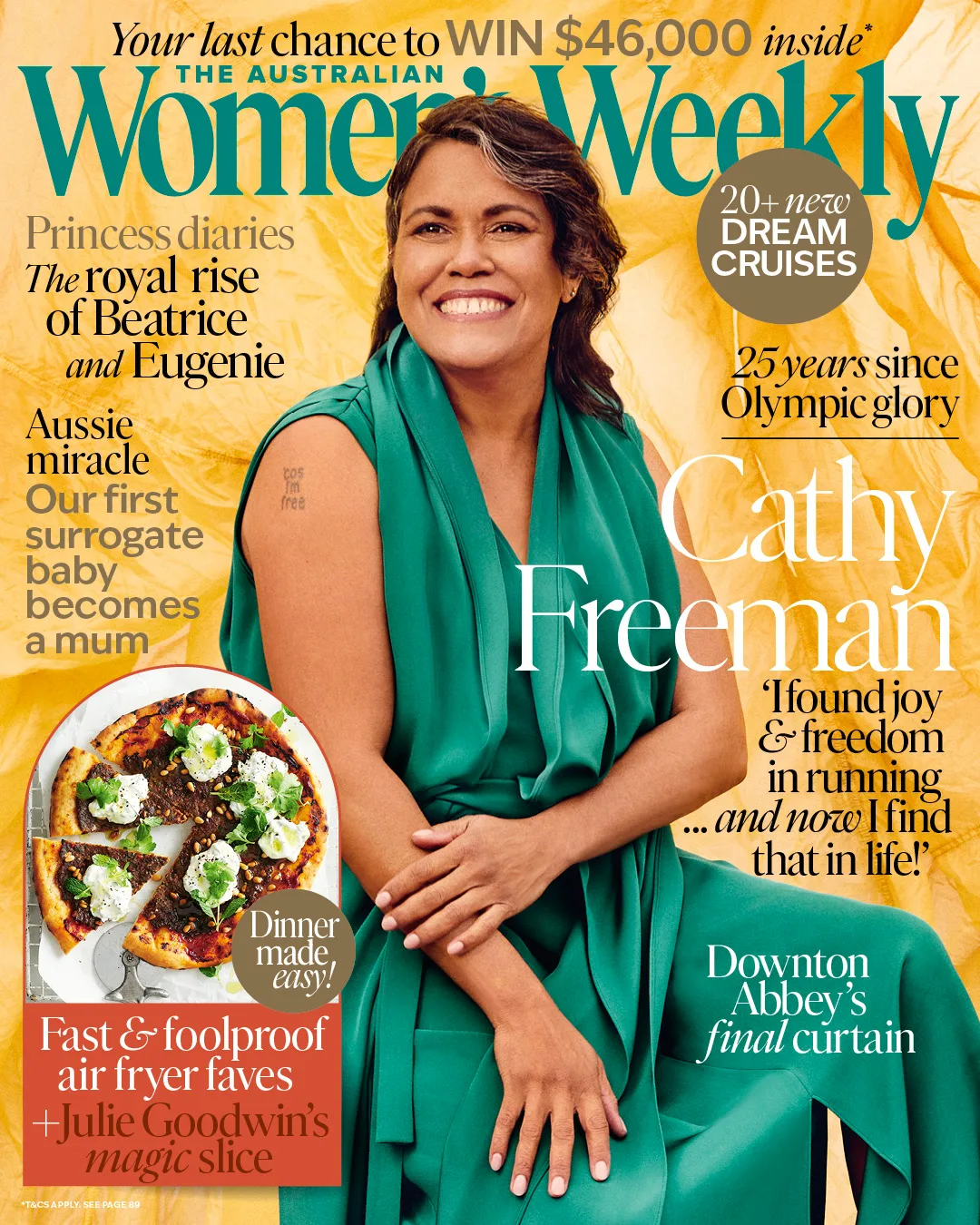
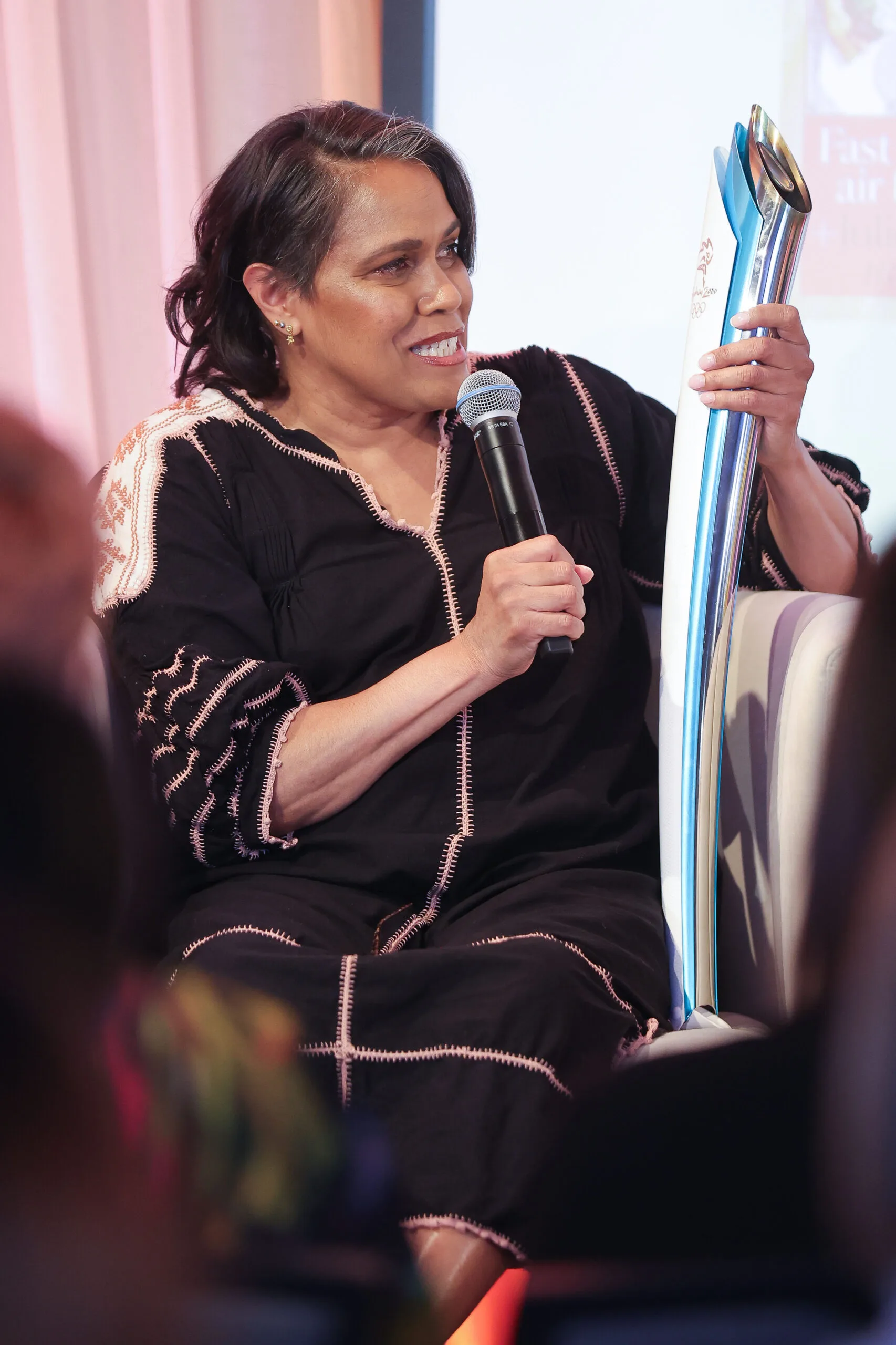
To mark the historical occasion, Cathy Freeman was the cover star of the October issue of The Australian Women’s Weekly and was an honoured guest at The Australian Women’s Weekly Health Summit, where our editor, Sophie Tedmanson, who ran in the Olympic relay, presented Cathy with the torch from the event.
Read on for our exclusive interview with Australian Olympian, Cathy Freeman AC.
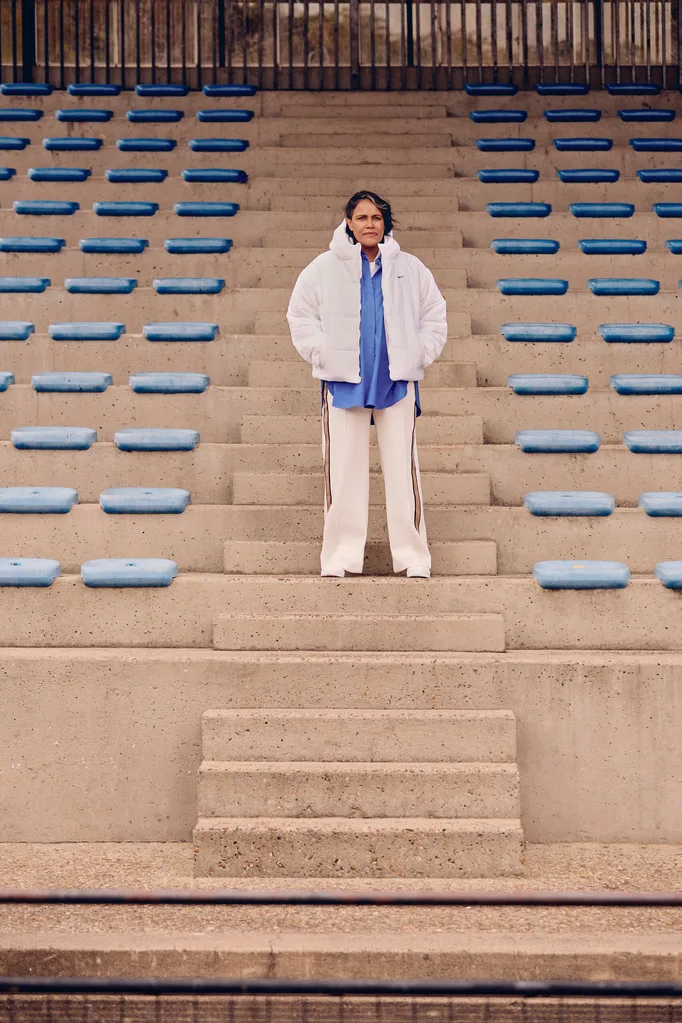
A kookaburra sits on the eaves of the grandstand of a picturesque athletics stadium surrounded by bushland in Sydney’s North Shore. She is beautiful and unusually large, keeping a protective eye over her territory below. Which today includes Australian Olympian, Cathy Freeman AC.
“Give us a laugh, buddy,” Cathy looks up at the giant tree kingfisher, her trademark grin bursting into a giggle. Cathy’s giggle is infectious, as is her joie de vivre.
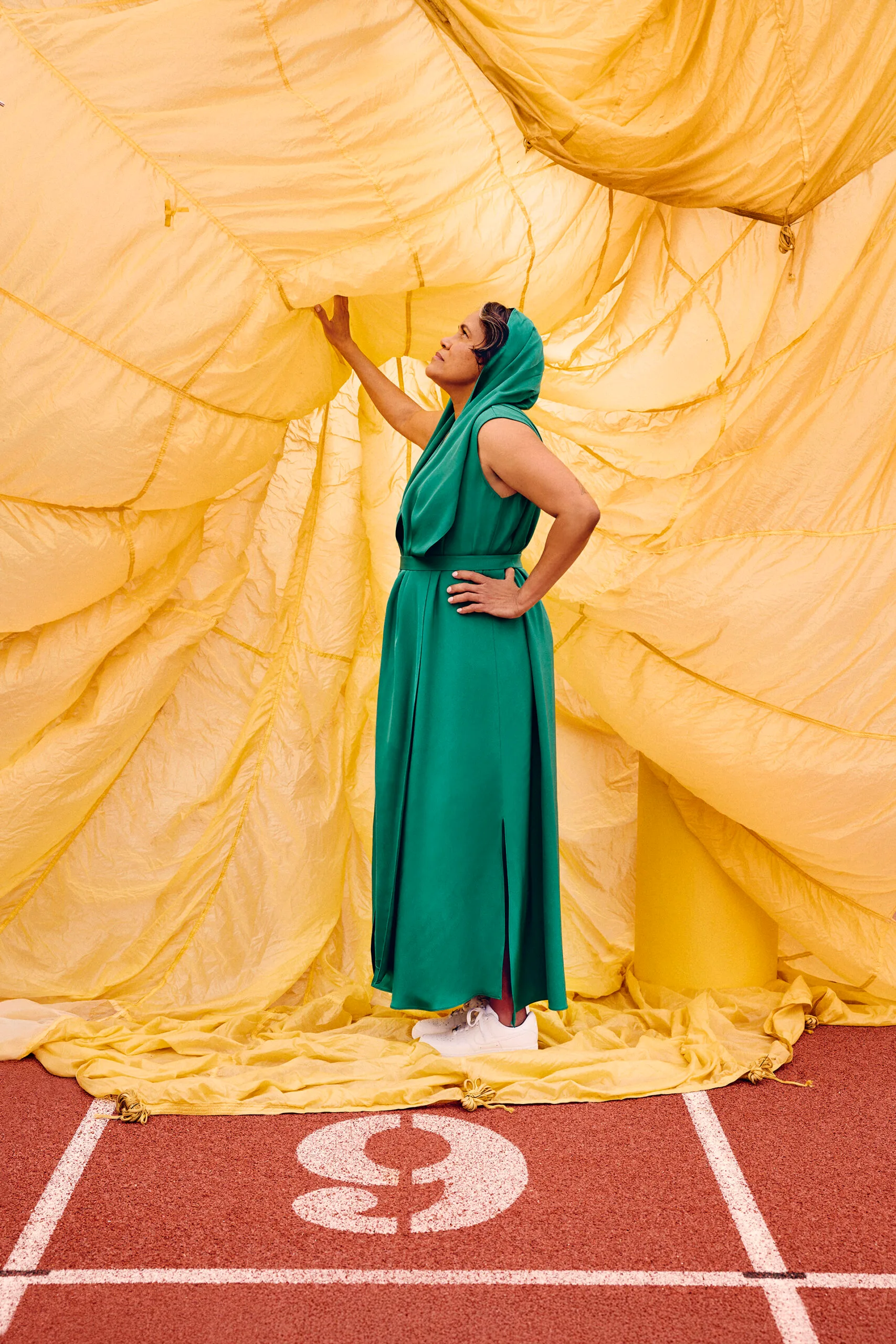
Cathy is at this training ground for a photo shoot to celebrate 25 years since her iconic gold medal win at the Sydney 2000 Olympics. Coincidentally, she trained here in the lead-up to those Games, so it brings back positive memories.
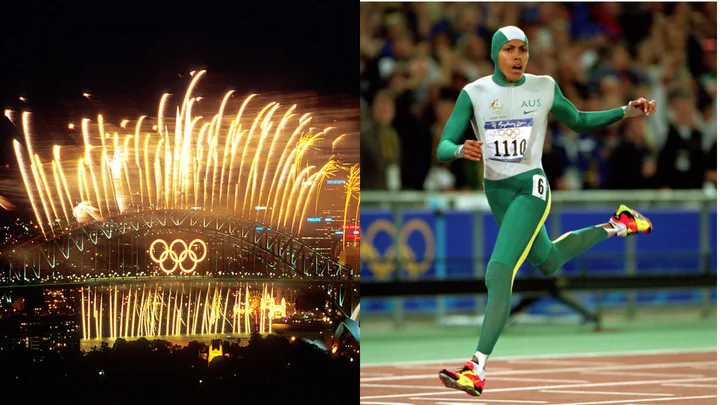
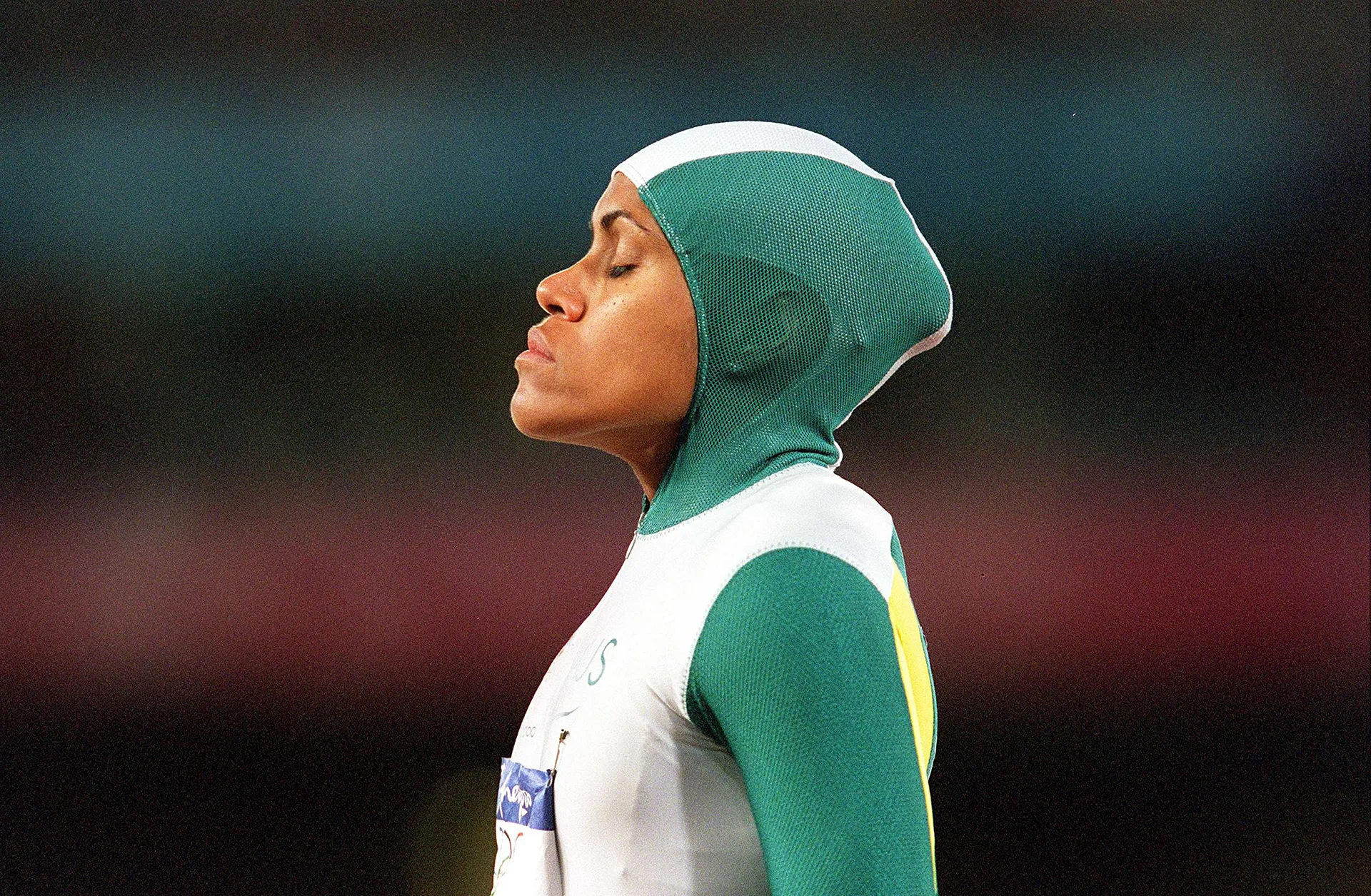
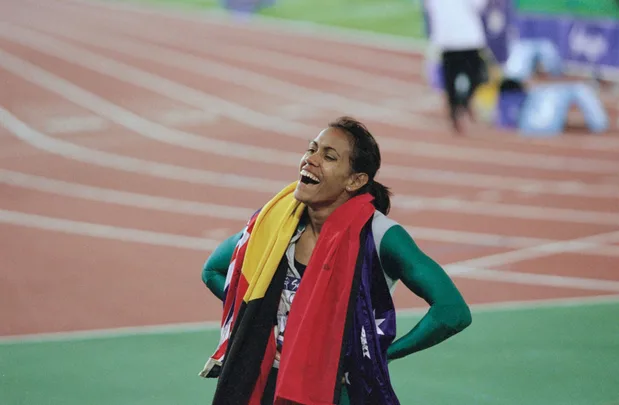
It is hard to believe that it’s been a quarter of a century since that iconic night on September 25, 2000. Cathy won the women’s 400-metre athletics final in front of 112,524 spectators at the Sydney Olympic Stadium. An estimated 8.8 million people were watching at home in Australia, plus many more millions around the globe. It was then the largest TV audience for a sporting event in Australian history.
It was a race that stopped, not only the nation, but the world. And it was a win that symbolised more than Olympic gold.
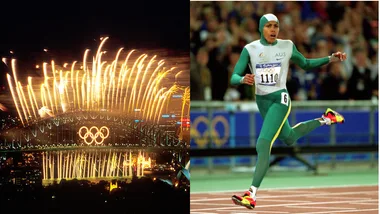
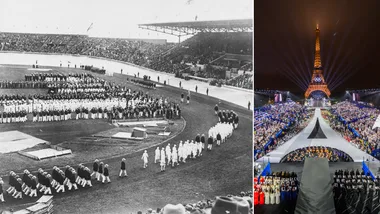
The vision of Cathy – a proud Kuku Yalanji woman from Mackay in North Queensland – running her victory lap barefoot, waving both the Australian and Aboriginal flags, forever cemented her as an Australian cultural icon. It united our country when, only four months earlier, 250,000 people had walked across the Sydney Harbour Bridge in support of Reconciliation.
I was in the Olympic Stadium that night watching Cathy cross the finish line. The deafening roar and the euphoric jubilation that followed her win are like nothing I have ever experienced. The memory still elicits goosebumps.
“Where were you sitting?” Cathy asks excitedly when we meet the day before this photo shoot. In the media area with the other journalists, I respond, and she grins. “Oh yes, that was just to the right of us at the finish line”.
I ask if there’s one word that comes to mind when she thinks back to that race. She smiles again: “stillness”.
“Stillness within myself, because within that stillness was this strong inner sense of: I’ve done the work, I’ve done the preparation. I know in this whole journey leading into this moment … I’ve earned this.
No template / Incompatible template“Some athletes are full of bravado … but that’s not who I am. It’s just not where I’m from, it’s not who we are. The Olympic gold medal was the only thing I had focused on. I never felt rocked, I never felt thrown, and I just felt incredibly, impeccably still, serene, tranquil. I think you’ve got to maintain that inner peace, inner calm in a storm of chaos … to have the sense of inner freedom.”
While the public might still think of her as the determined 27-year-old with a laser focus on a gold medal, 52-year-old Cathy has an unexpectedly tranquil presence. She is calm and attentive; she looks at your face intently when you speak, taking in your body language. At one point, she worried that I was cold.
It is mid-winter, and we are sitting on the balcony of a beachside hotel in Sydney, and Cathy is staring out at the horizon. She’s barefoot, of course, hugging a cardigan, but seemingly not feeling the chill as the sun is starting to set over the ocean, and she is oozing a sense of zen. Fellow diners already recognised her over lunch, something that happens regularly. Cathy takes fame in her stride, having been one of the most famous Australians for most of her adult life.
Catherine (as she is known to her friends) Freeman was born in Mackay to Norman, a former rugby league player and Birri Gubba man, and Cecelia, a proud Kuku Yalanji woman from Palm Island. Cathy was the middle of five siblings, including her older sister Anne-Marie and brothers Gavin, Garth and Norman.
She dreamed of becoming a champion athlete from the age of 10, but her talent wasn’t always obvious. It was her primary school teacher – Bessie Baldry – “a feisty Maltese lady” who found the shy schoolgirl hiding in the toilets at a school sports carnival and enticed her onto the athletics track. “And the rest is history,” Cathy laughs.
By then, Norman and Cecelia had divorced, and Cathy’s stepfather, Bruce Barber, decided to become her family coach.
Come behind the scenes of Cathy Freeman’s shoot with The Australian Women’s Weekly in the video below.
“He said: ‘Okay, Catherine, this is what we need to do to get you better as an athlete – go and just do these laps of a sawdust track,’” she recalls.
“I just found absolute joy and freedom in running, and a lot has to do with feeling so grounded with my bare feet on the ground and looking up and seeing the glorious blue sky … I have always taken the ability to find retreat in nature. And I think the connection to earth, being grounded and connecting with your true self with your own thoughts and feelings … really helped.
“I think the very first lessons for me in learning how to do that was as that 10-year-old kid being barefoot on sawdust in Outback Queensland, and being all on my own, doing something that brings you a lot of joy and freedom, and the sanctity of that. That’s something I learned from a very early age. Plus, it’s also part of my Indigenous heritage, so I love that.”
In the documentary Freeman (2020), Cathy recalled waiting on the start line at the Sydney Olympics. She shared how she blocked out the noise by feeling her Aboriginal ancestors propelling her forward.
The juxtaposition of finding freedom within extreme focus is something that Cathy has thrived on. It helped her soar during her Athletics career.
Her Olympics coach, Peter Fortune, says Cathy was a dream athlete. But she really “took control” in the lead-up to the Sydney Games. As she was carrying the weight of expectation of the nation on her shoulders.
“Around 2000, she really developed a lot and took control of her existence, possibly for the first time. She learned how to be a leader in a lot of ways,” he says.
Cathy admits to one moment of doubt that occurred a few months before the race: the committee offered her the honour of lighting the Olympic cauldron.
“I thought about running away … It was very, very private; I didn’t tell a soul. I had just this voice [of doubt] within. I used to ring up my brother, and he’d be out fishing, and I’d get jealous … I’d be like, oh, you are fishing, and I’m about to go and run this race in France somewhere … I just wanted that escape from the pressure.
“You’re very mindful of what is in front of you. But it was a time when it just all seemed a bit too much.”
Luckily, Cathy rallied.
“I think it’s important to be vulnerable,” she says. “And this is one of the things that I cover off in my mentoring. It’s important to lean on others or surround yourself with people who have your back.
“So I acknowledged at the time that it was perfectly natural to feel this way. And I’m fortunate in that I had dreamt of this moment from being a 10-year-old girl. I wasn’t prepared to let my dream go. The next thing I knew, I was back training. In my innate wisdom, there was a sense of, ‘don’t be so ungrateful … this is a once-in-a-lifetime opportunity. Just enjoy yourself and play it out exactly how you want to play it out, with positivity, self-belief and self-conviction.”
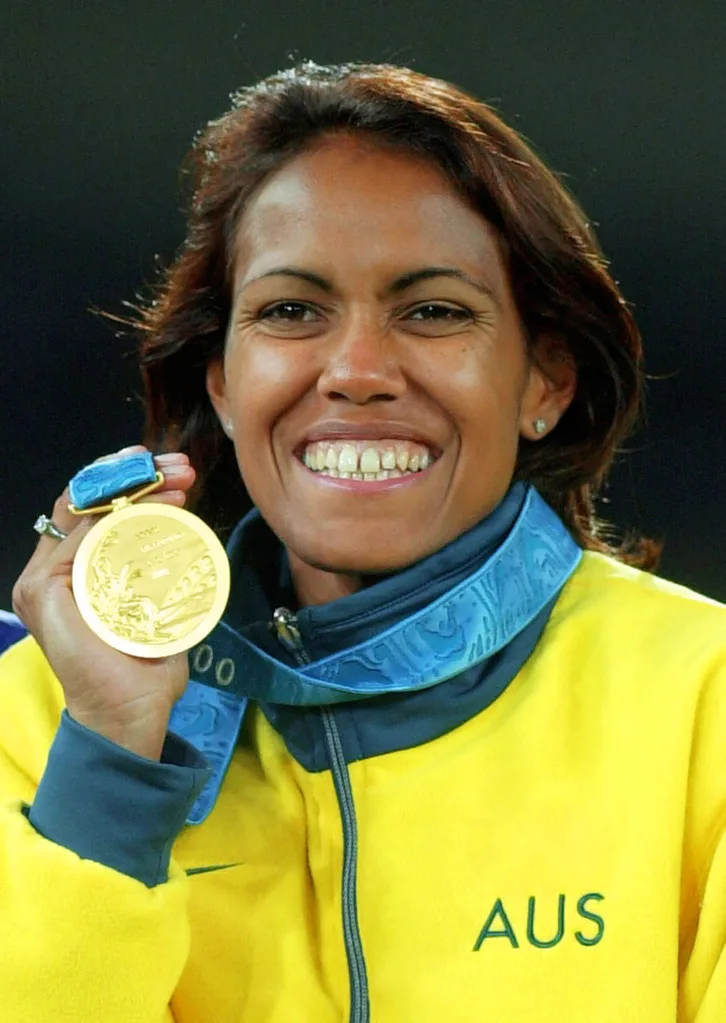
It is no surprise that the significance of lighting the Olympic cauldron on home ground during the opening ceremony was a turning point for Cathy. It is, after all, one of the greatest honours for an athlete.
She was the final torchbearer to carry the flame into the stadium, following six Australian athletes – including Betty Cuthbert, Raelene Boyle, Dawn Fraser, Shirley Strickland, Shane Gould, and Cathy’s own role model Debbie Flintoff-King – in a powerful celebration of the 100th anniversary of women’s participation in the Olympic Games.
“I recognised at the time that it wasn’t just about me,” she says. “It was about representing women, that female presence, and obviously, I’m Indigenous, so that means a lot to me. Billie Jean King taught me that ‘pressure is privilege’ – and it is so true.
“So I very much played into that line of thinking, which helped a lot. Because those kinds of decisions are highly political, and I’m not a political person – I’ve never been that political face. I think when people relate to someone like me, it’s because I’m a human being. I’m a person, and I’m the girl next door, or, you know, I’m the girl walking the dog or who’s just had the confidence and the capacity to dream big and go for it, and not compromise along the way. There’s something ordinary about my journey, and that’s the appeal, I think. I was strong enough and joyful enough and had enough freedom within myself to just go with the flow … I got buoyed by it.”
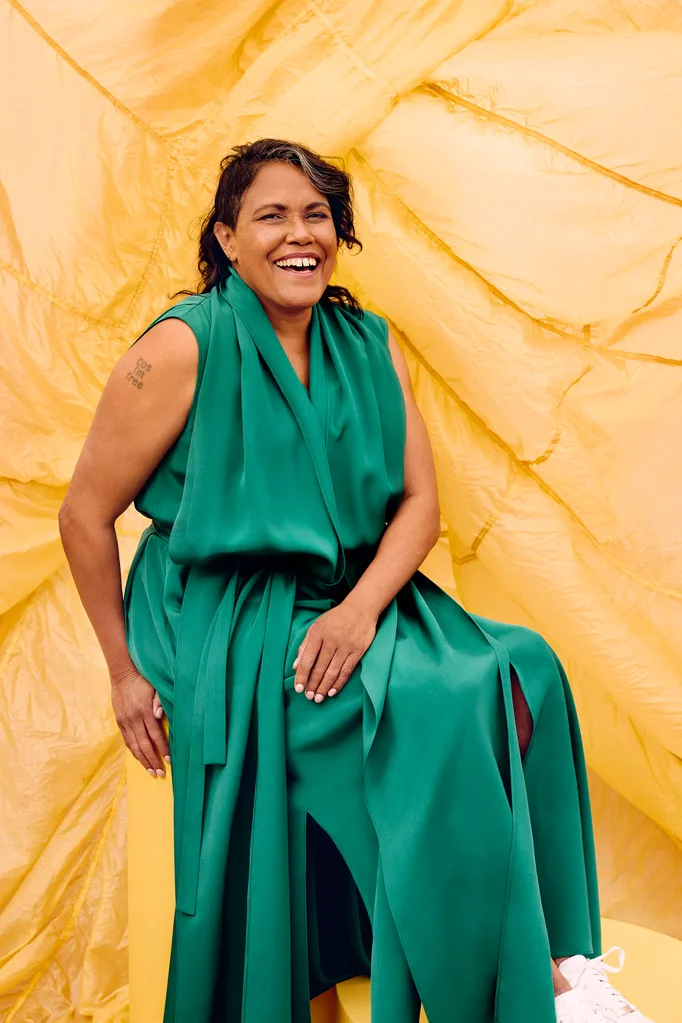
Cathy talks a lot about joy and freedom. She points to the tattoo – ‘cos I’m free’ – on her bicep. It’s her motto.
“It’s like that song ‘Cos I’m free, to do what I want, to be what I want any old time’…” she says, quoting the 1990s British band, The Soup Dragons.
Cathy got her tattoo in 1997 after a breakup with a long-term partner. “I needed to move into this new phase in my life where I had to be on my own and be strong in who I was … And I was like a snake shedding their old skin. It all had a lot to do with identity and freedom and … remembering that there is joy on the other side.”
Cathy went on to marry cricketer and manager, James Murch, and have a daughter, Ruby, who is now 14. While Cathy and her ex-husband separated, and she doesn’t like to talk about her private life, her face softens when I ask about Ruby.
“I do find inspiration in my 14-year-old. She’s got a voice that’s just so strong, so clear – very annoying [she laughs] but strong and clear.”
“And she makes me sit up and go, oh, you are actually right,” she smiles. “And it’s a pretty amazing experience when that occurs because it makes you feel safe and good about the kind of character that she’s become.”
Motherhood, Cathy admits, has taught her to be more empathetic and a better listener.
“Listening, being present, trying to be attuned to who she is,” she says. “I think young people today, in a world that they’ve got to thrive in, where there’s so much information at their fingertips, they are just so astute. There’s less time to be on their own, to be grounded, to be listening to their inner voice or to be attuned to their true nature. There’s peer pressure on screens, and their role models aren’t necessarily the strongest role models. And the lack of ancient ways and the disconnect … it frightens me.”
So does Ruby take after her mum? Might we see her following in her athletic footsteps?
“She does like sport, but I’d rather her take up music or art!” Cathy laughs again. “She does really well at writing, which is nice.”
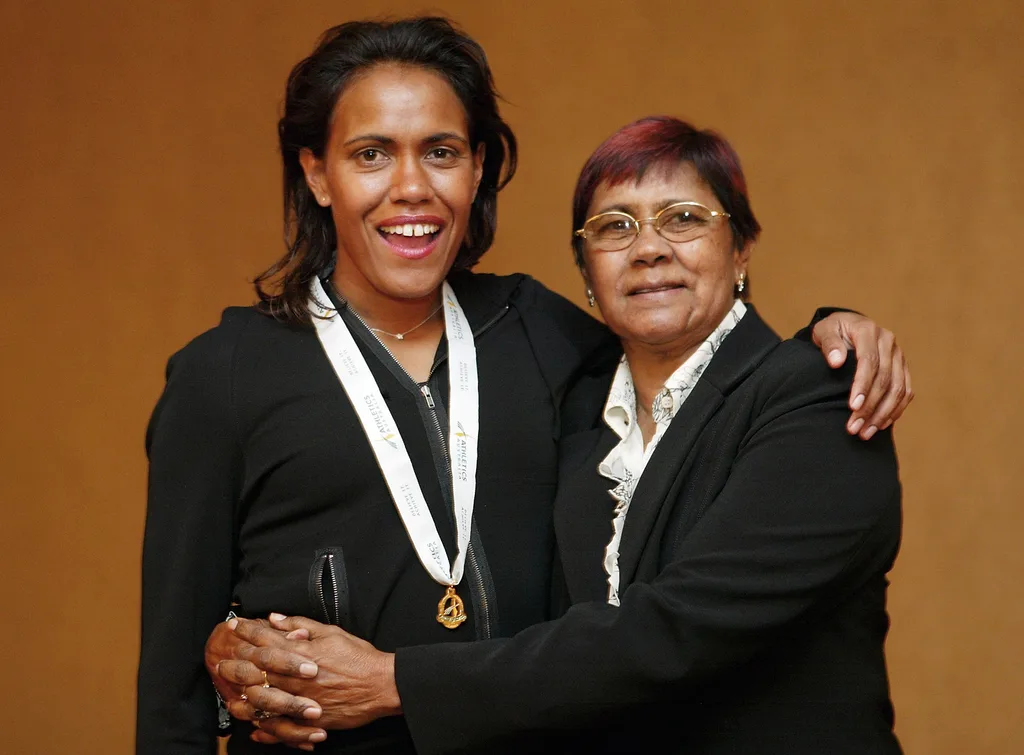
Cathy cites her own mother, Cecelia, as one of her biggest inspirations.
“My mum’s the most compassionate woman I’ve ever met, I think her capacity and ability to empathise and be compassionate is extraordinary,” Cathy says.
“She’s inspiring, she’s resilient, she’s soft-hearted, she’s tough. But of all the things that inspire me most, it’s probably her capacity to be compassionate. She is an incredible role model. And I’m so grateful to have a mother like her … I’m inspired so much by her struggles, the hardships, her resilience – and the ability to still laugh and find joy in the world. That’s a true testament to her strength of character and anyone who’s had to overcome setbacks.
“I have great inspiration from the stories of our Elders, whoever they are and wherever they are from in the world.”
Watch Cathy Freeman win the 400m final at the Sydney Olympics 2000 in the video below.
Some of Cathy’s relatives were among the Stolen Generation, and she admits the family has been through “really, really, difficult times and also really, really profoundly life-defining moments”, including the death of her beloved sister Anne-Marie, who was born with cerebral palsy.
Anne-Marie died in 1990, at age 24, three days after Cathy, then 16, won her first gold medal at the Auckland Commonwealth Games.
“Anne-Marie’s life continues to define who I am,” Cathy says. “I may not have taken the running path if it wasn’t for Anne-Marie. Mrs. Baldry, of course, played a role, but you’ve got to have a reason to follow a particular direction. You’ve got to have a reason really deeply rooted in your heart and soul and gut that propels you.
“Anne-Marie’s not my wind beneath my wing, she’s my cyclone under my wing. She’s like a force of nature that makes me feel that, as long as I can walk, I’ll be fine … I’ll ever lose my way or lose sight of that horizon – it’s quite incredible.”
In the public sphere, Cathy’s Olympic past largely defines her, as well as her enormous achievements and accolades. She was named the 2001 Laureus World Sportswoman of the Year, received the Medal of the Order of Australia (OAM) in 2001, and remains the only person to have ever been awarded Young Australian and Australian of the Year (in 1990 and 1998, respectively).
However, now her focus is on the future.
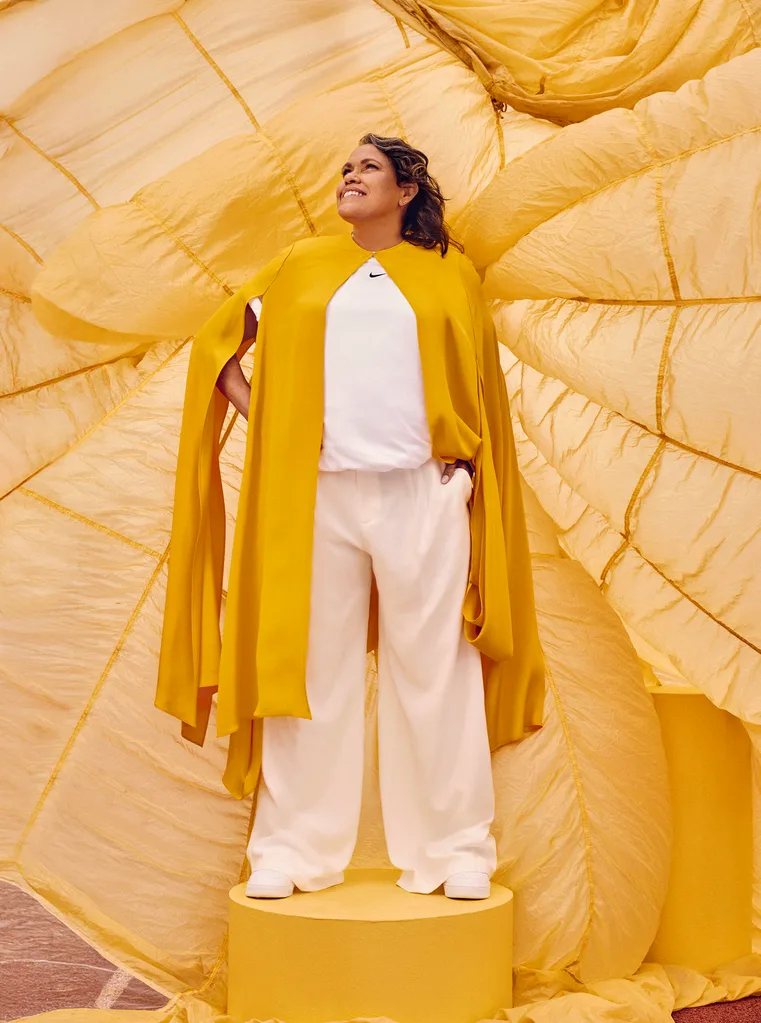
Since retiring from competitive athletics in 2003, Cathy has fostered deep community engagement. This includes acting as an ambassador for organisations such as Inspire and Cottage by the Sea. She is passionate about creating new opportunities for young people to thrive through sport. Cathy recently supported the development of the Great Barrier Reef Arena, a multi-faceted sports and events precinct in her hometown, Mackay.
She is also a mentor to athletes, including Matildas’ captain Sam Kerr, who looks up to Cathy as a role model. “I loved her so much,” Sam wrote in her book, My Journey to the World Cup. “She was so fast and strong, and she coped so well with the unbelievable pressure that was put on her. I watched her race in the Sydney 2000 Olympics over and over and over again.”
Cathy is still involved in the Olympics. In fact, she will play a significant role in the 2032 Olympic and Paralympic Games in Brisbane.
But she is also tapping into her passion for wellness, admitting to dreaming about opening her own sanctuary one day. “I’m already fantasising about throws and pillows …. You never know!”
Last year, she was appointed to the Advisory Committee at the Monash University Centre for Consciousness and Contemplative Studies. There, she gives guest lectures on mindfulness.
“One of the things I’ve had to work hard at is public speaking. I’ve had to really, really drive and push myself to be able to verbalise and share and be an orator,” she says. “I get nervous still being a public face. Because I’m still a shy kid at heart.”
Cathy is a guest speaker at The Australian Women’s Weekly Health Summit, brought to you by Priceline, in Melbourne this month. She admits that health has become more important to her as she gets older especially as she lives with asthma, Type 2 diabetes and is currently recovering from a severe knee injury, which restricts her mobility.

When I ask if she will run again, Cathy looks serious: “I drive myself to rehab three times a week because I want to run again, and so I’m not going to accept anything else.”
Asked about her advice for others, she says: “My best piece of advice in terms of looking after your heart, spirit, mind and body is of course about self-care,” Cathy says. “Nutrition is gold. I find being silent in nature incredibly nurturing and healing, and laughter is medicine in itself – with friends, family, or wherever you seek humour. And relationships with others and community, I think, helps one to remain grounded and maintain a sense of belonging.”
Back at the athletics stadium, the kookaburra gazes down at Cathy as the photo shoot is wrapping up. A young girl suddenly enters the field across from us. She laces up her training shoes, preparing to begin her own athletics practice. A new generation is emerging, oblivious to the Australian icon standing just metres away.
Named from the Wiradjuri word, guuguubarra, the kookaburra apparently symbolises “profound significance, embodying essential qualities of laughter, communication, and awakening”.
The same could be said for Cathy Freeman.
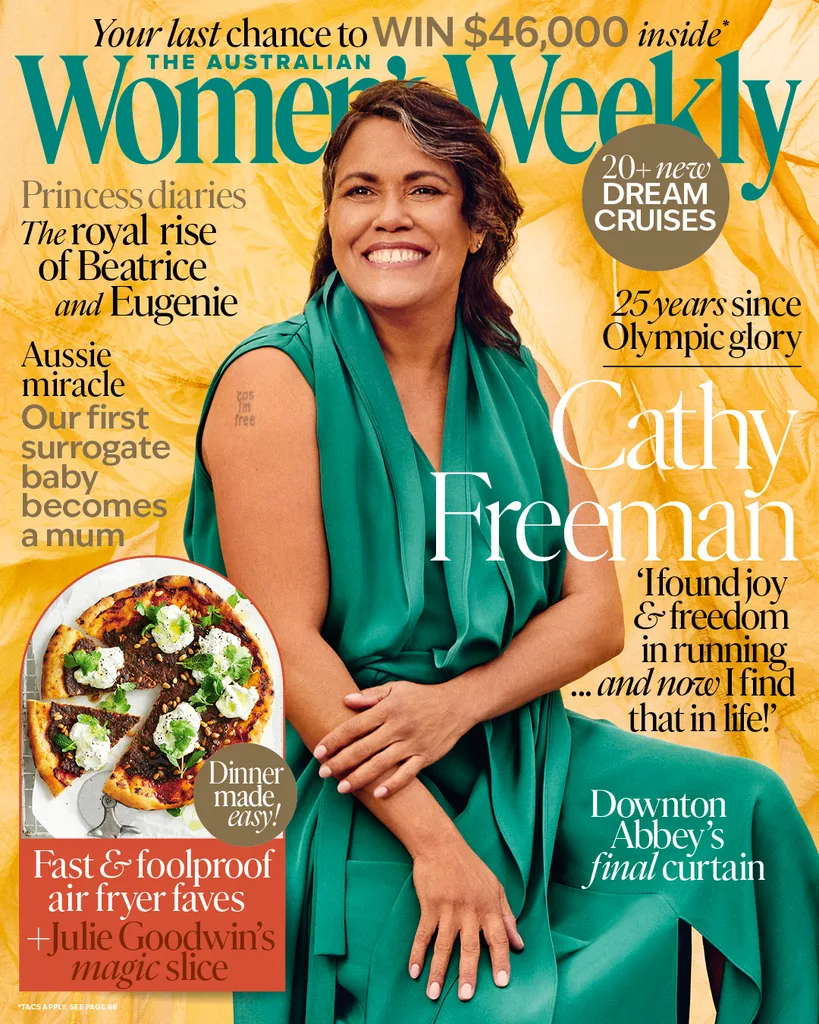
This article originally appeared in the October issue of The Australian Women’s Weekly. Subscribe so you never miss an issue.

