


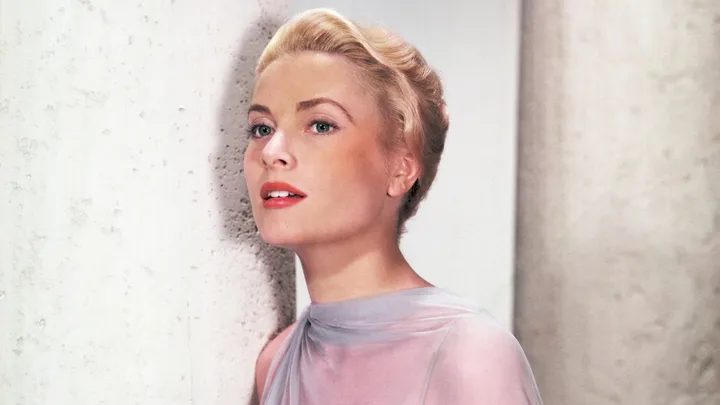
Grace Kelly sadly died on September 14, 1982. Aged 52, she suffered a stroke while driving, causing her vehicle to plunge down a steep embankment.
Her life was tragically cut short. But she lived fabulously none the less. With only 11 movies under her belt, she famously retired as an icon to become a Princess of Monaco, during which she welcomed three children with husband Prince Rainier III of Monaco.
Her granddaughter, Princess Alexandra of Hanover continues to revive her legacy. In September 2026, the 27-year-old wore a family heirloom: an archival Givenchy gown that once belonged to Grace.
With Grace’s memory coming alive, read more about her career and life below, originally published in The Australian Women’s Weekly Icons 2024 issue.
As the press pack jostled for space a voice called out, “What will you do now, Miss Kelly?”. The aristocratic blonde raised her baby blues, and the flashbulbs popped. It wasn’t the first time MGM had suspended its top star’s contract. “Why,” Grace Kelly demurred in her cultured, English-accented voice, “I’ll have to stop decorating my new apartment for the present.”
Infuriated, MGM had come down hard when Grace had declined yet another role she considered inferior to her talent. The studio, however, had underestimated her reaction.
Unrepentant, Grace called a press conference to reveal MGM’s harsh treatment of her. Then the star of 1952’s High Noon, and 1954’s Dial M for Murder and Rear Window turned on her kitten heels and left for a vacation in Jamaica with her sister, Peggy. With a trust fund set up by her wealthy father, Grace didn’t need her $1500 a week salary – and didn’t give a damn about her contract.
The relationship between Hollywood’s most powerful studio and its elegant blonde star was fractious from the get-go. Before she’d even signed to MGM, who wanted her for the 1953 John Ford classic Mogambo with Clark Gable, Grace’s independent nature, determination and insistence on managing her own career astonished studio executives.
Although the studio system was in decline, stars were still locked into iron-clad seven-year contracts that dictated their every move, both on and off the screen. That a 23-year-old who’d only appeared in a handful of films would take on MGM was unheard of.
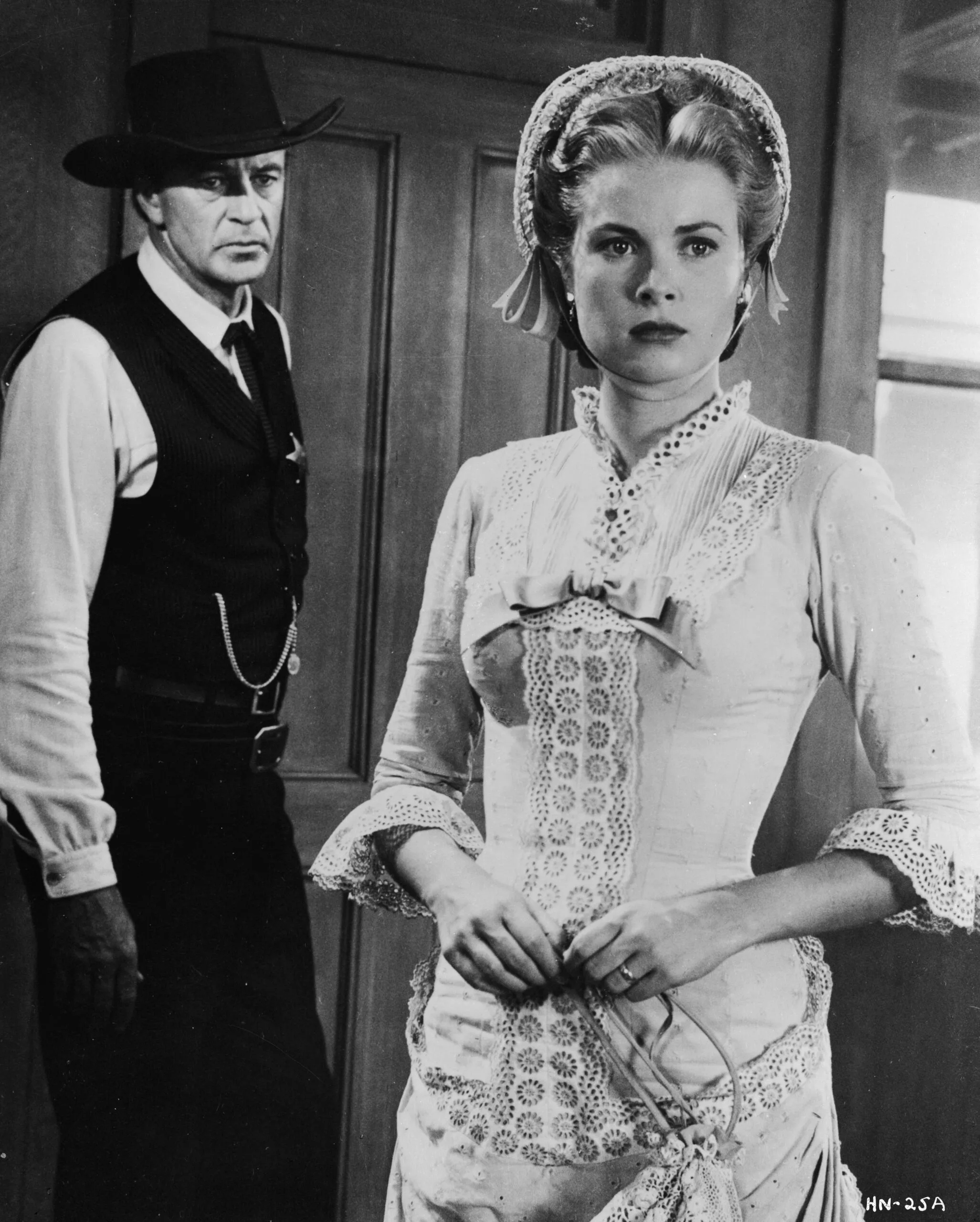
“She would make just three pictures a year (in those days even major stars might make four or five); she wanted one year off every three, and she wanted to be able to make her home in New York rather than having to live in Hollywood,” wrote James Spada, author of Grace Kelly: The Secret Life of a Princess.
She kept MGM waiting for her signature on the contract right up until the last minute.
“I signed because they offered me the chance of shooting in Africa,” Grace recalled later, “but I signed it at the desk of the airport, when the engines of the plane were already turning.” It would be the first of many contentious dealings with the studio.
As her To Catch a Thief co-star Cary Grant said admiringly of her, “She owns a controlling interest in her own mind”. The woman Alfred Hitchcock dubbed “the snow-covered volcano” had a backbone of steel, and a will of iron, forged by her privileged upbringing in a wealthy, creative, competitive Philadelphia family.
Born in 1929, the third child of four, Grace and her siblings wanted for nothing. Her father, John Kelly Sr., was an Olympic athlete who’d won gold for rowing, and then earned millions in a construction business.
“My father had a very simple view of life: You don’t get anything for nothing,” Grace would say later. “Everything has to be earned, through work, persistence and honesty.” Her mother, Margaret, was a former model and competitive swimmer. “We were always competing,” recalled Grace. “Competing for everything, competing for love.”
Her uncle, George Edward Kelly, a Pulitzer prizewinning playwright, screenwriter, director, and actor, had a huge influence over Grace’s career. For her audition for the American Academy of Dramatic Arts in New York in the late 1940s, Grace chose a scene from her uncle’s play, The Torch-Bearers, and was accepted because of George’s influence. He continued to advise and mentor Grace throughout her acting career, and his negative experiences at MGM decades earlier would colour his niece’s attitude.
“She was less dependent on other people’s responses than any actress I’d met in Hollywood,” Celeste Holm, Grace’s High Society (1956) co-star said. “She had an extremely strong will. She was keenly aware of who she was … She was George Kelly’s niece. And she knew it. It gave her a kind of stern pride.”
After graduating from drama school, Grace appeared on TV and the New York stage. By the time she arrived in Hollywood in 1951, Grace was a skilled and competent actress. She’d also been a successful fashion model, was financially independent and owned her own apartment.
“She wasn’t found behind a counter in a drugstore or luncheonette or at a drive-in,” her Rear Window co-star Jimmy Stewart said. “No producer would have thought to tell her, ‘I’ll make you a star and give you a new name and tell you where to stand and talk and how to spend your free time’.”
Grace was poised and reserved, yet spirited and outspoken. “Annoy her and she boils … There’s a lot of solid jaw under that quiet face of hers,” said costume designer Edith Head, who dressed Grace for many of her iconic roles.
Her shy beauty in High Noon (1952) had caught Alfred Hitchcock’s eye. “You could see Grace’s potential for restraint,” the legendary director recalled, and he cast her in Dial M for Murder. Soon his favourite muse, Grace would work twice more with Hitchcock, in Rear Window and To Catch a Thief (1955).
“They think she is a cold fish,” Hitchcock said of Grace. “But she has the subtle sex appeal of the English woman. It’s ice that will burn your hands, and that’s always surprising and exciting.”
But, while Hitchcock found Grace the most co-operative actress he’d ever worked with, MGM still didn’t know how to handle her. And so, when the studio tried to bend her to its will, the ‘volcano’ erupted. She hated publicity and was rarely quoted; would never reveal her ‘vital statistics’ (like Marilyn Monroe did), and refused to do cheesy studio shots.
“I was hired to be an actress, not a personality for the press,” Grace remarked.
When MGM fed her lightweight roles in B-grade films, Grace dug in her heels. “If anybody starts using me as scenery, I’ll return to New York,” she told MGM executive Dore Schary. Time and again Grace dismissed the roles proposed by MGM.
“All I’d do would be to wear 35 different costumes, look pretty and frightened,” Grace said of swashbuckling 1955 drama Quentin Durwood, and the role went to British actress Kay Kendall.
“She told me it was very important for her to choose her own roles,” MGM’s head of talent, Lucille Ryman Carroll said: “ … I told her we always chose roles for contract players. She said, ‘But you might put me into something that doesn’t suit me.’ I told her, ‘Don’t worry, we can be trusted to put you in roles that will enhance your career’.”
But the studio broke that promise and Grace continued to knock back films. When Grace insisted on being loaned to Paramount to work with Alfred Hitchcock, MGM grudgingly relented. By the end of 1954, Grace was in four films, was one of MGM’s most valuable assets, and had topped the year’s Best Dressed lists.
“By the time she returned from Europe after making To Catch a Thief, Grace had become the movie star version of the ideal ’50s woman – and she knew it,” her friend, and later bridesmaid, Judith Quine remembered.
Her Oscar nomination and Golden Globe win for Mogambo only reinforced her position as one of Hollywood’s hottest stars.
For her next film, Grace had her heart set on the role of the long-suffering wife, Georgie, in The Country Girl (1954), opposite Bing Crosby. MGM, however, were reluctant to loan Grace to Paramount again, and refused. Furious, Grace told the studio that if they didn’t allow her to do Country Girl, she’d pack her bags and leave for New York for good. MGM backed down, but the next year, when Grace turned down a role in 1956’s Tribute to a Bad Man – her third refusal in as many months – the studio suspended her contract.
A few months later, Grace was nominated for Best Actress for The Country Girl. Desperate to save face, MGM rushed to announce their star would be appearing in The Barretts of Wimpole Street (the role would eventually go to Jennifer Jones).
Adding to Grace’s consternation, she was also being pressured to withdraw her Oscar nomination to pave the way for Judy Garland to win for A Star is Born. Columnist Hedda Hopper, one of the most powerful people in Hollywood, insisted Grace refuse the nomination and not attend the ceremony. If Judy didn’t win, Hedda threatened, she’d be heartbroken and could attempt suicide again.
“This made me feel awful,” Grace said later. “I told Hedda it was not my choice, but that of the Academy members and voters.”
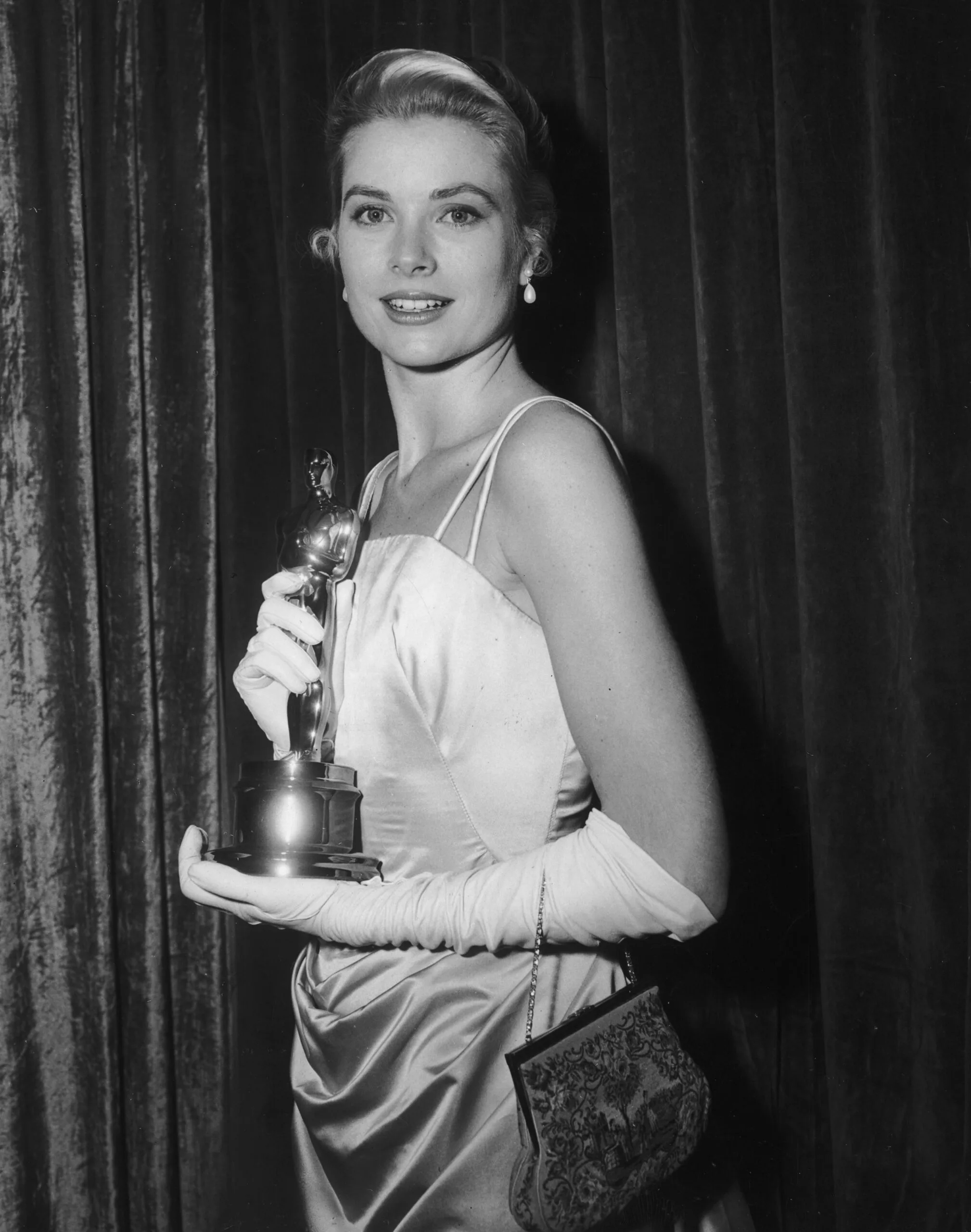
Despite overwhelming emotional pressure, and being on suspension from MGM, Grace won the Oscar. “The thrill of this moment keeps me from saying what I really feel,” Grace said in her acceptance speech. “I can only say thank you with all my heart to all who made this possible for me.” Then, before her composure could crumble, she quickly left the stage.
In 1955, Grace was part of the US delegation to the Cannes Film Festival where Hitchcock’s To Catch a Thief had largely been shot. The thriller’s famous car chase scene had been filmed in Monaco, which bordered France, and so, when Paris Match magazine devised a photo opportunity between Grace and Prince Rainier III of Monaco at his palace, she agreed.
Although the meeting was stage-managed and formal, the Prince wrote to Grace to thank her for her visit, and the two began corresponding. Seven months later, Rainier asked Grace to marry him.
Although Grace loved acting, she’d always despised the movie industry, and even though she was only 26, was already starting to age out of Tinseltown.
“When I first came to Hollywood, my make-up call was at eight in the morning,” she told a reporter on High Society, her last film. “On this movie, it’s been put back to 7.30. I’ll be goddamned if I’m going to stay in a business where I have to get up earlier and earlier and it takes longer and longer for me to get in front of a camera.”
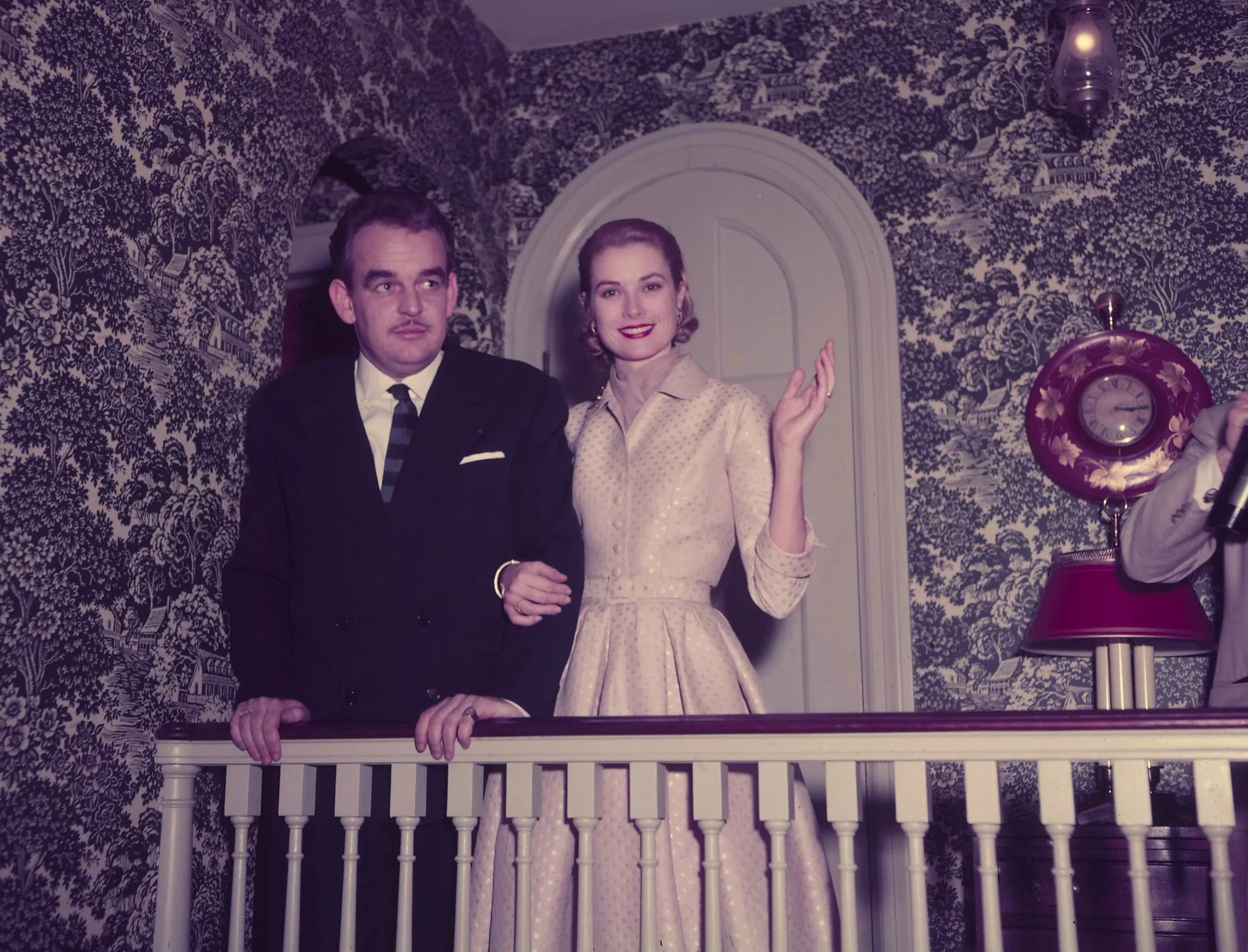
She accepted Rainier’s proposal. Grace became Her Serene Highness when she married her prince in April 1956 in a church service attended by guests including Cary Grant, Ava Gardner and David Niven.
Her wedding, which featured a dress hand-sewn at MGM, would be her last production for the studio. In a deal that freed her from what remained of her contract, the ceremony was filmed and released into cinemas later that year. When Rainier banned her films in Monaco, Grace’s transformation to princess was complete.
After just 11 films, Grace Kelly, Oscar-winning actress, had retired. Her protests against MGM helped put the final nails in the coffin of the studio system, but marrying into an ancient royal family came with its own restraints, ones that would make MGM’s contractual obligations pale in comparison.
Had Grace simply traded one set of prison bars for another, more gilded, cage?

