




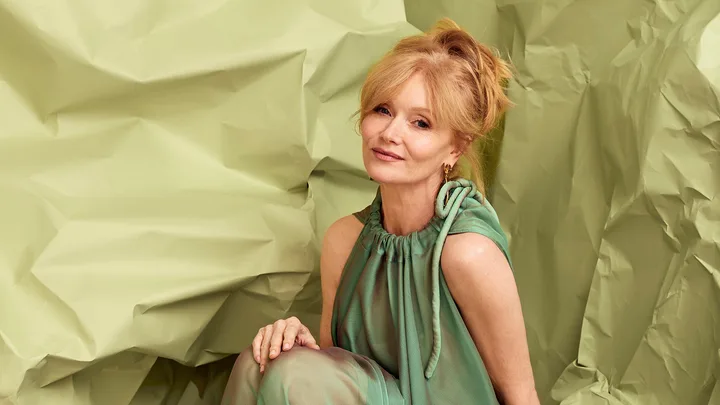
It will come as no surprise that Essie Davis is going out tonight, with an old friend, for cocktails and a spot of karaoke. Such a Phryne thing to do. One hopes it’s in a retro bar that serves dry martinis or sherry cobblers that’s frequented by undercover police and mobsters. To undertake all this, it’s critical that Essie leaves The Weekly’s photographic studio by half past six.
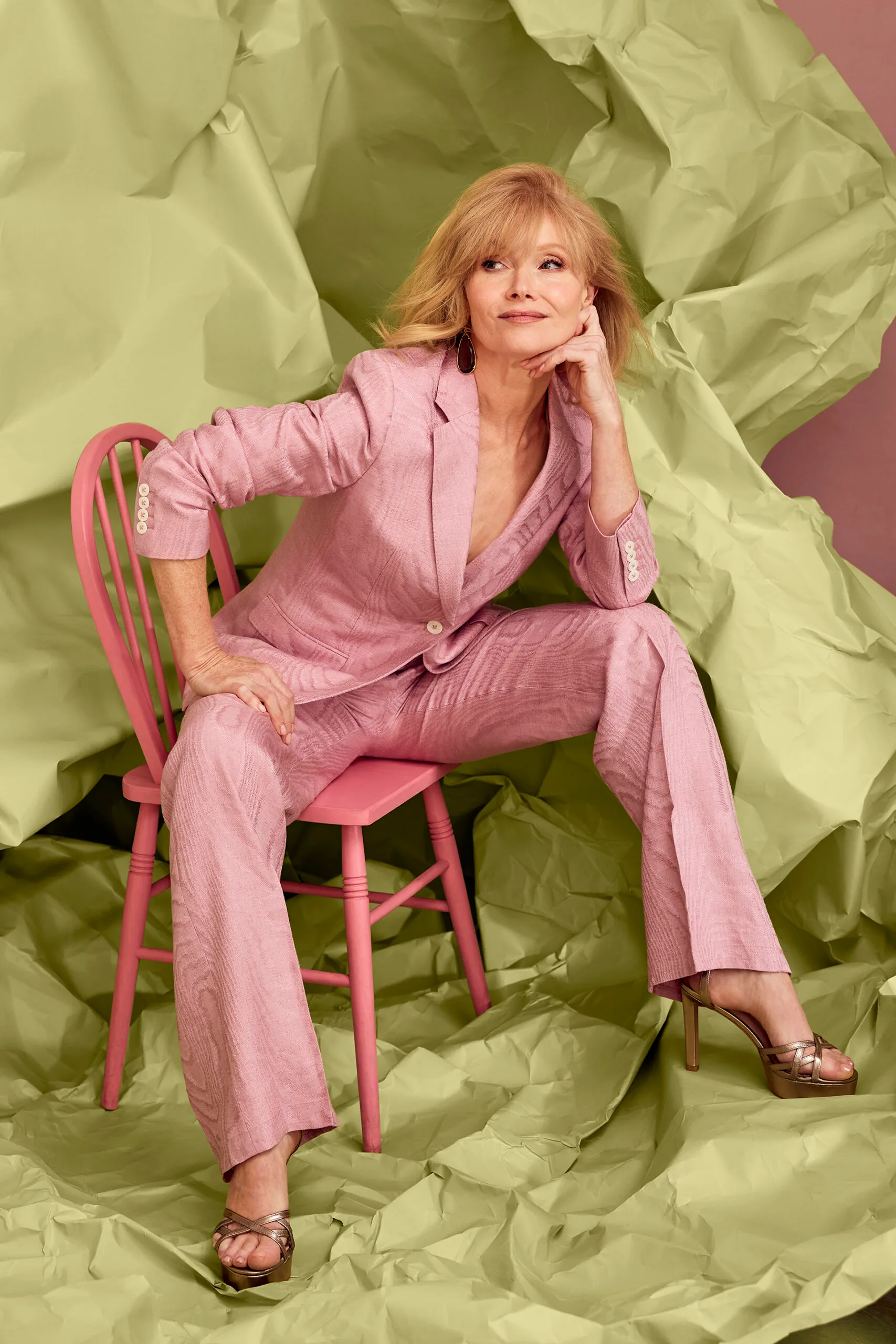
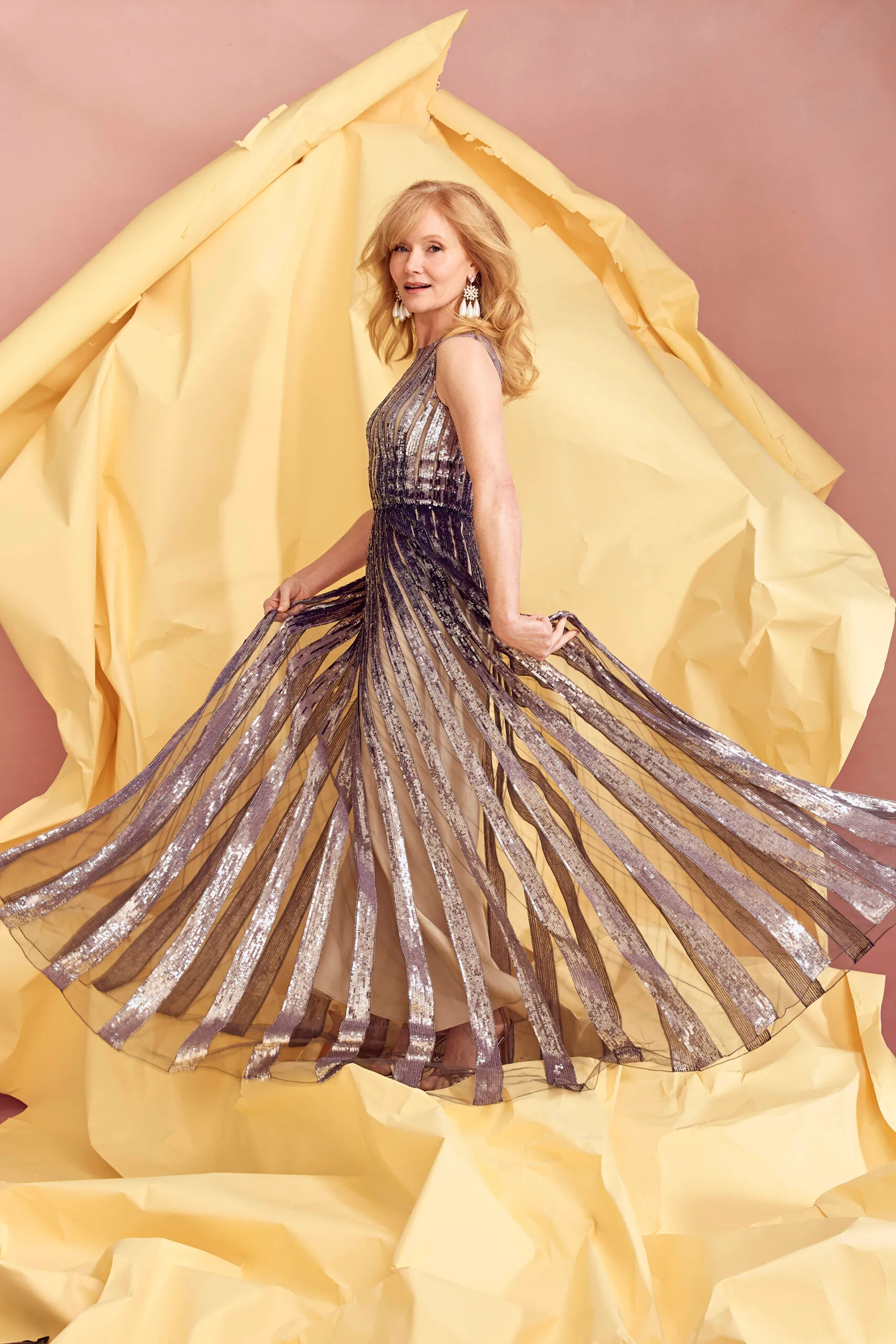
She’s been here for a solid five hours already, dressing up in sparkly skirts and platform heels, twirling for the camera. All the while, entirely joyful – not even a yawn – though she’s mere hours off a plane from London via Bangkok, where she’s been o the promotion trail for Alien: Earth, a streaming series and prequel to the first Alien film, directed by Ridley Scott.
At 55, Essie has boundless energy. She is the mother of twin teenagers, Ruby and Stella (19), wife to film director Justin Kurzel, articulate defender of wild nature in her home state of Tasmania (particularly of those communities affected by salmon farming). And she is an actor whose stellar career takes her all around the globe.
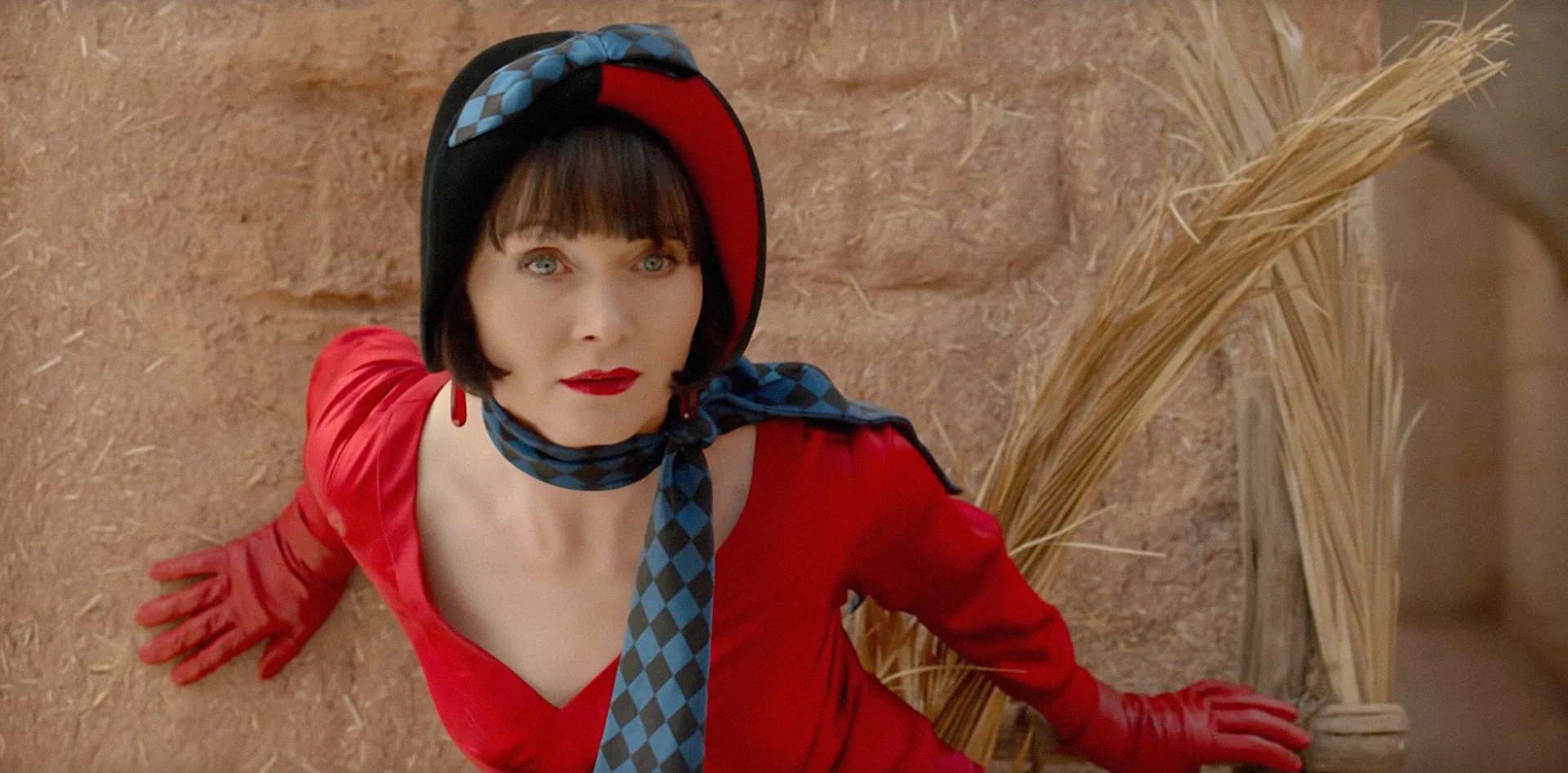
Outside Australia, she is probably best known as Amelia Vanek in The Babadook or as Lady Crane in Game of Thrones. Here, of course, she’s renowned for her starring role in Miss Fisher’s Murder Mysteries – three much-loved series and a feature film. And Essie appears to juggle all these roles – the personal and the public – as graciously as Phryne might a gold Smith & Wesson revolver, a grappling hook and a champagne coupé.
With little more than an hour to spare before she must fly out the door, we sit down to laugh a lot, shed just one tear and chat about her extraordinary life.
This year, we lost Kerry Greenwood, author of the Phryne Fisher books which evolved into Miss Fisher’s Murder Mysteries. How well did you know Kerry, and what can you tell us about her?
I did know her. She was instrumental in choosing me to be Phryne – thank God, because I was really concerned that, as much as I wanted to play the part, I might not be what the fans
of the book wanted or envisaged, and particularly what Kerry wanted. I wanted Kerry’s approval and thankfully she was like, “You couldn’t be more perfect!” It was an honour …
Kerry could talk at a thousand miles an hour and she had such an incredible brain. She was a meticulous researcher. All those stories were based on real events that happened in Melbourne in 1928. Every single one of them … She was an amazing woman. She’d talk about writing Phryne and she’d go, “I just sit down and Phryne will come and sit on my desk and light up a fag and say, ‘Here’s what we’re going to do, darling.’”
What did that role mean to you?
Phryne was a joy to play because she was always curious and positive; so highly skilled and able … She knew how to share her wealth, and how to keep her independence. She could speak multiple languages and dance and not be held down by any man. Phryne broke all the rules and climbed buildings and flew an aeroplane and drove an ambulance. She had seen the war and been in domestic violence situations, and she was like, “never again”. She was fighting for the underdog and for women’s rights and for basic human decency and social justice. She’s this fantastic female superhero.
And I got to wear Marion Boyce’s incredible costumes and hang out with delightful Nathan Page and Hugo Johnstone-Burt. What fun!
It was also a massive learning curve because it was such a tight budget. Sometimes we’d get just one take … There was homework, homework, homework. There was so much homework that I was going, “But
my children! I can’t work every hour of every day.” So my brain got faster, and I learned lines really quickly …
There’s so much that, with more time, we could have done better. But given the time that we had, and the women and children and older men who’ve reached out and gone, “Oh my God, Phryne got me through this,” or “inspired me to do that” – given all the lives it has touched around the world, I think we did okay.
Do you share Phryne’s daredevil bravado?
Look, yes, sometimes. I certainly have a fair dash of naughtiness and irreverence. [She laughs, a full, throaty laugh.] We had to be quite inventive, growing up in Tasmania, because there wasn’t a lot to do.
Also, I think, every character you play rubs off on you and stretches you and pushes you. There was so much I’d be freaking out about that I had to do, and that Phryne would do bravely. I would go, “Okay [she takes a deep breath], fan dancing – four days to learn it and a room full of extras. Here we go!” There were so many things that Phryne made me bravely do.
You mention being an inventive kid. Your father, George, was an artist. He and your mother, mary, were environmental crusaders. What can you tell us about those days?
They were quite bohemian, and we were also quite isolated. We lived in nature a lot and grew all our own produce. It was an amazing childhood.
I was the youngest [of seven], helping pluck ducks or pick fruit, helping to round the ducks up for beheadings. I also played with them when they were ducklings and had all the primary school kids over to play with them too … My first sleeping bag was made from our own duck feathers.
Mum made everything, preserved everything. We’d go blackberry picking and we’d go mushroom picking. It was all homegrown. It was walnut time and then it was olive time and apricot time and quince time, peach time, apple time, pear time, sweet corn time.
We’d spend every summer on Bruny Island. It was one of those free, wild places where there was literally an abundance of life. I don’t know how but we were just allowed to free range. My brothers and I jumped in the little dinghy and we’d catch every possible kind of fish. Not always to eat. We’d put back a lot of what we caught. Every rockpool was full of amazing creatures. There were rocky cliffs, sandy beaches, weedy sea dragons, seals, penguins. It was wild and beautiful. It’s one of those places I’ve loved my whole life.
It must have been quite the culture shock, moving to Sydney to study at NIDA.
Yes, but I was fully, “I’m going to be an actor”. I was hanging out with my year group and loving life and learning how to be a flatmate and how to catch three buses across Sydney and get to school before nine o’clock.
I was certainly not very worldly. It was a huge learning curve, but fascinating and wonderful. I’m seeing my best friend from NIDA tonight, and we still laugh about the fact that we thought we were so grown up,
yet we were so naive.
You met your husband, Justin, when you were working on A View From the Bridge at the Belvoir St. Theatre. What struck you about him?
I remember the day that we met. It was well into rehearsals. He was designing the set and the costumes. Some other actors were rehearsing and I was sitting up the back of the room and he was in front of me and I remember thinking, wow, you’ve got a great shaped head. I hadn’t really been looking at him until then … Anyway, I got a crush on him fairly early on.
Also, he was the first person who asked me to dye my hair. I had this long, red hair and everyone always said, “Never dye your hair”. But in A View from the Bridge, my character was Italian, so Justin took me to the hairdresser to have my hair dyed brown, and he really looked after me. He talked me through it, and he was caring and thoughtful.
So who made the first move?
I did. I went up to him and whispered, “I’ve got a crush on you.” [She laughs.]
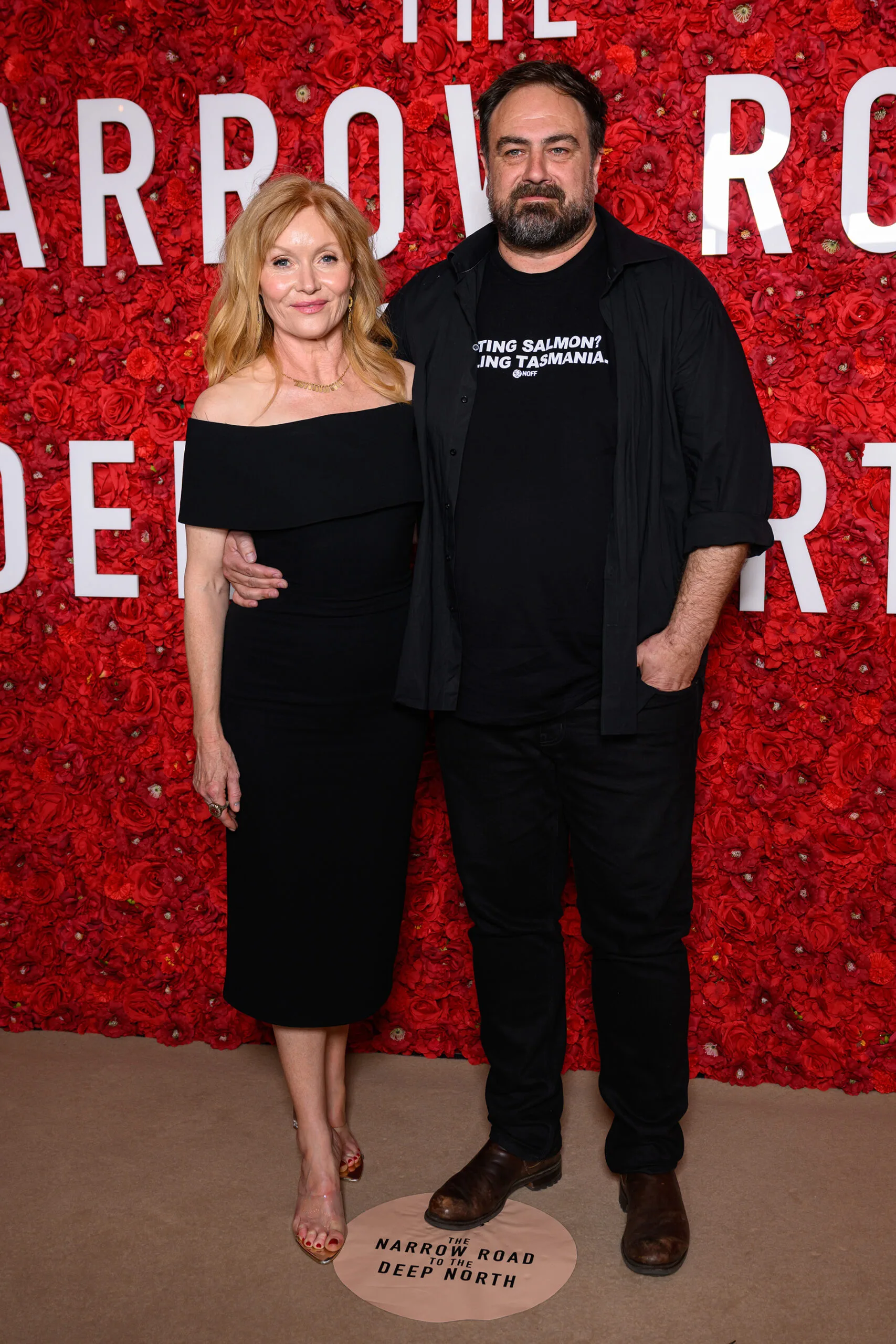
Justin directed you in Nitram, True History of the Kelly Gang and The Narrow Road to the Deep North. Do you have a favourite of his films?
I think they’re all pretty extraordinary. Nitram is a masterpiece, and I love Macbeth. I love working with him. I think both of us have quite high standards and both of us really dig each other when we’re pursuing excellence. We kind of get frustrated that we’re not there beside each other all the time, but when each of us is going for it, it’s like, “Oh, look at that!” We both have this great admiration for trying, and trying really hard. His brain is so different from mine, which is frustrating for him, but his vision and his problem-solving are amazing. He sees big and little, whereas I’m much more focused on little. He’s got a great vision and I’m the one looking in the rockpools.
Right now, you’re based in Hobart, but you also have a place on Bruny Island. How did you end up back there?
Justin and I had our honeymoon on Bruny Island and we’d been looking to buy a place there for years. Every time we were in Tassie, we’d search. And then eventually we bought this fantastic place and it really is like a special spiritual home place …
Stella and Ruby won a prize for Jachelt, a short film set on Bruny Island. Do they want to be filmmakers?
I don’t know yet. Maybe. They wrote that, they filmed it on their telephones. It’s a beautiful little film, and it looks amazing.
Tassie feels so windswept and isolated. When you’re there, do you feel as though you’re standing on the edge of the world?
Definitely. I mean, I didn’t when I was little. I guess I felt like it was the middle of my world – it was my whole world – but you know, it’s next stop Macquarie Island and Antarctica. And yes, I love that. I love that we’re the gateway to Antarctica and that so much scientific and animal research is based in Tasmania. And I love the wilderness. I wish we could protect it more. It’s ridiculous that we still have old-growth forest logging. We have a reputation for being this wild, green place … but that green, wild brand of Tasmania is being destroyed. I’m really frightened that it will just be an idea and not actually protected. We have to hold onto it more than ever.
Tassie means everything to me. I mean, I love the world. I love New York City, I love London, I love working all around the world. But Tassie is such a special place. It’s the place I feel most at home.

You once said that the older you get, the more you realise that we’re always coming of age, we’re always discovering ourselves and finding out what life is about. What are some of the things you’re discovering?
You never stop discovering stuff. The amount of times my eyes have been opened! I mean, I’ve always loved Mum and Dad, but now I’m even more grateful and more astounded by what they did for us and how they endured us and how … [Essie pauses for a minute to blink back tears.]
Dad passed away last October and it’s so scary suddenly being – we are the next generation. And also watching the wealth of knowledge and experience dying and realising, “Oh my God, I didn’t pay enough attention. I didn’t ask enough questions. Why don’t I know how to do that?”
There’s so much I have learnt, but you know, I’m still going, “Damn, why didn’t I ask Dad or Mum that?” They’re the most amazing people with such a wealth of skills … The making of all of these amazing things that people have learned over generations, and the making-do and the repairing of things …
Those values, as well as the skills.
Taking care of each other.
So who are you most like, your mother or your father?
I think I’ve got a good spoonful of each of them.
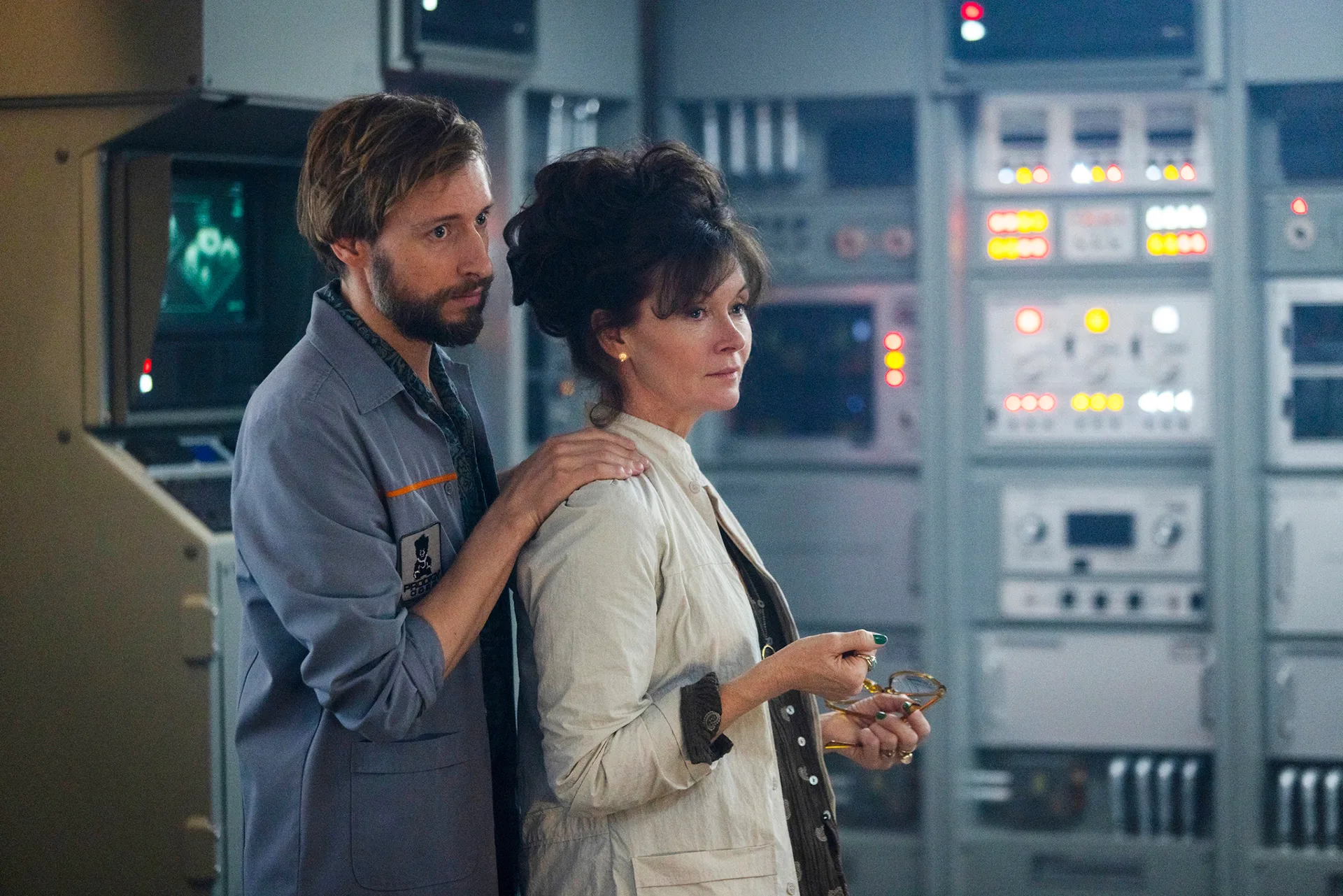
On the subject of parent figures, what interested you about your character, Dame Sylvia, in Alien: Earth?
Dame Sylvia is a scientist at the top of her field. She’s on the very upper echelon of a company called Prodigy, which is run by a young man who was a child genius and has built this company from about the age of 10.
Now he’s an adult, he’s a trillionaire and he runs one-fifth of the world. He’s financed her research, and she is a geneticist and psychologist who has created hybrids – she has worked out how to put human consciousness into a synthetic body … She’s kind of Dr Frankenstein.
I was also interested because those first Alien films were just amazing. You know, Sigourney Weaver as a freaking kickass female protagonist. That first film is so subtle and clever and grungy. And the relationships are so interesting between the crew members on that ship. And what is the predator? Is it a creature, an infection, artificial intelligence? Is it human? All those creeping dreads, coming closer and closer.
There’s a lot of that in our show, and it feels very timely with the race for AI and trillionaires ruling the world and the rich getting richer and this endless quest for youth.
On that somewhat foreboding note, thank you for this very long day.
“Oh look,” Essie says, checking her phone for the first time in hours, and beaming. “It’s 6.29!”
With that, she hugs the crew, tosses her golden mane and is on her way.
Alien: Earth is available now to stream on Disney+.
This aritcle originally appeared in the November 2025 issue of The Australian Women’s Weekly. Subscribe so you never miss an issue!

