




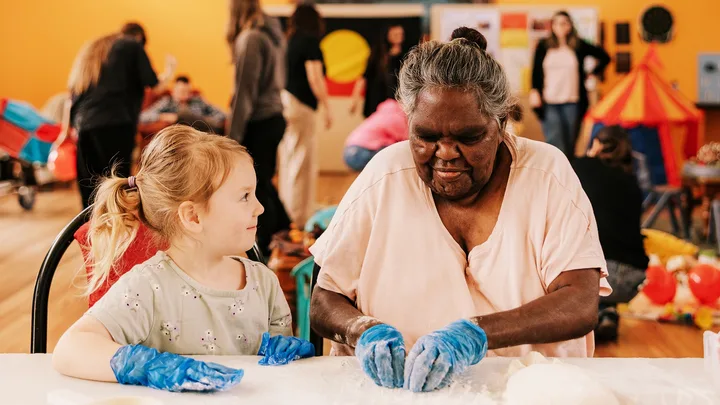
At a one-of-a-kind intergenerational playgroup in the north of Adelaide, Aboriginal Elders and children share wisdom, language, laughter and a lot of love.
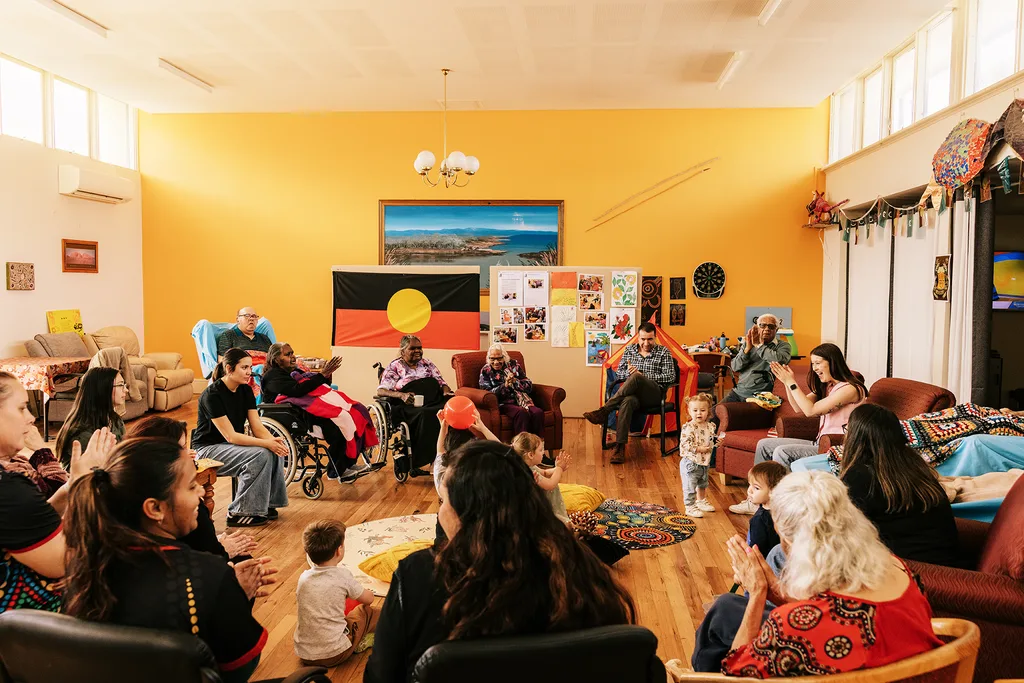
Betty, 92, enters with a spring in her step and a sparkle in her eyes. She settles into a comfy armchair and pulls her harmonica from her handbag. There’s a collective whisper of delight as she launches into a crowd favourite, When The Saints Go Marching In. Toddlers clap their hands and spin to the music. Betty’s good friend, Daisy, sings along.
Betty is not a resident here at the Aboriginal Elders Village in the north of Adelaide, but she visits every fortnight. “You couldn’t keep her away,” says her daughter, Raylene Snow. Betty and Daisy come to bask in – and contribute to – the joy that fills this room when the Marra Elders Playgroup is in session.
Meet the Marra Elders Playgroup
This is no ordinary playgroup.
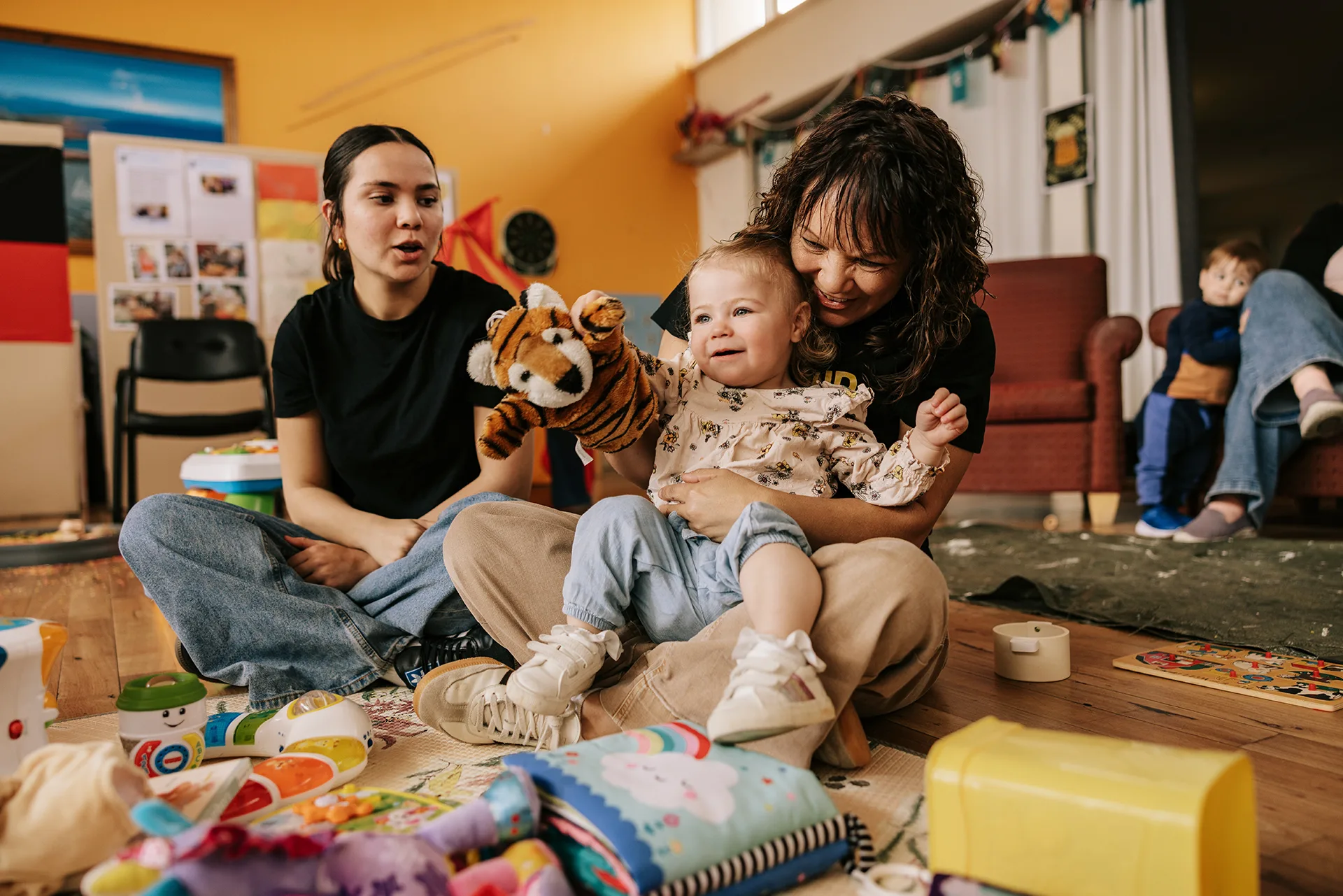
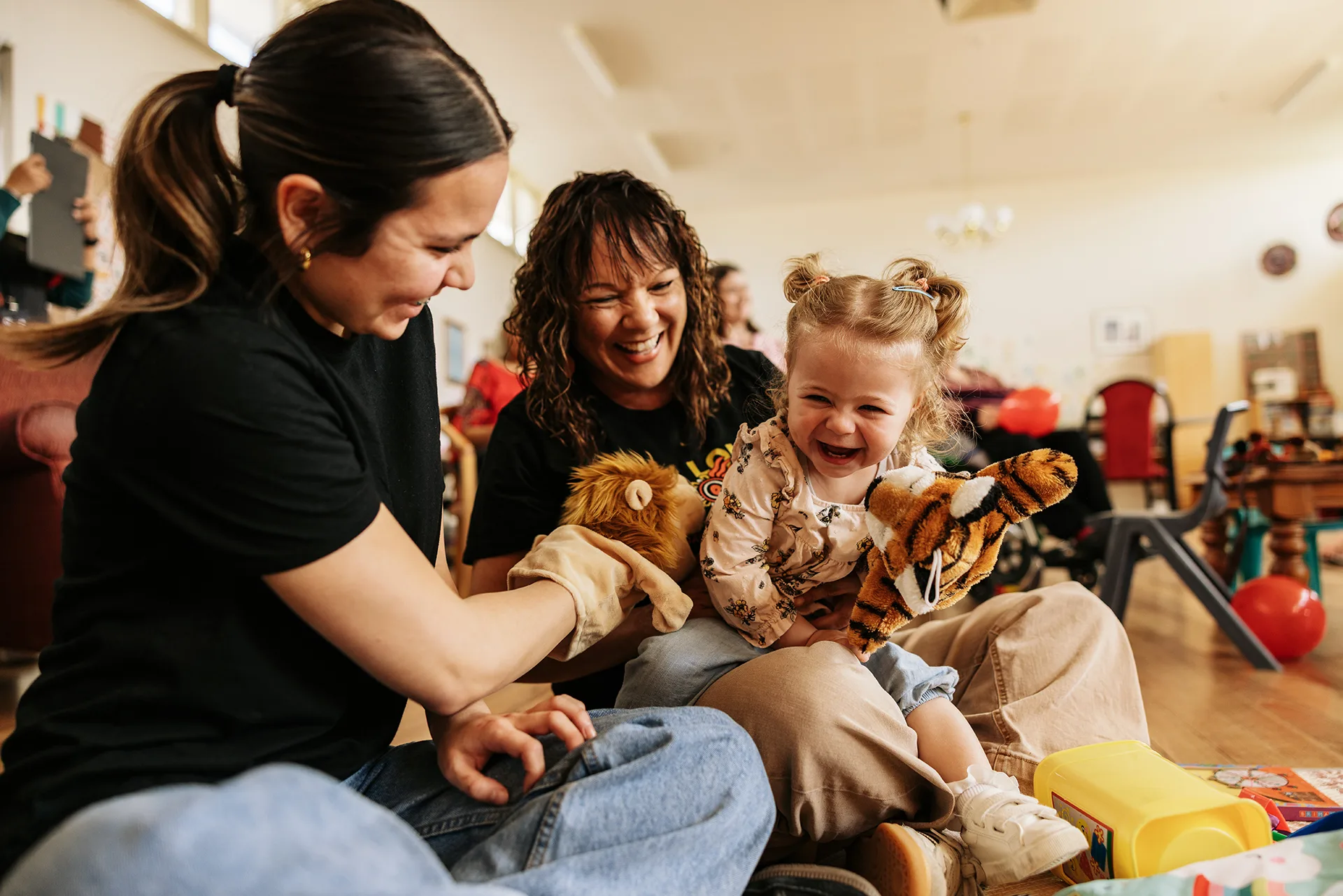
A collaboration between Aboriginal Community Services, Playgroup SA and Marra Dreaming (a community arts centre), it’s the only regular group for preschoolers, their parents and carers that’s hosted in a First Nations aged-care centre in South Australia.
Their first event was held on Reconciliation Day last May. “And it’s been going, and growing, every fortnight since,” says Ingrid Coad, manager of the Aboriginal Elders Village. “We welcomed the idea because we want our ressies to have a connection to family. A lot of them don’t have their grannies [grandkids] living nearby, so it was a perfect opportunity. And the parents who come along can also connect, because often they don’t have Elders around who they can look up to or speak to or connect with.
“There’s a carer, who comes in with her grandson. Her cultural group is Ngarrindjeri, which is further south, on the Coorong. She had lost her connection with her family, but coming here, she felt she was able to connect with Elders, even though they weren’t her own, and her grandson was able to do the same. So, there are different layers to this experience. You’ve got the little ones, you’ve got their parents and carers, and then you’ve got our Elders.”
All ages welcome
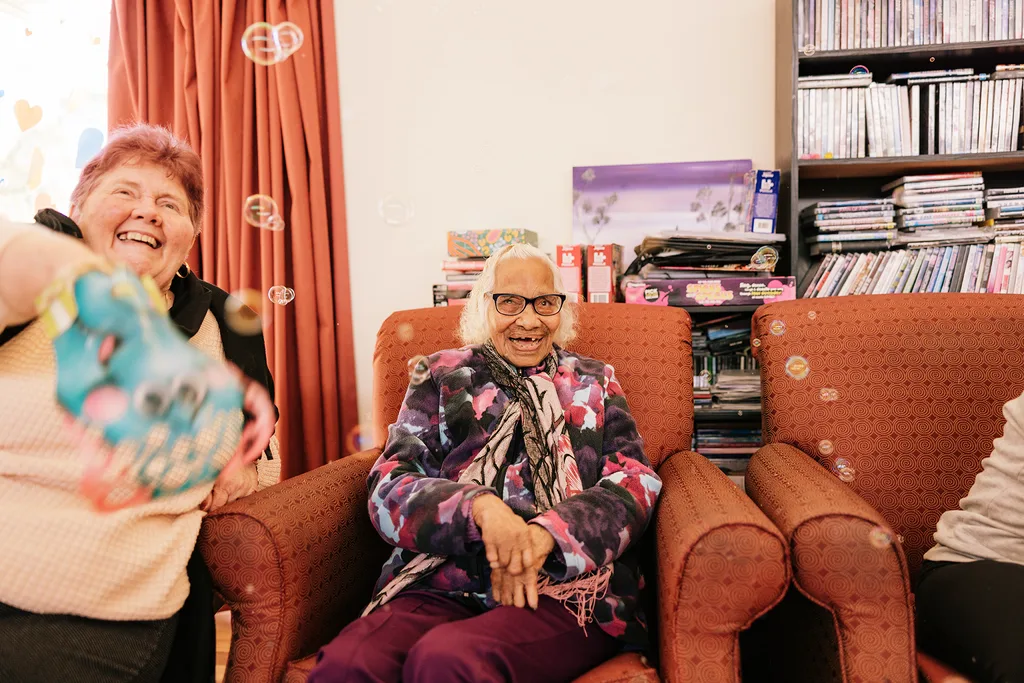
The Elders range in age from their early 60s through to their 90s, and come from all over South Australia, and even from interstate. Many of them are missing family and community, too.
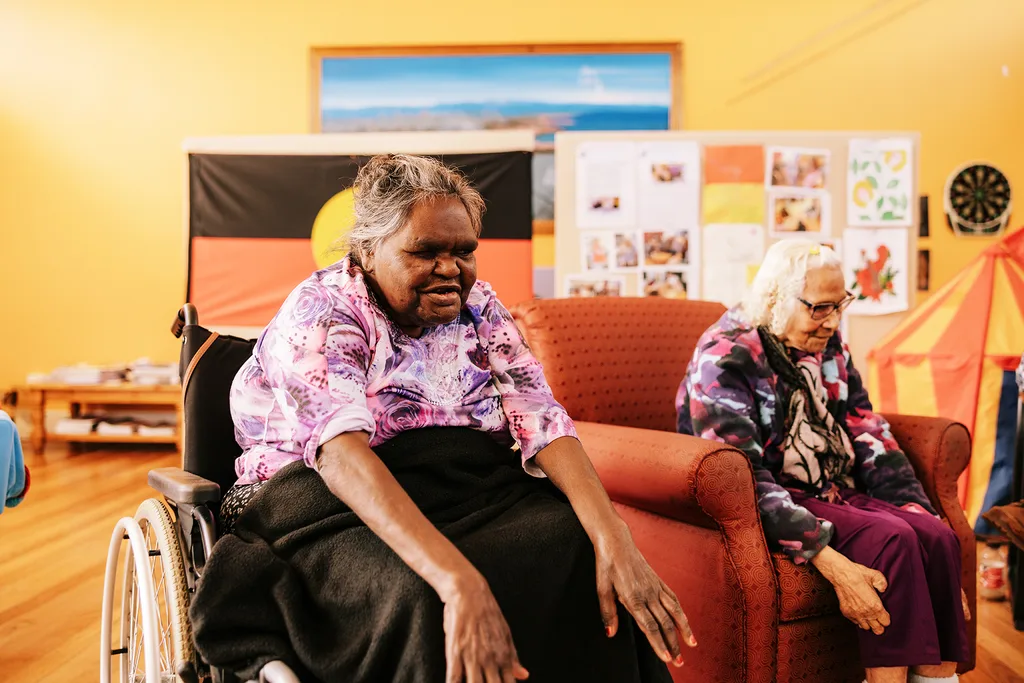
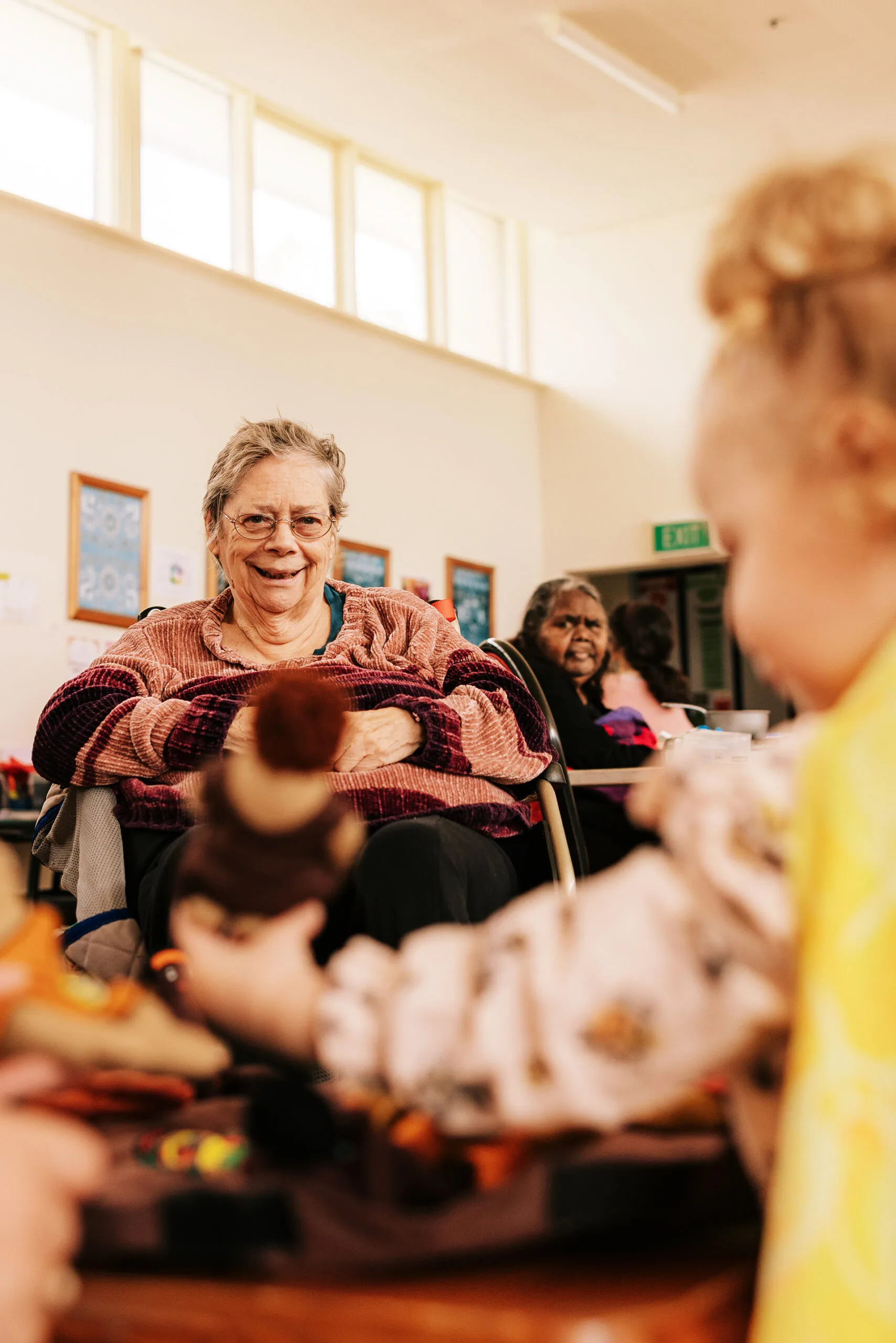
Nanna K and her friend K Nanna sit together in the morning sun by the window. They were born on the Anangu Pitjantjatjara Yankunytjatjara (APY) Lands, a 17-hour drive north of here. For much of her life, K Nanna was a painter and worked in arts centres across the Northern Territory – as far north as the Tiwi Islands, which were “too hot, too much water, too many crocodiles”. She had to come back.
Nanna K was a school teacher, and she loves sharing language with these little ones through song. She strikes up a round of Heads, Shoulders, Knees And Toes in Pitjantjatjara and English: “Kata, alipiri, muti, tjina.” K Nanna and Betty, then most of the residents and all of the little ones join in.




Passing on language & sharing skills
“It feels good,” Nanna K says, “to be passing this along. When I was teaching in a school, I used to teach the little kids this song and other songs in Pitjantjatjara.”
The two nannas then break into a rousing version of The Wheels On The Bus in Pitjantjatjara, singing in perfect harmony.
“Language is really important,” Nanna K says. “I used to teach it in a preschool. Then I got really sick with my kidneys.” It wasn’t possible to do regular dialysis at home on the APY Lands. “So that’s when I came here.”
She missed her friends and family and Country, and she missed her work. “But now,” she says, “I can teach the tjitji tjuta [little children] here and pass along our language to the next generation. It makes me happy. I sing my songs and I’m happy.”
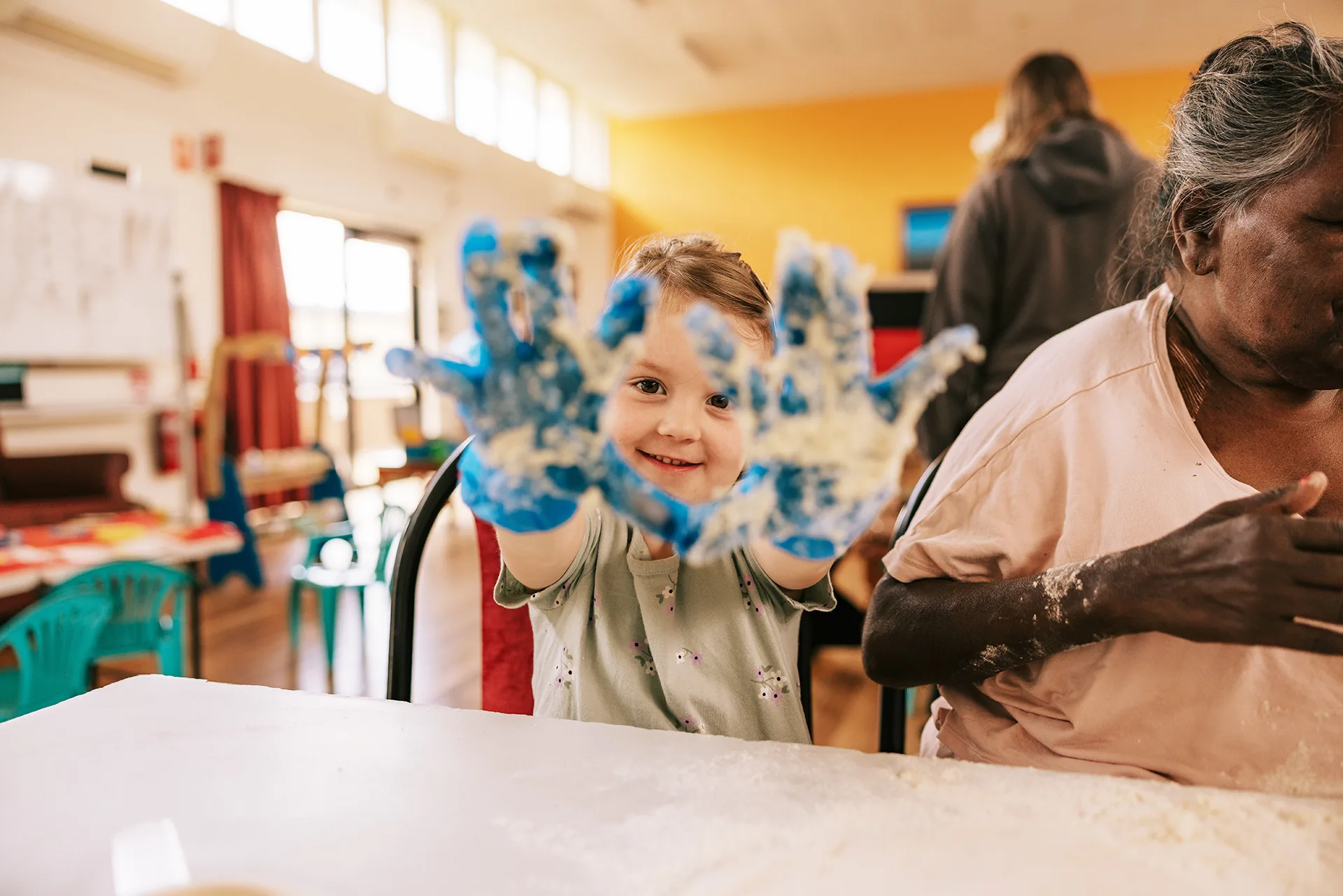
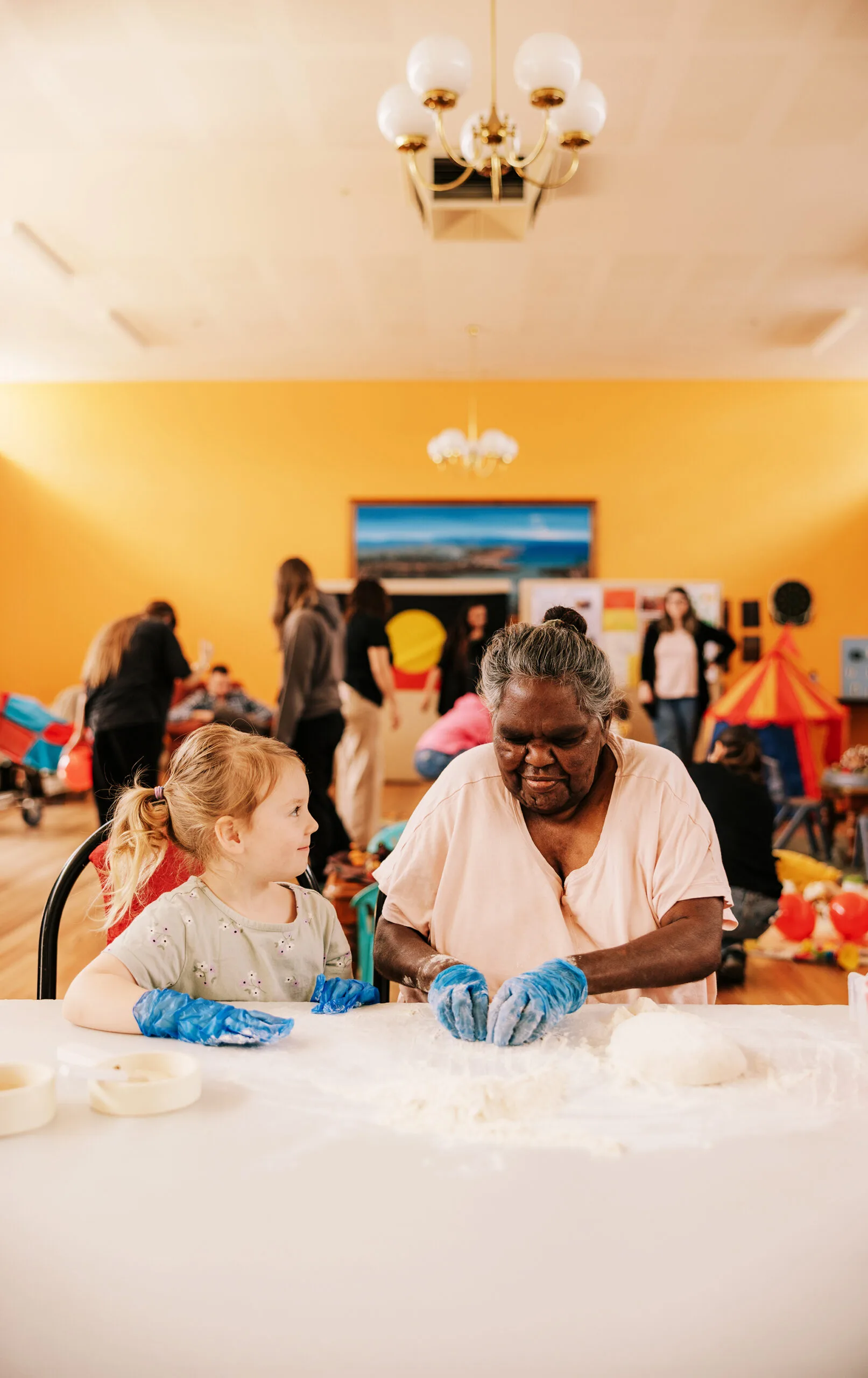
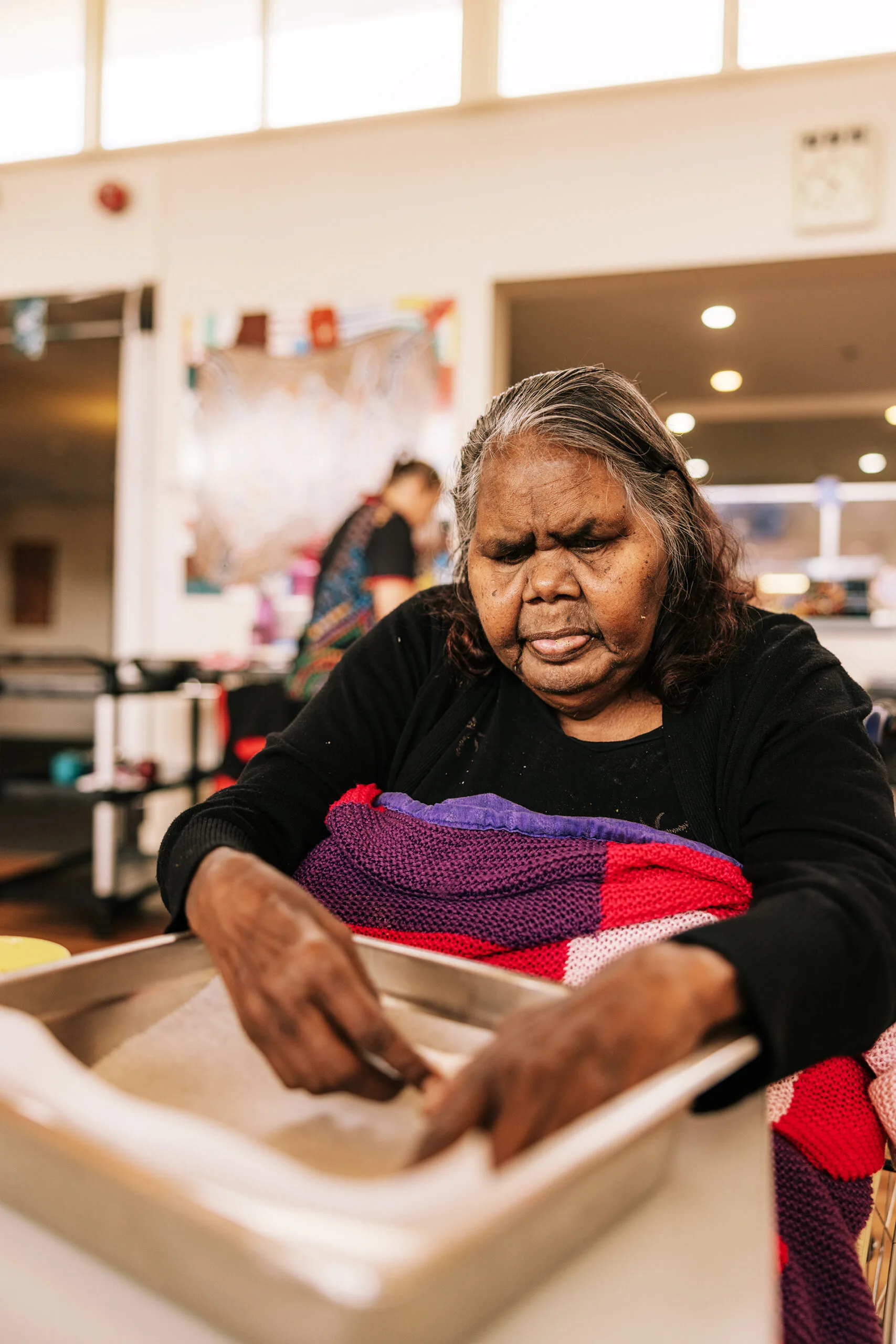
Later, Nanna K and K Nanna help the tjitji tjuta to make damper. They sit – each with a preschool partner – at the flour-dusted work table, kneading dough until it’s ready to bake. When it’s time for the children to leave, they’ll each take home their own warm, crusty damper.
Intergenerational playgroup prepares kids for school
This welcoming, nurturing environment, full of new experiences, is as important for the children as it is for the Elders, says Playgroup SA’s CEO Craig Bradbrook, who comes along when he can and brings his guitar to jam with Betty.
“We’re trying to support our kids to be developmentally on track,” says Craig. “There’s a dataset that measures developmental progress in 99.8 per cent of children across Australia every three years. It’s first done when they turn five. It gives us a good indication of what’s happened in the first five years for children, and it’s also the best indicator of future outcomes.
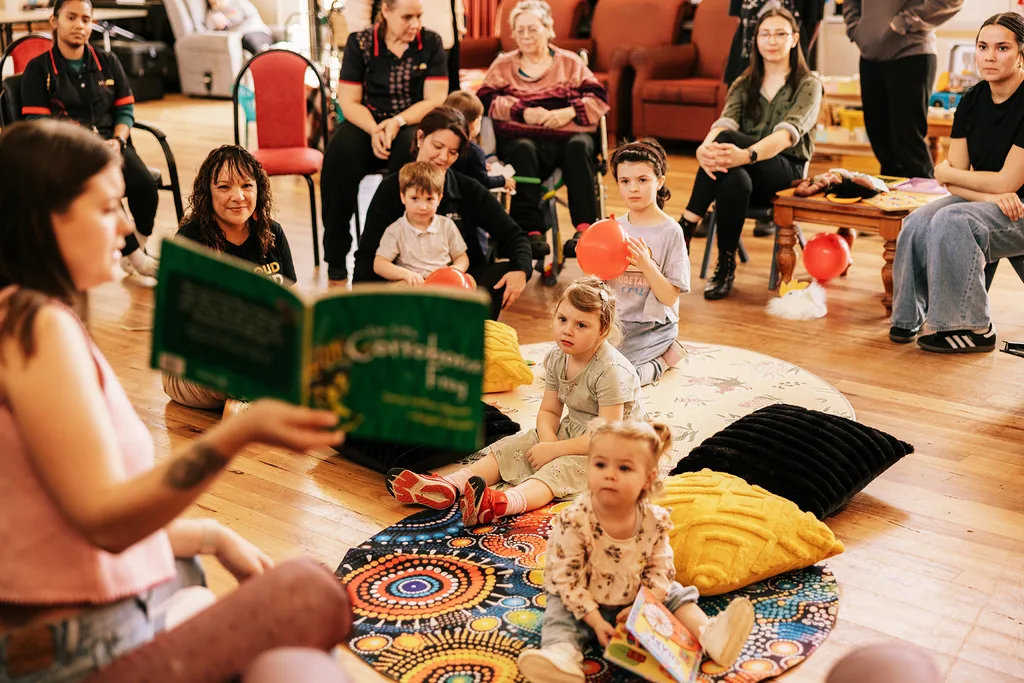
“In South Australia, 28.8 per cent of our children are starting school developmentally vulnerable. Another 25 per cent are at risk. So only half our children walk through the school gate ready for school. And of course, First Nations families, Aboriginal children, are even more adversely impacted.
“One thing we know about development is that the quality of our relationships has a profound effect on children’s development. So when they’re here and experiencing this warm and caring approach that our older friends have, it can have a great impact on the child’s development. It’s not just about their relationships with their parents, it’s also about their older friends and the other children around them. So, this is profound.”
Inspiring the next generation
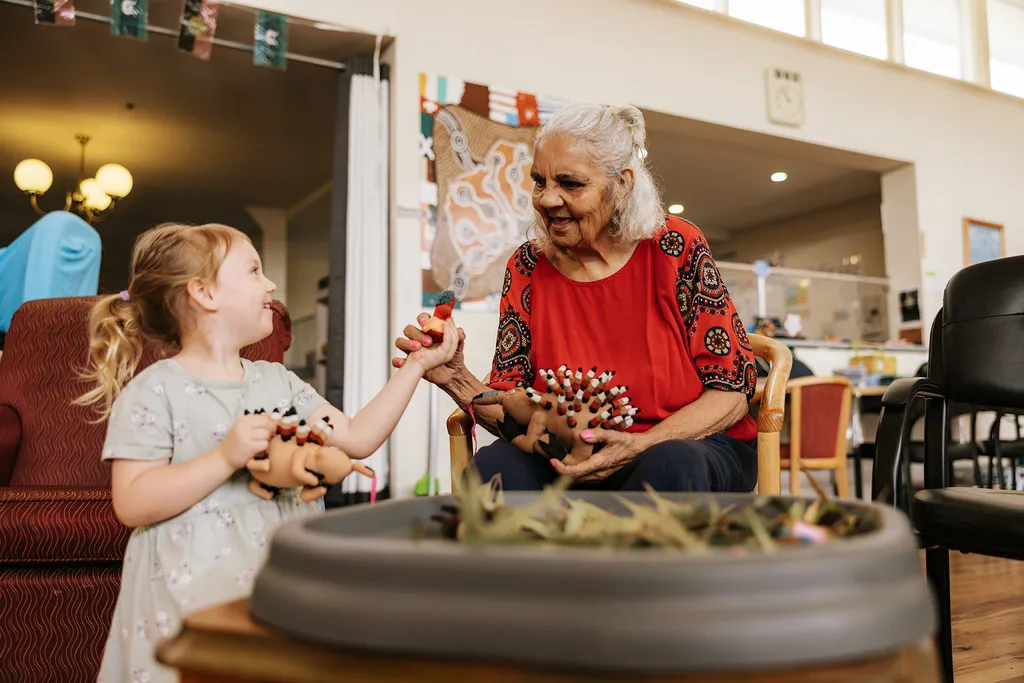
Lifestyle coordinator Kirsty Woodward and Irene King from Marra Dreaming spend a good deal of time with the residents, thinking of new activities to fire up the children’s imaginations. The elders make play dough for them, and clay animals for them to paint. They make bookmarks. They help set out the games, the blocks, the art materials.
“There was one woman the other week who made bracelets for the little ones,” says Raylene, who is both manager and a founding member of Marra Dreaming.
“So it’s helping the little ones,” Ingrid joins in, “but it’s also about the independence, the cognition, the dexterity, the sense of purpose of the Elders.”
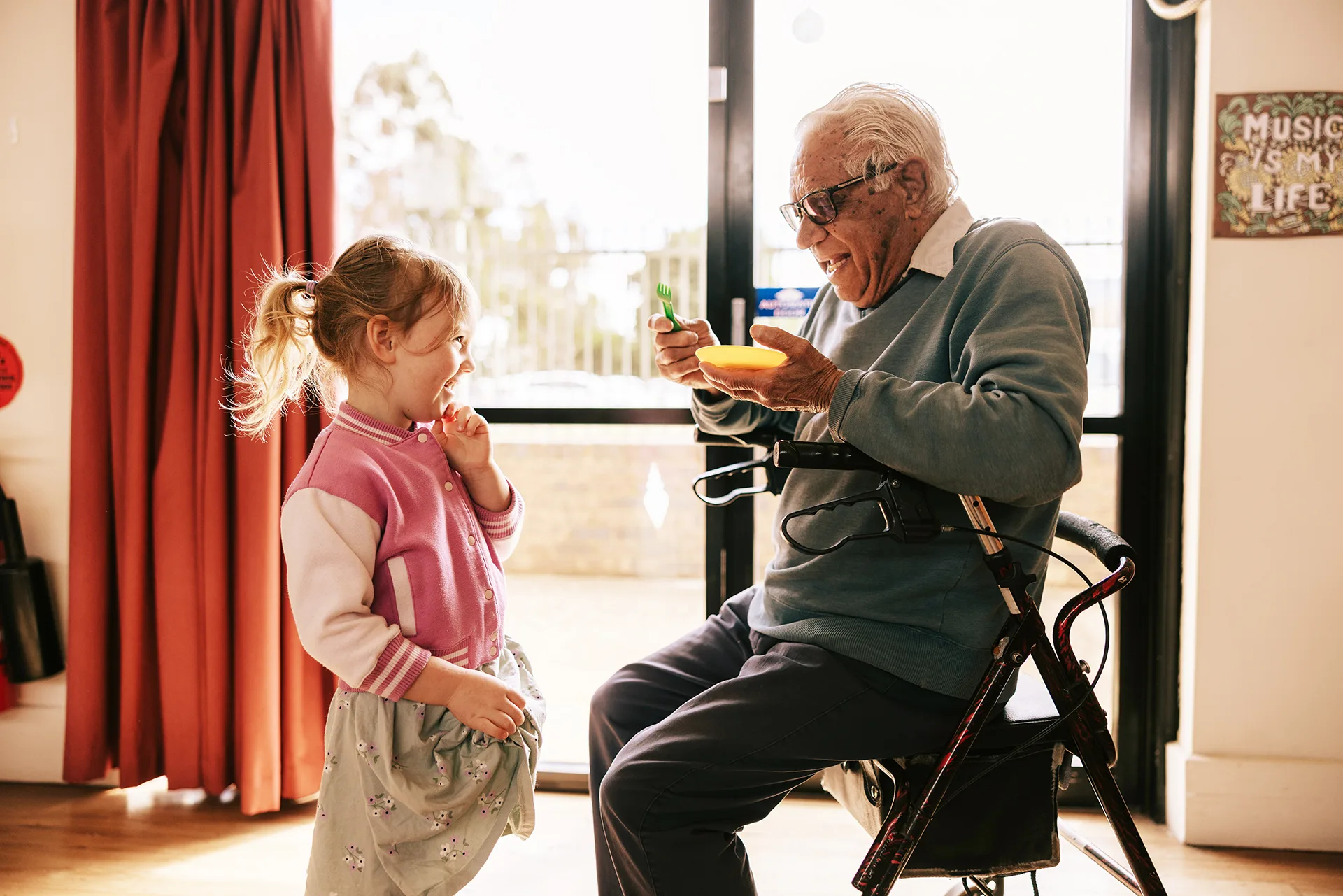
“And when the children arrive,” adds Raylene, “it’s incredible to watch the Elders’ faces light up.”
A sense of purpose
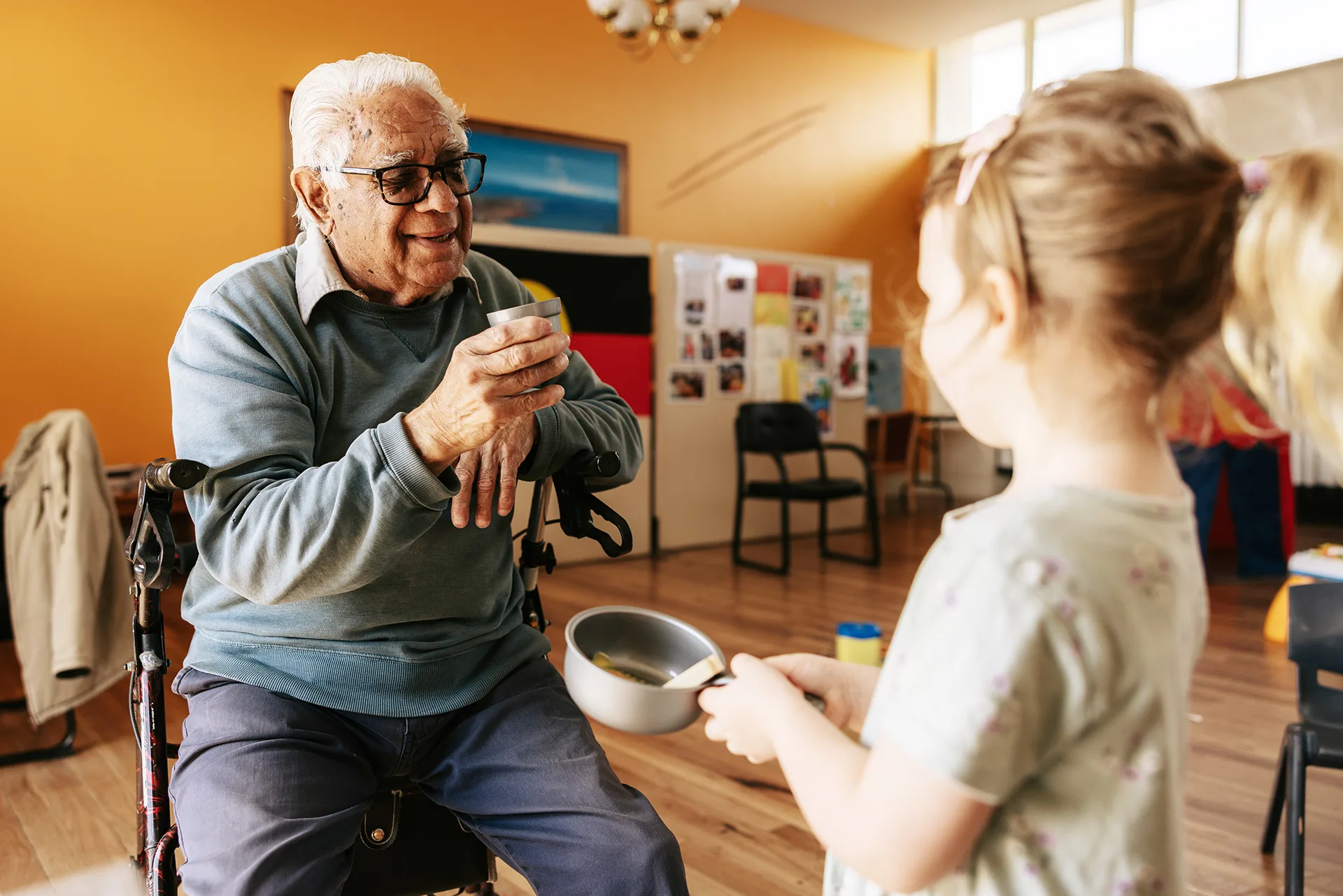
One of the Elders, Uncle John, begins looking expectantly out the window as soon as breakfast is over on playgroup days. “He’ll help Kirsty set up the activities, and if they’re not to his liking, he’ll change them. He’ll say, ‘They can’t reach that,’ and move things around. And then the team from Marra and the children and their carers arrive, and he’s beaming. He’ll go up and give everyone a hug.”
Craig would like to find other locations where intergenerational playgroups could be run on a similar model. There are now more than 30 intergenerational playgroups in SA, having increased exponentially over the last few years.
“It has been absolutely magnificent,” he says. “But this one is the best, because it is so focused on culture and the sharing of language and stories.”
How intergenerational playgroups fight ageism
“It’s also about breaking down those ageism stereotypes for young kids,” Raylene explains, “and about the kids seeing the value of Elders. In Aboriginal culture, Elders are very highly valued. But I think in mainstream society, we can devalue our elders because we see them as less productive in a commercialised way. This really helps change those stereotypes.”
“It takes away the stigma of, ‘When you go into aged care, your life is finished. You don’t contribute to us anymore,’” Ingrid adds. “That’s so wrong. We – because I am older, too – still have a lot to give.
“The ladies here have a lot to give. Everyone is valued. There’s always something we can give, even if it’s simply love.”
Across the room, Ruth, who was also once a teacher but is deep in dementia now, is blowing kisses back and forth with three-year-old Isla. They’re both utterly happy in this moment.
Craig worries sometimes that our world has lost sight of how important and how deep these intergenerational relationships can be.
“Unless we, as societies and communities, consciously create these opportunities for the generations to come together,” he says, “we’ll miss this chance for connection.”
And everyone who comes along to the intergenerational Marra Elders Playgroup knows just how precious that chance can be.
The article originally appeared in the April 2026 issue of The Australian Women’s Weekly. Subscribe so you never miss an issue.

