




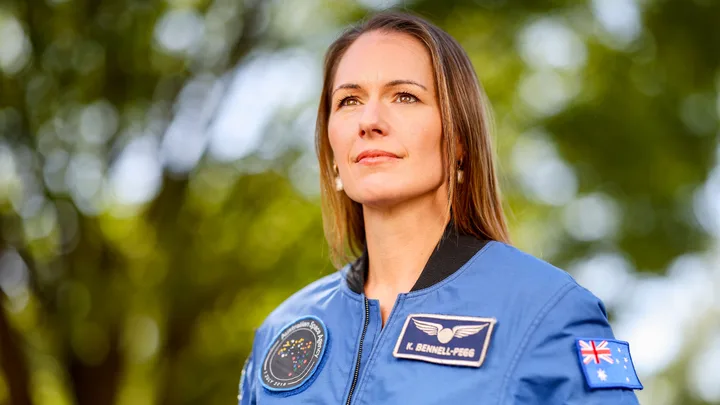
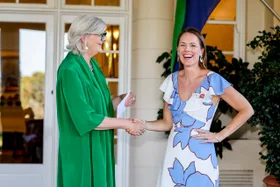
When Katherine Bennel-Pegg was in school, she was asked to write down her dream career aspirations. She only wrote one: Astronaut. Now, she’s the first astronaut to officially fly with the Australian flag on her shoulder. Our first female astronaut and on 26 January 2026, she was named Australian of the Year.
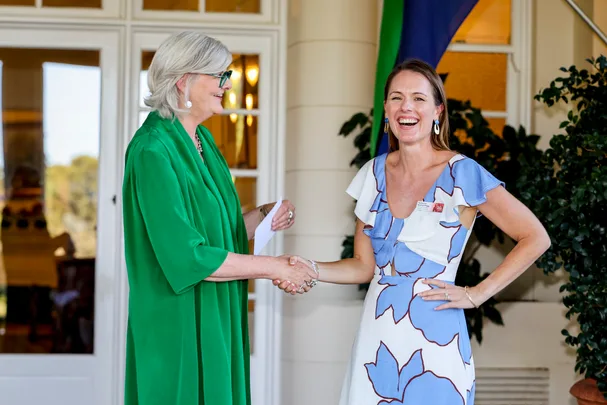
For the July 2024 issue of The Weekly, we sat down with four incredible women who are paving the way for women in space. Among those was Katherine Bennell-Pegg.
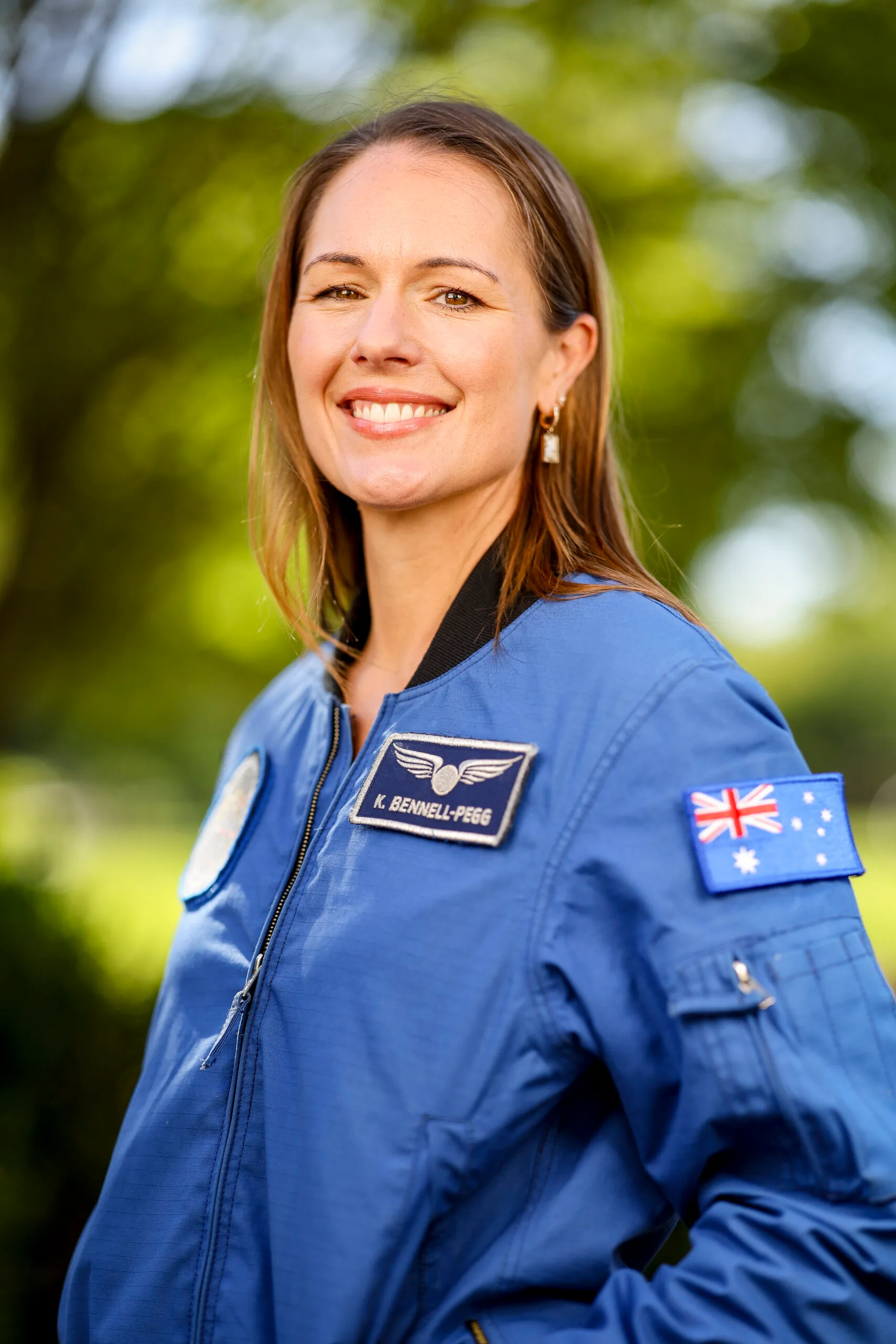
She was just freshly graduated from the European Space Agency’s (ESA) astronaut training program. And the first person, male or female, to graduate with the Australian flag on her suit.
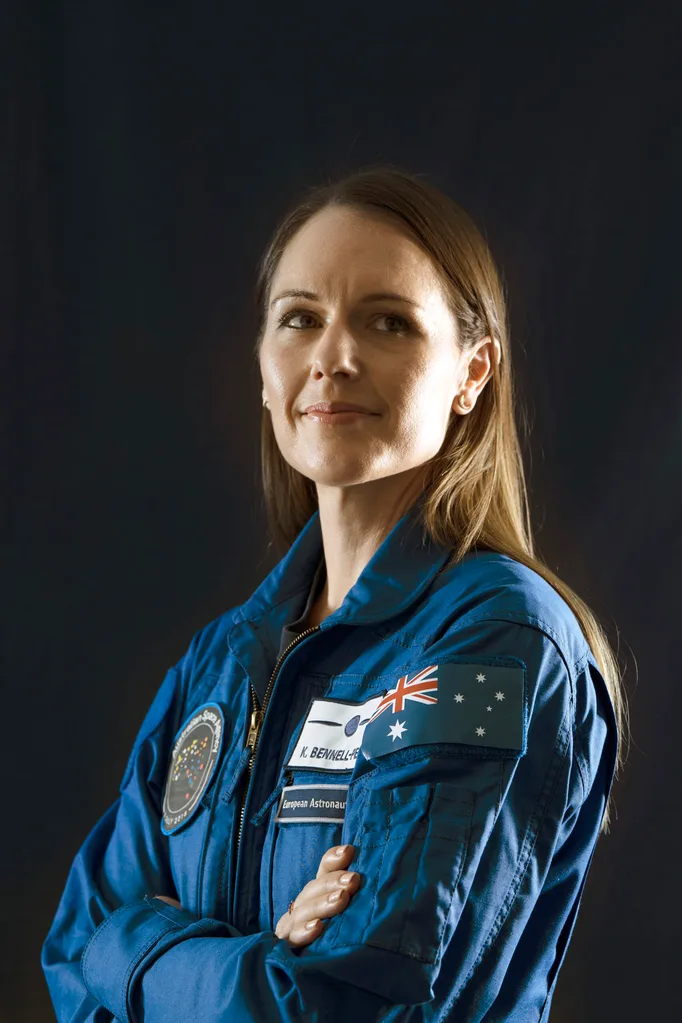
“But that moment, when I received the blue flight suit with the Australian flag on the shoulder, was really special,” she told The Weekly. “That’s when it became very real to me … To be the first person officially representing Australia as an astronaut is such an honour.”
A dream that started in her youth
It’s an honour Katherine had been steadily working towards since she was a starry-eyed schoolgirl growing up on Sydney’s northern beaches.
“I loved the outdoors, I loved the massive expanse of the ocean,” she told us in 2024. “The sky was bright with stars, and then I learned that those stars were in some cases planets. Once I got a telescope, I could see nearby galaxies, and that made me realise how large the universe is.”
“My mother had studied physics at university, and my father was into hiking and the outdoors. So I think the combination of that desire to explore nature and also that scientific curiosity lend themselves well to an astronaut dream.”
After school, Katherine did a double degree in science and space engineering. She also took up a range of astronaut-ready hobbies, from aerobatic flying to volunteering for the Army Reserve and the SES.
Her career in space
Katherine moved to Europe for postgraduate study and worked as a space engineer.
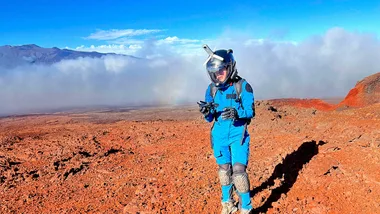
“I worked on some of the coolest missions I could have hoped for,” she shared. “Exploration missions to Mars; the vehicle that’s going to fly humans back around the moon; lunar space stations … ”
In 2018, the Australian Space Agency was established. Katherine and her fellow space engineer husband, Campbell Pegg, were invited home “to help grow Australia’s space industry”. At the time, they were both working for the ASA and raising their two daughters in Adelaide.
Katherine was eligible to apply to the ESA’s program as she’s a dual UK citizen. Out of the 22,500 applicants, she was one of the 25 people selected and one of six to train at the European Astronaut Centre in Germany. She was the first international candidate to do so.
Training to become an astronaut
From learning languages to survival training, the program was gruelling but ultimately rewarding. After all, Katherine was working towards her dream.
“I loved the team spirit. Everyone was there to lift each other up and help each other move forward,” she explained. “A lot of our training was about building trust quickly, and about psychological safety, and leadership and fellowship.
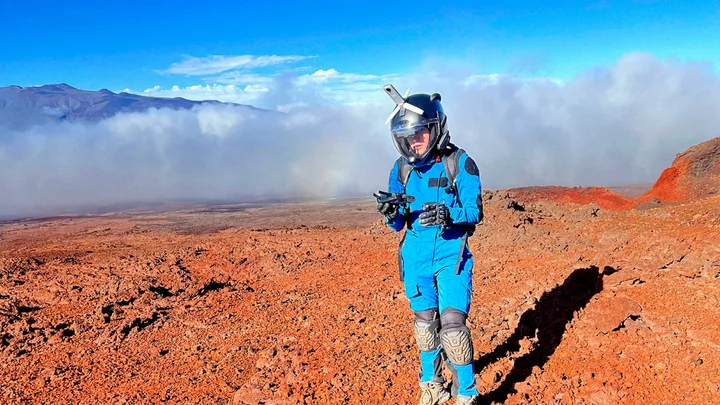
“We did winter survival training, ocean survival, firefighting and rescues. I loved the operational training, which involves learning to do spacewalks underwater in scuba gear around life-size mock-ups of the space station. You learn how to manoeuvre around, how to clip on, how to maintain the space station and work in pairs. We did robotics training and some medical training. We learnt how to put in drips, take blood and stitch wounds.”
Becoming Australian of the Year
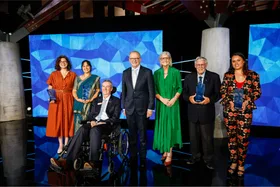
In 2025, Katherine was recognised as Australian of the Year for South Australia. And then, in January 2026, she took out the top honour: Australian of the Year.
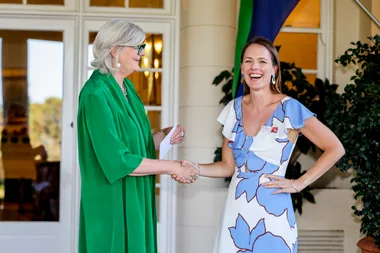
“Katherine is forging new frontiers for Australians in space engineering, research and exploration,” said National Australia Day Council CEO Mr Mark Fraser AO CVO. “Her work is shaping the future not only in space, but in everyday life through the impact of research and development.”
“She leads by example,” he continued. “Openly sharing her story to inspire the next generation and reminding us all of the power of a dream, and where determination can lead.”
In her speech, she shared that she hoped that seeing people like her achieve their dreams in space would inspire young Australians. In particular, young women in STEM who are pursuing their own space goals.
What’s next for the Australian astronaut?
It’s now up to the Australian government whether Katherine will put her astronaut skills to the test in space or closer to home. But she’s prepared for whatever mission comes her way.
“Astronauts go to the space station usually for six months – some for a year or more,” she explained. “I think the hardest part would be your family being on Earth and you not being there, but that’s how it is for any job that involves a long deployment, like the military or going to Antarctica.”
The reasons Katherine has wanted to work in space have changed over the years, from the longing for adventure as a starry-eyed kid to a desire to contribute to human knowledge now.
“I’ve realised space can have a much bigger role in society than I imagined when I was younger,” she explained “Australia’s a super-remote land, very vast, and remote communities and industries can really benefit from space. It’s basically a high point from which you can see different phenomena around the world – bushfires, floods and weather. You can connect and transmit information to remote communities or industries.”
Becoming an astronaut has been the culmination of her lifelong dream, but also her understanding of outer space.
“It combines a sense of adventure and inspiration with helping our society through the scientific discoveries we can make up there. There’s nothing I’d rather do.”


