




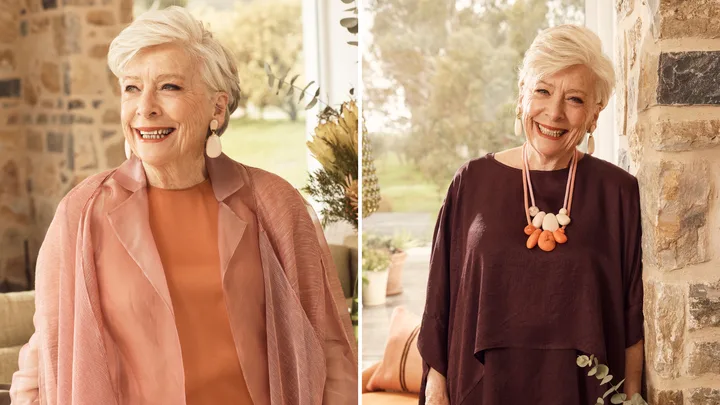
Optimism, determination and love brought Maggie Beer back from a serious accident last year. It gave her the impetus to create a life that brings her even more joy.
The smell of coffee wafts through the cottage, which is warm, even though it’s bitter outside. There’s been a cold snap overnight and a deluge. Raindrops hang in spider webs on the limbs of a peppercorn tree. Lemon trees and a pummelo are in full fruit. Herbs spill over the rims of clay pots in the courtyard. And an immense patch of Daphne spreads its heady scent by the back door. Stone fruit trees are covered in buds about to pop. Beyond the garden, green fields roll towards rows of vines, then forest.
Everything appears verdant, but “it’s what we call a green desert at the moment,” Maggie Beer explains. “We’ve had some rain, but not enough yet. It was the worst drought I remember in our 53 years in the valley.”
Yet the drought that devastated farmland in the Barossa and much of South Australia has not been Maggie and her husband Colin’s fiercest challenge these past 12 months.
Far from it.
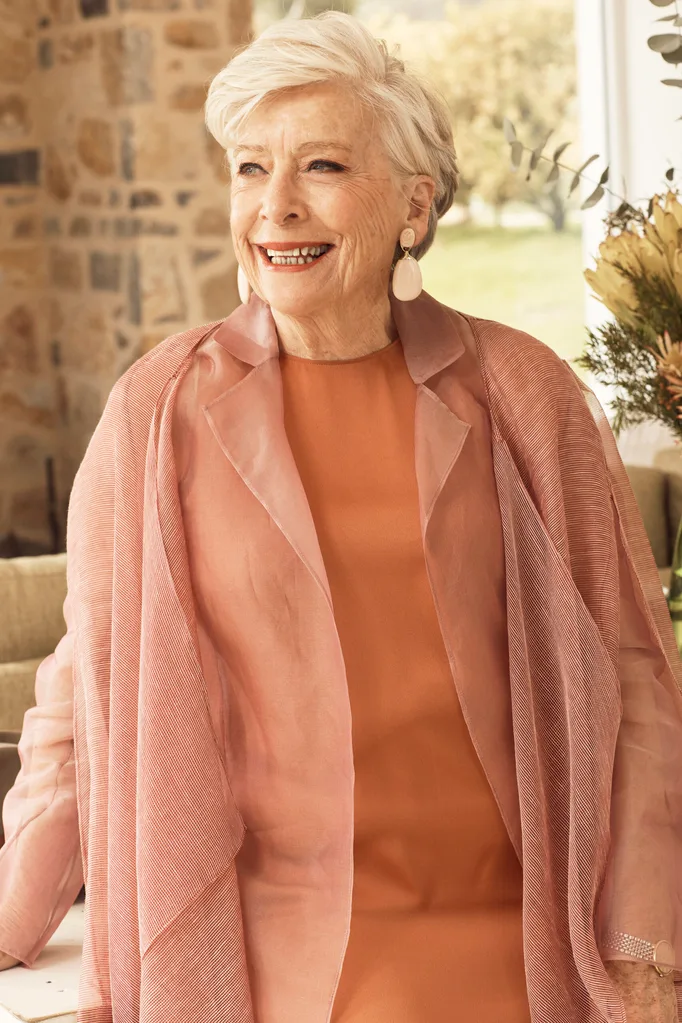
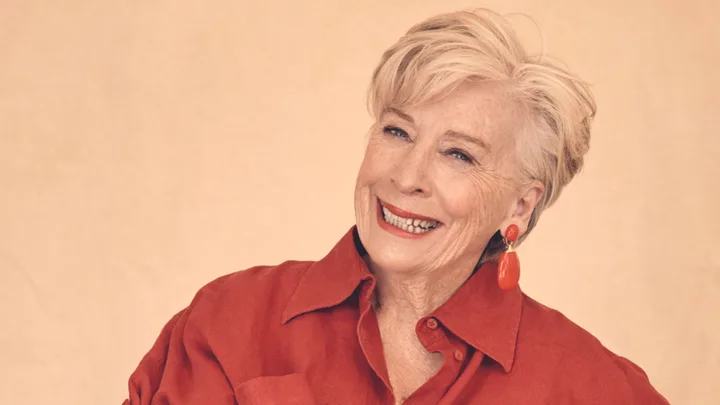
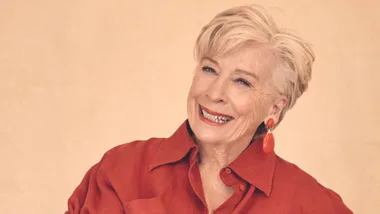
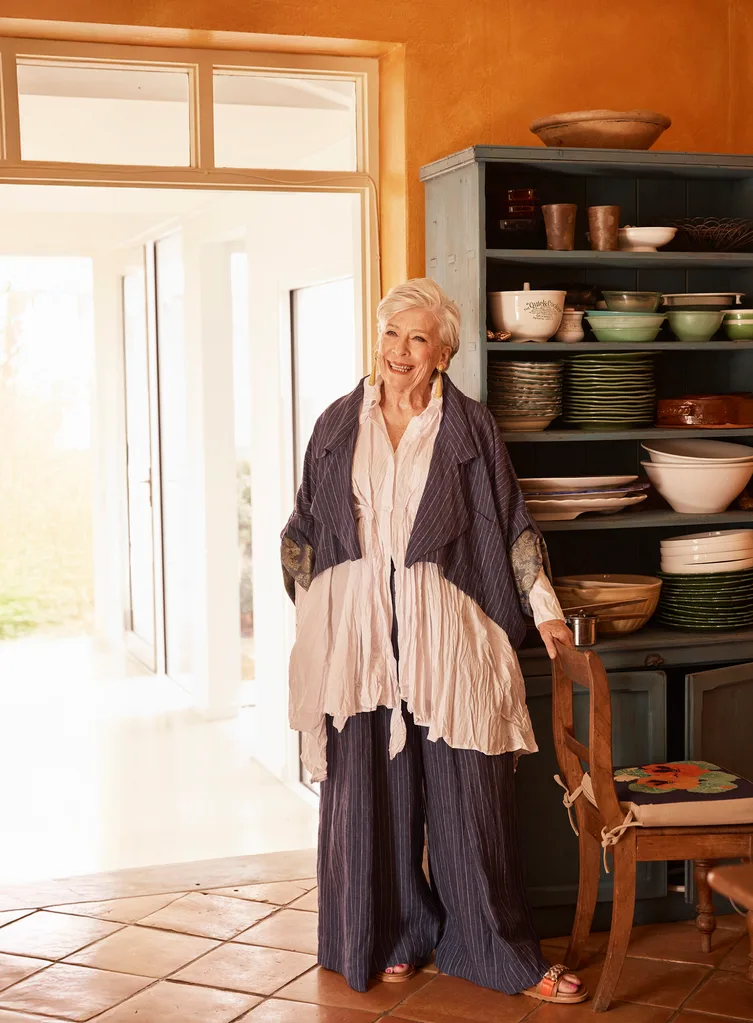
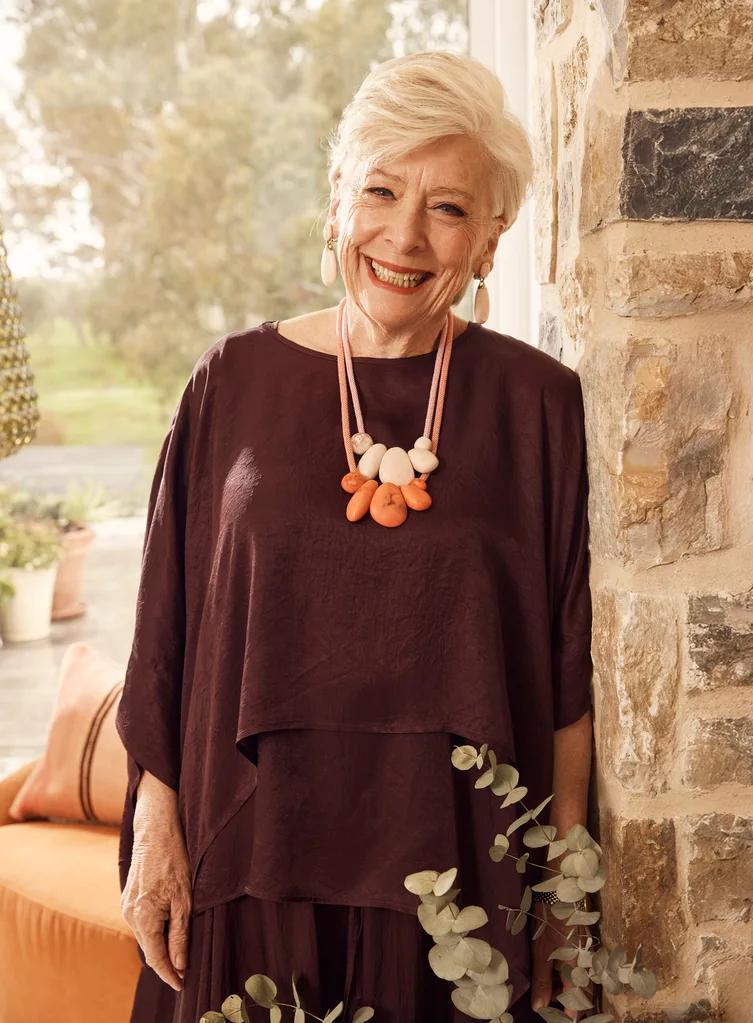
Today, Maggie is strong, brimming with life, cheerfully dashing from one task to the next. That is before our photo shoot consumes the rest of her day. “She’s a whirling dervish,” says Bonnie Charles, our make-up artist, who has worked with the much-loved cook, campaigner, food producer and writer since her Great Australian Bake Off days.
But 12 months ago, it was not a given that she would be standing here today, greeting The Weekly team with her characteristic warmth and verve. On August 16 last year, Maggie fell from the top of a steep, narrow staircase, fracturing bones and causing significant other damage.
“It was a terrible fall,” she admits. “I was very lucky.” And then, in her measured and patient way, she recounts it step by step.
“It had been a really big week,” she begins. “I’d been in Canberra on the Thursday, meeting the Governor-General. I came home Thursday night, and on Friday, I went to a training session for the Maggie Beer Foundation chefs in Adelaide, and then I drove home.
“It was about 10 o’clock at night. Col was still watching the news downstairs. I had a shower, and as I always do before I go to bed, I walked up the stairs. The attic is our bedroom. It’s a very old cottage, and there are very steep stairs. I had a glass of water in each hand … and I had my dressing gown over my shoulder – not on – and right on the top stair to the attic, I tripped. I lost my balance because I tripped on the cord of my dressing gown, and I went backwards.”
Colin called an ambulance, which rushed her to the Royal Adelaide Hospital. A week later, her family posted a statement on social media:
“It’s Maggie’s family here. Just writing to let you know that following a fall in her home, she’s unfortunately suffered a couple of minor bone fractures and related injuries.
Thankfully, Col, her husband, was there, and she is now in the excellent hands of her doctors, who are confident she will make a full recovery.”
However, the situation was far graver than that. Maggie spent five weeks in the hospital, including some time in Intensive Care, and underwent three surgeries. The certainty that she would make a complete recovery was, at that early stage, more on her part than her doctors’.
“I’m a very optimistic person,” she says now, with that characteristic chuckle. “After each surgery, I would say to the doctors, ‘I’m going to make a full recovery’. I always knew I would.”
She also has an iron will. And while she has the highest praise for the care she received at Royal Adelaide Hospital and later at The Queen Elizabeth Hospital’s rehabilitation centre, Maggie’s fierce determination and the support of the people she loves also fuelled her recovery.
She remembers, at one stage in hospital, losing the will to eat. For the first time in her life, she had no appetite at all, but she knew she needed food to regain energy and strength.
“Food’s really important to me,” she tells The Weekly, “so my gosh, it was quite a surprise to me that I didn’t want to eat. I was lucky that family and friends would bring in things that were very protein-laden to tempt me.”
She smiles, thinking about the first meals she truly enjoyed.
“One friend, Michael Angelakis, brought in this congee he’d made with stock and fresh ginger, and it was so beautiful. I remember the scent of the ginger, because scent has so much to do with it. Then there’s another friend, Matt Lawrence, who happens to be a medical specialist, and as well as being a medical specialist, he has a truffle farm. So he brought in a fresh truffle, and he or his wife, Georgie, had made pasta with extra virgin olive oil and parmesan. Could you believe it?
“Lesley Woods [COO at the Maggie Beer Foundation] used to bring in porridge that she’d infused with cashew cream to give me protein. And Colin would make me smoothies with skim milk powder, yoghurt and banana.
“So yes, I was spoiled. But it took ages for me to want to eat, and I lost a lot of weight – a lot of muscle mass.”
Even with her extraordinary reserves of positivity and strength, there were days that were emotionally difficult, too. Maggie recalls one in particular.
“I remember it well,” she says. “I was in the hospital, and one day I just emotionally fell apart. Colin was staying in Adelaide and coming in every morning, every night – being there so much of the time. And this day, I just needed Colin, and I needed Elli, our daughter. Just one day. It all sort of … that emotional relapse.”
Of course, Colin and Elli spent that time with her. And the next day, the clouds lifted.
Then came months of rehabilitation, which required enormous discipline, but there was never any doubt in Maggie’s mind that she would get there. “I just couldn’t accept that I wouldn’t recover completely; I honestly couldn’t accept that; I wouldn’t,” she says.
Even so, the recovery was challenging. “It took longer than I thought, but every day I saw an improvement of some small kind. I honestly think a doggedness in nature helps you. I learned you have to work at things. You can’t just presume you’ll get better without putting in the effort for rehabilitation. You have to push yourself. I’ve always been fairly fit, I’ve always been strong, but I couldn’t just rely on that. That was a big lesson.”
And over that long, slow recovery, during which Colin devoted his days to caring for Maggie, there were more personal insights, too.
“I learned to be patient. I surprised myself with how patient,” she admits.
“Also, it was a very peaceful time – not having demands upon you – and I realised that I had to find more of that peaceful time somewhere.
“Not that I was ever surprised about it, but I learned that I had the best husband you could ever have,” she adds, and her eyes light up and her voice is unabashedly joyful. “It was a really lovely time for us in some strange way. We’ve always been close, but we’ve always both been so busy and just having that time together all the time – it was beautiful.”
That closeness played out in Colin intuiting what Maggie needed almost before she knew it herself. Coffee, conversation, an extra blanket.
“I never had to ask,” she says. “He just would do it. It’s so much harder to ask to be helped.”
After 55 years of marriage, two children, six grandchildren, and the co-creation of an iconic business and farm, “we’re a pair,” Maggie explains. “We always say that the two of us together make one good traveller. We fill in each other’s gaps.

“Everything we’ve done in the business world has been together – totally supported – which is really unusual in so many ways. We’re both lateral thinkers and hard workers. We both come from small business families, and I think there’s something there about, you know, needing to just get things done …
“I’m grateful for his kindness, his humour – he makes me laugh every day of our lives. I think his humour is one of the best things that we have because I’m obsessive and he’s laid-back. I feel very lucky.”
Back in January, aside from Maggie’s increasingly robust health, there were two milestone causes for celebration. On January 17, it was 55 years since Maggie and Colin had been married at the Chester Hill RSL Club in western Sydney, just four months after they’d met. And on January 19, it was Maggie’s 80th birthday.
There was a gathering of friends and family at the farm, which the couple had bought back in 1974 to breed pheasants after moving from Sydney to the Barossa. It’s still known as Pheasant Farm, although a good deal of other produce has now been raised there. Today, there is a vineyard and olive groves, quince trees, and a glorious orchard. And looking out across all this bounty, the Beer family and friends celebrated.
“It was a perfect evening,” Maggie remembers. “We invited everyone for five o’clock, because we wanted them to get the feel of the sun and the sun setting. It was balmy, warm, and there was almost no breeze. Elli and the team at The Eatery did the food, and we had music, and my choir sang.” Maggie hosts a small choir at her home.
“It was just a lovely party. And then they made a pavlova for my birthday cake and put 80 candles on it,” and Maggie laughs at this and adds, “Oh dear, it was just the most perfect night.”
To Maggie, 80 is “just a number”. She “rails against” age discrimination, and insists that, in her own business, “mature women are the most fantastic part of the team because they come with patience and wisdom and life skills.
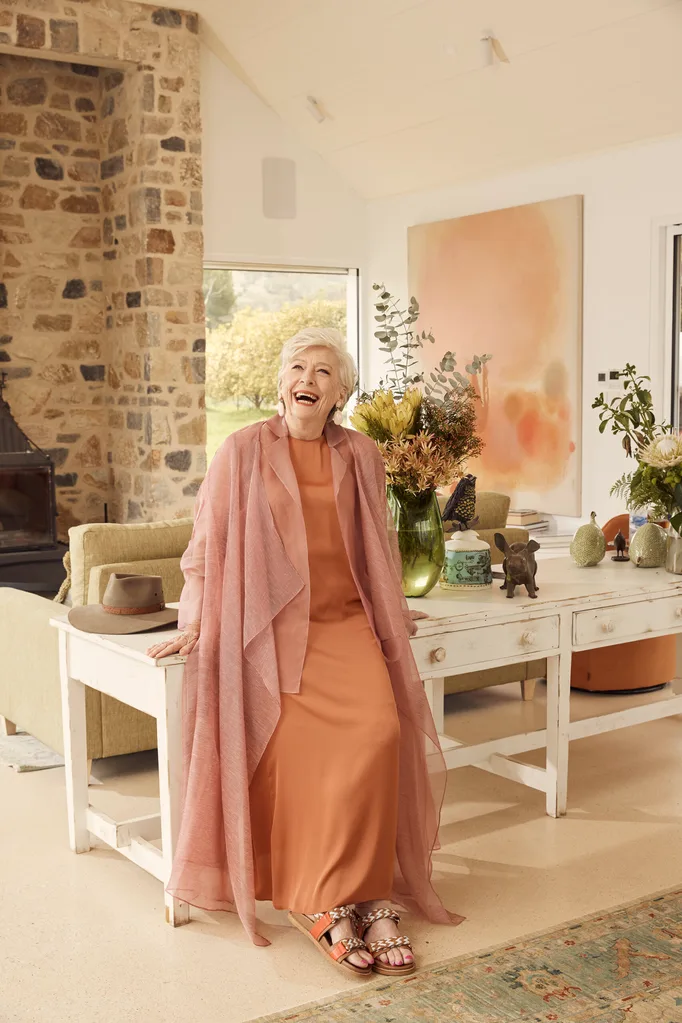
“One of the things that really distresses me is the number of people in society who think old age means you’re not interested, you are physically going downhill. There’s life to be lived right to the end of life if you look after yourself and if you are engaged mentally and physically, and if you have purpose and feel connected and have delight in life … I know I’m going to enjoy the rest of my life.”
In August, a year on from her accident, Maggie addressed the National Press Club. The seed of an idea that she had conceived during her 2010 tenure as Senior Australian of the Year had come of age. The Maggie Beer Foundation had achieved federal government funding, the Governor-General, Sam Mostyn, had become its patron, and it was changing lives around the country. Now she had been invited to the national capital to speak with knowledge and passion to an audience of politicians and press gallery journalists about improving the lives of older Australians.
The Maggie Beer Foundation, she says, “is the biggest job I’ve ever undertaken, but I’ve never felt it was impossible to make a difference. I just wish we could make the difference more quickly.”
To date, 135 aged-care homes have taken part in the Foundation’s free trainer mentor program, which pairs aged-care home kitchen teams with a qualified chef trainer who guides them to create fresh, flavourful, nutritious food that engages the senses and is made with knowledge, respect and care. A further 7130 people have studied the Foundation’s 16 free online training modules. And 2800 cooks and chefs are part of the Foundation’s virtual moderated professional community (that has been free since April 2023) and 13 ongoing virtual learning hubs.
This work is critical because there is currently no other specialised training for chefs in aged care, and there is no base requirement for expertise. The Foundation advocates fiercely for nationally accredited training, and that is on the horizon, but it is still some time away.
“That’s what makes what we are doing so important, and also so rewarding,” Maggie says. “The cooks and chefs in aged care are working so hard under such difficult conditions. But if you give support, you give knowledge, you give skills, you give respect for the work that they’re doing, then you do see results.”
Maggie speaks with delight about aromas wafting through aged-care dining rooms, about kitchen gardens and fresh produce. And about homes where an oven has been placed in the breakfast nook so that, with supervision, residents can whip up a batch of scones for afternoon tea.
After her own experience, losing her appetite for food in the hospital, Maggie has a deeply personal sense of how this work can change individual lives. She sounds driven by it.
“I feel driven, full stop,” she says, laughing. “I’ve always felt driven, and I don’t know how not to. But I love what I do.”
Classical music drifts through the cottage. Music has always lifted Maggie’s soul. Her father had a beautiful baritone voice. Her aunt was a professional jazz singer. She remembers an uncle who, in his 90s, would still call his sister on the phone at six o’clock every evening, and she would play the piano and he would sing.

Earlier this year, Maggie and Orchestra Victoria collaborated on three special performances. The orchestra played some of her favourite music. There were works by Mendelssohn and Brahms, Delibes’ Flower Duet from Lakmé, Gershwin’s Summertime from Porgy and Bess, and others. Then she shared the stories behind her selection with soprano and ABC Classic presenter Greta Bradman. Mendelssohn’s Fingal’s Cave, she said, reminded her of the Isle of Skye in Scotland, where she’d lived in her early 20s, in a cottage overlooking the sea.
“I inherited this love of music from my father,” Maggie tells The Weekly, as we sit in her lounge room, watching sunlight, just for a moment, break through the grey. “And the ability, the instinct, for cooking, because I’ve never been taught. I just know. That came from my father.”
From her mother, she adds, “I inherited an ability, even with things that can be so very hard, to find joy. There is always joy in every day in some way.”
That gift has lightened some long and painful days this past year.
Maggie finds joy in her family and music, of course. “And my garden, my friends, reading, walking. I try to walk every single day – up hills from here – and the sense of being in nature gives me joy. Sharing the table – cooking gives me joy. I think how lucky we are.”
Before the accident, Maggie had promised herself she would slow down. After the accident, there was an enforced slowing and the peace that came with that. Now, however, all her many roles and responsibilities have begun, once again, to clamour for her attention, and she finds herself struggling to strike a balance.
“It’s interesting,” she says, “because having to slow down, I loved the quietness of it and the freedom of it. But when I got to feel better, more like myself, I had so many things that had been pushed out and were waiting for me to feel okay. So I’ve been on a whirlwind, but I have to stop that, and I have to work at stopping that.”
It’s a rich life. “It’s a complicated life, a full life,” she adds. But she wouldn’t swap it for anything. She still loves the business and is dedicated to the Foundation.
“I can’t imagine not being involved in something that’s important,” she says. “When you have a platform, you have a responsibility. But it doesn’t weigh heavily on me. It just involves me; it gives me energy to keep contributing.”
All that said, those months at home with Colin have given Maggie a sense of what life might be if she could strike that perfect balance.
“There’s lots I’m trying to do, but I’m very aware of how much I also want that quiet time,” Maggie says finally. “Not all quiet time. Just a bit of it. I can’t see myself not working, but I want lots of freedom in between to do the things I love.” And she pauses for a moment.
“I need more time for just us,” she adds, “and for freedom. The freedom to just get up and go when Col says, ‘Let’s drive over to Coffin Bay’.”
The article originally appeared in the November 2025 issue of The Australian Women’s Weekly. Subscribe so you never miss an issue.

