




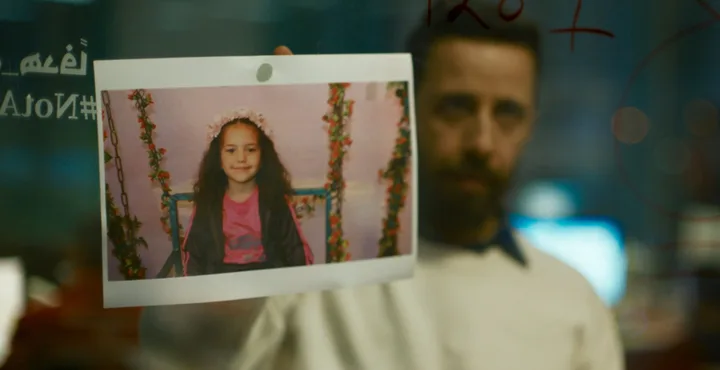
It’s around 8.30pm on a Tuesday night and seasoned journalist, Jess Hill, is weeping. She stands beneath a screen, before a similarly damp-eyed cinema audience, trying to pull herself together to introduce a panel of speakers. We’ve all just watched The Voice of Hind Rajab.
The film took out the Silver Lion Grand Jury Prize at the Venice Film Festival where it received the longest standing ovation in the festival’s history. It was also nominated for Best International Feature Film at this year’s Academy Awards and Golden Globes.
A little girl’s call from a war zone
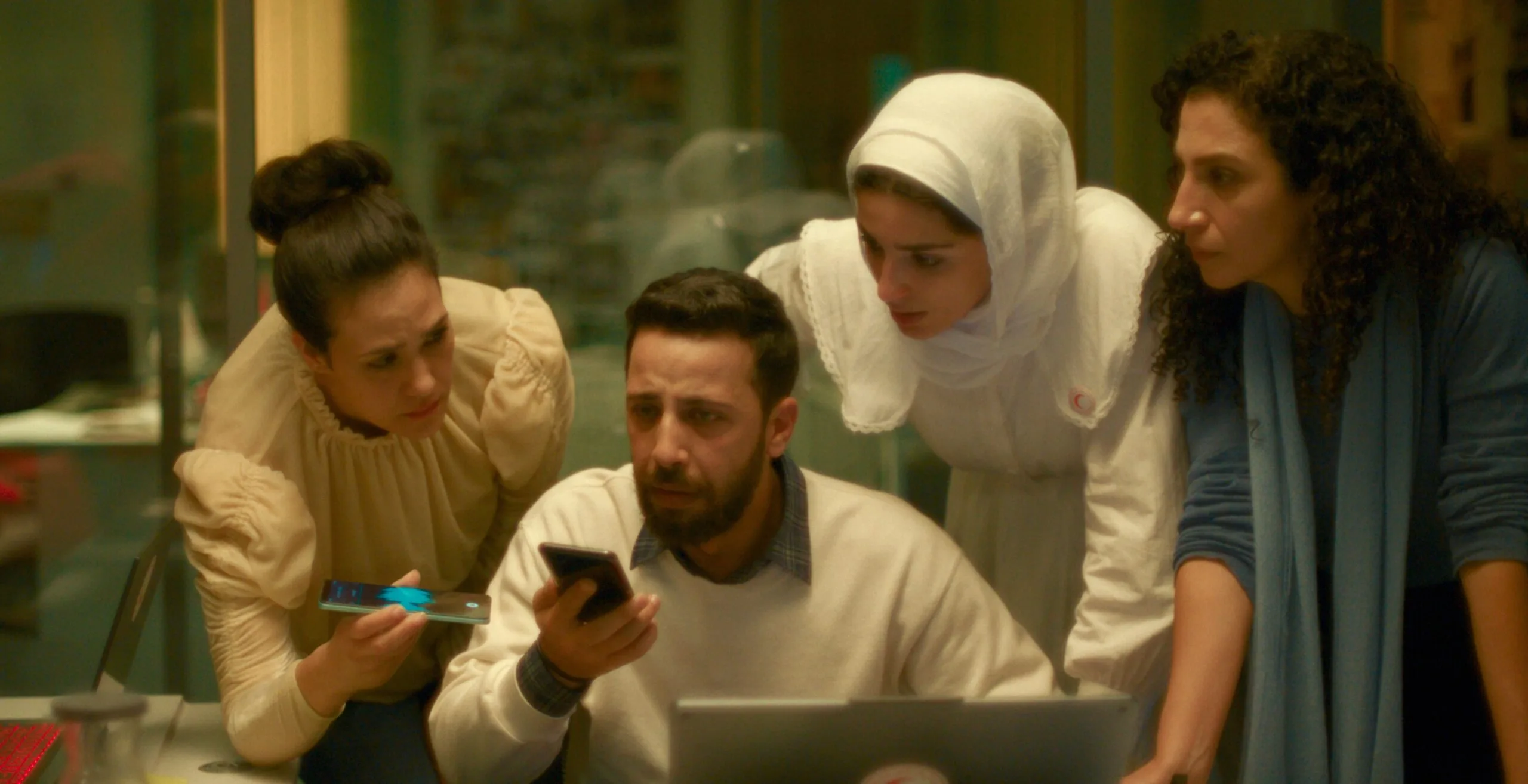
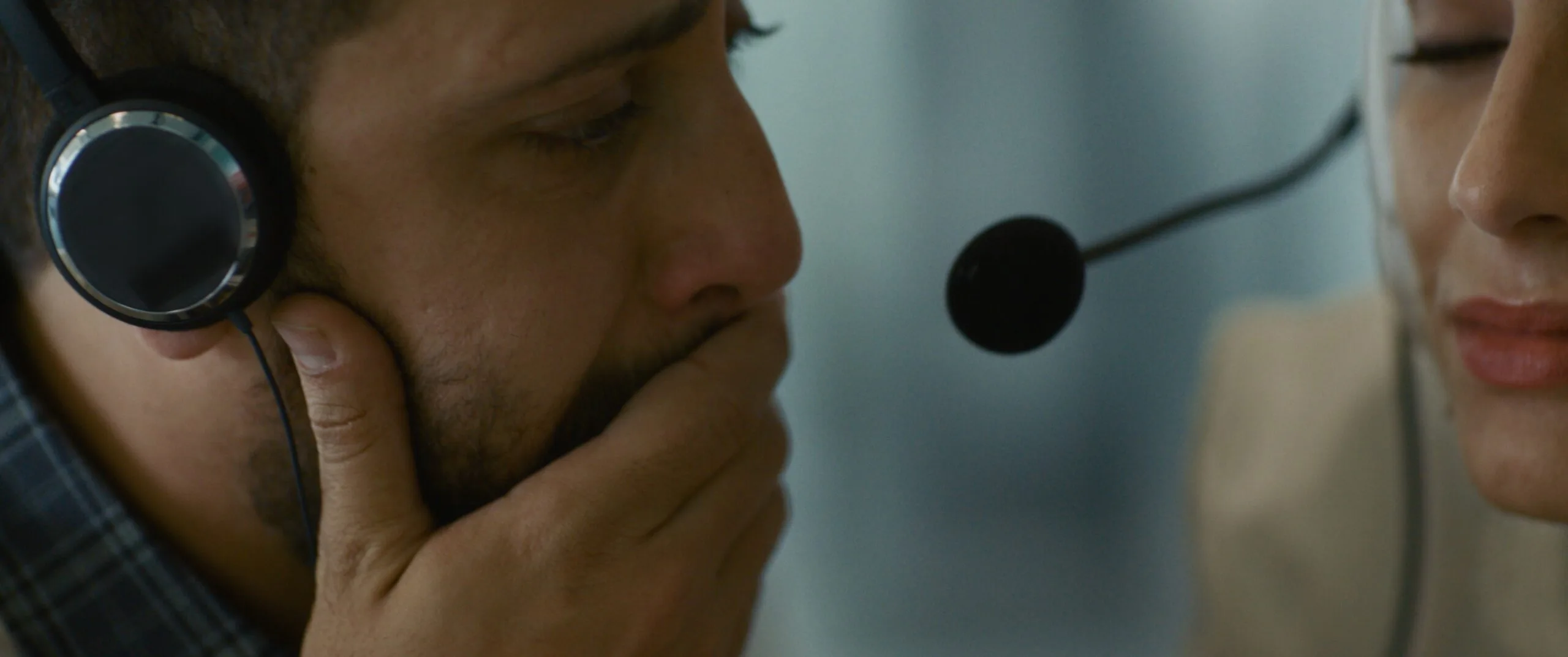
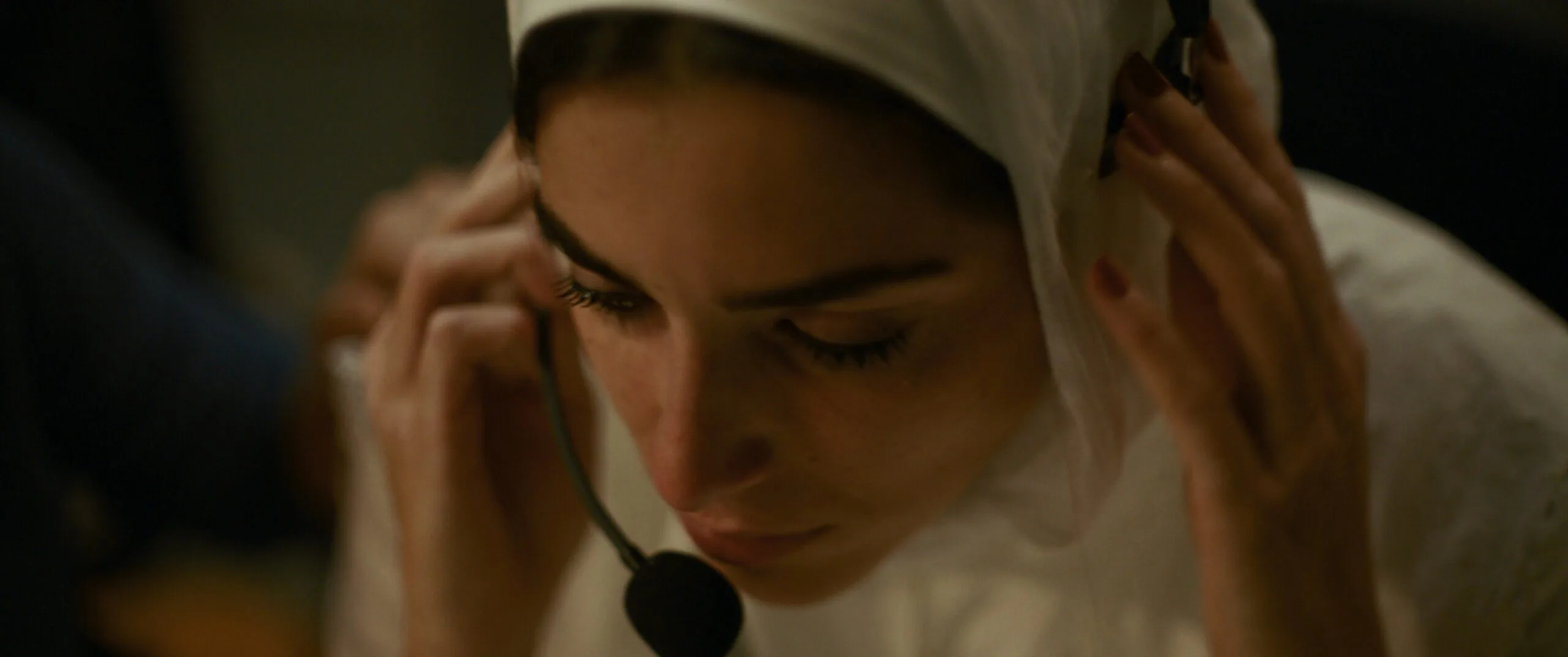
With devastating accuracy, it tells the real-life story of a group of Red Crescent volunteers in Gaza who, on January 29, 2024, received an emergency call from a six-year-old girl. Her name was Hind Rajab and she was trapped in a car with her cousins, aunt and uncle. They had been trying to follow instructions to evacuate when they came under fire from Israeli forces. The car was hit by 335 bullets. By the time her call to the Red Crescent ended, all the members of Hind’s family had died.
In the film, the volunteers struggling to send an ambulance are actors. But the little girl’s voice is real, taken from original recordings of her calls that day to the Red Crescent.
A director’s world shifts on its axis
“I first came across a short audio clip of Hind Rajab calling for help. Her small voice breaking through chaos, asking simply not to be left alone,” director Kaouther Ben Hania recalls. “The moment I heard it, something inside me shifted. I felt an overwhelming wave of helplessness and sorrow: not intellectual, but physical. As if the world tilted slightly off its axis.
“I reached out to the Palestine Red Crescent Society to hear the full recording. It was over 70 minutes long – 70 minutes of waiting, of fear, of trying to hold on. It was one of the most difficult things I’ve ever listened to.”
But she knew “instantly (in my body, not just my mind) that I had to make this film”.
Meeting Hind’s mother
Kaouther reached out to Hind’s mother, Wesam Rajab Hamada. Kaouther had decided, she says, that “if Hind’s mother said no, I would walk away. That conversation wasn’t a formality, it was the foundation. Without her consent, nothing would move forward.”
They spoke for hours, and she also spoke with the people “who were on the other end of that call – the ones who tried, against impossible odds, to save her. From their words, and from the haunting presence of Hind’s voice itself, I began to build a story. A story rooted in truth, carried by memory, and shaped by the voices of those who were there.”
That story was eventually supported by an influential team of executive producers, including Brad Pitt, Joaquin Phoenix, Rooney Mara, Spike Lee, and Michael Moore. And Hind’s story has now travelled around the world.
A doctor in Gaza
Fourteen thousand kilometres from Palestine and two years after that devastating day, Dr Mohammed Mustafa, better known as Dr Mo, speaks to cinema goers about his two stints as a United Nations volunteer, working in a barely functioning Gaza hospital.
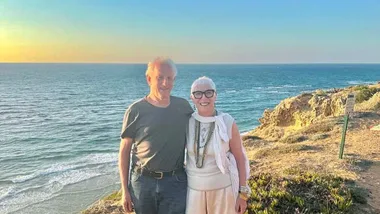
It’s fitting that he’s here tonight to speak to this film because Hind Rajab’s dream was to grow up to become a doctor.
“Tens of thousands of children have been killed in Gaza,” he later tells The Weekly. “It has the largest cohort of child amputees in the world, the largest cohort of orphans in the world. Many screams of children in Gaza are never heard. Hind Rajab’s were recorded on a phone, and it shook the world.”
These children are precious
“That’s why it’s so important that we watch a film like this and learn about this,” he adds. “Because it’s not just about Hind Rajab. It’s about the fact that … these kids are not numbers. Hind Rajab is just one of these tens of thousands of children who are all equally precious and beautiful and loved. That’s why it’s so important.”
Dr Mo’s parents were originally from Palestine. As a child, he lived as a refugee in Egypt and then his family moved to the UK, where he trained as a doctor. Now he lives in Western Australia with his wife, Nour Dalloul, also a doctor, who he met and married amidst the bombing of Gaza.
Building bridges of understanding
“Growing up as a refugee, growing up without a home, watching generations of your family being killed over the years,” he says, has filled him, not with anger, but with a “desperation for change”.
That is why he studied medicine, why he volunteered as a doctor in a war zone, and it is why, since his return from Gaza, he has been advocating for the creation of a mobile children’s hospital that could be transported to the territory with a volunteer medical crew. It is also why he is a passionate supporter of the Palestine Children’s Relief Fund, and why he is speaking out so powerfully about The Voice of Hind Rajab.
“I am desperate to change what’s going on in Gaza,” he says finally. And even in the face continuing conflict, he retains a sense of hope.
“I just want to make lives better for the people there. Anger is not the way to do it. Retribution is not the way to do it. The way to do it is to recognise the humanity of the people in Gaza and the people on the other side and see if we can build a bridge.”
The Voice of Hind Rajab is currently screening in Australian cinemas

