


At a glance…
- Clothing the Gaps was founded in 2019 by two friends, shortly after discovering the Aboriginal flag was copyrighted.
- The brand uses fashion to spark important conversations and empower Aboriginal communities.
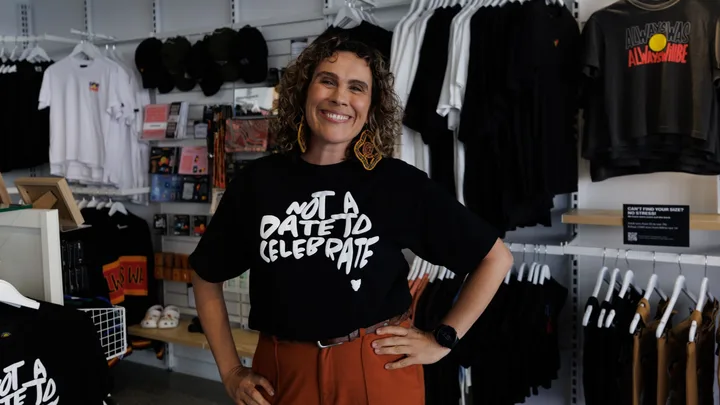
- It’s co-founder Laura Thompson speaks to The Weekly ahead of Melbourne Fashion Week.
Being the founder of a clothing brand comes with an allure or a belief that everything in their life must be glamorous. But Laura Thompson didn’t found Clothing the Gaps for glamour. She did it to spread an important message.
Clothing the Gaps uses fashion to create social change by sparking conversations and promoting Aboriginal voices. It may seem like a heavy burden, yet when The Australian Women’s Weekly sits down with Laura, she speaks only with a fire in her belly.
“I didn’t expect the brand to be leading political movements that way it has and continues to do,” Laura confessed. “We have so much trust from the community. This week, I’ll spend as much time looking at samples as I will meeting with politicians.”
Laura just dropped off the latest collection for Melbourne Fashion Week when she speaks to The Weekly, feeling as though a weight is off her shoulders. “That’s one big tick!”
While she’s just as busy preparing the clothes, she is also gearing up to speak on the Visible and Valued panel, which she’s “really excited about because it’s about the representation of women over 50 in fashion.”
“One of the things Clothing the Gaps has always done is use our matriarchs in photoshoots. Including women over 50 is something we do every day, and quite naturally. So, it’s a really interesting conversation to hear, considering that’s not the case with a lot of other brands.”
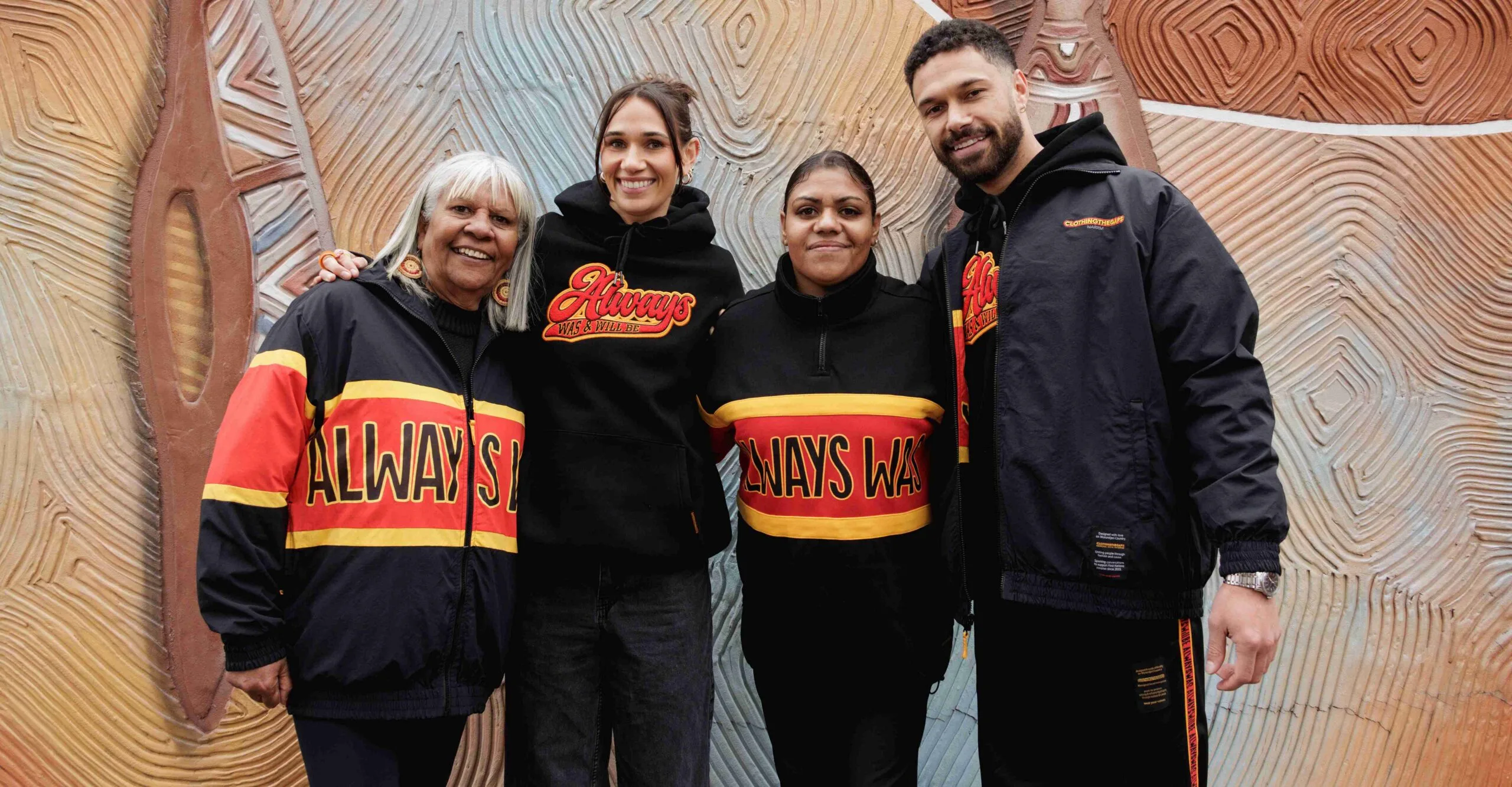
Clothing the Gaps was founded in 2019 by Laura, a proud Gunditjmara woman, and Sarah Sherry after learning the hard way that the Aboriginal flag was copyrighted. “We received a cease and desist from WAM Clothing,” Laura confessed.
Shortly after, Clothing the Gaps began its first campaign: ‘Free the Flag’. Describing this milestone moment as the “tipping point,” Laura and Sarah shifted from health care to political fashion.
The Aboriginal flag was officially freed in 2022, when the Australian Federal Government struck a $20 million agreement with Harold Thomas, who held the copyright.
“That was a huge win,” she recalled. “A legacy piece for the community to see what businesses and collective action is capable of… When all the AFL teams wore ‘Free the Flag’ t-shirts, that’s when the government announced the inquiry into the Aboriginal flag.
“There have been so many moments, and advocacy wins along the way. It’s not just the win at the end; it’s those small wins along the way. At the moment, we’re advocating to change the date of Australia Day.”


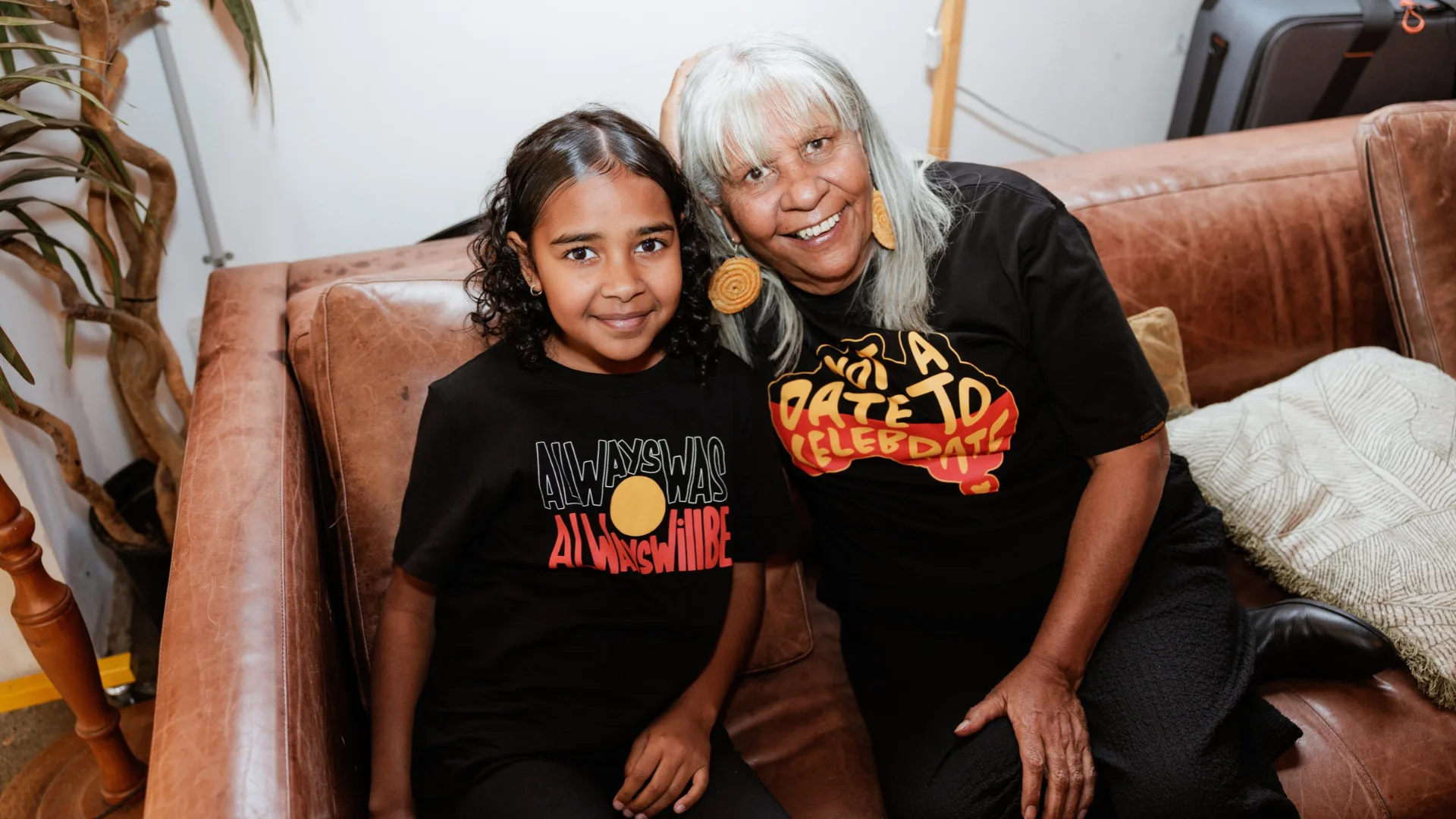
Australia Day occurs annually on January 26, honouring the 1788 landing of the First Fleet. But it also marks centuries of trauma, stolen generations, lost connection to land, and irreparable cultural damage.
In 1938, coinciding with the 150th anniversary of colonisation, Aboriginal people protested and titled January 26 as the Day of Mourning. It’s earned many names since, including Invasion Day.
While some Australians choose to ignore the campaign, others find ways to support Clothing the Gaps endeavours like purchasing ally-friendly clothing.
“[We received] an overwhelming amount of requests saying, ‘I want to support you, the brand, and First Nations people, but I don’t want to be culturally inappropriate. Am I allowed to wear this?’”
“That’s what our community and our customers needed at the time… So, we labelled our products ally friendly, and we created a mob only collection,” Laura shared. “I always think of the word ‘ally’ as a verb. It’s not really a title that I think people should give themselves. It’s how you show up every day.”
Clothing the Gaps has transformed so much since first opening its doors. But its message hasn’t. Laura reflected on the first time she sent clothes down the Melbourne Fashion Week catwalk, with each model holding a sign of which mob they belonged to.
“Clothing the Gaps isn’t about the clothes; it’s about the message. When each of those models walked down with [a sign saying], ‘I am Wanggumara’ or ‘I am Yorta Yorta’ or what ever it is, they weren’t just models; they were people. We were able to connect those models to people all over the country,” Laura said, proudly.
“We gave them a voice. We challenged stereotypes around what an Aboriginal person looks like.”
Laura will send yet another poltically-led collection down the catwalk for the 2026 Melbourne Fashion Week, going from October 19 to 25.

