


Sarah Hayden describes discovering she has Attention Deficit Hyperactivity Disorder (ADHD) when she was aged 48 as a cathartic experience. The mum-of-five, social worker, author and equine-assisted psychotherapist had built a life she loved – a mishmash of roles that suited her busy brain and need to keep many irons in the fire. But learning she had ADHD helped her better understand herself and why she had always felt out of step amid the rules of a neurotypical world.
“As a kid, I was intelligent and capable, but I struggled with everything,” Sarah, now 51, recalls. “I’d walk into class, and the teacher would say, ‘Ready for today’s exam?’ and I’d be like, ‘What exam? I didn’t have friends – I bounced between groups, nothing was consistent.”
She remembers young boys in class who likely had ADHD being loud, fidgety and disruptive, while she would be drawing pictures in her maths book, writing poems or daydreaming. As an adult, while passionate, curious and energetic, she struggled to apply her focus to a particular area. “For years I flipped between jobs,” she says.
“I prefer to be unemployed and have no money than be bored. I’ve started and dropped out of so many diplomas and degrees – my HECS debt is enormous. I’ve also signed up for short courses on a moment’s inspiration, paid upfront, then forgotten about it until textbooks for a yoga teaching course show up in the mail. That hasn’t happened once; it’s happened multiple times.”
What does ADHD look like in women?
Long seen as a condition affecting “naughty little boys”, ADHD in girls, who are more likely to seem distracted, forgetful or quietly daydreaming, often went unnoticed, leaving them to manage their struggles alone.
“Our [traditional] understanding of ADHD has been that stereotypical, wiggly little boy calling out in class,” says University of Queensland researcher Dr Kate Witteveen, who has led a study into the impact of ADHD diagnosis on women.
Dr Witteveen explains there are three types of ADHD: hyperactive-impulsive, inattentive, and a combined type that includes features of both inattention and hyperactivity. While early research and diagnostic criteria was based almost entirely on boys, Dr Witteveen says it’s now recognised that it can look very different in women. “We’ve found that girls and women tend to be more likely to experience the inattentive type, which means those outward behaviours – wiggling, fidgeting, interrupting – are not as evident. Because of this, they are often missed as their experience is much more internal.”
Sarah – an advocate for neurodivergence – says women often become experts at hiding their symptoms with exhausting coping strategies. “Women and girls are socialised to be ‘good’, stay quiet, and please others,” she says. “They work harder, mimic their peers, and hide their struggles – often at a huge emotional cost.”
Inattentive symptoms include difficulty paying attention, a tendency to start but not finish tasks, being easily distracted or daydreaming, having trouble remembering things or organising tasks or time, struggling to follow instructions, often losing things, and making careless mistakes.
“Those things can also look like anxiety or other conditions,” Dr Witteveen says. “In our study, over 70 per cent of participants had received a diagnosis of anxiety in childhood or adolescence, and then went on to be diagnosed with ADHD as adults.”
The impact of undiagnosed ADHD
Sarah says that for many women, undiagnosed ADHD can potentially have destructive repercussions on their lives. “We [women with ADHD] can be very spontaneous,” she says. “People lose houses, marriages, or end up in poverty because they can’t keep going with something others tolerate just to pay the mortgage.”
Dr Witteveen found through her study that ADHD is highly consequential across all domains of life, including emotional and psychological well-being, relationships, education, and career. “If it’s not diagnosed, we have women moving through a world with a brain that isn’t well supported by their environment, creating challenges in those areas,” Dr Witteveen says. “It also sends a constant message that there’s something wrong with them. With that comes high levels of distress and negative self-judgement.”
Dr Witteveen interviewed over 200 women as part of her study and says the language many used in reference to their sense of self was often heartbreaking. “When asked what the diagnosis meant, they said things like, ‘it means I’m not just deficient as a person,” she says. “That theme of ‘I’m broken, I’m wrong’ could finally be reframed as ‘my brain works differently, and the world doesn’t necessarily support that’.”
The catalyst for diagnosis
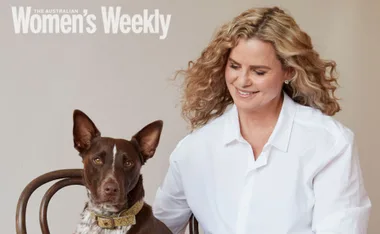
For several years, Sarah began to suspect she had ADHD. It was finally confirmed when her eldest daughter, award-winning autistic actor Chloé Hayden, was diagnosed.
“As part of the diagnostic process, I had to answer some questions and fill out some of her childhood history. With every question, I was thinking ‘tick, tick, tick – for me’,” she recalls. “At the end of the session, I said to the psychiatrist ‘I didn’t realise all of those things were symptoms of ADHD. I think I’ve got it too’.”
Dr Witteveen says the condition is highly heritable. “Almost everyone I interviewed in my study said they either got diagnosed because their children had been, or once they were diagnosed, their children started the process as well,” she says. “It’s hard to estimate exactly, but we know it does run in families.”
Despite her strong suspicions of her ADHD, Sarah grappled for years with whether she should get assessed. “Getting a diagnosis in Australia as an adult costs thousands of dollars, can involve months on a waitlist, and is a long, convoluted process that can be quite invasive – you have to talk about your childhood, family history, your parents,” she says.
“I struggled with spending so much money on something I already suspected. So, I thought, ‘What’s the point?’ I ticked the boxes. I didn’t want medication. Why pay for a piece of paper that confirms it?”
When her second eldest daughter, Gemma, told her she suspected she had ADHD and wanted a diagnosis, Sarah decided she’d go through it with her. They went to different therapists, and were both identified as having ADHD.
“I remember feeling a huge mix of grief and relief,” Sarah says. “Looking back at my life, it made so much sense. All the signs about how ADHD presents in girls – missing deadlines, careless mistakes, not retaining information, perfectionism, even when the work looks messy because your mind is moving so fast – I had every single one.”
Surge in ADHD among adult women
According to the Australian Psychological Society, there has been a 450 per cent uptick in adults being prescribed ADHD medication in the 10 years to 2022-23, and 52 per cent of those were women.
Dr Witteveen says the prevalence of ADHD in adult women being diagnosed is not an indication that ADHD is becoming more common, but a reflection of a growing awareness of how the condition presents in women. “As our understanding has evolved, we’ve realised it is a lifelong condition. You don’t just develop ADHD in adulthood – but you may not get diagnosed until you’re an adult.”
Dr Witteveen’s research found that life transitions were particularly difficult for women with ADHD. “Times of increased emotional or cognitive load – like starting high school, leaving home, beginning university, starting a family, or going through menopause – were consistently described as challenging,” she says.

It’s no coincidence that for many women, an ADHD diagnosis often overlaps with the onset of perimenopause or menopause. “Women at this stage are juggling a lot – they may be in senior roles at work, parenting young kids or teenagers, as well as caring for ageing parents,” Dr Witteveen says. “Add in the hormonal changes of perimenopause, and what we’re seeing is almost a perfect storm where the coping mechanisms they’ve [always] relied on are no longer enough.”
There’s a biological reason for this, too. “Oestrogen and the brain’s feel-good hormone dopamine work closely together,” Dr Witteveen says. “So when oestrogen drops during perimenopause, challenges linked with not having enough dopamine – which is central to ADHD – can be exacerbated.”
Shining a spotlight
Social media, along with celebrities including Em Rusciano, Rebecca Gibney, Julia Morris and Celeste Barber talking about their experiences, has fuelled public awareness around ADHD.
Sarah says the increased attention has enabled more women to understand and recognise the condition in themselves. “It gives them permission to ask, ‘What if this is what I have been struggling with?’”
In an episode of The Australian Women’s Weekly Love Stories podcast, comedian Melanie Bracewell spoke about her own ADHD diagnosis.
“It’s something that I kind of always thought that I had, but I didn’t want to go get diagnosed because I thought, well, I’m going fine,” she tells host Tiffany Dunk. “As your life changes and there’s more things to keep track of… it reached a point where there were too many people relying on me.”
“I needed a bit of closure in that regard to know: is this hard just for me? Is this hard for everyone? Is there a way to make this less hard?”
Listen to the episode:
The dark side of self-diagnosis
With so many public faces coming forward with their own diagnosis and normalising it, Dr Witteveen worries that it could also drive the narrative that being diagnosed with ADHD is somehow “cool”.
“Not one gets diagnosed with ADHD for fun,” she says. “It’s expensive, time-consuming, and difficult to access. The idea people are doing this because everyone else is – I reject that. It’s disparaging to those who’ve gone through the process and discouraging for those who might consider it but worry about judgment and stigma.”
Melanie speaks about something similar in the epsiode of Love Stories.
“I just have ADHD really. So it kind of ebbs and flows with confidence and all that kind of thing.”
Living with ADHD
Dr Witteveen says the term ADHD can be misleading, as it focuses on deficits and doesn’t truly capture the way an ADHD brain works or the positive traits that often come with it.
“It’s a neurodevelopmental disorder, but it’s a difference that comes with tremendous strengths – like being calm under pressure, a creative problem solver, a big thinker, very creative, empathic, intuitive – these are common in people with ADHD.”
She says a diagnosis can be life-changing, giving women a clearer understanding of themselves. “It opens up opportunities for self-advocacy, self-compassion, and reframing negative beliefs,” she says. “It allows relevant support – whether that’s therapy, medication, or extra time or breakout rooms for exams, or flexible workplace arrangements. These low or no-cost supports can make a huge difference, but without a diagnosis, people don’t know to ask.”
Dr Witteveen says women with ADHD can live full, productive, self-satisfying lives the same way anyone else can: “By playing to their strengths, connecting with people who love, accept and appreciate them, pursuing things they enjoy and taking good care of themselves. There’s nothing unique or different about that. It’s about working with their brains and energy, rather than against it, and really embracing who they are.”
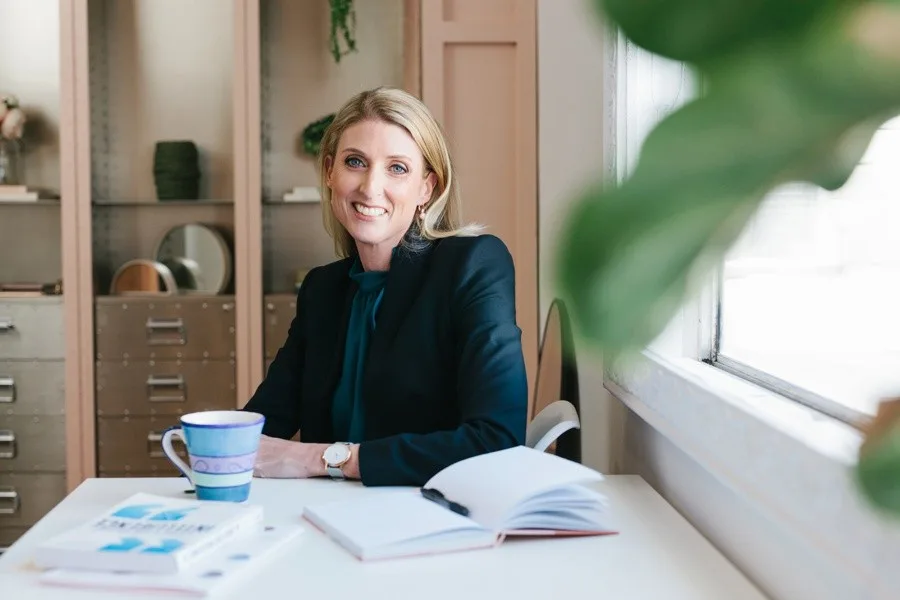
Sarah says life post-diagnosis is still chaotic – just how she likes it – but recognising how her brain works has helped her adopt strategies to make things easier. “I might need to double-check my brain sometimes, especially if it’s midnight and something seems like a brilliant plan. But I haven’t dropped anything. I’m probably just enrolling in a few fewer courses,” she jokes.
Sarah says learning she has ADHD was less a diagnosis, and more a discovery. “Finding out you’re neurodivergent – you’re just discovering what you’ve always been. You’re simply putting a name to it. It gives you acceptance and the ability to show yourself the same love and forgiveness you’d offer your child if they were diagnosed with something,” she says. “It brings relief – of finally being able to accept yourself.”
Where is ADHD surging in Australia?
It may seem surprising, but some parts of Australia are experiencing greater surges in AHDH diagnosis than others. University of New South Wales (UNSW) analysts have crunched the data for ABC’s Four Corners and discovered that the number of adults filling prescriptions for ADHD medication jumped by nearly a third over the last year and six times over since 2017. And it turns out, some areas, like Fremantle in Western Australia, are “hotspots”. You can track your own suburb here.
Why Fremantle over other suburbs in WA? ABC suggests that it could be related to disposable income, as it can cost thousands of dollars to be properly diagnosed, so people from lower socio-economic backgrounds who live in “cheaper” suburbs may have ADHD, but do not have the resources to obtain an official diagnosis and prescription.
If you or someone you know is struggling with ADHD, see your GP, psychologist or visit adhdaustralia.org.au

