



Anyone who has tried to get an endometriosis diagnosis knows there is nothing quick about it.
In Australia, women wait an average of six and a half years for answers, according to Endometriosis Australia.
Now, Australian researchers have developed an artificial intelligence tool that detects signs of the condition in just 18 milliseconds – faster than the blink of an eye.
How can AI detect endometriosis?
Called EndoFusion, the AI tool analyses pelvic scans for two common signs of advanced endometriosis.
In a study published in the journal Artificial Intelligence in Medicine, Adelaide University researchers trained EndoFusion using four datasets made up of more than 9000 pelvic MRI scans and more than 800 transvaginal ultrasound scans.



Both MRI and ultrasound are used to detect endometriosis, but each is better at picking up different signs.
“Current scanning methods each have their own strengths when it comes to detecting two common markers that indicate the likelihood of endometriosis and patients will often only have access to one of them,” explains study author Associate Professor Jodie Avery, from Adelaide University’s Robinson Research Institute.
“This means that some patients could be disadvantaged if they are scanned by the less optimal option for their particular signs. Some of the imaging tools also rely on operator experience and can be costly.”
EndoFusion uses what it has learnt from both types of scans to analyse either one.
“Our AI tool can help address these shortcomings by combining data from both imaging tools, giving the framework the knowledge it needs to detect both signs of endometriosis through a single scan more effectively and efficiently,” Associate Professor Avery adds.
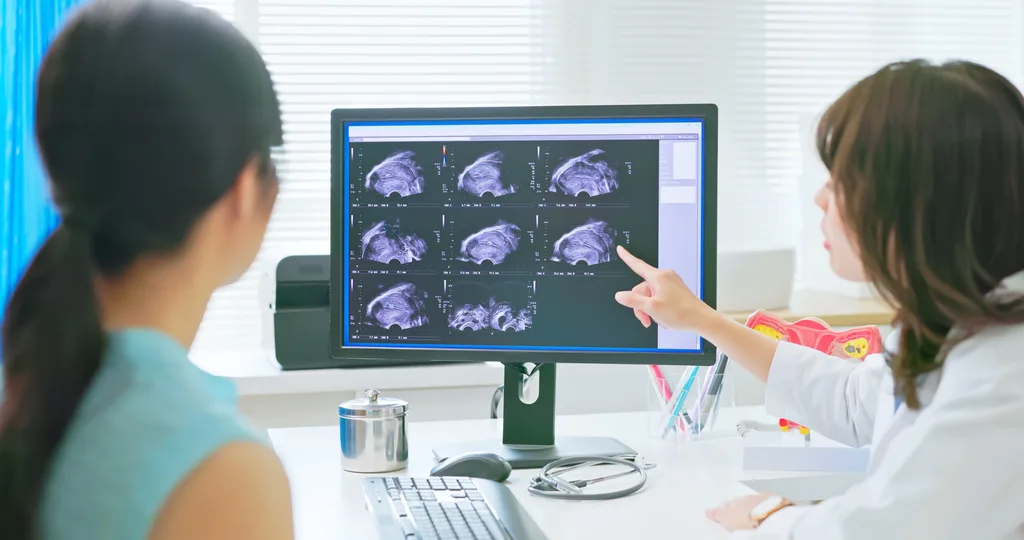
Early testing found EndoFusion performed better than the other models researchers compared it with.



“We looked at how well EndoFusion was able to distinguish between positive and negative cases of endometriosis and found it was able to provide a correct diagnosis 83 per cent of the time, which is more accurate than all competing models,” says lead author Dr Yuan Zhang, from Adelaide University’s Robinson Research Institute and the Australian Institute for Machine Learning.
Why is endometriosis so difficult to diagnose?
Endometriosis affects around one in seven Australian women and more than 190 million women worldwide.
It is a chronic condition where tissue similar to the lining of the uterus grows outside it, often affecting the ovaries, fallopian tubes and other parts of the pelvis.
Common symptoms include severe period or pelvic pain, heavy bleeding, bloating, fatigue, pain during or after sex and difficulty falling pregnant.
Not all endometriosis shows up on scans, so some women undergo surgery to find lesions and confirm the condition.
“The development of accurate, non-invasive early diagnostic methods is critical to shorten the diagnostic timeline and reduce associated costs,” Associate Professor Avery says.

