





For years, Body Mass Index (BMI) has been used as a quick way to tell whether our weight falls into a ‘healthy’ range. But new research suggests that as we get older, that number may not tell the full story.
Published in the Journal of the American Geriatrics Society, the study found that waist circumference could reveal health risks that BMI alone missed – including in people whose BMI fell within the ‘normal’ range.
What did the study find?
The study, which followed 6905 adults in the United States aged 65 and older over 14 years, looked at how BMI and waist circumference related to their risk of dying.
When BMI was considered on its own, people classified as overweight had a lower mortality risk than those in the ‘normal’ BMI range. The association was stronger in men but was also seen in women.
But when researchers looked at waist circumferencel, a larger waist was linked to a 24 per cent higher mortality risk in both men and women, even after BMI was taken into account.



Having a BMI in the ‘healthy’ range didn’t always mean lower risk either. Women with a normal BMI but a larger waist had a 23 per cent higher mortality risk than women who had both a normal BMI and smaller waist.
“BMI and waist circumference provide complementary information about health risk in older adults,” study co-author Dr Bryan Blissmer from the University of Rhode Island said.
“Our findings suggest that considering both measures together, rather than relying on BMI alone, may improve mortality risk assessment and support more informed clinical decision-making.”
Why does BMI become less useful as we age?
BMI is calculated using your height and weight and is an internationally recognised way of categorising people as underweight, healthy weight, overweight or obese.
But as Amelia Phillips, an exercise scientist, nutritionist and co-founder of Vitality360, points out: “The key takeaway from this study for women over 50 is that the scales and BMI are not the best predictors of health and mortality.”
She adds: “BMI is not able to differentiate between muscle and fat so a well-muscled older person may return a higher, potentially ‘overweight’ BMI, yet more muscle is indeed very healthy.”
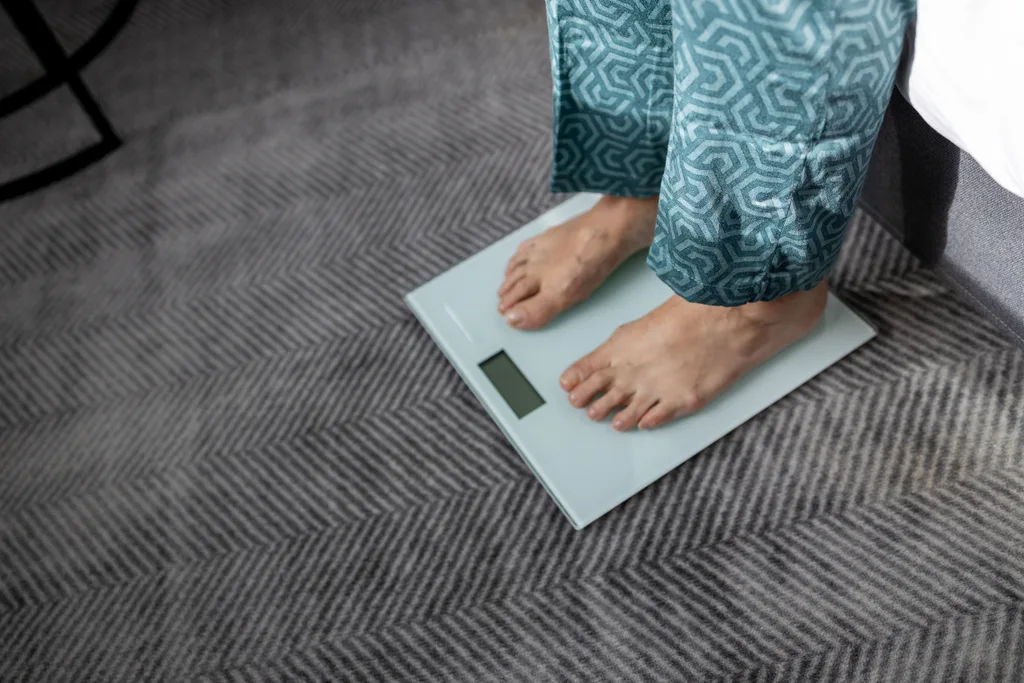



Looking at BMI alone can help explain what’s known as the ‘obesity paradox’, where studies in older adults have found that people with BMIs in the overweight range can sometimes live longer than those in the healthy range. The researchers stress that doesn’t mean having more body fat is protective, but shows that BMI can only tell us so much on its own.
Why does your waist measurement matter?
Unlike BMI, your waist measurement can give you an idea of how much fat you have around your stomach.
“Where our fat sits on our body makes a huge difference to our health risk. An apple shaped body has a higher risk of metabolic related conditions compared to a pear shape,” Amelia says.
“This is because visceral fat – the fat stored in our abdomen, around our organs – triggers issues such as inflammation, raised cholesterol, blood pressure and non-alcoholic fatty liver disease.”
It’s particularly relevant for women in midlife. “Changing hormones during perimenopause can mean that fat storage shifts towards our abdomen,” Amelia explains. “But the good news is that this visceral fat is also very responsive to diet and exercise.”
In Australia, a waist circumference of 80cm or more is considered an increased health risk for women, with the risk rising more at 88cm or more.
How to measure your waist correctly
If you want to keep an eye on your waist circumference, it’s important to measure it in the right spot.
Amelia recommends using a flexible tape measure directly against your skin. Find the midpoint between the bottom of your lowest rib and the top of your hip bone, then wrap the tape horizontally around that point.
“Stand relaxed, don’t suck your stomach in!” she says. “Breathe normally and take the measurement after a normal breath out.”
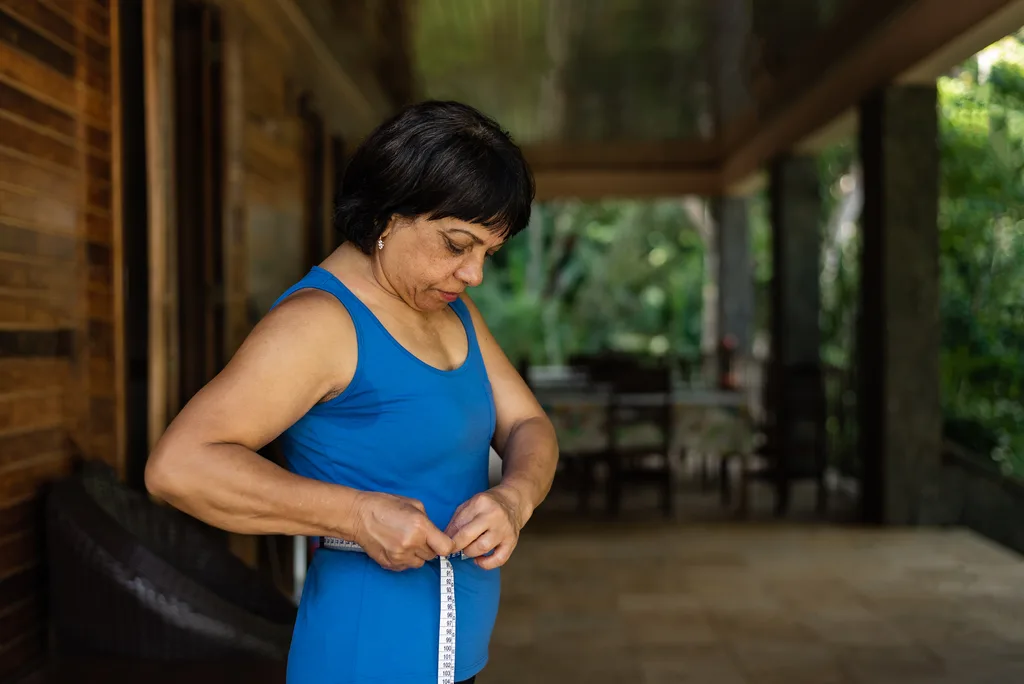
She suggests using a mole or another clear mark near the measurement point as a guide, so you measure in the same spot each time.
“For consistency, you should measure in the morning ideally, just after waking up and using the bathroom,” Amelia adds.
Does BMI still matter?
This isn’t to say BMI is useless. “The researchers themselves concluded that BMI and waist circumference provide complementary information, rather than one necessarily replacing the other,” Amelia points out.
For women in midlife and beyond, Amelia says there’s much more to health than weight.
“I don’t want to know only how much you weigh. I want to know what that weight is made of and how well your body functions.”
That means looking at BMI and waist circumference alongside muscle mass and body composition, strength, blood pressure, blood glucose and insulin markers, cholesterol, cardiovascular fitness and, where appropriate, bone density.
And higher weight wasn’t the only thing the study picked up. “Being underweight wasn’t benign either,” Amelia notes. “In this study it was associated with almost double the mortality hazard in both men and women.”
“So the message shouldn’t be ‘get as thin as possible as you age’. A much better goal is: maintain muscle, keep visceral fat in check, stay strong and metabolically healthy.”


Share this post