





I’m currently sitting on the couch writing this story, adding to a shopping list on my phone, keeping an eye on the oven timer, and answering questions about where the dog’s bowl could be. It’s a familiar scene in many households. Multitasking, after all, is just the norm these days as women juggle busy lives.
Yet while it may be commonplace, it may also be one of the main reasons we can feel scattered, fatigued or overwhelmed. You see, multitasking isn’t actually the skill we have long thought it was.
“From a psychological perspective, multitasking isn’t the productivity superpower we’ve been led to believe,” says psychologist Kerstin Anderson-Ridge. “What it actually does to the brain is fragment attention, increase cognitive load, and keep the nervous system in a low-grade stress response.”
Adds clinical therapist Justine Campbell, “We’ve normalised doing everything at once, but the brain doesn’t actually ‘multitask’. It switches. Over time it reduces focus, decision quality and emotional steadiness.”
This rapid task-jumping creates what researchers call the cognitive switching cost – the mental toll we pay each time we shift our attention – which can mean brain fog, forgetfulness and feeling easily overwhelmed.
Switching also affects the brain’s reward system. “Each switch of attention – whether checking a message, responding to an email or completing a small task – delivers a tiny burst of dopamine, a small reward that can feel satisfying in the moment,” says Divya Bannerjee, psychologist at Mindplace.
It may sound positive, but it’s not necessarily a good thing. “While it can make multitasking feel productive, frequent switching burns mental energy, interrupts concentration and traps us in shallow attention loops,” she says.
Why multitasking is so exhausting
As women we often carry the mental load in the home – which is why many of us complain about having to do a million things at once. “For many women, that’s not an exaggeration. They’re working, parenting, running households, pre-empting everyone’s needs, and trying to keep all the pieces moving, very often at the same time,” says Kerstin. “Most of my female clients are surprised to learn that what feels like ‘getting more done’ is often what’s driving their brain fog, irritability, poor concentration and fatigue.”
In other words, multitasking is causing more problems than it fixes.

So how did we get here – and more importantly, what can we do to change it? Experts agree that we have mistakenly normalised being ‘busy’, often seeing it as something to be proud of – and something to strive for.
“For women especially, multitasking is often seen as a strength – a sign of competence, care and capability,” says Divya. “Combined with the mental load of managing households, schedules and work, this creates a constant sense that something always needs attention.”
The problem is that our brains haven’t evolved to handle the volume of stress, thinking and output that this all requires of us. “There’s a mismatch between what our society and modern life demands of us, and our attention, and our neurobiology,” says neuroscientist Dr Simone Boer, author of Ultimate Brain Hacks.



This means that if we want to help our brains – and our stress levels – we should try and limit what is taking our attention, at least for periods during the day. And no – taking a short break while we scroll through our phones won’t do it.
“We train the brain to keep scanning, switching and seeking stimulation. When people finally ‘take a break’, they often reach for more input: scrolling, messages, news, catch-up calls,” says Justine. “These feel like relief in the moment, but they keep the mind busy and the nervous system ‘on’.”
What is monotasking?
Instead, monotasking – the practice of doing one thing at a time with your full attention, instead of switching between multiple tasks – could be the answer.
“Monotasking allows the brain to fully engage with one thing at a time, and enables you to complete tasks,” says Simone. “This improves focus, reduces stress, and will lead to more accuracy and better outcomes, and in less time.”
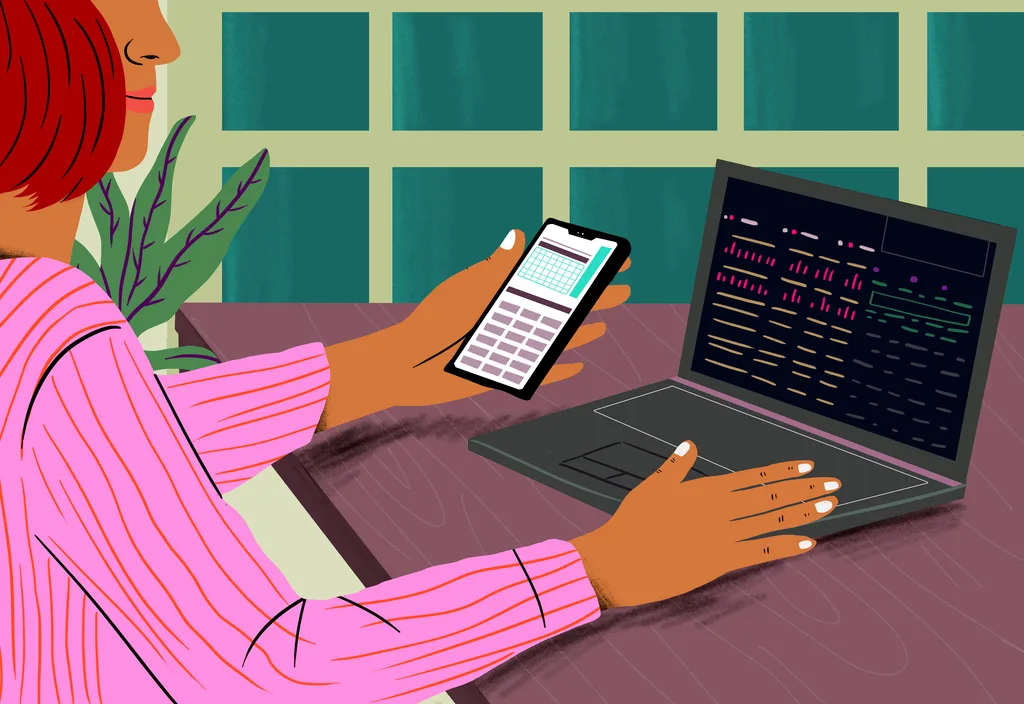
“Doing one thing at a time can feel almost impossible at first, especially for women who are used to holding everything together,” says Kerstin. “But it’s much easier on the brain. When attention isn’t constantly being pulled in different directions, people often notice they feel clearer, calmer and less reactive. Things take less effort, not because life is easier, but because their brain isn’t stretched in five directions at once.”
There’s another bonus, too. While multitasking gives the brain cheap, fast dopamine hits, monotasking creates a different dopamine response – rewarding completion and leaving you feeling in control.
How to start monotasking
But don’t worry, chore-jugglers, you don’t have to change your habits entirely. Simply giving your brain small pockets of uninterrupted focus throughout the day can be enough. The nervous system has a chance to step out of the “alert mode” we so often run on, which can give your mind and body a rest.
“Even small shifts – single tasking for short blocks, reducing cognitive clutter and creating clear transitions between roles – can significantly improve clarity, calm and cognitive performance,” advises Simone.
“It’s easing the mental load with fewer interruptions, fewer tabs open (both literally and mentally), and giving yourself permission to focus on one thing. For many women, that small shift alone can make a noticeable difference to stress, energy and concentration,” says Kerstin.
Dr Simone Boer’s top tips
- Set short time-blocks: Knowing there’s an end point reduces resistance and helps the brain stay engaged.
- Use focus mode/silence notifications: Fewer interruptions mean fewer attention resets.
- Try the ‘Third Space’ ritual: One deep breath to close off the last task, one to be present, one to set your intent for what’s next.
- Batch similar tasks: Grouping like with like keeps the brain in the same cognitive lane.
- Move between tasks: A short walk or stretch boosts blood flow and resets attention.
- End the day with a checklist or ‘done list’: This signals closure to the brain and reduces mental clutter.
This article originally appeared in the August 2026 issue of The Australian Women’s Weekly. Subscribe so you never miss an issue.

