




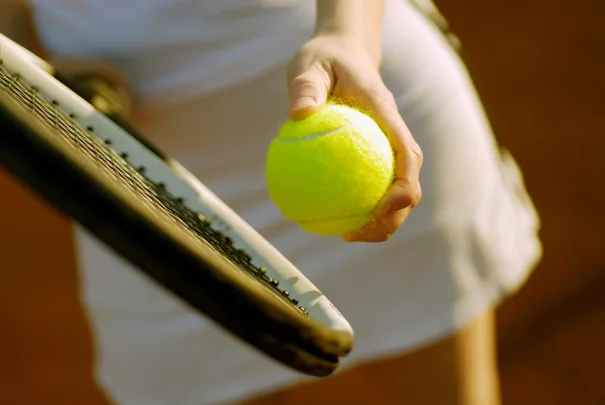
Long before Pilates studios and run clubs, the tennis court served as a space for women to gather, move and connect. In the late 19th and early 20th centuries, tennis clubs were among the few socially acceptable spaces for women to be both physically active and socially visible.
“Tennis is one of the very few global sports in which women and men compete on the same stage, earn equal prize money and have equal exposure,” says Rebecca McDonald, Head of National Programs at Tennis Australia. “It’s one of the few sports where women’s achievements have been celebrated for more than a century.”
A good 100 years on, that legacy continues. Beyond Wimbledon, suburban clubs and community courts are giving women in their 40s, 50s and beyond space to reconnect with themselves or begin again.

“Tennis is such a good group environment. It brings so much more than the physical benefits. It’s the mental wellbeing and the community – you’re part of something special,” says tennis pro Lorena Fromberg, who coaches men and women of all ages and runs a women-only cardio tennis group alongside fellow pro Anna Klim at FrombergKlim Tennis in Melbourne’s bayside suburbs.
“It’s a safe space where women feel comfortable talking about the good things in their lives, but also the hard things. Everyone supports each other,” says Anna of the connections she sees growing on her courts. “It’s really inclusive. We have women from their 20s to their 60s playing together. If they’ve got the passion to turn up, they’ll have a go.”
It’s a passion that builds as female athletes at the highest level challenge outdated ideas about life in elite tennis. Ash Barty stepped away at the height of her career on her own terms. While 46-year-old Venus Williams has spoken about continuing to compete with a goal to simply “have fun” and “enjoy the moment”.
“Icons like Evonne Goolagong Cawley, Margaret Court, Ash Barty, Serena Williams and Billie Jean King have shaped the sport’s legacy and inspired generations of girls to pick up a racquet,” says Rebecca McDonald. And nothing says reinvention like taking on a new sport later in life – which is exactly what’s happening on courts around the country.
“Tennis has absolutely gone from strength to strength in recent years,” Rebecca says. “Adult participation is at an all‑time high.” National data shows tennis ranks among the top activities Australian women take part in throughout their lives, particularly aged 25–55 plus. And the post-pandemic surge has continued, with court bookings growing year on year – a clear sign that women aren’t just trying the sport, they’re sticking with it.
The health case is equally compelling. Racquet sports have been associated with a 47 per cent reduced risk in all-cause mortality, and shown to promote potential benefits for bone density, cardiovascular health and overall longevity. In other words, it’s hard to find a reason not to rally a few friends and hit the courts.
I came to tennis later in life after a pretty shaky start as a kid. My sister was one of those gifted tennis kids (coordinated, competitive and actually able to hit the ball over the net). I worshipped her, so naturally, my parents enrolled me in group lessons too.
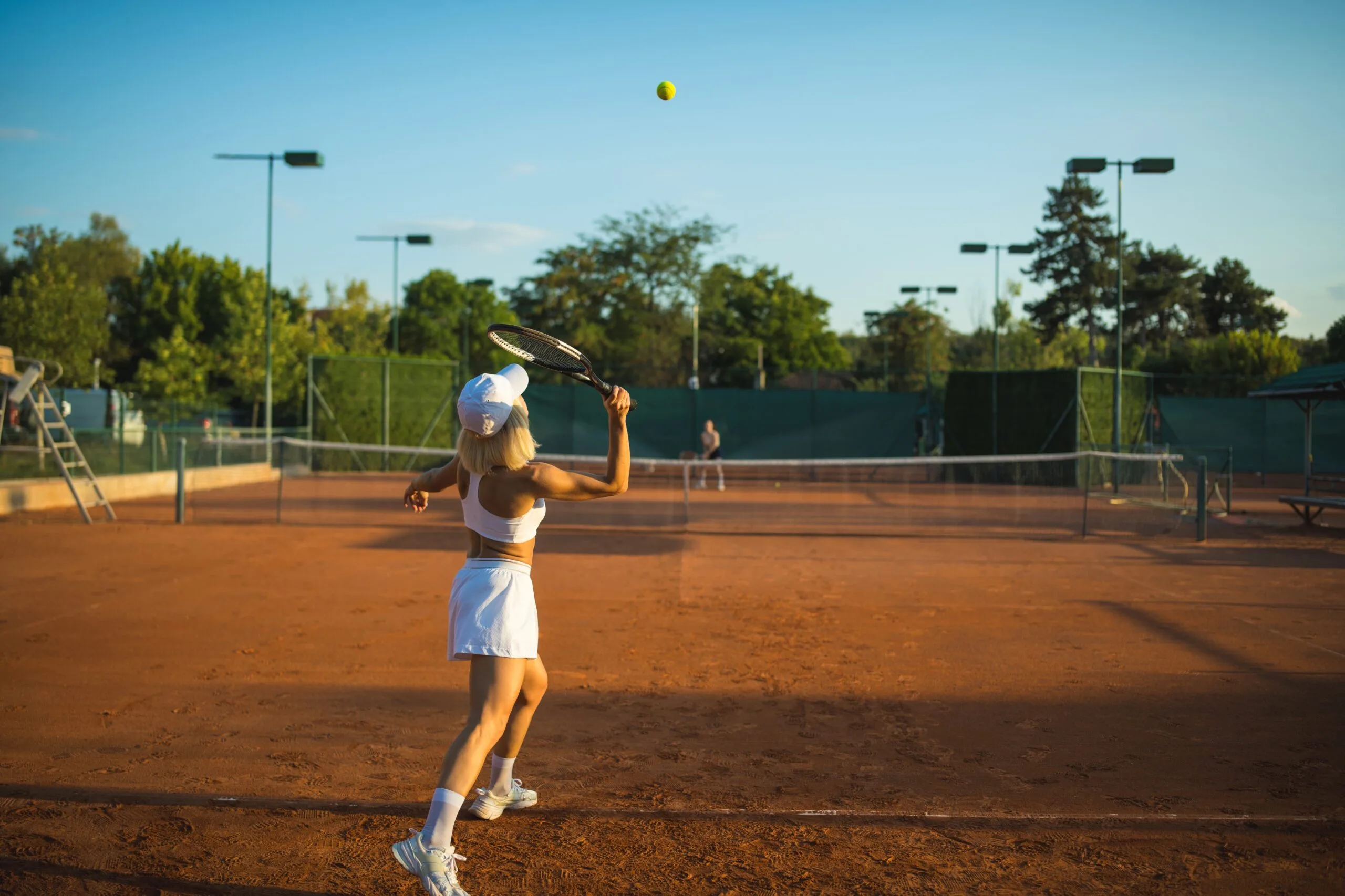


My coach had one clear focus: Talented players like her. To him, the rest of us were furniture. His rule? Miss a ball, pick up 10. Naturally, I spent 90 per cent of my lessons as an unpaid ball girl. Mum did try to find a new coach for me, to no avail.
That’s something Rebecca McDonald sees often. “You can play at any age or stage,” she says. “Tennis truly is a sport for life. We see people start young, drift away as life gets busy, and then rediscover it in adulthood. It’s a natural cycle, and the sport supports you at every phase of your life.”
More than 1.35 million Australians found their way onto a court over 2024–25. “Tennis is incredibly accessible,” Rebecca says. “You don’t need a team, a big time commitment, or elite skills; you can just pick up a racquet and play.”
Recreational tennis, Rebecca points out, is “built around fun, connection and fitness.” It’s far from the lonely, high-pressure image many of us carry from childhood. If my younger self had known that, I probably wouldn’t have waited 30 years to come back.
Anna Klim and Lorena Fromberg say the beauty of tennis is you don’t need a lot to get started. A racquet and tennis balls are a must, of course. However, if you’re ready to go all in, this gear will get you there:
- Tennis shoes: “You need a low-sole tennis shoe with good ankle support. A zigzag grip pattern gives you better traction on court.”
- Tennis dress: “Tennis is a crossover movement, from one side of the body to the other. You don’t want material obstructing that.”
- Visor: “A visor is ideal. It keeps the sun out without getting in the way of your ponytail.”
- Sweat-wicking layer.
Any coach will tell you that to get the most out of a session, you need a plan. This workout is designed to build consistency, footwork and fitness. All you need is a racquet, balls and access to a court.
Follow this routine:
- Warm up: Jog four laps of the court followed by dynamic stretches including arm circles, leg swings and torso rotations.
- Rest
- Footwork drill: From the centre mark, shuffle quickly to the doubles sideline; squat. Shuffle back to the centre; squat. Shuffle to the other side; squat. Repeat 10 times.
- Rest
- Mini tennis: Stand inside the service boxes and hit the ball gently with a partner or against a wall. Focus on control rather than power. Aim for 10-15 shots per rally, resting in between for up to 10 minutes.
- Rest
- Cool down: Light jog or walk around the court followed by gentle stretching.
Your goal at this stage isn’t power; it’s repetition. Consistency and skills build a foundation in tennis. Speed and intensity can come later. Confidence isn’t about being the best player, it’s more about who you’re playing with. Start by booking a court with a friend or try a beginner clinic. At first, you might miss more shots than you make, but you can have laugh about it and come back better the next week.
I want to get into tennis, but I’m scared I’ll get hurt. How can I prevent injury?
“The key to reducing your risk is allowing your body to adapt by increasing sessions gradually. Start with two sessions per week and build over six to 10 weeks, taking rest days in between. Warm up for at least 10 minutes using half the court to ease into movement and prioritise hydration every session.
“It’s also important to make sure your racquet has the correct grip size and weight, appropriate string tension, and that you’re wearing supportive court shoes suited to the surface you’re playing on.
“To further lower the risk, incorporate strength training, focusing on calves, glutes, core, shoulders, forearm and wrist mobility.
“Another tip is to start with doubles. Sharing the court reduces physical load while you build fitness and confidence.”
Dr Tim Wood, sport and exercise medicine physician; former Chief Medical Officer, Australian Open and Tennis Australia.
Class to try: Cardio Tennis
Stepping onto the court for one of the sessions at FrombergKlim Tennis is like walking into a purpose-built sweat club, where everyone knows your name. Think of it as tennis with the social and cardiovascular benefits dialled up.
Cardio tennis blends traditional drills with fast-paced, music-backed intervals designed to keep your heart rate elevated. “It’s low impact, but you still get all the cardiovascular benefits,” says Lorena Fromberg, explaining that the stop-start nature of tennis makes it surprisingly effective conditioning. “You’re working across the body, changing direction, accelerating and recovering.”
That constant change of direction is part of the magic. Tennis is a crossover sport, meaning the body moves rotationally as well as laterally, recruiting multiple muscle groups at once. “You’re not just running in a straight line,” Lorena says. “You’re loading through one side of the body and transferring that energy across.” The result? Strength, coordination and agility gains alongside improved endurance.
Sessions typically involve short, timed drills, rotating between forehands, backhands, volleys and footwork patterns. The emphasis is on sustained movement rather than perfecting technique.
“You don’t need much,” says Anna. “Just show up as you are.” That accessibility is part of the appeal; participants range from total beginners to former players returning after years away.
For Anna, the social aspect is just as powerful as the physical benefits. “It keeps you accountable, playing outdoors with women you connect with,” she says, noting that the group format often helps people push a little harder. The music keeps the tempo high, balls are fed continuously, and there’s little time to overthink your swing.
And while it sounds playful, don’t underestimate it. Between the lateral shuffles, split steps and repeated sprints, cardio tennis delivers a full-body workout that challenges the heart, lungs and connective tissue, without the joint load of running. As Lorena puts it, “It’s low impact, but you still get all the cardiovascular benefits.”
Why not try Pickleball?
“Pickleball is often the gateway sport,” says Angela Langmann, founder of pickleball paddle company OutWest Sport and co-founder of Evolve Pickleball on Sydney’s Northern Beaches. Having picked up a racquet for the first time aged 44, she’s now a regular on both tennis and pickleball courts.
“I spent a year teaching beginners how to play pickleball and helping women step onto a court for the first time,” she says. “It’s more accessible than tennis early on, and the social element is strong. For many women, that confidence then spills over into trying tennis.”
Blending elements of tennis, badminton and table tennis, pickleball is played on a smaller court with a plastic ball and solid paddles. It’s easy to learn, highly social and suitable for all ages and skill levels.
This article originally appeared in the July 2026 issue of The Australian Women’s Weekly. Subscribe so you never miss the latest issue.

