




At a glance…
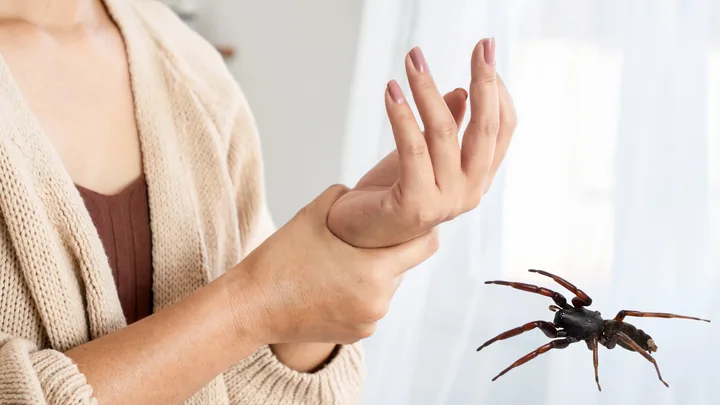
- Our Digital Editor Orlaith Costello loves to say she loves all kinds of animals, but one sneaky white-tailed spider tested her resolve.
- After hearing horror stories about what happens with a white-tailed spider bite, the Irishwoman promptly freaked out when she was bitten.
- But this is what really happened…
- CONTENT WARNING: This article shows images of spiders, spider bites and wounds which may upset some readers. If you’ve been bitten by a big black spider, treat it as a medical emergency. Call triple zero (000) and ask for an ambulance.
When you say you live in Australia, most people will make some comment about how every creature on the continent is trying to kill you. And it’s true that Australia does have an inordinate amount of venomous (not poisonous, sorry, it’s a pet peeve) creatures. Even the cuddly-looking animals can be dangerous; I was also once nipped by a spotted quoll at a sanctuary in Tasmania.
However, in my over ten years in Australia I have been mostly left alone by its creatures – excepting the aforementioned quoll and mosquitoes. But that changed when I woke up two weeks ago with a burning hand.
It was a morning like any other, only this time with some added wrist pain. To be frank, I had been experiencing some muscle strain from the gym, so initially I assumed I had slept on my arm and aggravated my injury. I even messaged my partner to say that my wrist had gotten “worse”.
But then I took a proper look at my wrist…and it was bright red. In fact, there were three red blotches around a singular white blotch. It was warm to touch. I was completely confused. Was it red from the way I was sleeping on it? How did I contort my arm in that position to do that? Had I somehow burned myself with my now cold hot water bottle?
Then, I got up and showered. Afterwards, the area started to form a blister. So that nixed the muscle strain idea.
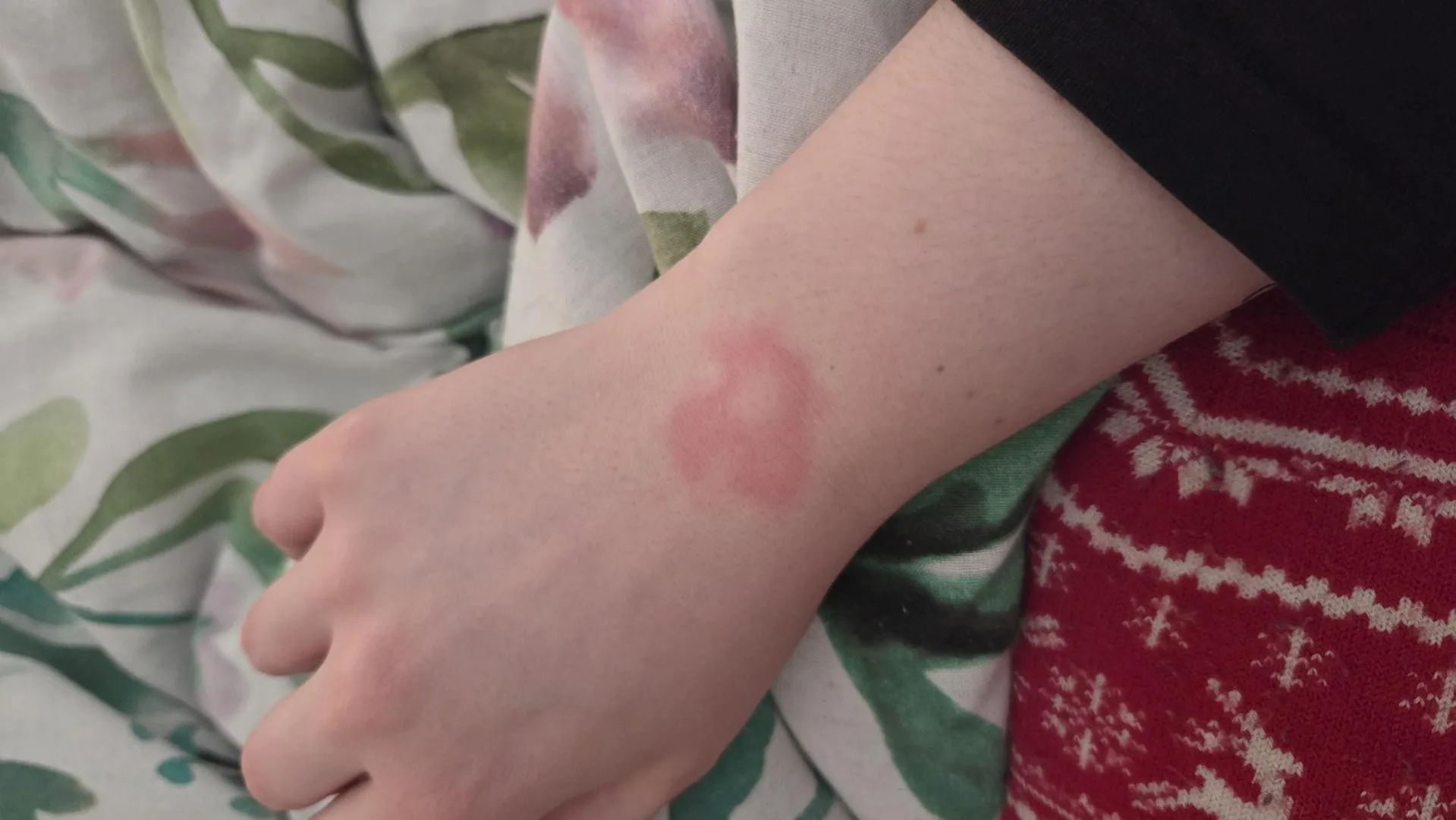
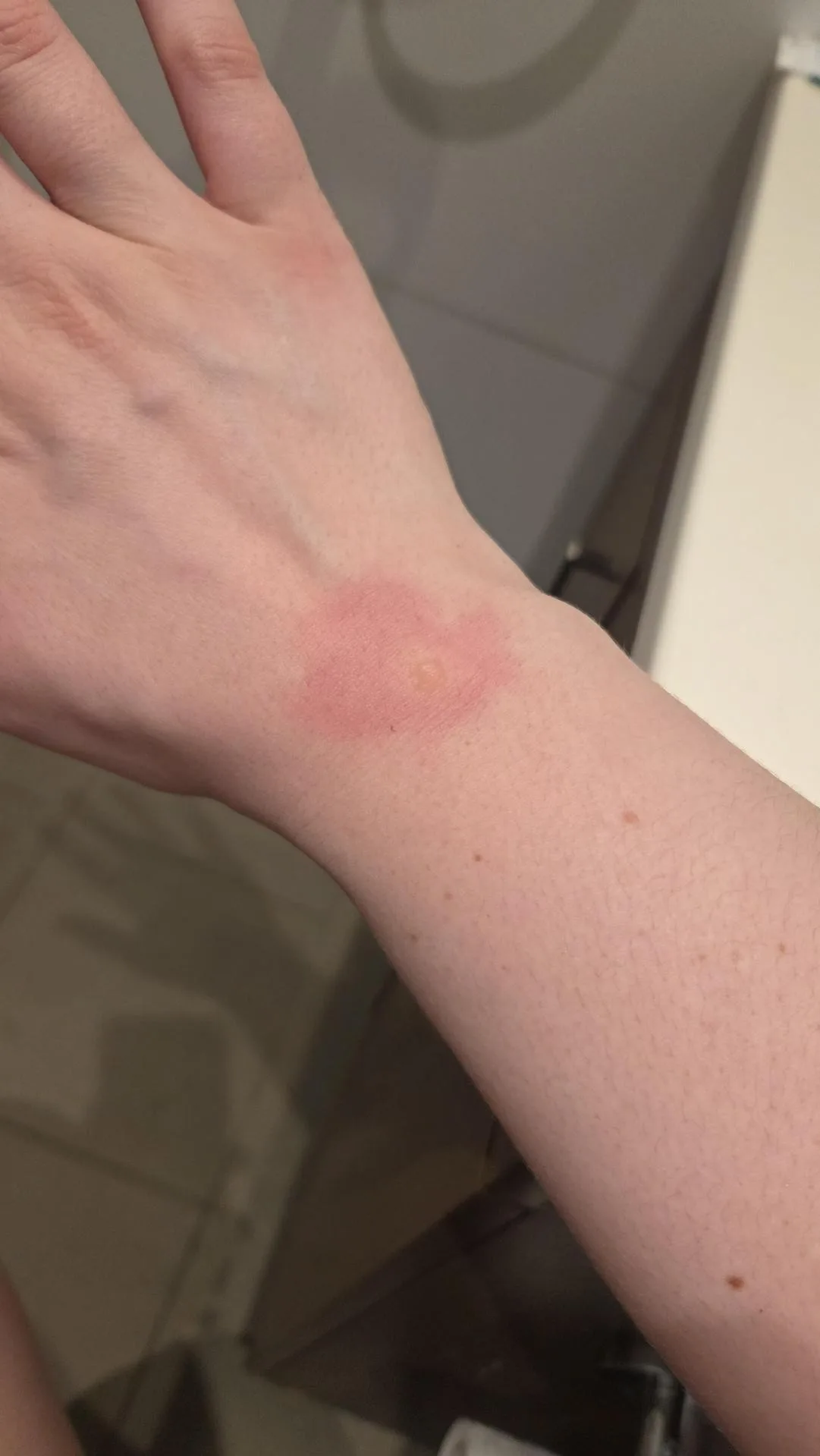
Then, the realisation hit me: white-tailed spider. We had spotted a few around the apartment in recent months. I, of course, had heard the mythic tales of necrotising flesh from their bites, so we kept our distance and maintained a “live and let live and eat mosquitoes” mentality. But it turns out the mosquitoes weren’t around, and so our resident white-tailed spider decided to go for something bigger.
I immediately started catastrophising that I was going to lose my hand. I’m not even kidding. And the Google searches I did only reinforced that notion. But then, I went into first aid mode. I drew a line around the redness, iced it, and logged on to work for the day. When I told my team at morning stand-up that I was bitten, they all (all Australians who know better than me when it comes to the dangers of the native creatures) advised I get checked out.
But it wasn’t until another co-worker told me that her sister was bitten by a white-tailed as a teenager and she ended up with one of those scary flesh-losing wounds. No thank you. So, I went to my local GP to get it checked. She agreed that it was a white-tailed spider bite and told me that the stories of the dangers of its bites have been sensationalised over the years. Praise be.
In fact, a landmark Australian study published in 2003 in the Medical Journal of Australia found that confirmed white-tailed spider bites were unlikely to cause the severe skin necrosis they had long been blamed for. Clinical toxicologists Geoffrey Isbister and Michael Grey led the study, which included 130 confirmed bites from the spider. Pain or discomfort occurred in all cases (ditto), with 27 per cent experiencing severe pain, 83 per cent developed redness (me too), 44 per cent experienced itching (not until it started healing did I experience this), but not one developed a necrotic ulcer.
The researchers concluded that white-tailed spider bites are “very unlikely to cause necrotic ulcers” and that other causes should be investigated when someone develops a severe ulcer following a supposed spider bite.
Healthdirect, the Australian Government-funded health information service, says explicitly that white-tailed spiders aren’t considered dangerous to humans and that current evidence suggests their bites do not cause skin ulcers/necrotising arachnidism.


The Australian Venom Research Unit (AVRU) at the University of Melbourne is a little more nuanced. It says most confirmed white-tailed spider bites produce a mild local reaction, redness, itching or blistering, and that severe tissue destruction is very uncommon. However, AVRU also notes that a small number of witnessed bites have been associated with ulceration or necrosis, so it doesn’t completely rule out the possibility.
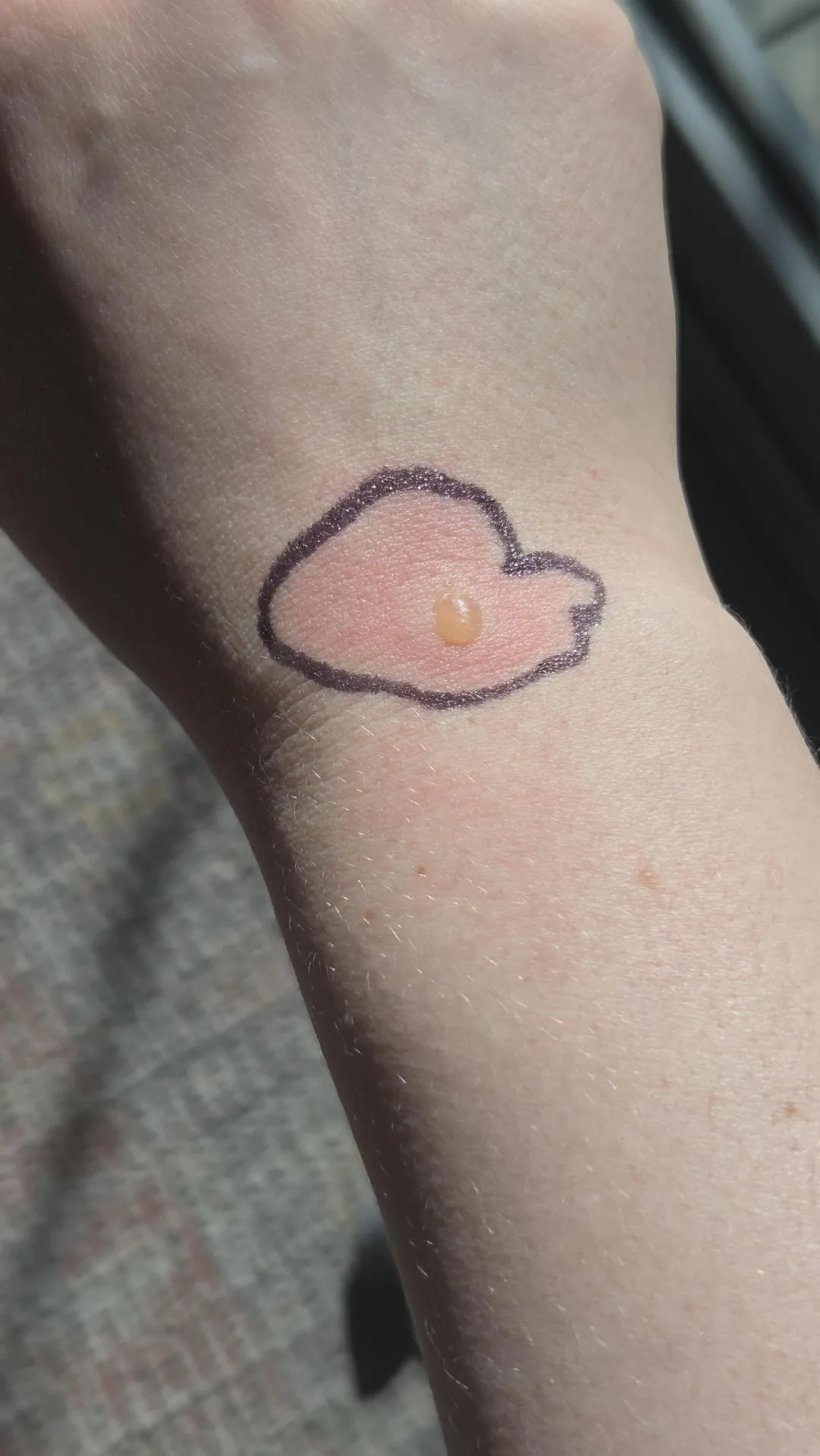
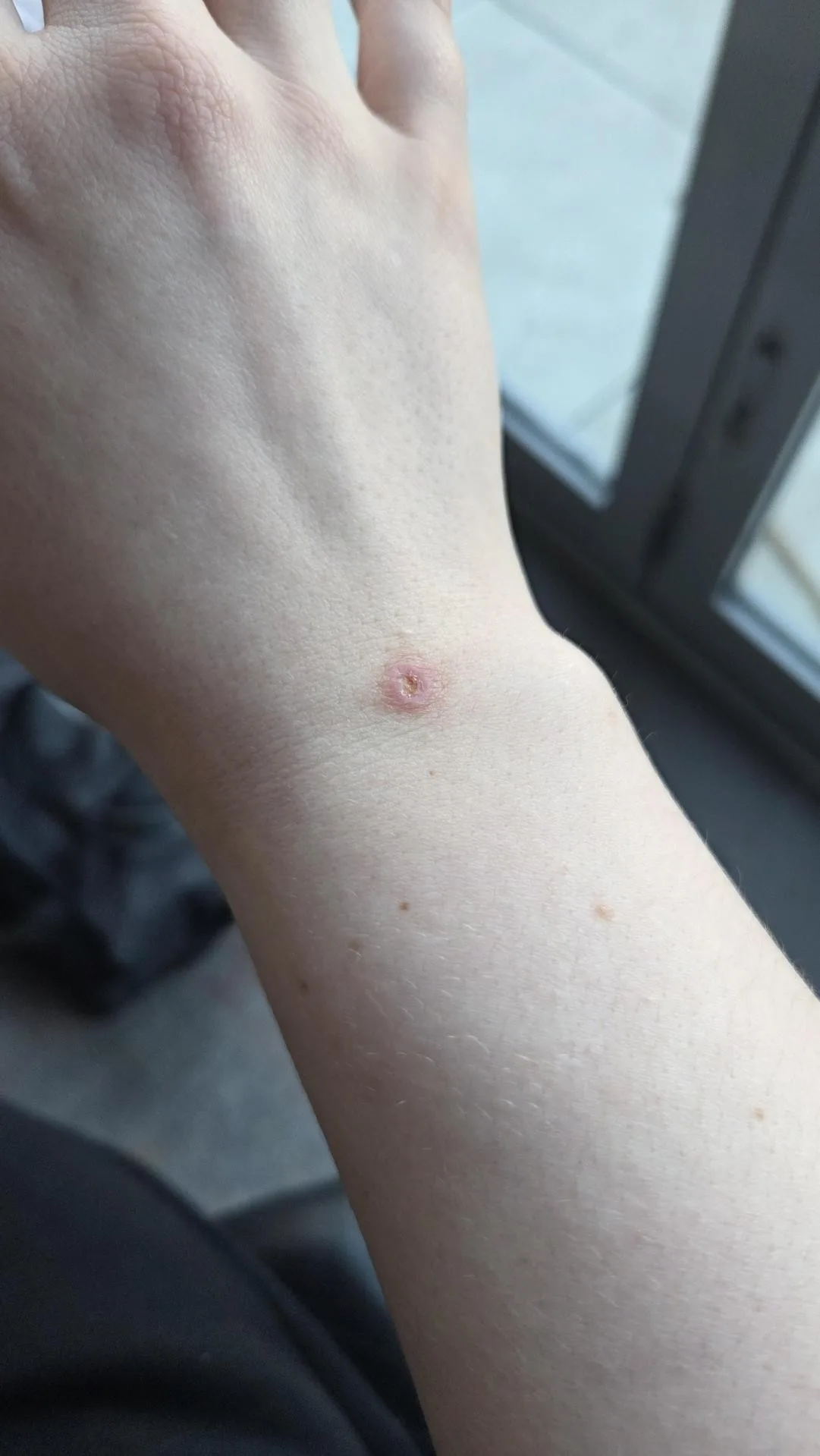
Turns out it may simply come down to what bacteria the spider has come into contact with. And it appears my white-tailed spider kept his fangs clean. So, a proper wash from the on-site nurse, a prescription for antibiotics, and a tetanus shot later, I was deemed good to go.
The redness around the bite disappeared within 24 hours, but the blister stayed for a couple of days (amazingly, it took like four days for it to burst). I kept the area clean and covered with a bandage until it got to the crusty, nearly healed stage. Two weeks later, it’s definitely finishing up and will likely leave a nice round scar – so my hand-modelling days are officially over.
I recognise I was lucky…but so was the spider, as we haven’t managed to locate him. As my partner said, “He got what he was after.”
What to do if you’re bitten by a spider?
If you’ve been bitten by a spider, try to stay calm. Most Australian spider bites cause only local irritation, but bites from funnel-webs, mouse spiders and other large black spiders can be medical emergencies.
If it was a funnel-web or other large black spider, call triple zero (000) immediately and do not let the person who was bitten move the bite site. Keep the person as still and calm as possible and apply a pressure-immobilisation bandage like an elasticised roller bandage, but not too tight.
If, like me, you were bitten by a white-tailed spider or something similar, wash the bite with soap and water, apply an antiseptic cream if you have one, and use a cold pack wrapped in a cloth to reduce swelling and pain. Paracetamol or ibuprofen can also be used for pain relief, provided they’re suitable for you.
Of course, go see a doctor if you have significant pain, the bite doesn’t settle within a few hours, or swelling or itching gets worse after 24–48 hours. You should also seek medical advice if you’re concerned about the bite.
Call 000 immediately if you develop signs of a severe allergic reaction, including difficulty breathing, a swollen tongue or throat, persistent coughing, dizziness, collapse or difficulty speaking. If you’re unsure what to do, you can call healthdirect on 1800 022 222 to speak with a registered nurse 24 hours a day.
If you’ve been bitten by a big black spider, treat it as a medical emergency. Call triple zero (000) and ask for an ambulance.

