




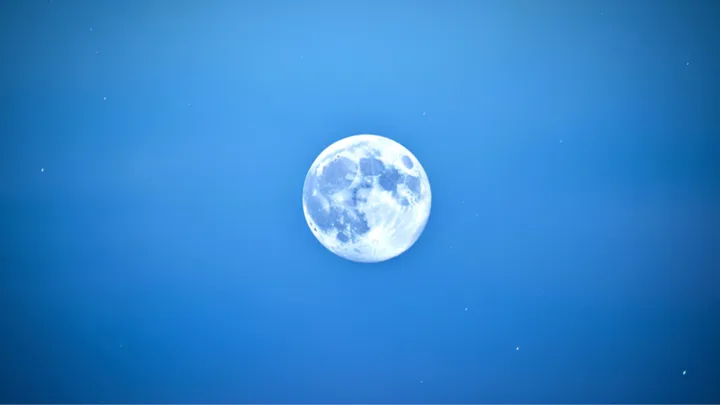
The phrase “once in a Blue Moon” implies something impossibly rare, but the truth is a little more chaotic. The celestial event heading our way on May 31, 2026, isn’t just a quirk of the calendar—it’s actually the result of a decades-old mathematical misunderstanding that the world simply decided to run with.
No, the moon won’t turn a moody shade of sapphire (unlike a Blood Moon, which genuinely blushes red under Earth’s shadow). Instead, we are tracking a quirk of timekeeping, and this year, it comes with a tiny twist.
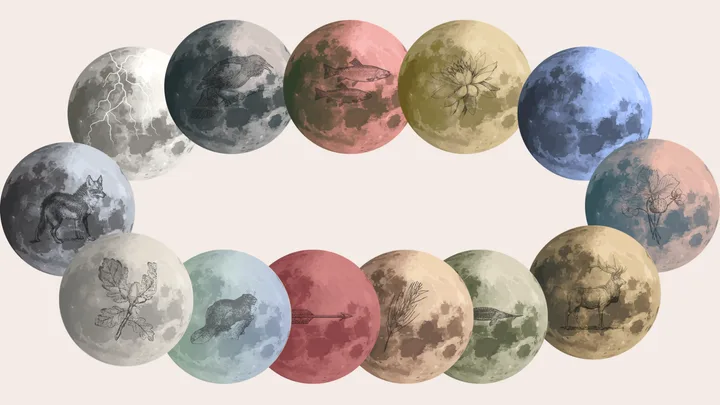
How the Blue Moon got its name
The phrase, “once in a blue moon,” has debatable origins. The most popular origin is from the 1528 satire Rede Me and Be Nott Wrothe. In it, there’s a phrase, “If they say the moon is blue, we must believe that it is true.” The line was intended to be absurdist, as in, it couldn’t possibly happen.
However, there’s nothing to really connect it to the lunar phenomenon. It wasn’t until 1937 that the Maine Farmer’s Almanac used it to refer to a second full moon in a calendar month.
In olden times the almanac makers had much difficulty calculating the occurrence of the Blue Moon and this uncertainty gave rise to the expression “Once in a Blue Moon”.
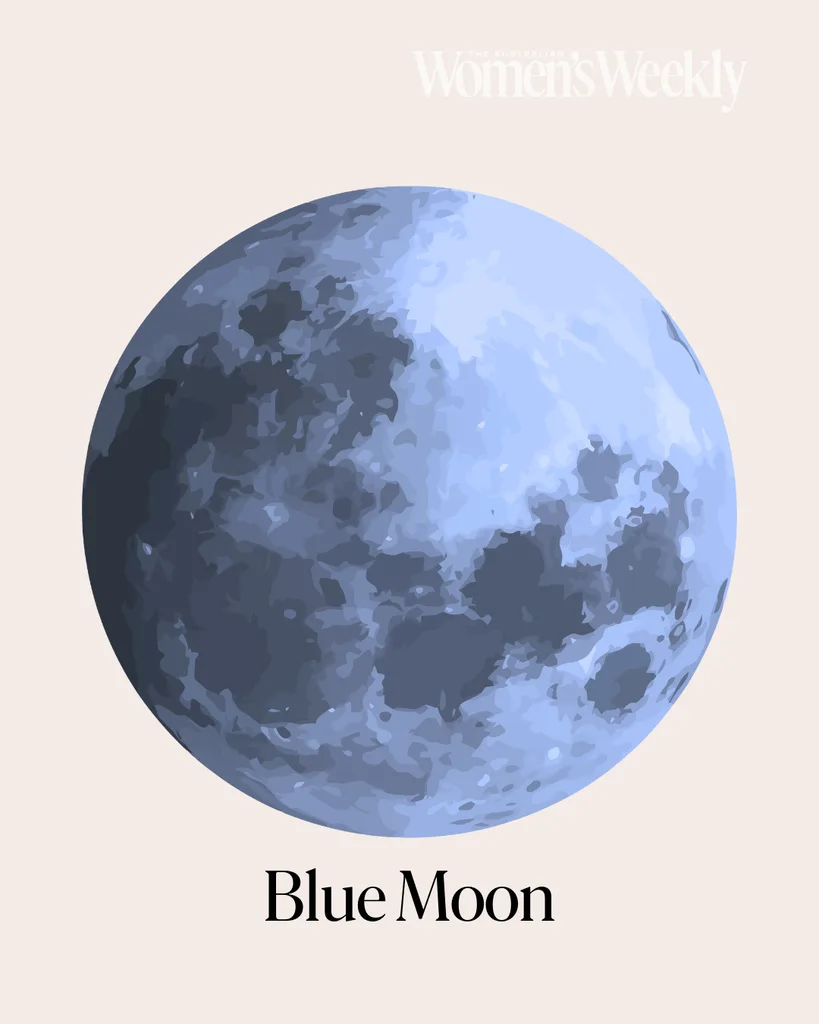
Another reason it ended up with the name Blue Moon is that, according to the Almanac, it occurred sporadically, and so it couldn’t be given a season-appropriate name, like the other full moons.
So, as it was rare-ish and random thanks to the twelve-month calendar, it ended up with the name, Blue Moon.
How often does a Blue Moon happen?
Well, it depends on which Blue Moon you mean. There’s the monthly Blue Moon, which happens when there’s a second full moon in a single calendar month (like in 2026), and there’s a seasonal Blue Moon, which is the third full moon in an astronomical season that contains four full moons.
Because our calendar months don’t perfectly align with the Moon’s 29.5-day cycle, these “accidental” Blue Moons pop up roughly every 2.7 years. They aren’t magical anomalies; they’re just the universe outrunning our 12-month calendar. Although there are 12 months in a year, there are 13 full moons. However, as many of us know, 13 is considered unlucky.
What’s so special about May’s Blue Moon in 2026?
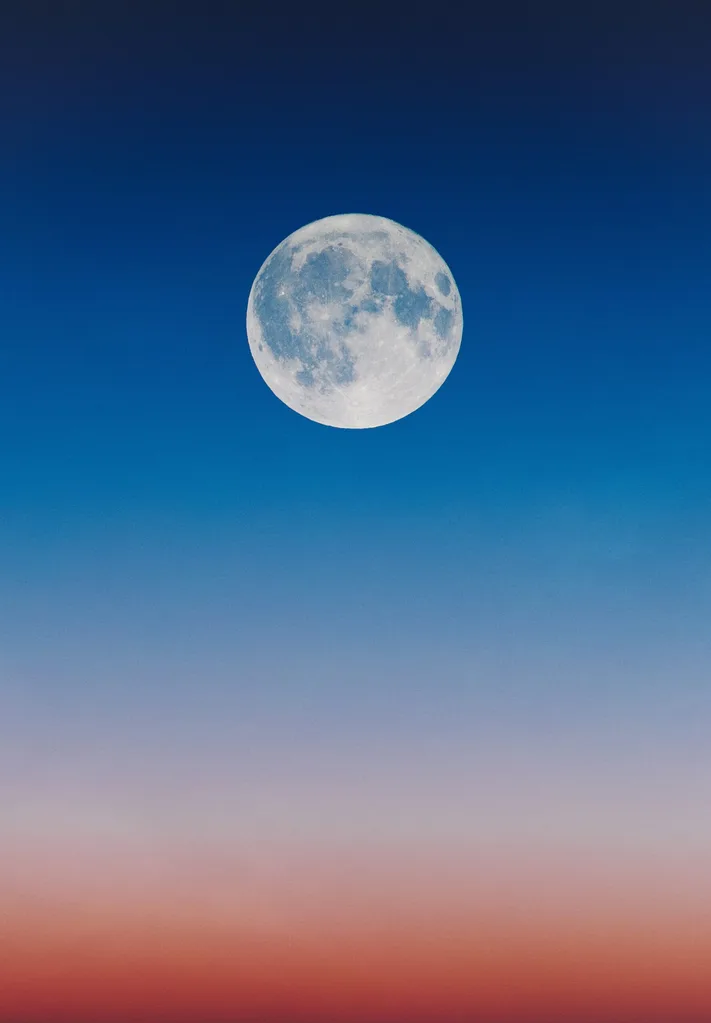
While a standard Blue Moon happens every few years, the event on May 31 (peaking at 6:45 pm AEST) carries a rare distinction: it is also a Micro Full Moon. Think of it as the opposite of a Supermoon.
Because the Moon’s orbit isn’t a perfect circle, it reaches a point furthest from Earth called its apogee. When a full moon hits this exact crest, it appears roughly 14% smaller and dimmer than usual.
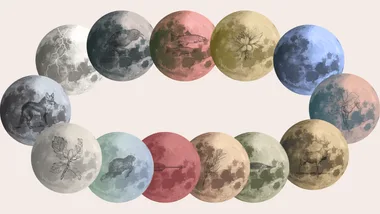

And sadly, yes, although it might be cold down here in Australia, it won’t be blue.
How to spot it in the Autumn sky?
So, even though it will peak before the sky is sufficiently dark for many of us, it will stay fairly full for a couple of nights.
For those of us rugged up against the late-May chill across Australia, the cosmic view will be crisp. Because it is a Micro Moon, it won’t have that dramatic, oversized “moon illusion” as it hugs the horizon. Instead, it will look like a sharp, brilliant, pocket-sized pearl high in the sky.
Step outside just before 7:00 pm AEST, look east, and enjoy a view that is still a perfect excuse to look up.

