





At a glance…
- CONTENT WARNING: This article touches on topics which may be triggering for readers.
- Following the Bondi Terror Attack in December 2025, Australians donated blood in record numbers. Sadly, blood supply has plummeted to its lowest level in under a decade.
- 16,000 blood donations nationally are needed to refill the blood supply.
- If you are keen to donate, you can do so now on lifeblood.com.au or via the Lifeblood app.
I have been donating blood for over a decade. Over the years, I’ve spoken to many people who are curious about what happens. So I’ve broken down what will happen in a blood donation and why it can help people in times of need.
In light of the Bondi Terrorist attack, many are flocking to Lifeblood donation centres. Thanks to the massive community support, Lifeblood shared the day after the shooting was a record blood donation day across the entire country.
“Close to 50,000 appointments were booked, more than double the previous record. A total of 7,810 donations of blood, plasma, and platelets were made across the country.”
It broke two national records.
Please be aware that blood donations are needed all year round, and there is a limit to how much blood a facility can store. Lifeblood were inundated with donors and had to cancel booked appointments and turn people away. If you cannot make an appointment due to the influx of people, please make it for a future date. You would be saving up to three lives.

However, as is common after major events, donors don’t return to donate. Despite tens of thousands donating following Lifeblood’s winter campaigns, supply has plummeted 60 per cent to the lowest level in almost a decade. It said that 16,000 donations are urgently needed to restock supply.
“The number of people affected by this year’s cold and flu season has remained unusually high from August to early October, contributing to persistently low donor turnout,” Lifeblood Chief Customer Officer Cath Stone said. Even if you have the sniffles, Lifeblood cannot accept your blood donation as it could potentially harm the recipient of the donation.
“An ageing population, increased cancer prevalence, and longer life expectancies are just a few of the reasons we’re seeing demand continuing to grow for both blood and plasma treatments,” Cath added. “Yet the number of people donating remains low at just three per cent of the population, and we need that to change.”
If you’re unsure about what happens when you donate, I’ve shared my experiences below.
What happens when you donate blood?
As soon as you arrive at a blood donation centre, you are checked in by staff and given a form to fill out. This form asks questions regarding your general health and whether you’ve travelled recently. Some of the questions are quite personal, but keep in mind you are sharing bodily fluids with another human and plenty of viruses and diseases can spread via our blood. All the information is kept confidential; it’s just for screening your donation.
After you’ve filled out your form and returned it to the counter, you wait (and get a free snack or a glass of water) until your name is called.



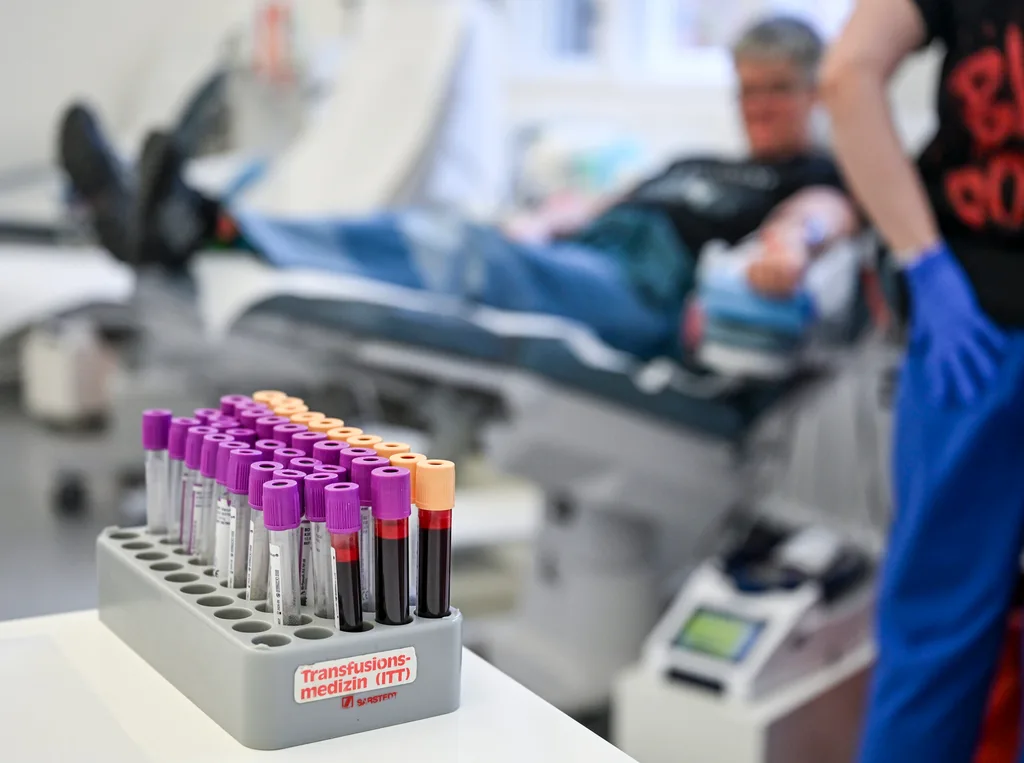
Once you’re called, you’re brought into a private room with a healthcare professional who goes over your answers and assesses whether it’s safe for you to donate blood. They will take your blood pressure and prick one of your fingers to do a haemoglobin test to ensure your iron levels are at a suitable level for donating. It’s a small prick, not too painful at all.
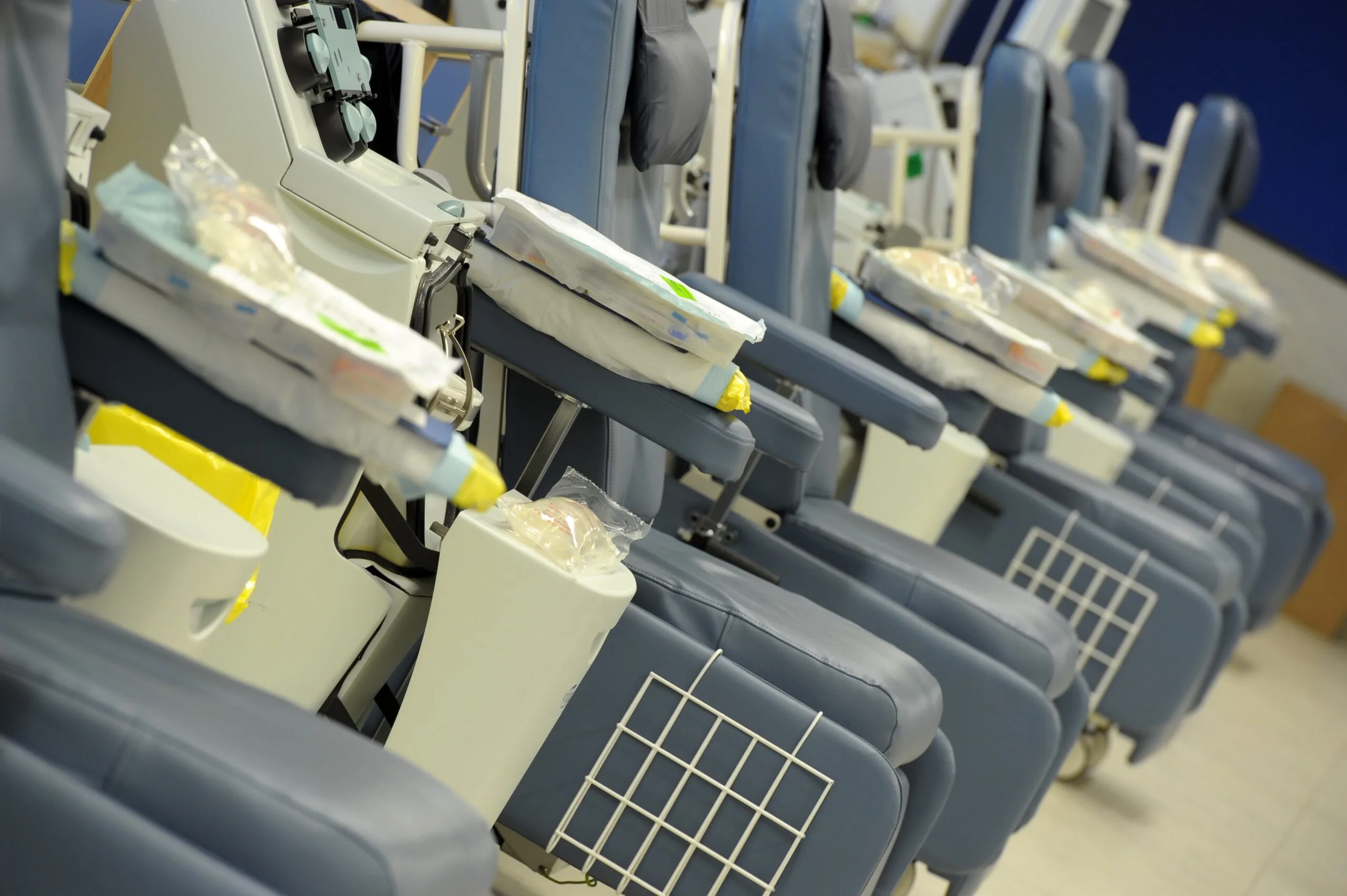
Once you’re cleared to donate, you’re brought into the donation room and get settled on a reclining chair.
You can choose which arm you’d like to use for the donation. For me, I have tricky veins that are barely visible despite being so pale. But I’m also right-handed, so the veins on that arm are usually the best bet for accessing a vein. Everyone is different. The healthcare professional will place a blood pressure armband on your upper arm and inspect the donation site. They will clean the area with iodine or something similar.
Before they insert the needle, they will ask you certain questions to ensure you’re still okay (your name and date of birth, for instance). Then they will set up the needles. They will also give you a ball or a squeezing toy and ask you to squeeze to promote blood flow to the area.
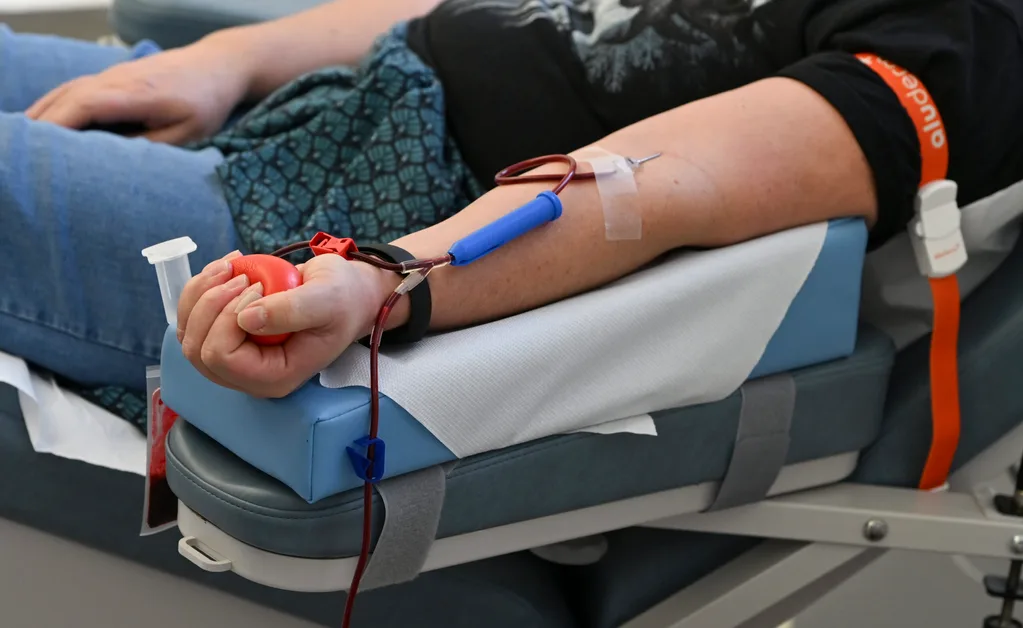
Then, once your vein is visible, they will ask you to stop squeezing and insert the blood collection needle. Once they do, blood will immediately start flowing. The needle is connected to a blood collection bag, and along the line, there is a blood collection chamber. They will take some blood samples from that collection chamber to assess your health. As you can imagine, they don’t want to give compromised blood to a patient. They may also tape down the needle and collection tube to ensure they don’t move during your donation.
After that, they will again ask you questions to ensure you are still okay (name, date of birth) and then leave you to it.
Your blood will be collected in a bag, which is left on a see-saw machine which keeps the blood moving so it doesn’t coagulate. One time when I was donating, they were out of see-saw machines, and the healthcare professional held my blood bag and kept moving it until I had donated the appropriate amount. It was a lovely bonding moment as she held my blood in her hands.
The machine will beep if your blood flow slows or stops, which can happen if the line is impacted or you become faint. It will also beep when the donation is complete.
Once complete, the healthcare professional (it may be a different person from the one who put your line in) will stop the machine and ask you those questions again (name, date of birth) and remove the needle.
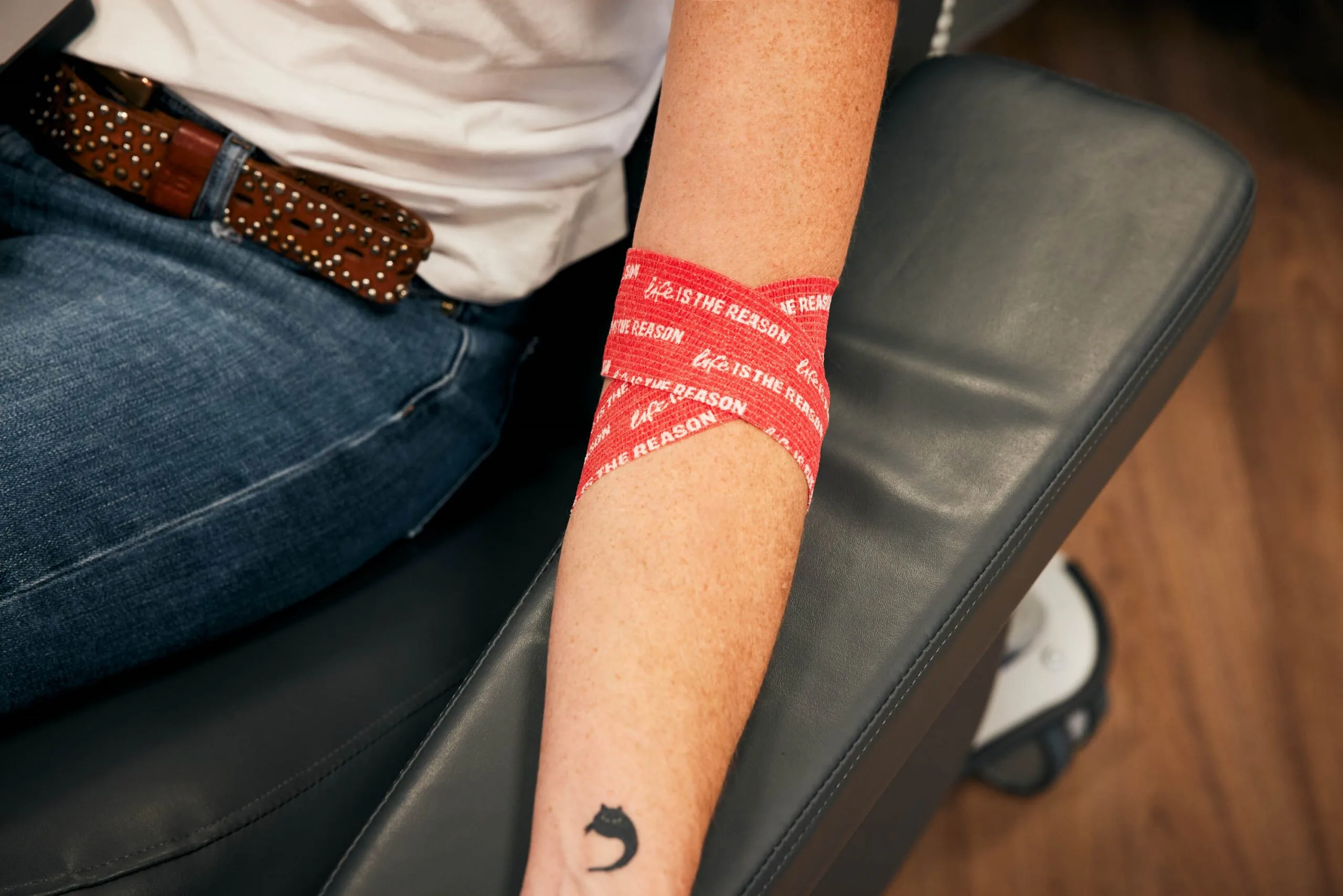
They will ask you to hold a cotton ball to the needle site and then wrap your arm in a bandage. Then you can go relax in the recovery suite and enjoy some snacks and water.
What happens in a plasma donation?
When you get to the donation centre, you may be asked if you would like to donate plasma. In fact, behind the check-in counter, there is usually a sign which states which blood types are most in need for whole blood or plasma. Plasma is the liquid in which your other blood cells (red and white blood cells) and platelets are suspended.
The plasma donation pretty much follows the same steps as a whole blood donation. However, as you are only donating part of your blood, there are a few extra steps.
Instead of your blood donation line being connected to a bag, it’s connected to a machine with two spinning dials and a centrifuge. Your blood is collected in three stages. After each stage, the machine filters your blood and separates the blood cells from the plasma. The plasma is then collected in a bag. Fun fact: if you are on birth control, your plasma will have a greenish tinge. And if you have a high-cholesterol diet, your plasma can show a bit of foam. So, it can also be a way to see where your body is at. After three rounds, your blood cells are returned to you with saline, which mimics plasma.
Fair warning, the saline can be quite cold. If the staff offer a blanket or a heating pad, take it. There’s something disconcerting about the cold coming from inside your veins, so take the heating pad. Plasma donations are not as draining, pardon the pun, as whole blood donations, but they are just as important.
Donated plasma is used to help those recover from severe trauma, such as burns, cancer treatment, and those living with liver or clotting factor disorders. It is also used to make anti-D injections, which can only be made from donated plasma. Around 17 per cent of Australians who become pregnant need anti-D injections to keep their babies healthy.
For instance, if a pregnant person has a negative blood type and their baby has a positive blood type, the parent’s immune system may view the baby’s blood cells as foreign and produce antibodies which attack the RhD-positive blood. It can lead to severe anaemia, jaundice, brain damage, and, in severe cases, stillbirth. The anti-D injections stop the immune system from creating the antibodies.
How long does a donation take?
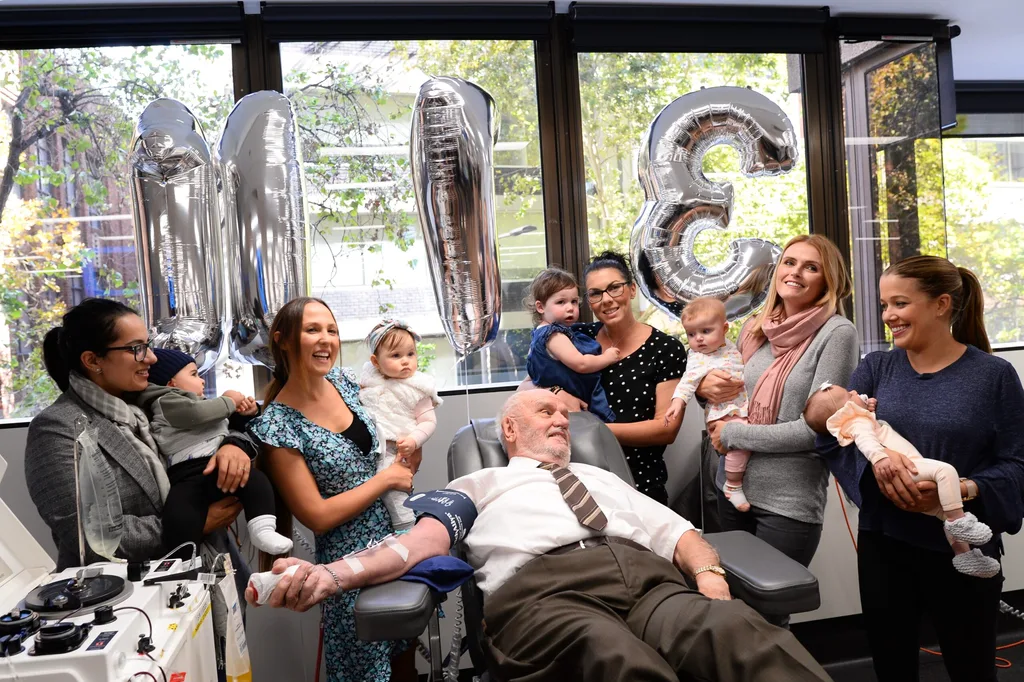
Your entire appointment can take up to an hour, depending on how many people are there and how long you spend in the recovery suite. However, a regular blood donation itself takes about 7-10 minutes.
However, a plasma donation can take up to an hour, and platelet donation can take up to two hours.
How often can you donate blood?
You can donate blood once every three months. The reason behind the wait is to ensure you have built up enough blood cells. However, you can donate plasma or platelets every two weeks (or four weeks after a blood donation).
What blood types are in high demand?
All blood types are in high demand! There are eight common blood types: A+, A-, B+, B-, AB+, AB-, O+, O-.
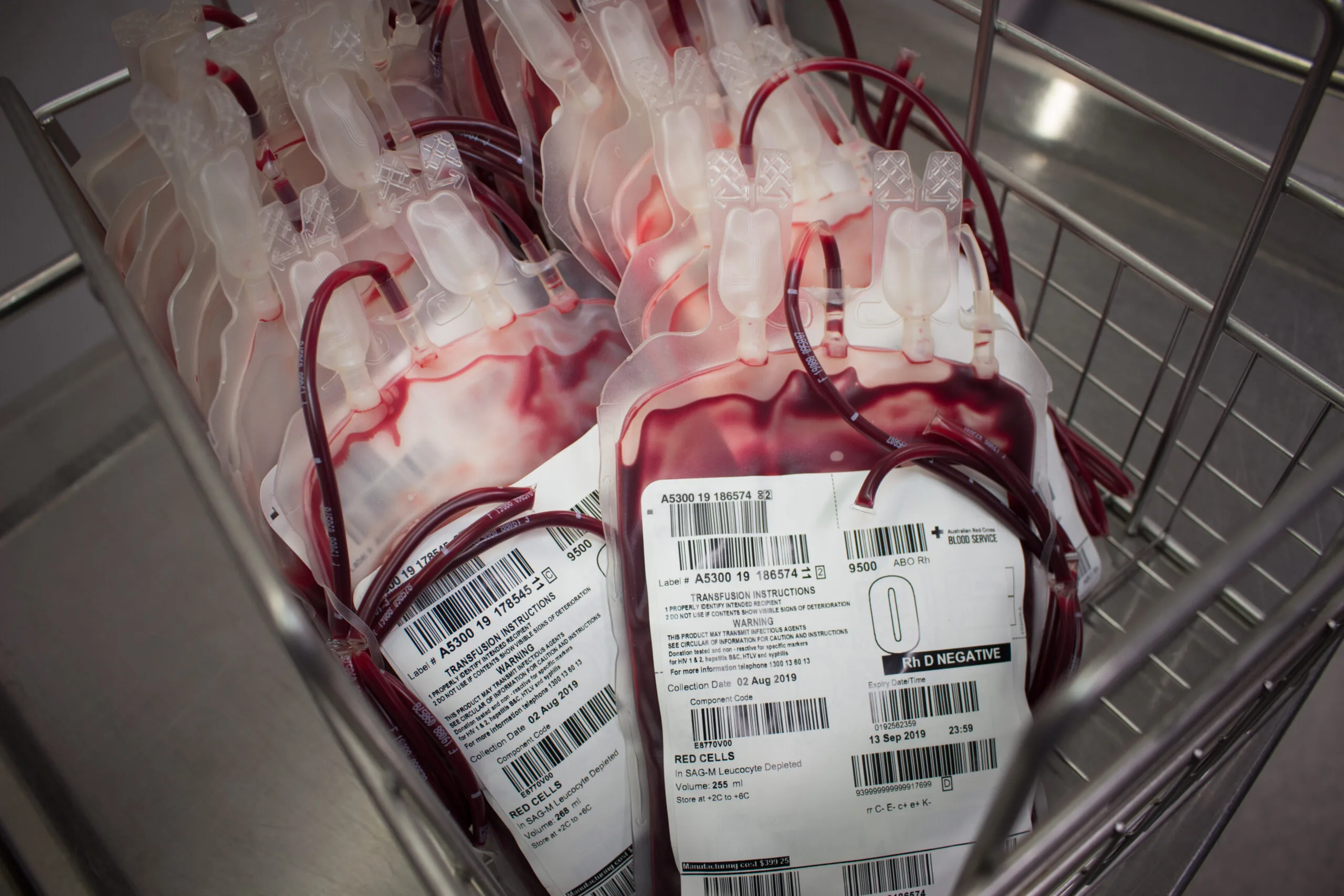
However, O-negative (O-) blood is the “universal donor” (that’s mine!), meaning it can be given to anyone regardless of their blood type. As a result, it is generally always the most sought-after blood type by donation centres. AB+ is the “universal receiver”; a person with that blood type can receive any blood. Furthermore, AB plasma can be donated to anyone.
Fewer than 1 in 14 Australians have O-negative blood type, about 9 per cent of the population. However, it’s not the rarest. That title goes to AB-negative, which is about 1 per cent of the population, followed by B-negative at 2 per cent.
Who can’t donate blood?
Unsurprisingly, you can’t donate blood if you’re sick. As mentioned, even if you had a mild cold, you shouldn’t donate until two weeks after you’ve recovered. You could potentially put a patient who is already immunocompromised at risk.
Furthermore, you generally are not eligible to donate if you have had a tattoo or a piercing within the last six months. Also, if you are underweight, have a low iron count, or are pregnant, you are not eligible to donate blood.
After many years of campaigning, from 14 July 2025, Lifeblood scrapped its rule which barred gay and bisexual men, trans women and other gender-diverse people from donating if they had unprotected sex in the previous three months. The rule is due to be fully implemented in 2026.
There are many other criteria which could make you ineligible to donate. You can explore those here.
Furthermore, if you are afraid of needles or faint at the sight of blood, I highly recommend that you do not donate unless you want to overcome your fear. The staff at blood donation centres are highly trained and can help you in the event of a fainting spell or anxiety attack. There is nothing wrong with being afraid of blood or needles. Look after your mental health. And if you do want to donate, why not make it a group event with a friend or colleague?
Where can I donate blood?
In Australia, you can donate blood at Lifeblood centres across the country. They also have roving blood donation vans and pop-ups from time to time.
To donate, call them on 13 14 95 or book an appointment on the website here.

