


At a glance…
- Have we forgotten how to have fun without our phones? Former lawyer Mea Campbell is on a mission to help Australians rediscover the joy of spending time offline.
- Her monthly subscription service, The Offline Box, encourages people to put down their devices, try new hobbies and reconnect with the simple pleasures of analogue living.
- From rediscovering childhood pastimes to connecting with loved ones, Mea shares why spending less time scrolling could mean more time enjoying the things that matter.
We’ve all done it. Reached for our phones while waiting for an appointment, sitting on the bus or even watching television. Before we know it, we’ve lost half an hour to mindless scrolling, and what have we got to show for it?
For Mea Campbell, the realisation came while sitting in a hospital waiting room for her husband to come out of spinal surgery.
“I was literally sitting there scrolling through my phone, thinking I should be reading a book or doing something a little better for myself,” she recalls.
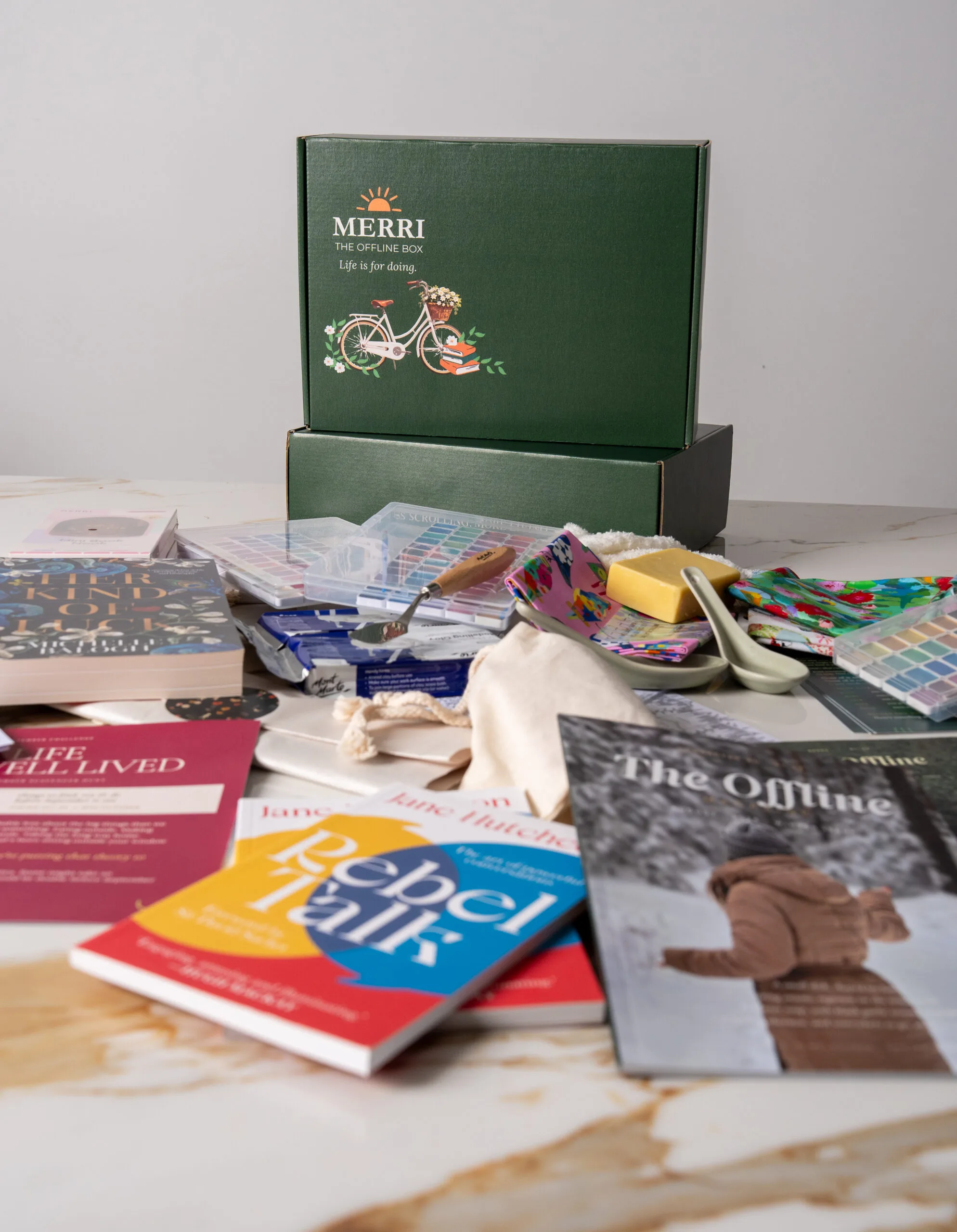
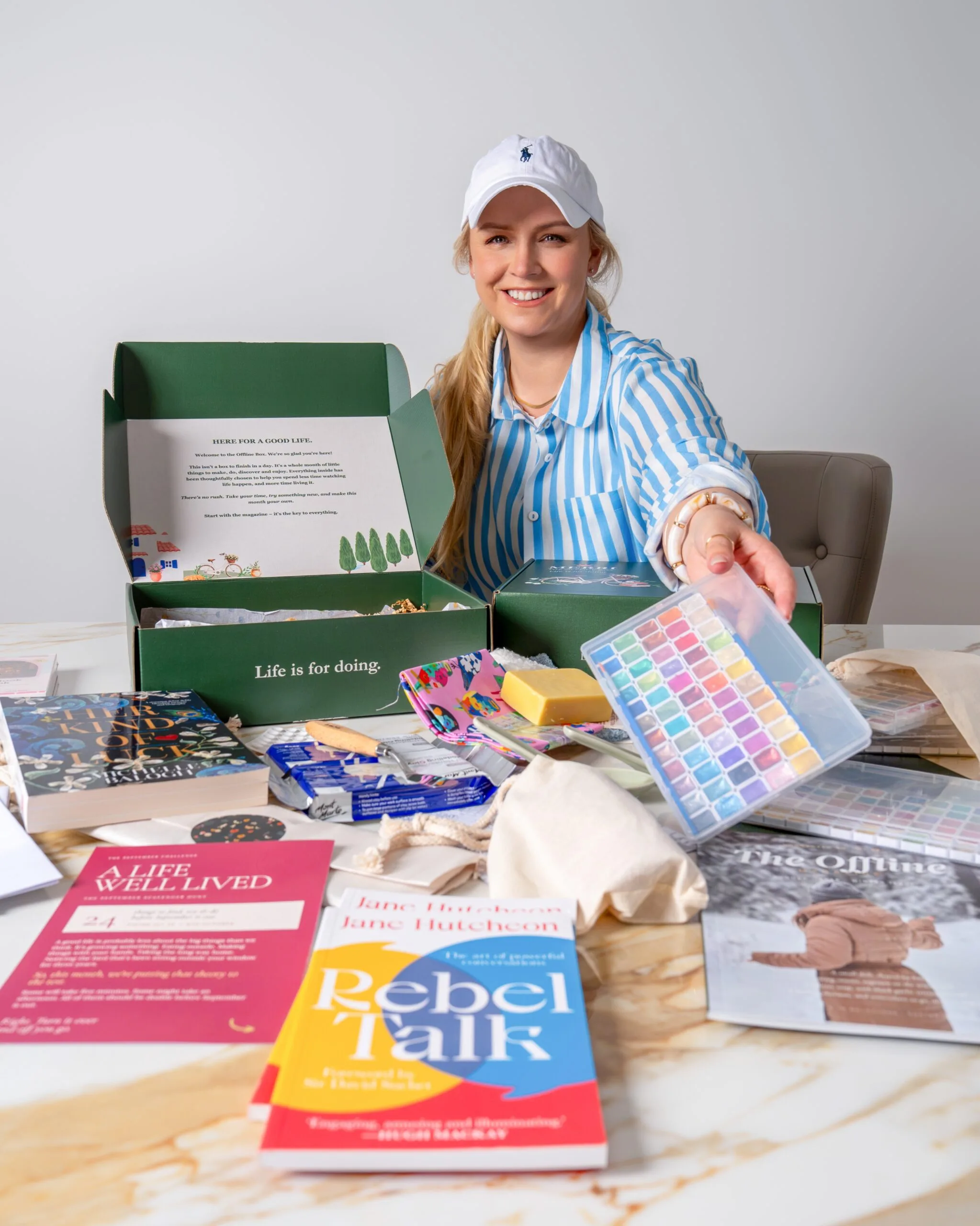
It was a lightbulb moment for the former lawyer, who had been contemplating a career change. What if there was a business dedicated to helping people spend less time on their phones? And so MERRI was born. Its hero product, The Offline Box, is a monthly subscription filled with activities designed to get people away from their screens and rediscover the simple pleasure of making something with their hands, learning a new skill or perhaps even finding a new passion. Each box contains craft projects like paint sets, books, and The Offline Magazine and more.

The healing power of hobbies
In the March 2026 issue of The Australian Women’s Weekly, features writer Genevieve Gannon explored the “healing power of hobbies”, examining the cognitive, social and mental health benefits of activities such as knitting.
“When you’re knitting, you’re engaging several parts of the brain,” Pat Pillai, a member of Anything Goes Contemporary Arts Group, told The Weekly for that feature. “There’s the mathematical, cognitive side, where you’re interpreting the pattern. And there’s the creative side and the tactile feel and the colour of the yarn. Plus, there’s the relaxation aspect of it. Then the connection with others that you find through knitting.”

Meanwhile, researchers are increasingly examining how our digital habits affect our attention, memory and ability to concentrate. Although the evidence is still evolving, there’s growing interest in what happens when we spend less time passively consuming information and more time actively engaging with the world around us.
And there’s another potential side-effect: Having a little fun.
We spoke with Mea about the inspiration behind The Offline Box, why so many Australians are craving a break from their screens and how rediscovering the hobbies of our childhood might be just what we need.
Was there a particular moment or personal experience that inspired you to create The Offline Box?
Scrolling! To be honest, I’d just become increasingly aware of how much time we all spend looking at our phones. Everywhere you go, there are people looking down at their screens: in doctor’s surgeries, waiting at the chemist, having coffee, even people walking down the street. And I’m certainly not exempt from that. I do it too!
The actual idea came to me while I was sitting in the hospital waiting for my husband, who was having spinal surgery. I was literally sitting there scrolling through my phone, thinking I should be reading a book or doing something a little better for myself.
I’d also been thinking for a while about my next move professionally, whether to return to practising law or try something completely different. I’d always loved the idea of creating a product-based business but didn’t ever have a good idea for it!
Then, sitting there, thoroughly sick of my phone, I started thinking about how cool it would be if there was a business that actually specialised in the alternative to all of this digital noise. That’s where MERRI came from. The name is a play on the word merry, because the thought process was around a brand centred around happiness and enjoying life.
What do you think we’re missing out on by spending so much of our lives online?
I don’t think we’re necessarily missing out on anything in particular, to be honest. I think it’s more about how present we are for the things we’re already doing. The constant stimulation and pull towards our devices means we’re just less present in general. You could be watching your child’s soccer game, or out having dinner with friends, and it’s a very different experience if your phone is sitting beside you compared with when it’s not there at all.
And the science is pretty interesting around all of this. There have been studies showing that even just having your phone nearby, without using it, can affect your working memory and the attention you’re able to give to things. So it’s not that we’re necessarily missing out on the experiences themselves, but maybe just our ability to enjoy them.
How do you choose the activities and experiences that go into each edition?
We just have fun with it! There’s no real rhyme or reason. Some months have a beautiful theme that ties everything together. During winter, for example, we leaned into warmth and comfort, with ceramics, clay, homemade soups and lovely things to do on a cold afternoon.
Other months, we’ll come across something unusual or really fun and decide we just have to include it. There’s no set formula. Every box is different, and I think that element of surprise is a big part of why people enjoy them. You never quite know what you’re going to get, and that’s half the fun.
Have any customer stories or responses particularly stayed with you? Has anyone surprised you with what they’ve discovered through The Offline Box?
Certainly! I think with any brand, customers develop their own unique connection to it and what it means to them. That’s what’s been so lovely with MERRI, seeing how much people enjoy the experience. In the first three months, MERRI grew to thousands of subscribers, which really shows just how many people are looking for something like this.
We’ve had sisters living on opposite sides of Australia opening their boxes together over video calls, mothers and daughters subscribing so they can enjoy the same activities despite living in different states, and parents telling us they’ve spent entire afternoons sitting around the table with their children, working through the activities together.
Many women are juggling careers, families, caring responsibilities and endless to-do lists. What would you say to someone who feels guilty about taking time out just for themselves?
I don’t think any woman reading this needs to be reminded of the juggle. I think there’s an expectation these days that we should somehow be doing it all. Successful careers, being wonderful mothers, partners and friends, keeping beautiful homes, and then there’s the pressure to look after our physical health, mental health and general wellbeing on top of everything else! It’s exhausting for most of us, and I’d wager that most women feel like they don’t have time for themselves.
But at the end of the day, being happy is the best thing for everyone. It’s that oxygen-mask on a plane analogy: you have to look after yourself before you can properly look after everyone else. And I think to look after yourself, you need to do things that make you happy.
If someone wanted to start spending more time offline but didn’t know where to begin, what would you suggest? What’s one small change they could make this week?
Put your phone down. Obviously, this isn’t an issue for everyone, but if anyone feels like they’re spending too much time online, it’s worth looking at how much time you’re actually giving to that little brick of glass. The statistics around this are pretty interesting.
[Editor’s note: Just how much time are we spending on our phones? According to a 2024 Australian Government survey of more than 2,000 Australians, 60 per cent reported spending at least three hours a day on their mobile phones. That’s the equivalent of at least 45 full days a year. Meanwhile, the Australian Bureau of Statistics’ 2024 Time Use Survey found that one in four Australians aged 15 and over spent some of their free time checking emails, scrolling social media or browsing online on their diary day, averaging one hour and 23 minutes on those activities.]
Is there a hobby or activity from your childhood that you wish you’d never given up?
Probably just living a little more like I did as a child, to be honest! I grew up on a farm in a small country town, and like a lot of Australian kids, I spent most of my childhood outside. We had animals; I rode horses, played all sorts of sports, and we were always finding something to do. I don’t think there was one particular hobby. It was more just that way of life. Being outside, being active, having fun and not really thinking too much about it.
And then you grow up, have children, build a career, and life gets busy. I think building MERRI has actually given me the opportunity to rediscover a lot of that myself. I’m constantly researching new hobbies, trying different activities, making things and discovering things I’d probably never have thought to do otherwise.
It’s been one of the loveliest and most unexpected parts of building this business. I’m creating products to help other people enjoy more of their lives offline, but in the process, I’ve found myself doing exactly the same thing.

