





AWW: The Chateau on Sunset is a bit of a departure for you. Previously you’ve excavated the stories of women from history. This is a re-imagining of a classic novel. What prompted the change?
Natasha: “I wanted to make sure that I wrote a book that had all the hallmarks of a Natasha Lester novel so there’s still lots of fashion. There’s still a gorgeous love story. There’s still that sweeping saga and there’s still a story of a woman forgotten by history. You know, women who bring us hopes and dreams on the big screen and without whom movies would not have taken off the way they did, and streaming would not have evolved out of that. So, women we owe this big debt to. But I also wanted to do something that moved out of that World War II France arena that I had been writing in for such a long time.
There were a few reasons for that. One of them was The Mademoiselle Alliance was about probably the most extraordinary woman in war-time France I feel I’m ever likely to come across. I was worried I wouldn’t be able to find another woman whose story was quite as epic in scope in that timeframe and from that place. I didn’t want to embark upon writing another book that might have felt lesser than The Mademoiselle Alliance.
I also think it’s really important to stretch yourself creatively, take risks and try new things. That’s how you grow as an author. I also think readers like to see you experiment and having fun while still remaining true to the hallmarks of your style. Hopefully I’ve struck that right balance.
It’s certainly fun, and a really interesting combination. You’ve taken a story from classic English literature and situated it in the Hollywood studio era. How did you bring those two elements together?
It was a bit of a flukish thing. I always feel like my book ideas come from two seemingly disconnected ideas suddenly sparking off against each other in my brain.
Normally I find one part of that idea in the research I’m doing for the book I’m currently writing. But because I’d said I’m not going to write WWII France, I couldn’t find that part of the idea in the research because all my research for The Mademoiselle Alliance was WWII France.
So I had to sit down and brainstorm from scratch, which I hadn’t done for a long time. I was a bit worried how that would go. I waited until I was somewhere I thought would be an inspiring environment in the hope that would prompt really good ideas.
I was on a train with my oldest daughter going from Venice to Florence with my notebook, brainstorming. I had this little note about The Chateau Marmont in this notebook because I’d read this article online about three weeks before I went on that train journey. I don’t know why I clicked on the article. I don’t know what led me there, but I read this article and it talked about a lot of the stars who’d stayed at The Marmont. I didn’t realise so many stars had stayed there. Pretty much anyone you’ve ever heard of has lived there at some point. It was presenting a lot of the stories about the things they got up to in this quite fun way. I thought, ‘Wow, this is such a great setting for a book. But it’s a setting without a story. I don’t have a story to plug in there.’ I’d written it in my notebook just in case the right story came along.
So, I was sitting on this train, looking at all of these scraps of ideas just like that, little bits that weren’t big enough for a whole book. I began thinking about books I’d read recently that I’d really enjoyed and one of those was Barbara Kingsolver’s Demon Copperhead which is re-imagining of David Copperfield.
What I loved about her book was that even if you are deeply, deeply familiar with David Copperfield, you still had no idea where Demon Copperhead was going to go. The plot still felt fresh. The characters felt different, but the resonance of the classic was there. I’d also read Ann Napolitano’s Hello Beautiful which re-imagines Little Women in the same way.
I thought, ‘What if I do that with my favourite classic, which is Jane Eyre?’ The minute I had that idea I could see out the train window, instead of Rochester’s Thornfield Hall, the gothic Chateau Marmont as being the setting for this re-imagining of Jane Eyre. It was just those two things, colliding in my brain and thank goodness they did because the minute they did, I thought: that’s what I’m going to do.
The Chateau feels like a really nice fit for a gothic narrative. What is it about that era and that location that aligns so nicely with those gothic stories?
I think it’s because gothic stories are so often about women finding their voice and having to navigate through a whole layer of secrets in a closed environment and flourishing like a weed in this environment that otherwise tries to suppress them and keep them down. They find the little crack and they start to grow.
That’s what this story was all about. It’s about all those actresses. If you think of someone like Marilyn Monroe, she had a lot of power because she had an adoring public but the studio tried to make her believe that she didn’t have any power. For them it was better if she didn’t know how much power she had. She tried to push back against them. She refused some roles that she didn’t want to do, playing another dumb blonde. For refusing those things she was called a difficult and dangerous woman. The mad woman in the attic, almost. But, how is it mad and difficult to refuse to do something that demeans and diminishes you?
I loved all of those parallels with these women in this cloistered enclosed Hollywood environment which does feel like a locked room scenario in a way, the way they’re all hemmed in by their contracts and The Production Code and The Hays Code. Some of them managed to flourish, and the women that didn’t, I wanted to present in this book so we could look back at the genesis of what we found out during the MeToo movement. This is where it all began and this is what created that culture that so horrified us when we discovered all of those stories.
Can you tell us about your research trip to The Chateau Marmont?
It was super fun. The main reason I went was because they have this no photography allowed rule, and they enforce that. My daughter, who came with me, and I saw them enforcing that one day in the lobby. Someone took out a phone to snap a photograph of the merchandising cabinet and this beautiful woman who was dressed in all black, who stood at the entrance to the bar and restaurant area, slipped out from behind her desk and said, “There are no photographs allowed.” The guest quickly put their camera away.
It means that if you’re writing a book about it, you can’t access any visuals of what the interior spaces of the hotel look like. I knew there was a pool and I knew there were bungalows and I knew there was the main building but where those things were in relation to each other? You can’t find out. All the things I would normally access online were not available.
It meant I had to go because I didn’t think I could write a book that was so deeply entrenched in one setting without having walked those halls. And I’m so glad I did. You walk in and you can feel the history bleeding from the walls. I loved the way that each room is so different. They furnished them back in the 1930s when all of the once-wealthy Californians were going broke in the Great Depression and were selling off entire households of furniture to raise funds. The Marmont bought out those entire households of furniture and furnished each of the rooms like that.
The Chateau is almost a character in the book. Is there any mythology you learned on these trips that made it into the story?
Yes, I based a big part of the story on the filming of Rebel Without a Cause which happened in one of the bungalows in the Marmont’s grounds. In the book I’ve made the movie Jane Eyre because that was a fun thing to do. But Nicholas Ray, the director of Rebel Without a Cause, lived in one of those bungalows for the entire filming of Rebel Without a Cause. The film was written, cast, they did rehearsals in his bungalow, so the whole thing really happened there.
When you think of that movie, everybody thinks of James Dean because he died so tragically after filming that but the story that most interested me was the story of Natalie Wood, who was his co-star in this movie. She was so desperate to get a part in this movie. She started haunting the Marmont. She would go there every day. Going to Nicholas Ray’s bungalow. He had a stream of young actresses going in. He took advantage of the situation in every way he possibly could. She went out one night with a whole lot of people from the Marmont, got blindingly drunk, drove her car, smashed her car, called Nicholas Ray from the hospital and said, “The doctor just called me a goddamn juvenile delinquent, now do I get the part?” He did give her the part, but he also slept with her.
It’s recorded in all the non-fiction books as a sexual relationship but she was 16-years-old and he was 42-years-old. That’s not a sexual relationship, that’s a man in power taking advantage of a woman who is not even the age of consent in California at the time. I wanted to use that story as a stand-in for all of the things that happened. I thought it was really emblematic of so many of the things that went on in Hollywood at the time.
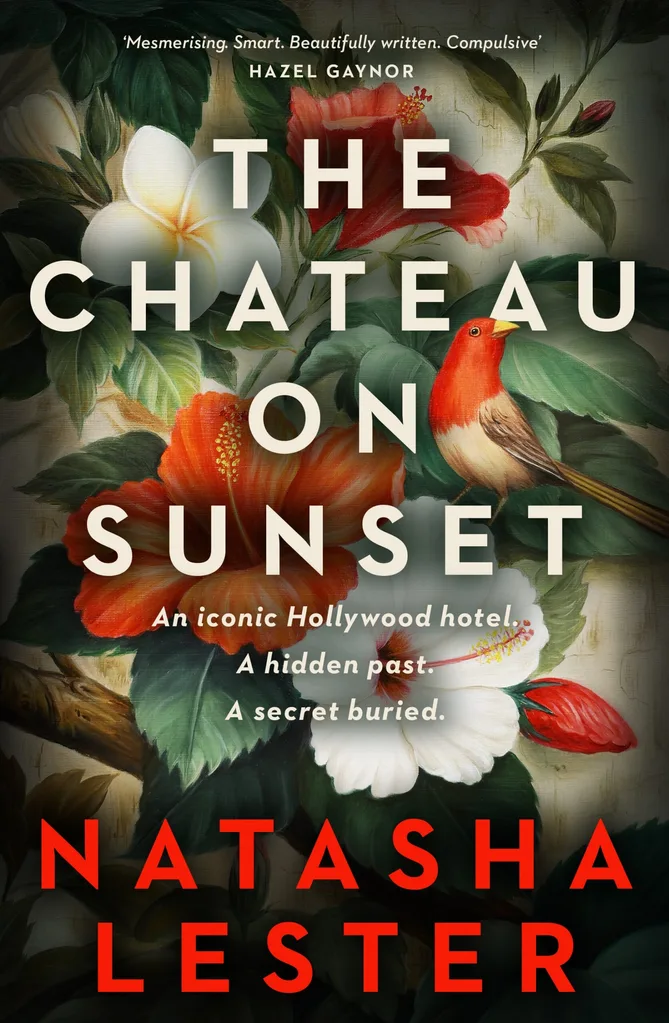
I’m glad you mentioned Jane Eyre. I know the book is very important to you. Is it daunting taking custody of that character and placing her in your own narrative? How did you work through that process?
It is, and there were many times when I was writing the book where I thought, “Oh my God, why did I think this was a good idea? People are going to come after me with knives for taking on the literary cannon like this.” But I also think that when you’re writing a re-imagining, you’re able to do things with that story that are things you’ve always wondered about.
I first read Jane Eyre when I was 10 and I only saw very specific parts of the story. I fell in love with Rochester. The mad woman in the attic totally fascinated me. Helen Burns dying of consumption was wow, mind blown, very tragic. All the very dark stuff really stayed with me.
When I re-read the book multiple times as an adult I really came to appreciate Jane so much more and what I wondered about was, there are so many moments in the book where Charlotte Bronte has Jane Eyre looking out at the hills that are the barrier between her and the rest of England, and the rest of the world, and she’s yearning and longing to go beyond the hills and see the wider world, and travel and explore and have adventures. On the first page of the book, she’s reading a book about birds and there are birds from the Arctic, birds from Siberia, and she’s wondering about Siberia, about the Arctic, about these places that she might never be likely to see, but she wants to see them all the same. She never does in the course of the book. It’s a bit of a romantically satisfying ending, she ends up with Rochester, but is there ever a moment post-conclusion that she regrets not having had the adventures and exploring the world that she wanted to explore?
What I wanted to say in this book is, can we give Jane a romantically satisfying ending and a personally satisfying ending as well, and let her go beyond the hills into the world and have those adventures and grow as a woman?
I loved the translation of Rochester into Theo, the rockstar with the dark past. Is he inspired by a real person, or real people?
I was just having fun and I thought if he was in the 1960s, what would he be? He was, in Jane Eyre, in his youth prone to excess and he talks about that in the book with Jane. So, a 1960s guy who’s prone to excess? He’s going to be a rockstar, right?
I really liked the way in which, on the surface, Theo is exactly the type of guy who fits right into the Marmont. He’s a former addict. He’s a rockstar. He’s got hoards of fans, so you think he’d be down by the pool in the middle of all the parties, shirt off, having a great time. But instead, like Aria [Jones, the character most like Jane Eyre], he never feels quite comfortable there.
I liked playing around with that idea. If you look at Jane Eyre, Rochester’s got this beautiful house, but he never feels comfortable there either. He’s always leaving and going away for long periods of time and only coming back to Thornfield Hall for very short moments.
I wanted to draw on the elements of Rochester that people maybe don’t notice because it’s easier to notice that he’s grumpy and can be a bit deranged at times, but what are some of the other elements of Rochester’s character that made him more someone we could really resonate with as a contemporary audience.
I imagine that was one of the most difficult parts, capturing these gothic characters and placing them in Hollywood, retaining their essence but making them feel like modern characters?
Yes, because you’re really dealing with three timeframes. You’re dealing with the Bronte original timeframe, the ‘50s and ‘60s timeframe, and the people who are reading it in 2026. I think I often delude myself, thinking, “This will be easy.” It’s only when you’re too far in to stop that you think, “Oh my God, this is the hardest thing I’ve ever done. What was I thinking?”
As well as the book dealing with some more serious themes, which I think readers really enjoy, it was also super fun to see what I could do. Flitter and Calliope go through some difficult stuff and come of age over the course of the novel, but they also do some really fun things.
There was a nice balance between the difficulties and the fun things I could do with that storyline.
What can you tell us about your next project?
It’s called Girl of the Year and it’s inspired by two women who were dubbed girl of the year in 1964 and 1965, Baby Jane Holzer and Edie Sedgwick who were part of the Warhol crew. It’s about an anonymous book that was written and published in 1965 about these women. No one’s ever found out who wrote the book. It became a massive bestseller. It was hugely scandalous. Fast-forward 20 years to 1985 and January Johnson arrives at Vogue for her first day at work and her editor tells her that to celebrate the 20th anniversary of this book, she wants January to write an article about it and she has to find out who wrote the book and interview her and have her as the focus of the article.
This interview has been edited for clarity and space.
Read the book review here.

We seek out the best stories. We nurture them. Then we share them. Hachette Australia is a team of expert publishers and passionate readers dedicated to discovering and supporting talented writers and working with them to craft exceptional stories.

Related stories