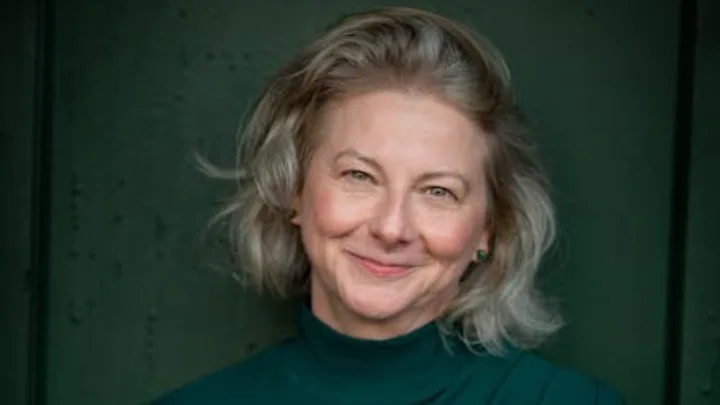
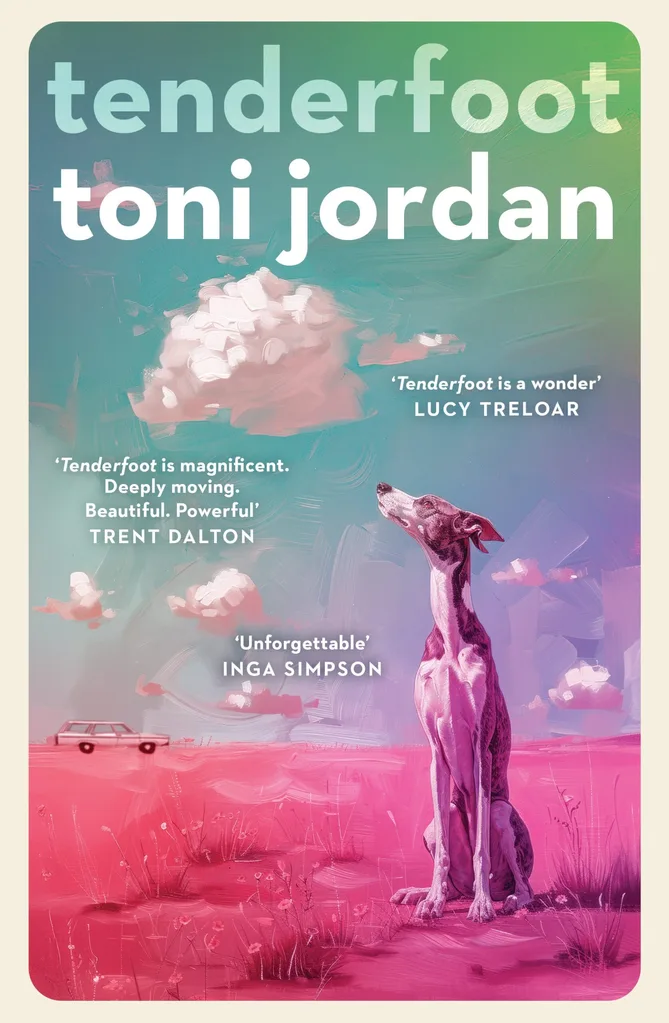
AWW: The blurb describes Tenderfoot as the book you were destined to write, and there are some elements that seem quite personal to you – although it’s very clear it’s fiction. How long has this story been percolating?
Toni: Actually it was the very first thing I made an attempt at when I first started writing Tenderfoot and I got to maybe 10,000 words in and then I got the idea for Addition, and I kind of dumped it and never went back to it. When I tell my friends or people around me about the greyhounds living under the house or working at the TAB, they’re always so intrigued by it. And, it’s certainly not a memoir, they’re certainly not my family but I’m trying to recapture that world.
You write about greyhounds with such tenderness. What made you want to place them at the centre of this coming-of-age story?
Obviously, I adore them but for me personally that was how I thought my life would turn out. I thought I would grow up to be a greyhound trainer and it’s a bit symbolic that almost every single thing I thought about my life when I was that age, none of it has happened. I’m very happy that I’m not a greyhound trainer but it was a bit symbolic because it showed all the things you get wrong about the world, and yourself and the people that you love when you’re little.
Three years ago, during lockdown, we had a chat about your book Dinner with the Schnabels, and you described wanting to capture a feeling a joy. When you sat down to write this story, what were you hoping to capture and convey to readers?
Accepting that this is certainly not my family circumstances, I very much remember the feeling of being powerless as a child and of having really no agency. I think we do kind of glamourise childhood in our heads as this magical spiritual time when you can do whatever you want. But really, it’s not like that at all. I guess I just wanted to record and remind myself that there’s a lot of things children don’t understand and a lot of things they get wrong about the world. And they’re scrambling to catch up.
If I had to say one emotion it’s that we’re all still often children on the inside. Often, I feel like I’m a kid walking around in grown up clothes hoping nobody notices.
I’m curious, given this was the first thing you ever sat down to write, you’ve published many books since and told different types of stories, why did you come back to Andie and her greyhounds now?
It’s been a slow process. I wrote a little thing about my mum for one of the newspapers when she died a few years ago, trying to capture her incredible spirit, which was incredibly unpredictable and volatile and exciting. My mother was a really remarkable person and after I spoke about her a little bit someone else asked me to write another little thing, and I started to think about a child growing up with an unpredictable mother and how that child learns to be extremely observant, and quick to try and decipher things because she needs to keep on her toes at all times.
The story really grew from that relationship between Andie and her mother and the effects that they have on each other.
Andie’s mum Val is a dazzling, frightening, and pitiful character. What was the spark of inspiration for Andie’s mum?
It was very similar to my mum. I think there’s often a couple of true things even in novels. [There is] a bit towards the end of the novel when she acts in this surprising way, which was something my mother always said that she had done for me.
People are so complex. Something that I’ve tried to show in the book is that people are multifaceted and they sometimes do good things, and they sometimes do bad things, and there’s never any easy answer to a person.
Andie’s memories of that era are so vivid. One moment she reaches out her hand “feeling the curve of the screen and the velvet static” of the television. This was instantly recognisable to me, but something I’d completely forgotten. What kind of work did you do to excavate all those granular memories of the 1970s?
I spent a disproportionate amount of time in my childhood watching television and it’s a very vivid image that I have, sitting in front of that screen for hours and hours watching all this rubbish television.
It was actually a quick book to write. It probably took maybe seven or eight months, but I really did spend every day sitting there thinking, ‘Okay, let’s just think about exactly what it was like. What do I remember?’ I have a sister who is a few years younger than me and I would say, ‘Tell me something about what you remember from being that age.’ Quite a few people gave me little stories of things that they remembered so it was a bit of a crowd-sourced effort.
Are there any artefacts from your own upbringing that made a cameo in the Tanner household?
Yes, when I described Andie’s bedroom, she had a bride doll and I had a bride doll and all the girls I knew had bride dolls. Now it seems nonsensical. Why would you have a doll that you barely played with because they were too good to play with, that sat on the shelf in this white satin gown? What was the mentality of that?
And I also had a glory box under the house. When I got to be 13 and I was too old for toys for myself, I got things that would go in the glory box. It’s such a ridiculous concept but it’s so vivid in my mind.
Like Andie, you worked in a TAB as a teenager. Observing the punters up close leaves a deep impression on her. Was it the same for you?
Yeah, that was pretty much exactly what I remember. The TAB was my mum’s so we were always there. She would pay me to sweep the floors and fetch things and wipe down the benches and refill the pens so I was able to remember exactly what that was like.
The novel explores out country’s obsession with gambling, and even comments on how gambling has changed with online sports betting. Do you think you were always destined to write about gambling, having witnessed it up close at such a formative age?
It kind of snuck its way in because up until I was about mid-20s I was just as much into gambling as everyone else in the family. We were all just mad about it. It was just something that all of us did. We went to the pokies and we drove all the way down to NSW to go to the pokies when I was living in Queensland. As I’ve gotten older it’s, again, something that you change your mind about. Something that you think that you were wrong about all those years before. So I think my opinions have snuck out a little into the book at that point.
We see the world from Andie’s perspective. How did you get into the mind of a 12-year-old, and keep that language and world view as consistent as you did?
This is my favourite part of it. It’s the same as when I did historical fiction, and it’s the same as when I wrote the first book Addition which is about a woman with OCD. People are always asking me about my OCD which I don’t have. It’s the most joyous part of fiction because you get to really work hard to see the world from other people’s perspective.
I always say to myself for the first half hour you’re just method acting. You’re just pretending that that’s what you are. I have some good friends with children that age and I would ask them what they’re thinking about and get little hints that way. Disappearing into somebody else is such a fun privilege to have.
Read the Tenderfoot book review here.

We seek out the best stories. We nurture them. Then we share them. Hachette Australia is a team of expert publishers and passionate readers dedicated to discovering and supporting talented writers and working with them to craft exceptional stories.

Related stories

Native ad body.
Native ad body.

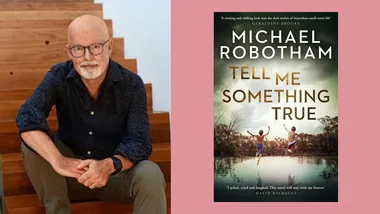
Book Review: Tell Me Something True by Michael Robotham
Book Club: Tell Me Something True by Michael Robotham
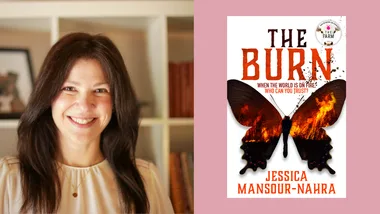
Book Review: The Burn by Jessica Mansour-Nahra
Native ad body.
Book Club: The Burn by Jessica Mansour-Nahra