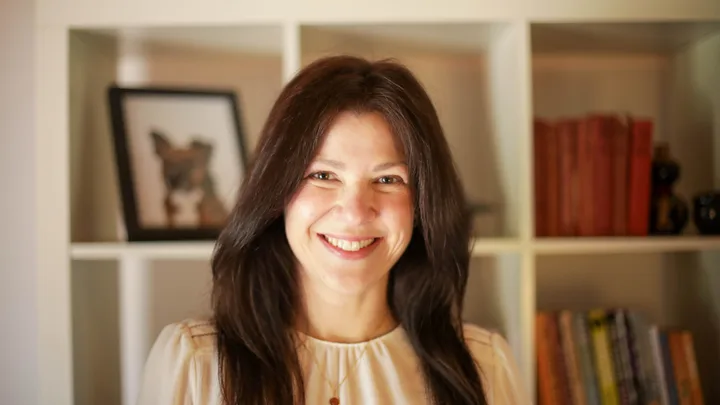
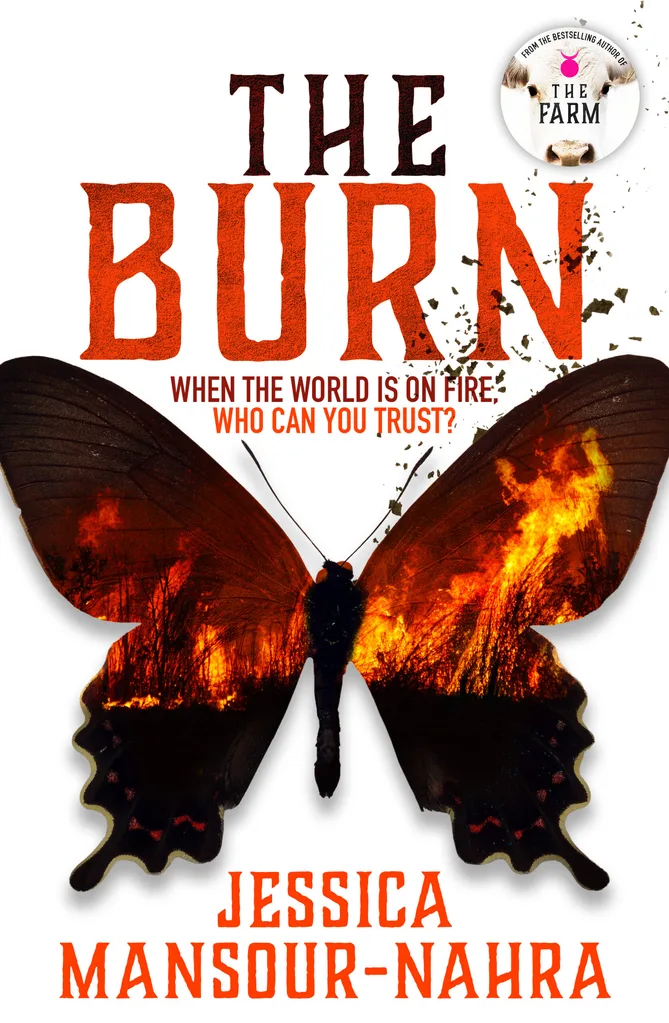
AWW: The opening chapters of The Burn took me back to lockdown. Was that part of the inspiration for The Burn?
Jessica: The inspiration really was Eden and the South Coast. I knew I always wanted to write a book about four friends on a road trip. I knew I wanted it to be set in Eden. It is just a spectacular and spiritual stretch of coast. I had had this idea for about 15 years, but it was never the right time. The underlying propulsion of what I was trying to explore never came to me.
Obviously, we all went through lockdown. I was going through all kinds of health stuff at the same time unrelated to Covid, so being at home actually suited me, but I was watching people and families and cities, and it broke people in all different ways.
Then there were people that liked it, but it probably wasn’t that good for people who liked it. Like me. I loved being at home because I’m a hermit, but then I found I was getting really anxious when it opened up again. So, there were all these impacts from Covid, but I didn’t want to write a Covid novel.
It wasn’t the lockdown that interested me so much as what the lockdown did to people, and then what the changes from the lockdown has done to our society in Australia. People were angry. People were participating in so much more rage. People had much more entrenched opinions about things. There was more radicalisation from being so online. I just watched it and I thought: this impact is not going away and it’s re-organising society and friends and families in ways that are quite harmful. All of that came together. I’m obviously very invested in the climate as well. I thought, this is the road-trip book I need to write.
We see the world through the eyes of Carmen, whose response to her lockdown, called Airlock in the novel, is to retreat further from society. Tell me about what you wanted to say with that character?
I want her to fight for her life. I want her to find her purpose. I want her to find her people. She’s been through quite a lot and towards the end of the book you start to understand why her response to lockdown has been the way it is. I think she fought really hard for the impacts of lockdown not to happen and then Airlock did happen and she was left to pick up a range of emotional pieces.
I thought it was important to have a character that wasn’t fighting against Airlock necessarily, but probably she should have been. Because the trauma of the entire experience of what happens to her does not give her a stronger or more satisfying life.
As someone who enjoyed actual lockdown, I was very lucky because I was on an acreage property, I don’t have children, I didn’t have to homeschool them, I could work from home. [But] you can get very institutionalized very quickly. I wanted to explore what it takes to get you out of that.
It’s quite personal to me because I had spent a lot of time in hospital in 2019 and it was another form an extreme isolation and, again, I was scared to leave hospital. Then we came out of that. There were epic fires and then we went into lockdown and I remember thinking, “Goodness, there is so much going on here for people. From fire to Covid, people are being traumatized over and over again. They are losing all their autonomy and control and people are starting to break. And they break in different ways.”
So, I wanted Carmen to be that central character that we can relate to, but we also want to root for her to break out of this smaller life that she seems willing to accept for herself.
Carmen’s sister Anna gets lured into the world of conspiracy theories and anti-vaxxers. What did you want to explore about that world?
I have so much empathy for Anna. I remember during the editing process, I’d hear from people, “Oh Anna, she’s so terrible. She’s so awful.” I thought, I’m not writing her correctly then, because she’s not awful. She was affected by the way she was raised. Their mother is a scientist and very much invested in her career so in a way it wasn’t a surprise that Anna went the other way. She felt ignored by her mother. She didn’t feel that she got the type of family upbringing that she wanted or felt entitled to.
In a way, [in] those communities around anti-vaxing and wellness and all sorts of things, there’s a sense of feeling accepted, and there’s a sense that perhaps you know something others don’t know. And that’s very enticing. So, exploring Anna gives me a lot of empathy for the way that people need emotional support. I think with more support and more emotional resilience around you, you may not be so vulnerable to those types of fringe ideas that are not based on the science that we know to be true.
Another member of the group is vulnerable to fringe ideas. You use the character Dan to explore the manosphere. What drew you to that phenomenon?
I think it’s because all of it’s connected: climate change denial, the radicalisation of young men into the manosphere, the radicalisation of Anna into this wellness and anti-vax communities. To me they are all about providing someone with the connection that you have lost in some way. Or to treat a trauma you have experienced with, “Don’t worry, have you heard of this? This will make you feel better. Come and join us and we will provide that sense of family and community and friendship that maybe you feel you’ve lost.”
With Dan, I think there’s a line in there where I say he has been counting their losses. Because I think there comes a point in the manosphere where men feel that they have lost something.
Often with feminism and human rights we say human rights are not a pie. If someone else has rights it doesn’t mean you lose yours. But I do think there’s a message out there in the manosphere that, if you’re a young man, or any man, you are losing ground of some kind in society that perhaps you feel entitled to because you are raised in the patriarchy so you do feel entitled to be top dog. That is how our whole Western society is set up. And to see other people coming through, achieving things, and maybe you’re not, I think it’s very enticing to say to young men, that’s not your fault. That’s women’s fault. That’s people of colour’s fault, and it’s not, but it’s enticing to them.
There are so many things in this world right now that we are grappling with poorly. Without making caricatures, because these characters are very real people to me, I wanted to explore what that looks like to a person that you love. Carmen really struggles with Dan because quite often in the book she’s saying, ‘This is our friend. This is someone I’ve loved for a long time. He’d done amazing things for Eleni.’ And yet we reach a crisis point where he seems like a different person. But he has an answer for everything. How do you fight that? It’s really difficult.
Do you think the circumstances that sent Anna down the conspiracy theory route are the same circumstances that drove Dan into the world of the manosphere?
Yes. If you’ve lost something over in column A they’re trying to avoid the difficult feeling of dealing with that by topping up something in column B, not realising that is not the way to go.
I feel a sense that people in general are less resilient than before and it makes sense. Covid did dreadful things to people. They lost people. They weren’t allowed to go to funerals. Personally. I think lockdown was necessary but let’s not pretend it didn’t absolutely harm some people. And these are the difficult decisions that we’re making now that we’re in an environment and ecology where – there’s a line in the book – we’re living between crises. We lurch between fire crises to flood crises to virus crises and then back again. Ultimately individuals can’t be that resilient all the time. There needs to be further support, systematic support, and we’re not getting that from our governments.
I want to ask some questions about the mechanics of the book. Dan, Eleni, Rhett and Carmen travel to Eden for a getaway. Tell me about recreating that environment. Did you head out and do a road trip?
Absolutely. I’ve been doing that road trip from Sydney and Canberra to Eden for about 15 years because my parents lived there for 15 years and so I was very familiar with the history of Eden. I wrote a lot of it from memory, then I said to my husband, ‘I’ve got three months until I have to hand it in. We’re going down to Green Cape for a road trip and we’re doing most of this hike. I took so many photos and so much video of the coast and the locations.
Most of it was as I’d remembered it, which was great. But it was very special to be there so close to finishing the manuscript and trying to imagine and feel what Carmen must have been feeling once they were out there in isolation.
The threat of catastrophic fires looms over the story. What sources did you look to to create the firestorm?
I don’t want to represent something on the page that doesn’t speak to people who have lived through it. It was a multi-step process. I started reading about what happens to fauna first. What happens to animals around smoke and fire and then I moved onto what happens to flora. That was a very depressing first step, I will say. These communities of animals and ecology can take years to return.
I was also reading a lot about ash going into waterways. I suppose I started with the impacts because I was quite nervous to work backwards into what would it be like to be in a fire itself.
My parents were in Eden when the fires were in Mallacoota and working their way up. My brother actually was visiting for Christmas and he got my parents out. They didn’t want to go. So, I was getting updates and photos in real-time and I was on the Eden Facebook page with the firies. But that’s not the same. I’ve never been effected by fires in the way so many Australians have. So, for the actual fire it was a lot of listening to podcasts about people who have been in fire storms. Firies who have had their cars picked up in fire tornados and tossed and one person survives to talk about it. That was extremely hard but extremely important to listen to. Then I watched a lot of YouTube clips of these guys in the country that prep their house, set up a camera, put on a gas mask and the fire storm comes through and somehow doesn’t hit their house but hits every tree around it. I was speechless watching them and so I had to put them into words.
Are you a planner? When you sat down to write the book, did you know what you wanted the outcome to be?
I am such a plotter. I’m the most methodical person you’ll ever meet, however, I plot the first two thirds. I had an idea of what I wanted for the ending, but it changed when I went to the area. There was a set of ruins that I wanted to incorporate in a more dramatic fashion, but it actually didn’t work. They’re still in the book but they’re really tiny.
Then there was another ending that I wanted to do, but I didn’t know how to get the book there. I was saying to my husband: I’ve got to get them to this place. My husband always said, ‘Yes, you have to do that. Find a way.’
So, in writing it, by the time you’ve written two thirds, and you’re thinking all the time about these characters and you have a sense of who they are, you also have a sense of what is realistic for them. So in a way they tell you, but you’ve also set them up to tell you.
What’s next from you?
I’m working on a new book called The Storm at the moment. It is an older couple and they have left Sydney to move to a clifftop house in Tasmania, for reasons that are a little unclear.
The main character, Julia, thinks the reason they’ve moved is for one reason, but we discover that maybe that’s not true. There’s an enormous storm rolling in and as it’s kicking off they get a knock on the door and they open it and a young woman is standing there, and she’s like, “Can you please let me in? I’ve been knocking for ages.” The couple is like, we don’t know you and she says, “Yes you do mum and dad, I’m your daughter let me in.” And so they have to figure out, ‘What is this stranger talking about?’ As usual with me it’s going to be somewhat political.
I think it will be a very tense one. But that’s usual with me, because I’m obsessed with landscape and climate. There’s always danger outside and danger inside.
Read the book review here.

We seek out the best stories. We nurture them. Then we share them. Hachette Australia is a team of expert publishers and passionate readers dedicated to discovering and supporting talented writers and working with them to craft exceptional stories.

Related stories
Native ad body.
Book Review: Tell Me Something True by Michael Robotham
Native ad body.
Book Club: Tell Me Something True by Michael Robotham
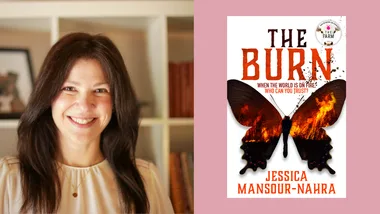
Book Review: The Burn by Jessica Mansour-Nahra
Native ad body.
Book Club: Sophie Green, author of The Frock Shop