



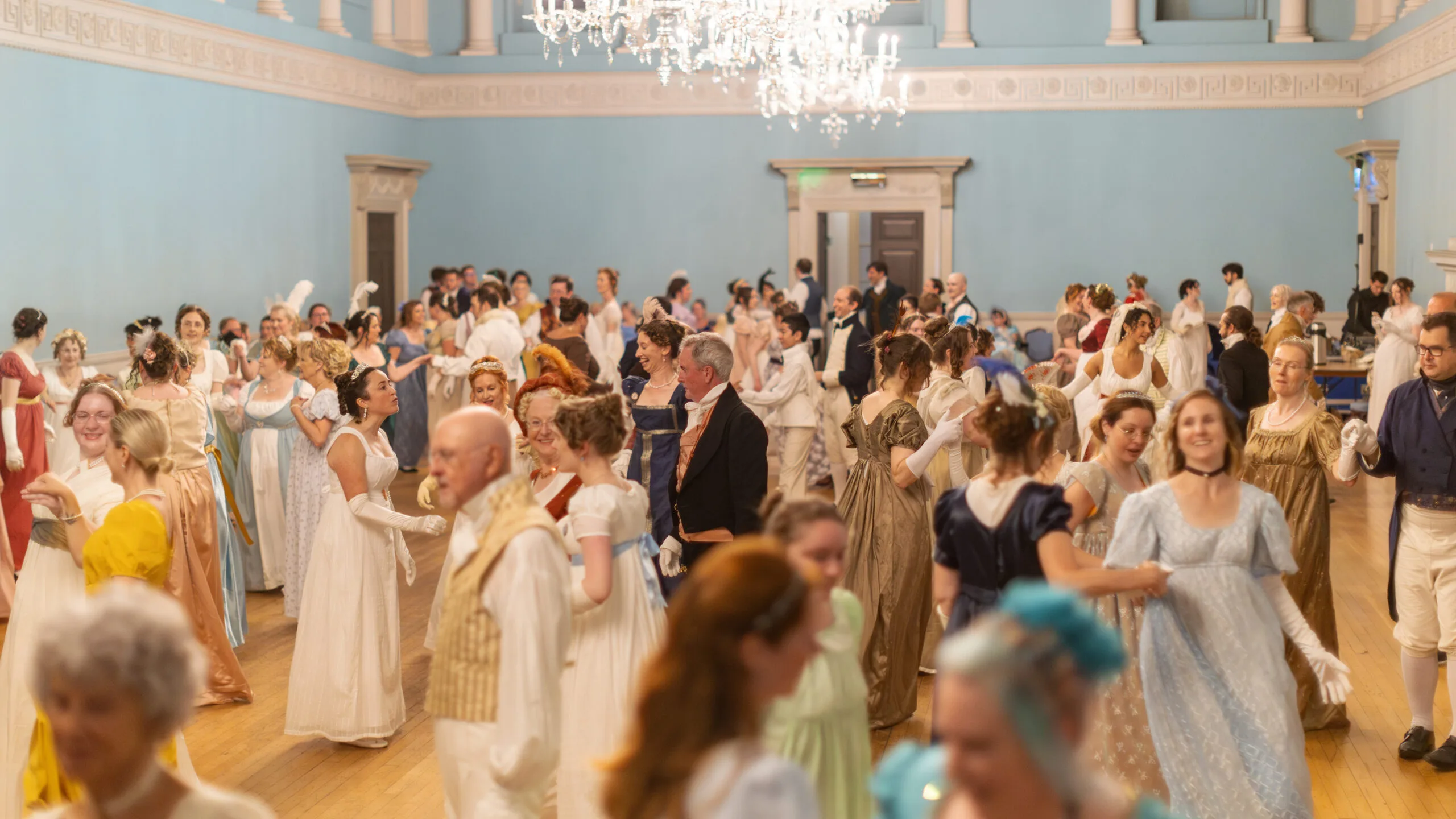
It’s a sunny day in Katoomba, NSW, and the Baroque Room at the Carrington Hotel is full of women in gowns and men in breeches learning reels for the evening’s regency ball. Dance master David Potter is calling out steps to a tune with the decidedly unrefined name of Mr Beveridge’s Maggot.
“It means favourite,” David explains. “It came out of the same place as ‘earworm’. It’s a tune that grabs you. One that runs around in your head.”
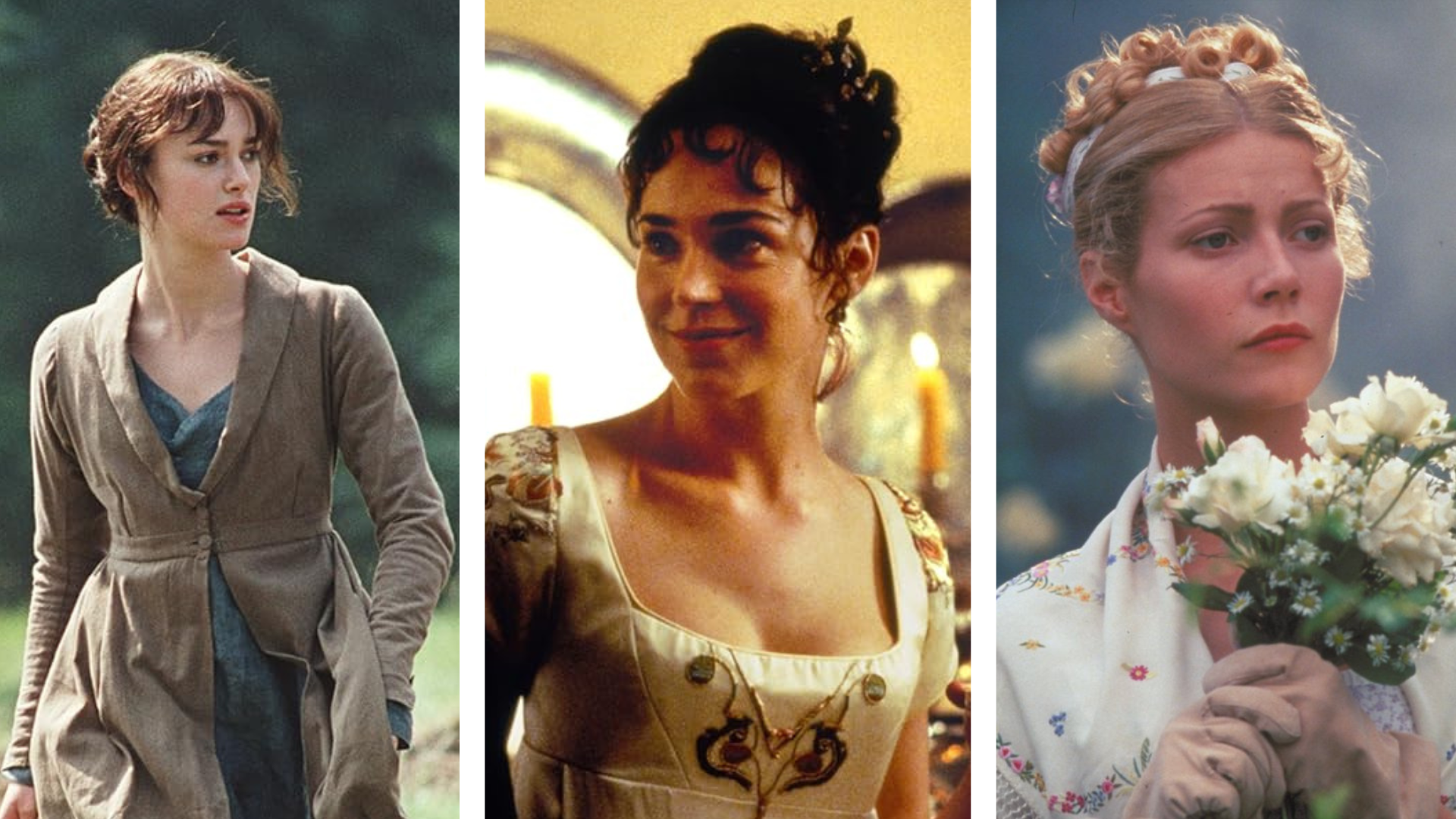
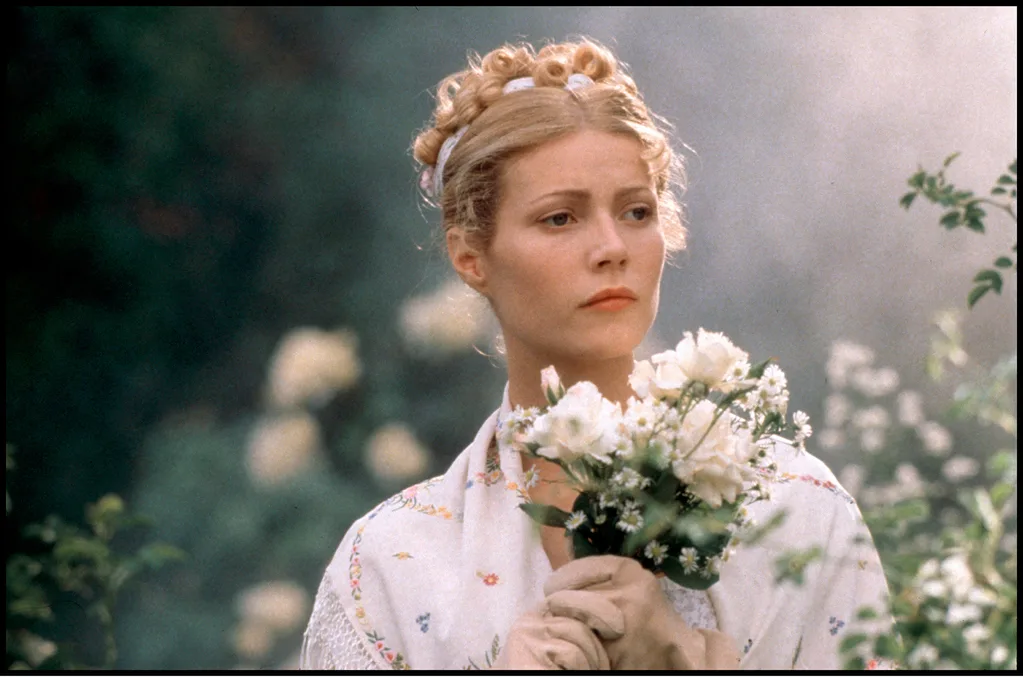
The music is particularly thrilling to modern Jane Austen fans – known as Janeites – because it’s the piece Elizabeth and Darcy dance to in the 1995 adaptation of Pride and Prejudice. Gwyneth Paltrow’s Emma also dances to it with Mr Knightley.



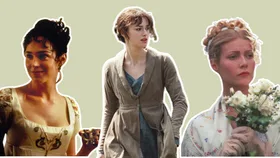
“It’s the fantasy,” says Kathy Potter, who is married to David, plays flute at the dances and creates historical headdresses. Anyone who has witnessed the genteel romances that play out in country estates “has the Jane Austen fantasy. And everyone looks good in a Regency dress.”
She and David are part of a devoted group who indulge their love of history, music, costumes and literature at regular Regency events around NSW. This year, their talents have been in greater than usual demand because, all around the world, literary societies are celebrating the 250th anniversary of Jane Austen’s birth.
In the UK alone, so far this year, there has been an Emma Festival, a Persuasion & Poetry Festival, and a Spring Fling Sense and Sensibility Festival in Bath, and still to come, a four-day birthday celebration at Jane Austen House in Hampshire. In Australia, there has been a conference in Canberra, and all manner of lectures, exhibitions and Regency balls, including this one in the Blue Mountains.
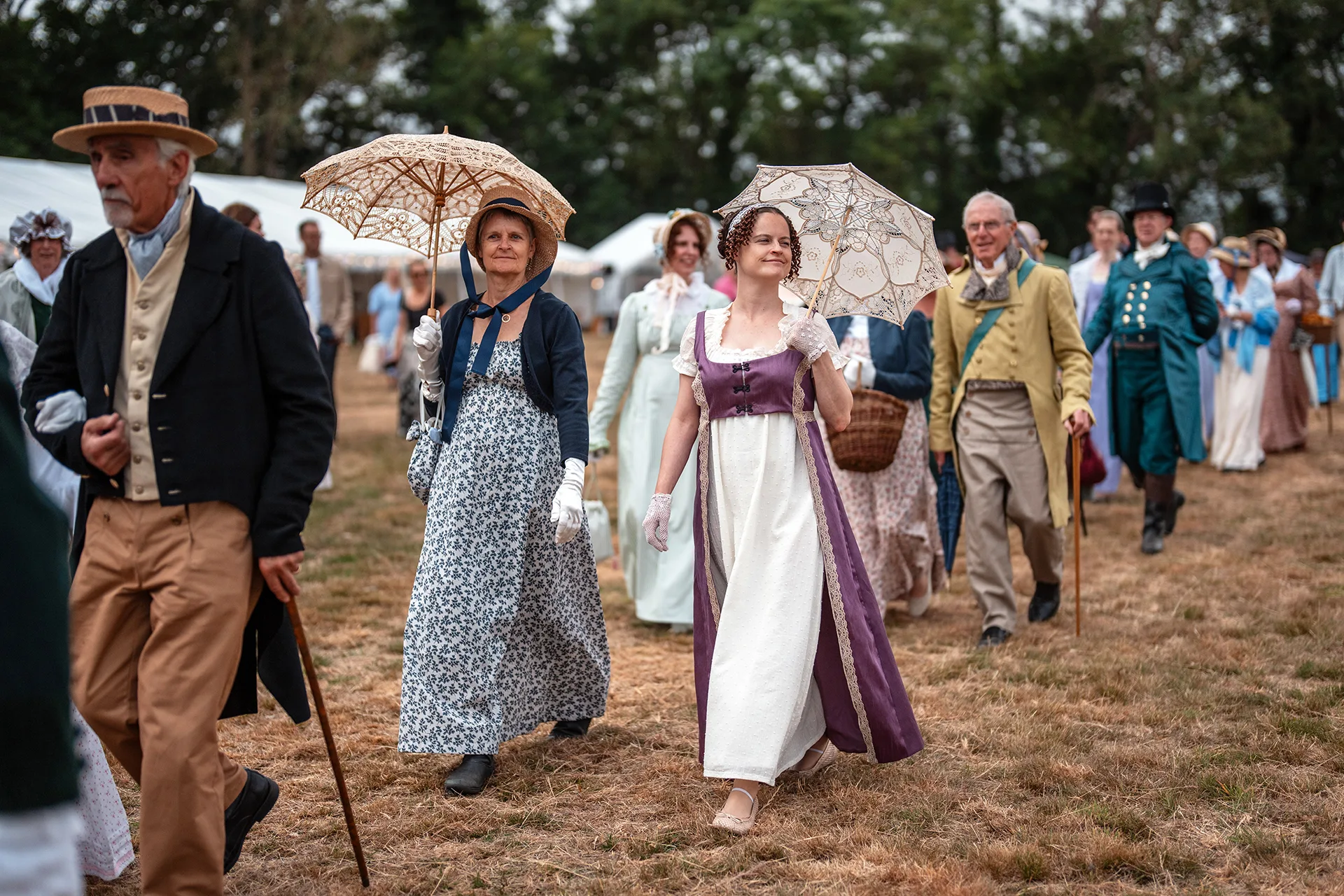
Regency recreationists
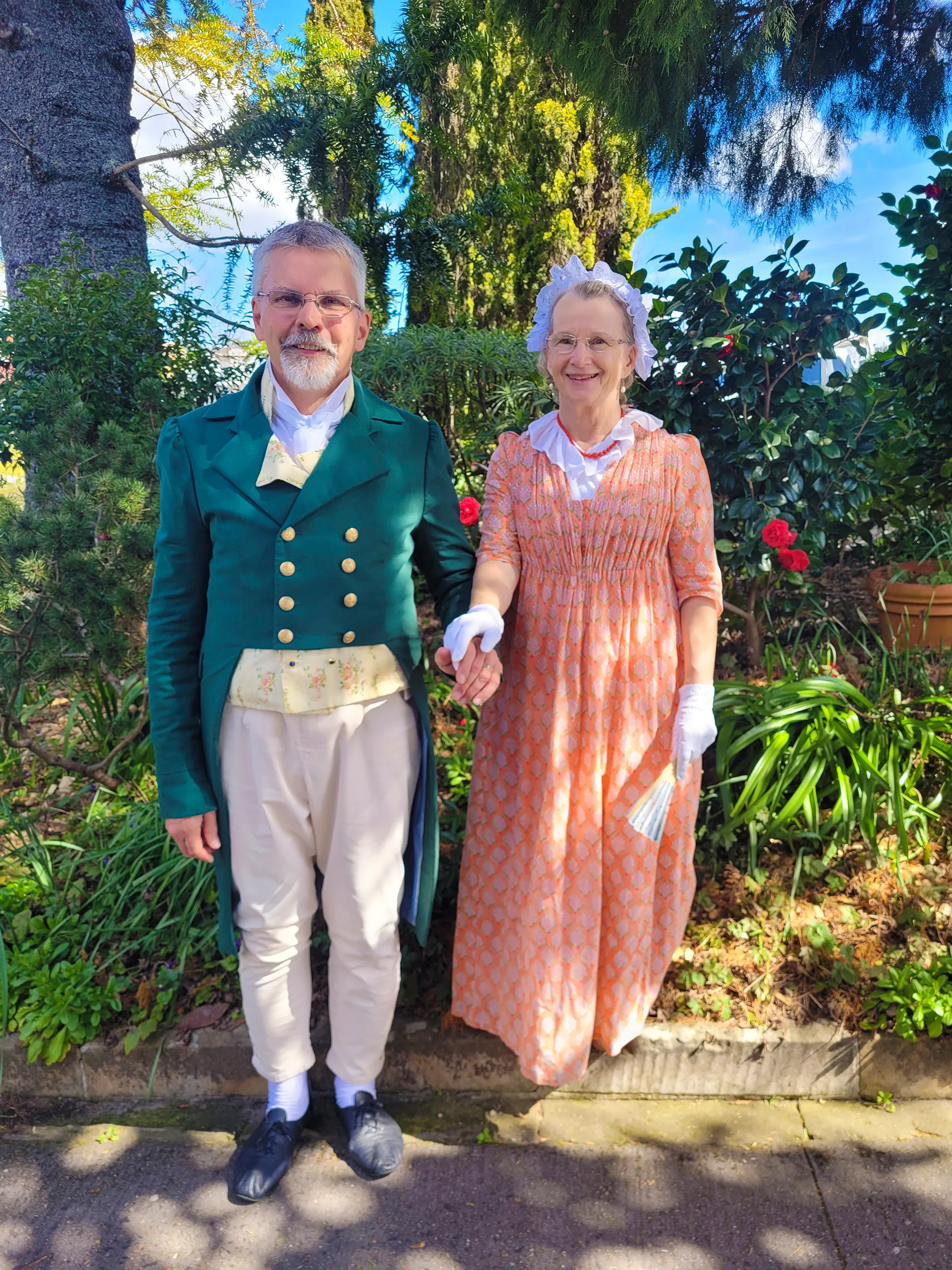
Adrienne and Bill Unger have flown in from Barcelona and are dressed in their Regency finest for the day. Skilled seamstress Adrienne has made a copy of a Danish wedding dress in apricot Indian block-print fabric. She has paired it with a mob cap because “a lady would not go out with her hair uncovered,” she explains, swirling her skirt. “It’s been so big this year. It’s been incredible.”
Sona Pamboukhtchian, one of the organisers of Sydney Regency Weekends, articulates the unique combination of pleasures to be found at a Jane Austen Regency event. There are dancing, whist and archery lessons, and there’s the appreciation of Austen herself. “She’s really witty and a little bit mean and sarcastic. She’s not that typical female writer,” Sona laughs.
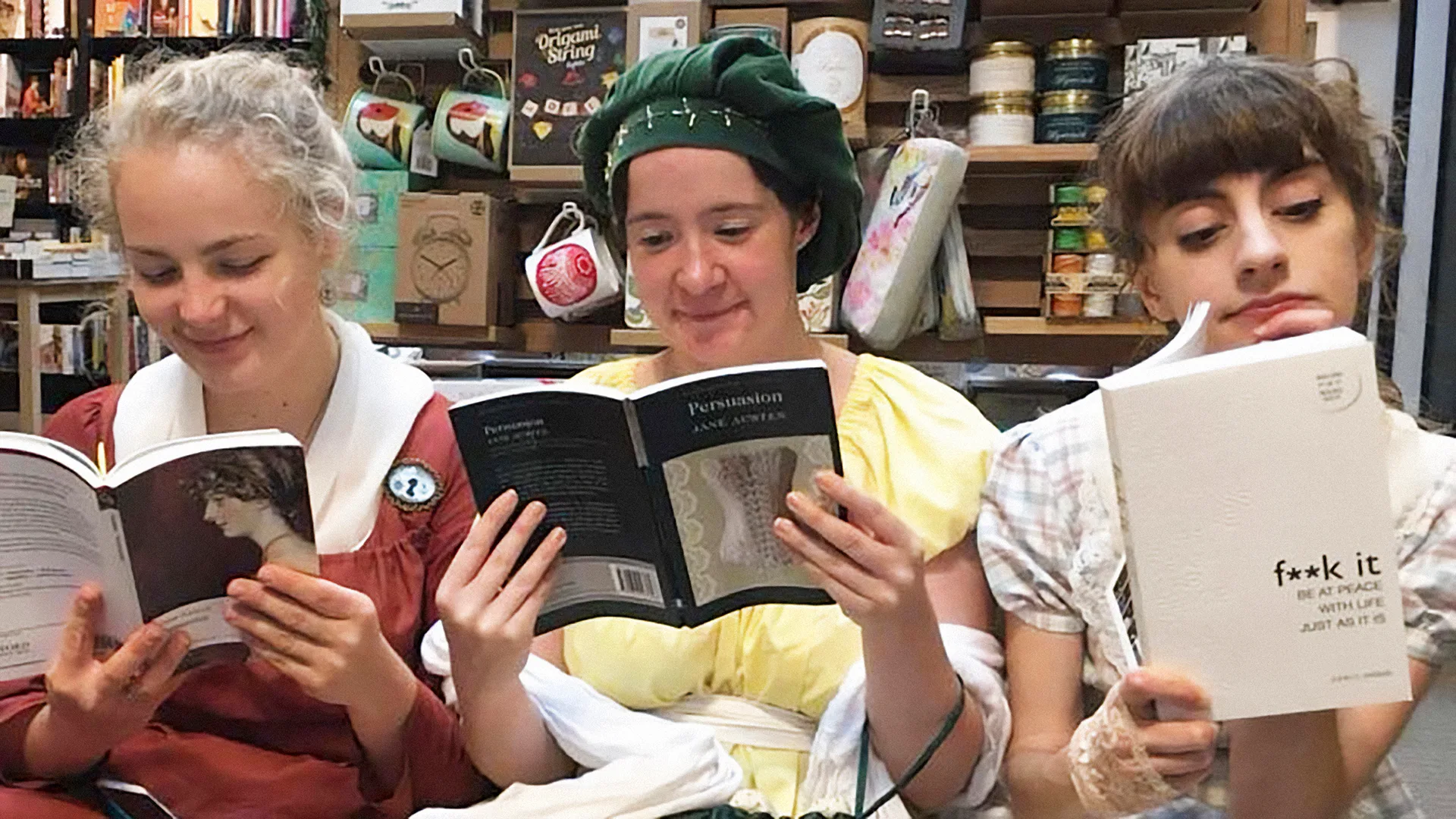
Her books are also “incredibly funny,” says academic and author Devoney Looser. “They are incisive social commentary. They’re beautiful art. Some of her prose can read like verse.”
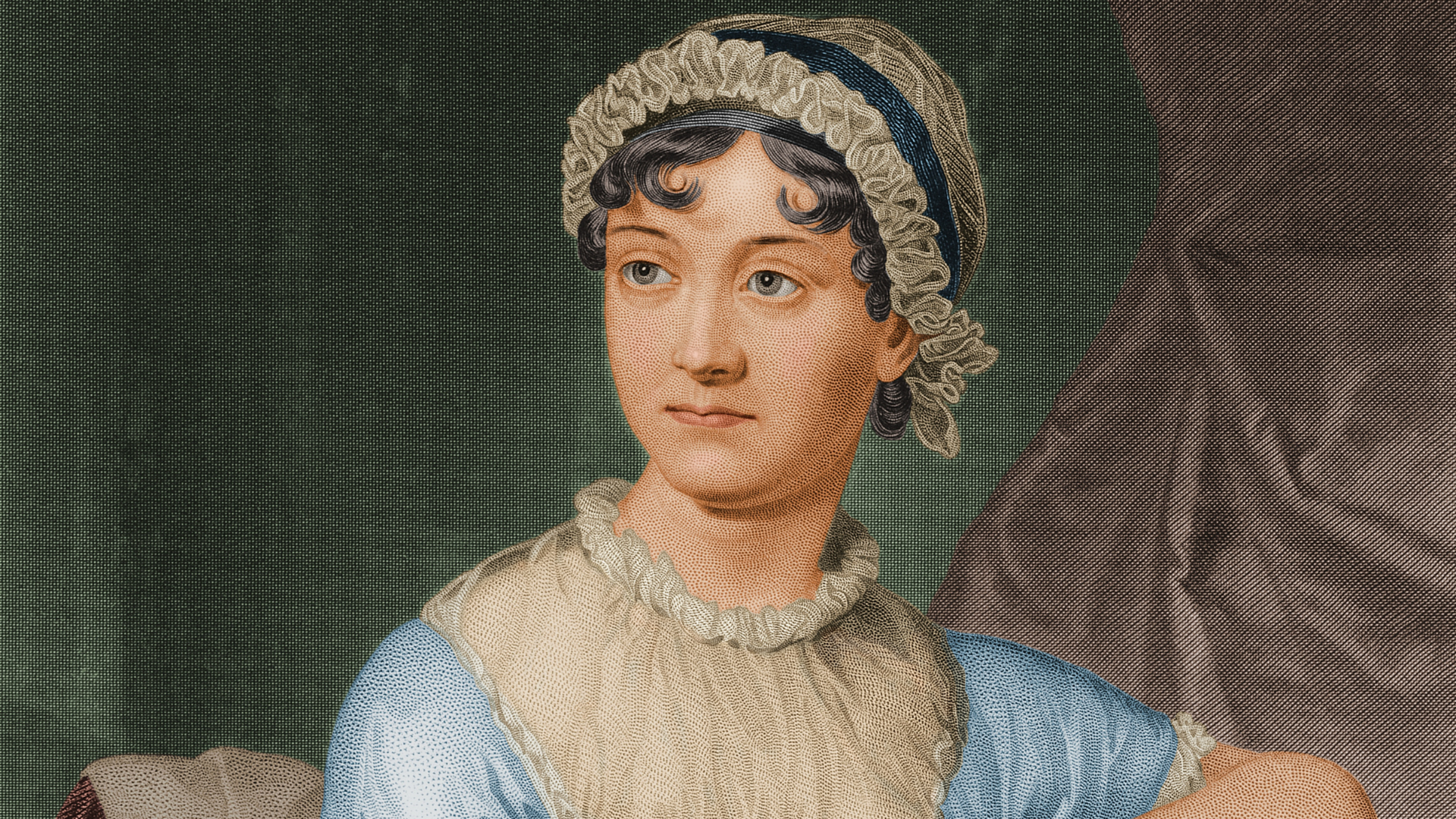
This is why, more than 200 years after her books were printed, Austen’s reputation and reach continue to grow. During her lifetime, her name never appeared on her work. Her first published novel, Sense and Sensibility (1811), was attributed to “A Lady”. Pride and Prejudice, published in 1813 after being rejected by a publisher in 1797, was credited “by the author of Sense and Sensibility”. Mansfield Park was published in 1814, also anonymously, however Devoney says this doesn’t mean Jane was a tortured artist who was not recognised in her own time.

A novel style
When Emma appeared on shelves in 1815, it was dedicated to the Prince Regent (soon to be King George IV), who was a fan of the ostensibly unknown author.
“The Prince Regent, of course, knew her identity. He was a huge gossip. Do we really imagine that he was keeping this to himself?” Devoney says, chuckling.
An anonymous, 5000-word review of Emma, printed in respected journal The Quarterly Review, praised the book’s precision and was later revealed to be written by Sir Walter Scott. It was critical in parts, but its mere existence was a compliment to the author.
“If you look at reviews of women’s writing from that period, some of them were just so sexist and so dismissive of women and dismissive of the novel,” Devoney says.
The novel, at the time, was not a respected art form. Even Sir Walter Scott published his fiction anonymously. It was only after Jane Austen died in July 1817, aged just 41, that Northanger Abbey and Persuasion were published with her name on the cover.
“She didn’t make a lot of money from the four books she published while she was alive or the two that were published after,” says Devoney. But, “she knew by the time she died she’d been successful. She knew that she had appreciative readers. This idea that she was obscure and unknown and toiling away by herself in this little country cottage is way overblown.”
Jane Austen’s family
Caroline Jane Knight frequently gives talks on Jane Austen and says about half the time an audience member will cry. Usually, she says, something happened to them in their teenage years or early 20s.
“Their family had to move,” she says, “Or a parent died. Something happened in their life that was significant and very upsetting.”
Then, someone had given them a copy of Pride and Prejudice and told them, “You need to read this. It’s going to help you.” The comfort they found in the pages set up a lifelong friendship with Jane. “That is the strength of it. It is extraordinary,” says Caroline.
It’s a connection she understands well, not only because she is Austen’s fifth great niece, but because she was thrust into adulthood by a disruption befitting a Jane Austen heroine.
Ms Austen and Ms Knight
Caroline’s family home, Chawton House, in Hampshire in south-east England, had been built in the 1580s and occupied by an unbroken line of Knights all the way up to the 1980s. But her uncle was heir to the estate, and when her grandfather died, Caroline and her parents had to leave the quiet gardens and wood-panelled rooms of the only home they’d ever known.
“So, when I picked up Pride and Prejudice, I actually didn’t really pay any attention to Lizzie and Darcy,” Caroline admits. “All I could see was Mr Collins being the heir … All I could see was this similar story to what was going to happen to us. I thought, ‘How did she know?’ … I hadn’t read my Austen by that point.”
Had she read Austen, Caroline would have seen that secure homes and unfair inheritances were very much on the author’s mind.
Pride and Prejudice’s Bennet sisters know that one day their home will pass to their smug cousin. The demise of Henry Dashwood in the opening pages of Sense and Sensibility leaves sisters Elinor and Marianne impoverished and reliant on relatives.
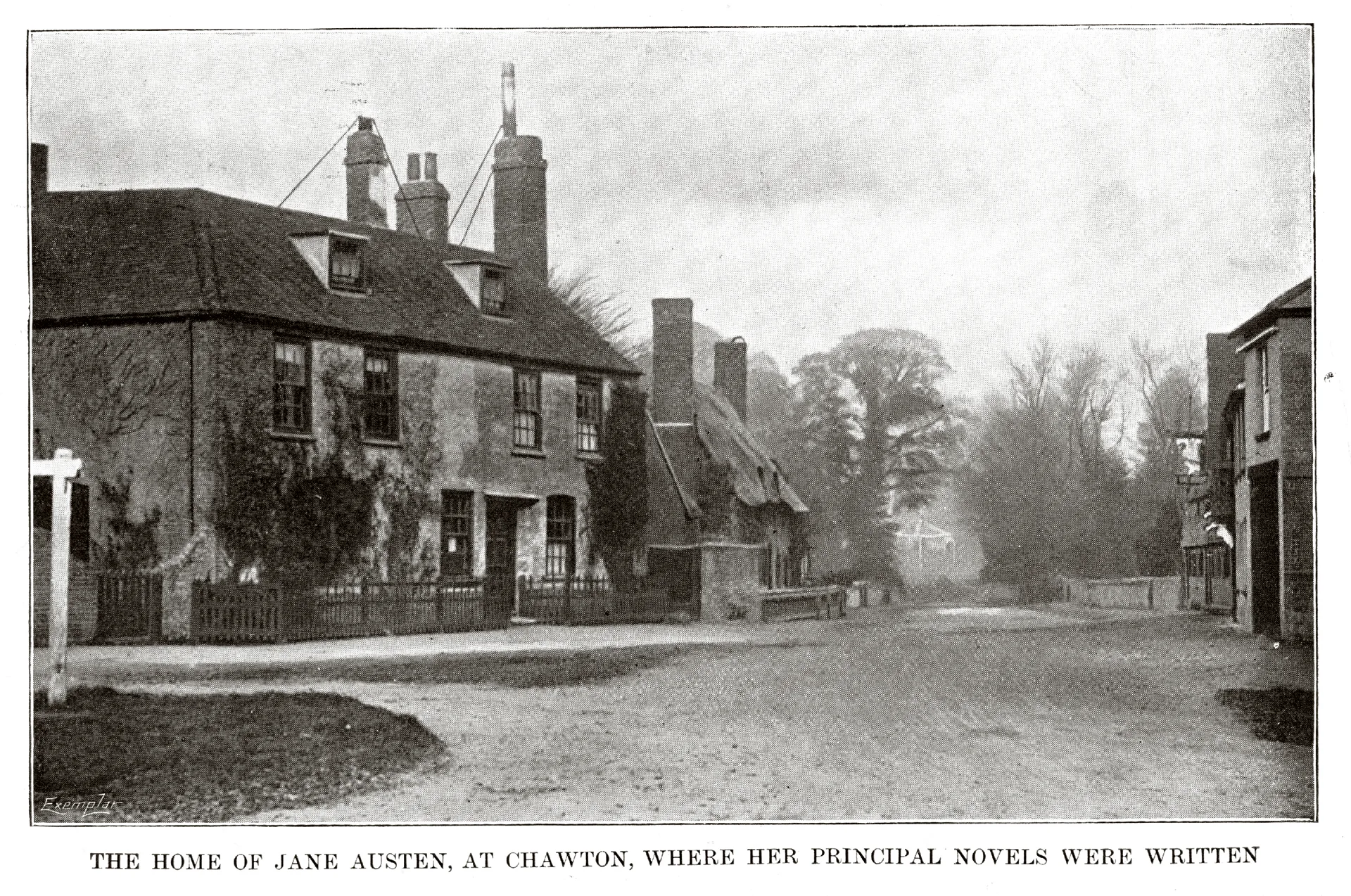
Jane Austen herself was plunged into housing insecurity by the sudden death of her father in 1805 and forced into cramped and uncomfortable rentals until her brother, Edward,
who had been adopted by the wealthy Knight family, gave her a house on his estate at Chawton.
This red-brick cottage provided Jane with the peace that allowed her to revise the three novels she had already crafted, and write a further three, that would together become some of the most beloved books in the English language.
A proud legacy
It was this legacy that Caroline, at 18, was particularly sad to leave. The house she had grown up in had often been visited by Jane Austen.
The brother who rescued Jane is Caroline’s fourth great grandfather, Edward Knight.
“She was a very powerful role model for a young girl,” Caroline says. “When I was four or five, I remember asking Mum what all these people were coming [to Chawton House] for … Mum told me about this incredible woman who was born into a normal family, but who was determined to follow her own path and to do what she believed she was meant to do. Despite the social expectations of the day, she achieved it.
“I grew up knowing that Knightley is named after us,” Caroline adds of the hero in Emma. “Mr Knightley is a pretty faultless character, and that’s not normal for Jane.”
For the record, Caroline says, her uncle, Richard, who inherited Chawton House, is “very, very nice” and “an absolute gentleman”, but the family was unable to stay.
For many years, Caroline didn’t speak publicly about her link to Jane Austen. In part, it was too painful, but also, like her famous aunt, Caroline wanted to forge her own identity. She did not want to live her life as someone’s niece.
Caroline now lives in Melbourne. She became a CEO of a marketing agency and created the Jane Austen Literacy Foundation. About a year ago she decided it was time to share what
she knew of her revered aunt.
“Frequently people would want to touch you because you’ve got a bit of Austen blood in your veins,” she tells The Weekly.
Jane re-imagined
Over the past 50 years an abundance of adaptations has delivered Jane Austen to a whole new audience. When Caroline lived at Chawton House in the ’70s and ’80s, pilgrims would arrive clutching well-thumbed copies of Pride and Prejudice “that they’d clearly read 80 times” which was the only way people could discover the stories.
“Now, there’s a gazillion ways to get involved in Jane Austen without ever reading a word of it,” Caroline says.
“The BBC has a lot to answer for,” Kathy Potter laughs.
The Jane Austen Literacy Foundation estimates there have been about 70 screen adaptations of Jane’s work. These range from Italy’s 1957 Orgoglio e Pregiudizio, to Clueless (1995), a modern riff on Emma.
Bride & Prejudice (2004) swapped Meryton for Amritsar in a Bollywood interpretation, and then there was the venerated 1995 BBC recreation.
A reported 10 million viewers tuned in every Sunday night to watch Colin Firth’s Darcy smoulder at Jennifer Ehle’s rose-cheeked Elizabeth. When the shirt Firth wore in the infamous lake scene went under the hammer last year, it sold for more than $50,000.
Modern love
Audiences can’t get enough. Australian author Diana Reid, whose debut Love & Virtue won a slew of prizes, has spent the past weeks on the set of Sense and Sensibility, which she has adapted for the screen.
“I can’t remember a time when Austen wasn’t part of my cultural diet,” she tells The Weekly. “I’ve loved her novels ever since I studied them in school, and I grew up watching various adaptations.”
Her own writing was influenced by Jane’s “juvenilia” – the shorter works she wrote as a teenager.
“They’re much darker and the humour is broader than in her ‘mature works’,” Diana says. “Reading them really unlocked something in me.
I realised that creativity should be about experimenting and trying to amuse yourself, before it’s about what other people might think.”
British writer Dolly Alderton has also updated Pride and Prejudice for Netflix.
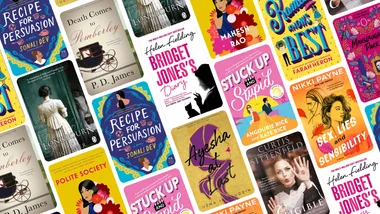
Literary re-imaginings have turned Pride and Prejudice’s Miss Caroline Bingley and Jane Austen herself into sleuths. There’s a Darcy and Elizabeth mystery series that includes the title North by Northanger. We can read a manga Emma and the horror parody Sense and Sensibility and Sea Monsters.
Classics re-told
Joanna Trollope, P. D. James and Alexander McCall Smith have turned their hands to an Austen update. Two-time Booker winner Hilary Mantell was working on an Austen mash-up before her sudden death in 2022. Her husband shared a small fragment of it with The Guardian.
Devoney discussed the project with Hilary about five years before her death. “She definitely very personally identified with Mary Bennet, and I do wish that we got more than that bit that was shared,” Devoney says.
Pride and Prejudice’s bookish middle sister, Mary Bennet, is a popular subject for retellings. Colleen McCullough published The Independence of Miss Mary Bennet in 2008. Janice Hadlow, BBC executive-turned-author, also took the character’s story further with The Other Bennet Sister.
“I understand why many people think Mary got a raw deal and they want to re-imagine what it means to be the brainy reader and … the one without support from either parent,” says Devoney, whose own book, Wild For Austen, explores the rebellious spirit that courses through Jane Austen’s work. “All these complex characters lead us to conversations where we can talk about them like they’re real people and get excited about these mixed personalities.”
It’s complicated
This complexity is part of Austen’s enduring appeal, Devoney says. In a letter to her sister, Cassandra – herself the subject of a recent BBC TV series – Austen once wrote, “Pictures of perfection make me sick and wicked.”
“I love this line,” Devoney says. “She didn’t give us pictures of perfection, even in her heroes and heroines, and that’s against convention. Against literary convention, as well as social convention.”
“Austen’s romances are about much more than physical attraction,” Diana Reid says. “They’re about finding someone who shares your values and sees the world the way you do. Intimacy, in Austen, is a space where your true self can be seen and understood: A reprieve from the constant demands of polite society, where everybody is always performing, and hyper-conscious of how they’re perceived. We still feel that today.”
“Each time I open these novels I find something new,” says Devoney.
Enduring love
Even Caroline Knight, who occasionally ate from the same heirloom Wedgwood dinner set as Jane Austen, still uncovers hidden secrets from the author’s world. The Knight family has always believed Chawton House was the inspiration for Donwell Abbey, the home of Mr Knightley. There’s a hill at the back of the property. In Emma, it’s called Box Hill. Its real name is Berry Hill.
People have often said to the family that Chawton couldn’t be Donwell Abbey, in spite of its obvious similarities, because of the name of the hill and because Donwell famously has a flagstone floor.
Not long ago, however, Chawton was renovated and, in raising the floorboards, a note was found, which read: “The stone floor that had been in the great hall has been moved,” Caroline smiles. “So it did have a stone floor after all.
“They’re family stories that get passed down. Can they be proven to an academic level of proof? The answer to that is no … But Chawton is magic. You can just imagine Jane there.”
And hundreds do as they return there on pilgrimage, year after year.
This article originally appeared in the Christmas 2025 issue of The Australian Women’s Weekly. Subscribe so you never miss an issue.