




At a glance…
- Content warning: This article touches on the topics of suicide, which may be triggering for some readers. Help is available.
- Carol Mudford hadn’t been working as a sheep shearer for long when she realised that her community was losing too many people to suicide. She also realised that she was in a unique position to help.
- We sat down with the 2025 Agrifutures Rural Women’s Award winner for this feature from the May 2026 issue of The Australian Women’s Weekly.
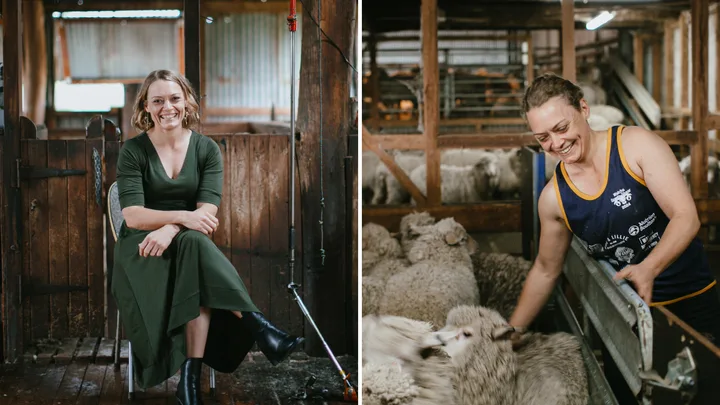
There was more than one joyful tear shed in October 2025 when Carol Mudford stepped onto the stage at Parliament House to accept the AgriFutures Rural Women’s Award. National recognition had come at the end of a long road for the 39-year-old shearer and nurse. In a little black dress, a far cry from her shearer’s singlet and jeans, she thanked her family, her community, and especially her late father, Max, without whom her mission to encourage better mental health in the nation’s shearing sheds might never have been born.
Carol grew up, along with her two younger brothers, on a sheep and cropping farm north of Gilgandra in the central west of NSW.
“It was family farming,” she tells The Weekly. “Dad was one of five brothers, and I’ve got 19 cousins. They were all farming on their own places in the district. Mum and Dad were farming together, and when I was a baby, I slept in the wool bin while the shearing was going on – all that. Kids on farms have the best lifestyle. There’s no daycare or separation of life and work – you’re doing everything together as a family.”
Carol’s parents separated when she was in late primary school, and she moved with her mum into town. “Once I was an adult, I guess I didn’t really see a place for myself on the farm,” she says. But she never lost her love of the land.
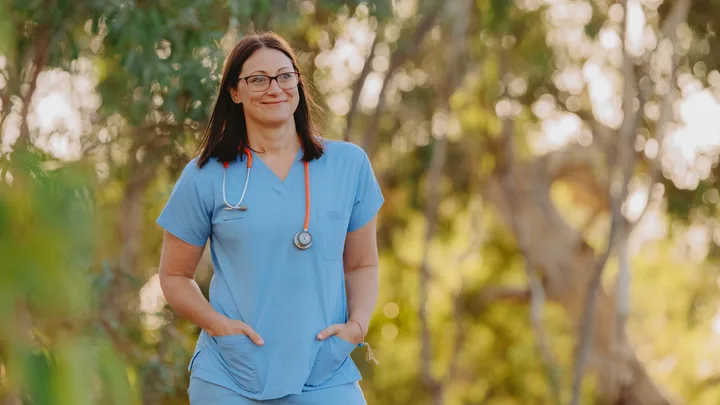
Carol trained as a nurse and worked for six years in the Northern Territory.
“I love the Territory,” she explains. “I went up there for my graduate year at Royal Darwin Hospital and I stayed for three years, mostly working in Emergency. Then I moved down to Alice Springs Hospital, and then into Aboriginal health … I ran a support program for first-time mothers. It was a wonderful opportunity. I went out to Hermannsburg – Ntaria.”
However, back in Gilgandra, Carol’s father had been living with cancer for a couple of years. In 2019, she decided the time had come to move closer to home.
Leaving her life in the Territory was tough. “The desert, and the people, have a really strong call. But I needed to be closer to Dad,” she says.
She moved to Victoria and made regular trips north to see him. Then COVID hit, and that drove Carol back to live on the farm. In so many ways, it was a godsend.
“We were told Dad wasn’t going to see the end of the year with his cancer battle,” she explains, “so I came back to the farm to be with him. Then the lockdowns were announced, and I stayed. I’m really grateful my hand was forced … We kept Dad on the farm with support from his partner, my brothers, and his medical team. He was able to stay at home through his illness and his passing. So that was really important. And it was a blessing, really, to have that time as a family.”
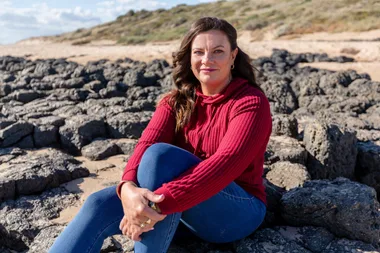
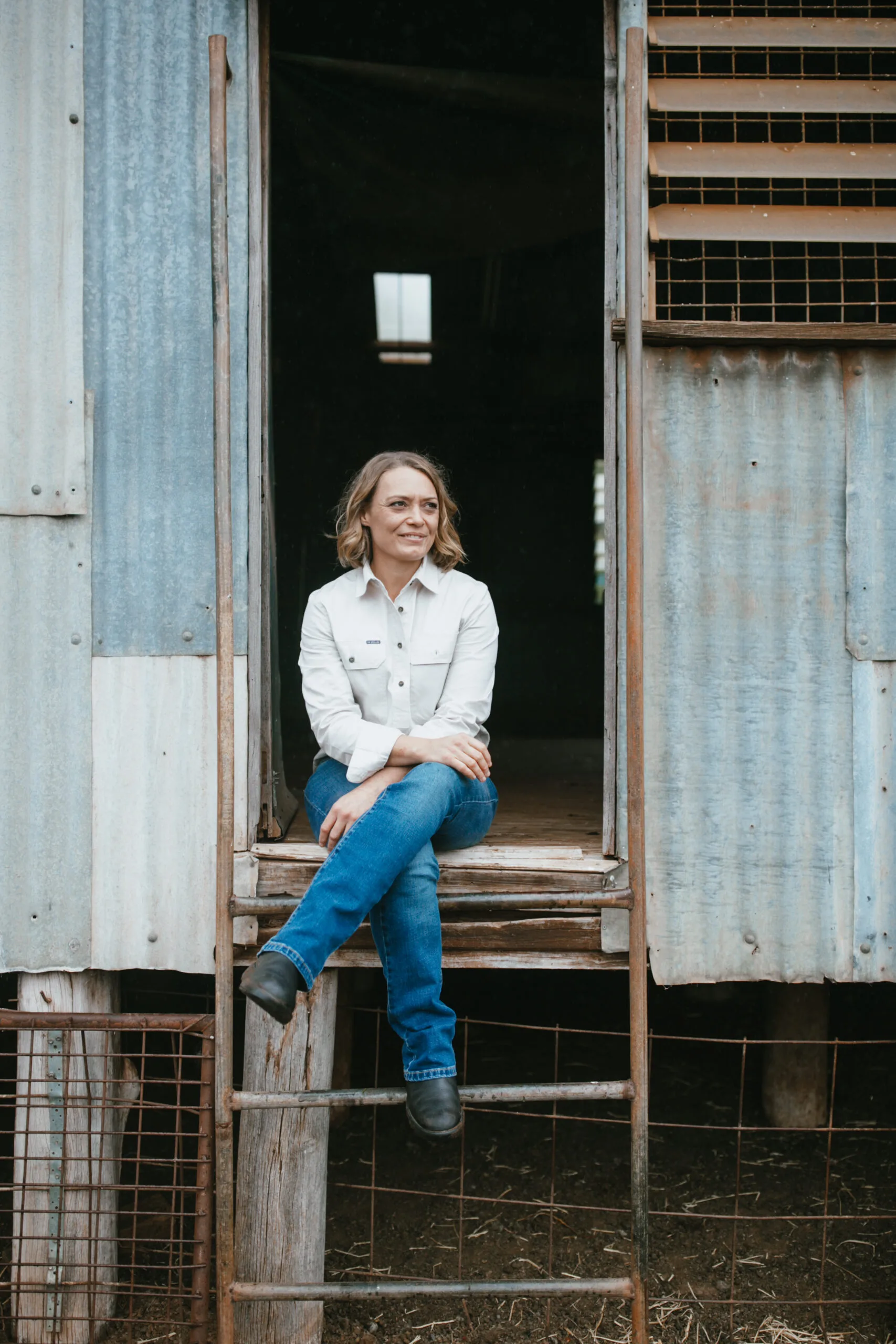
While she was at home, Carol found herself drawn back to the shearing shed where she had slept in the wool bins and breathed the smell of lanolin while growing up.
“After Dad passed away, I went to work in the shearing sheds as a wool handler,” she recalls. “I thought I’d do that for a few weeks, just to stay around family. I had a good time, and a few weeks turned into a few months.
“Then, one day, I shore a sheep with the help of a shearer and went home and told my brothers. It turned out they’d only ever shorn one sheep each as well. So I went back to work and shore three sheep, just to say that I’d shorn the most out of the three of us.
“Farm kid rivalry is always strong,” she adds, with a twinkle in her eye, and she laughs.
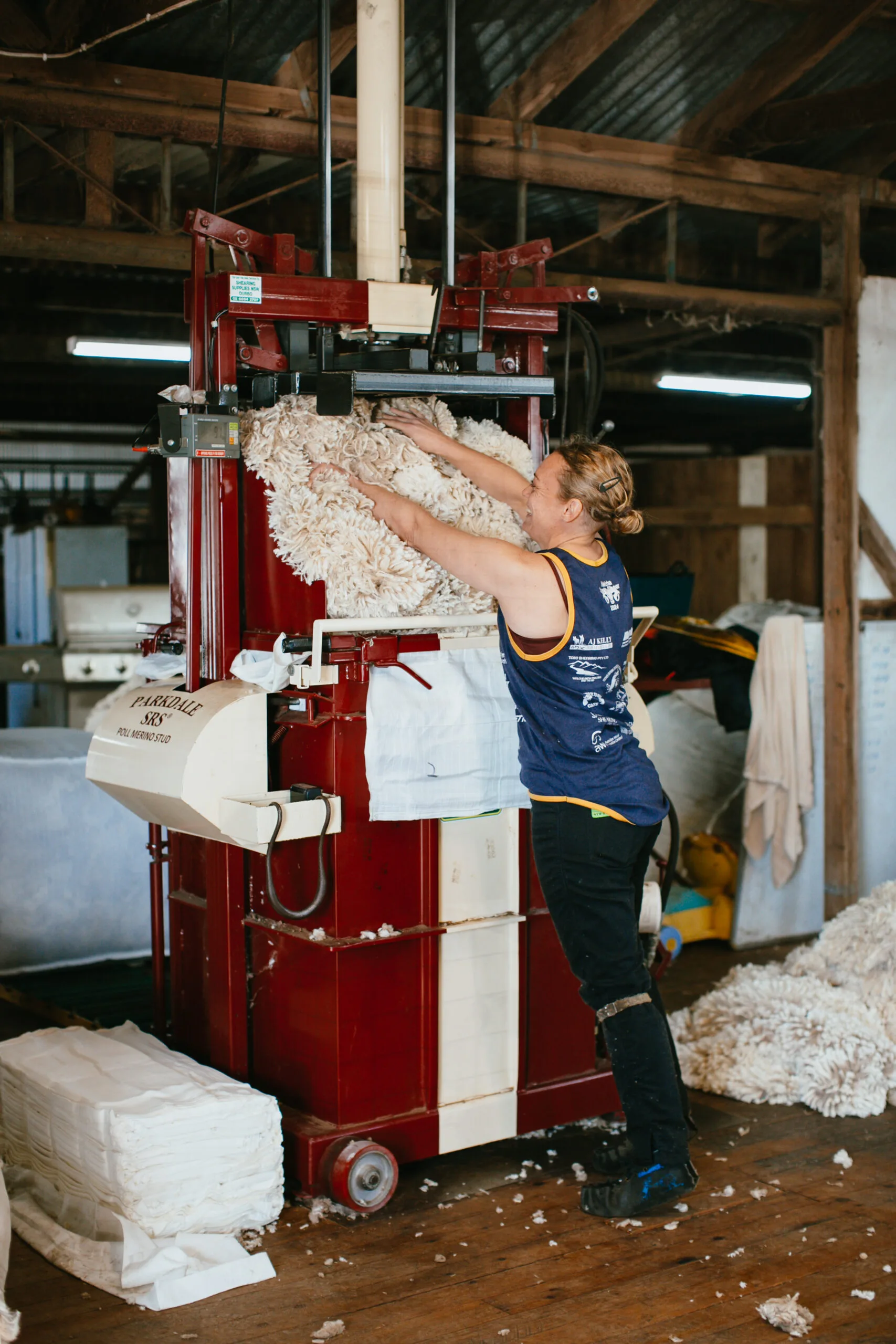
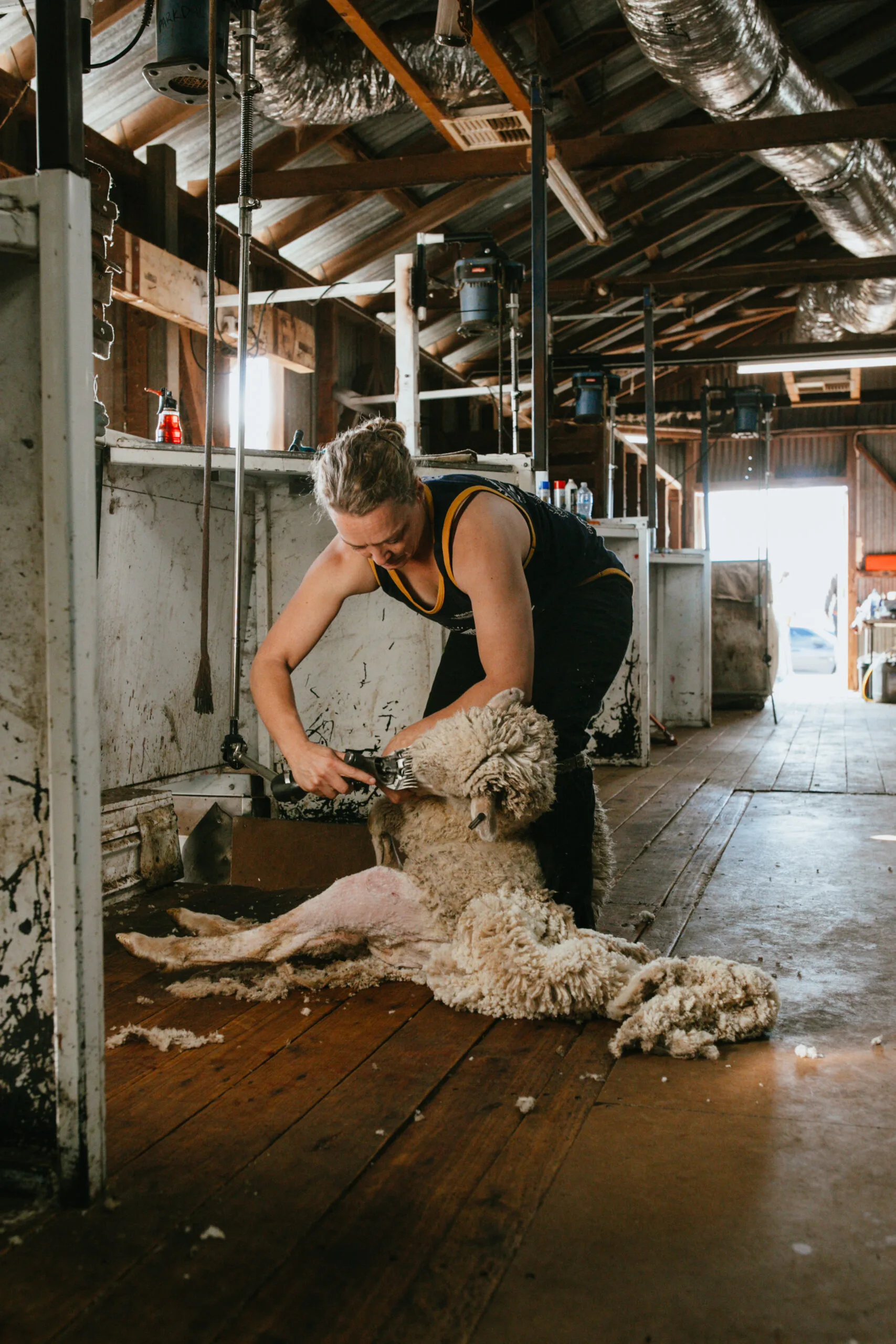
“That was enough to get me hooked. There was a shearing school coming up, so I went to that for a week to learn how to get around a sheep properly. Then you have to earn a stand as a learner shearer. So that made me want it a bit more.”
Carol had to work hard for it, but eventually she earned a stand, which meant she had her own place in the shed for a week. “In that first full week, I shore 100 for the day and went from there.”
She loved the shearing life.
“You get strong by doing it,” she says. “It’s absolutely phenomenal what shearers and all shed staff do. That job is tough and physical. It’s mentally challenging, it’s exhausting, exhilarating, and so satisfying. It’s completely addictive in every way.”
Carol also treasured the sense of community and the friendships she forged in the sheds.
“There’s a real sense of shed family,” she tells The Weekly. “People from all walks of life and all parts of the world. We might not always like each other, but we’re all bonded by the work. And we have respect for the work ethic, and doing the job well for the sheep and the people and the farmers and the wool. It’s the best community there is.
“For a lot of us, family is tied in and connected as well. A typical shearer will be a young fella whose dad was a shearer, whose grandfather was a shearer, or some of us whose mums have taught us to shear now. I was in the shed as a kid, so when I walked back in, I felt at home with the smells, the noises, the rhythms of the day – that sensory connection. It’s in our blood and bones.”
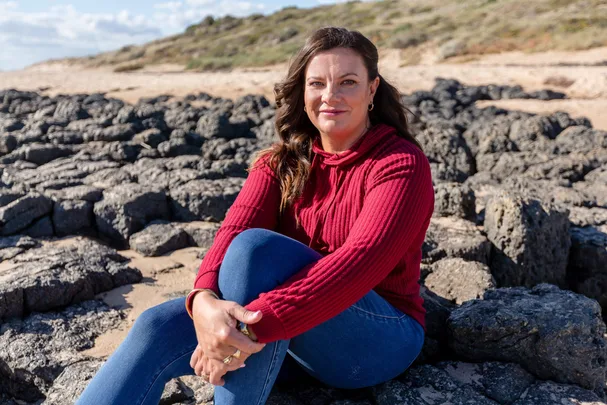
Then Carol received a letter. Her nursing registration was about to expire, and she had to get back on the tools to renew it. She had always been interested in mental health nursing – “and also, while I was working in the sheds, I’d seen a need there, and I’d seen how hard it is to get mental health services and support when you’re living the shearing shed life”.
Still keeping her hand in with a bit of shearing on the side, Carol moved into mental health nursing.
“When I interviewed for the job,” she remembers, “I said that I had a dream of doing something one day for mental health in the shearing sheds.”
Sadly, within her first few weeks in the new role, three shearers around the country – one of whom she’d worked with and whose family she knew well – died by suicide.
“It just brought it into the here and now,” she explains. “I’d had this idea that someone should do something, but then, all of a sudden, we were losing a lot of people. I mean, one loss is too many and devastating.
“I realised I was in a position to bring people together and do something. It started from there. The best time to plant a tree is 50 years ago, and the second-best time is today. You may as well start, right? So that’s what I did.”
Carol founded sHedway, a grassroots charity working towards suicide prevention and positive mental health in Australia’s shearing industry.
Its aim is “to see everyone in the shearing sheds looking after their mental health as well as a shearer looks after their shearing gear – or better. Because we are the most important tool in our toolbox.”
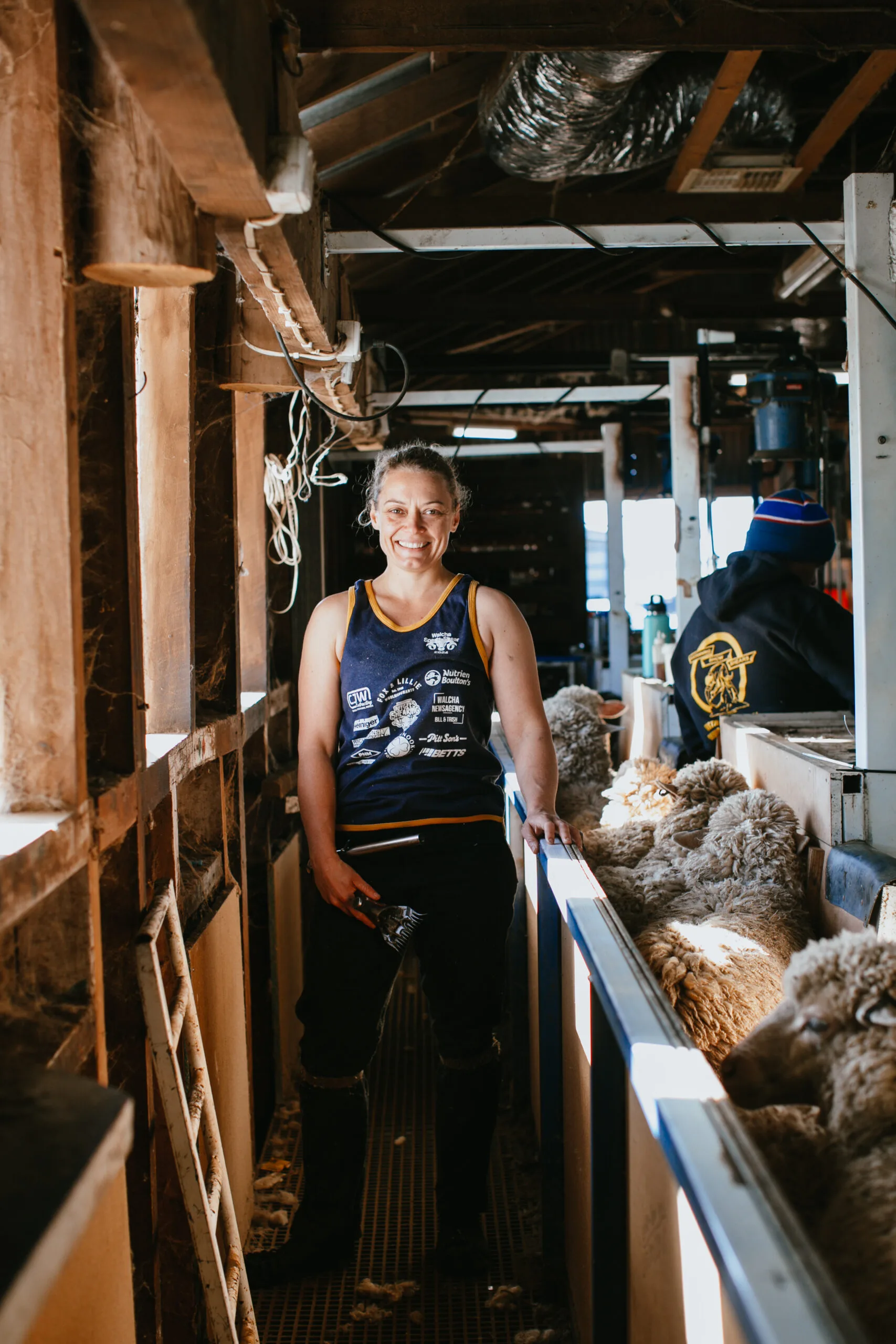
sHedway holds Toolbox Talks in shearing sheds and stalls at shearing competitions and rural shows. It’s also starting to train shearers in counselling and mental-health first aid.
When she began, Carol was told that rural blokes wouldn’t come up to a mental-health stall at a show. But she’s found these shows are great places to begin conversations.
She shares the story of “a shearer who finally came up to talk to me at the sHedway table after about 12 months of seeing us around the events. He introduced himself and asked me to come visit his shed because he was worried about another fellow on his team. It turned out that he’d been to six funerals in the last 12 months of people dying by suicide. It was devastating.
“I was able to visit the team he was with. Then afterwards, in his local area, a group of people organised a speed-shear competition and raised over $10,000 for their local mental health organisation. That’s the ripple effect of the work we’re doing as a community.”
Six years after Carol walked back into the sheds, she’s still living in Dubbo, working the occasional shift as a shearer and steering sHedway towards the future.
Suicide prevention, she insists, is not just about awareness in the sheds; it’s about better job security, housing and healthcare in the bush. And she can’t emphasise strongly enough how important it is for city folk to support rural communities by buying local produce and Merino wool.
Carol’s next goal is “to have people from the sheds trained in counselling and mentoring – two people in every shed team, working in pairs, so we’re supporting each other as well. I’d like to see sHedway champions across the country, breaking the stigma and running workshops.”
With the extra awareness that comes with her AgriFutures win, those goals are not far from being realised.
“If you want something done, get some shearers onto it,” she says with a chuckle. “They make things happen. It’s a really strong community.”
If you or someone you know is in distress, you can contact Lifeline on 13 11 14. You can also chat online at lifeline.org.au. Or call Beyond Blue on 1300 22 4636. Beyond Blue’s webchat is available via beyondblue.org.au. Or contact TIACS (a free text and call counselling service for tradies, truckies, miners, farmers and blue-collar workers) on 0488 846 988.
Find out more about sHedway here.
This article originally appeared in the May 2026 issue of The Australian Women’s Weekly. Subscribe so you never miss an issue.
Applications for the 2027 AgriFutures Rural Women’s Award open on Wednesday, 9 September 2026. Apply here.

