




At a glance…
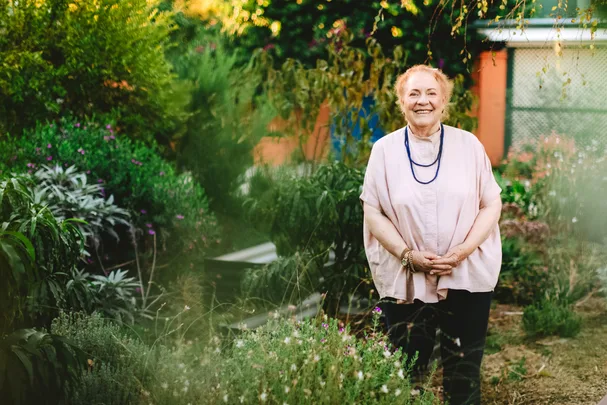
- At 80, Dr Mary Cole has spent more than 45 years championing organic and regenerative farming, teaching farmers how healthier soil can produce healthier, more nutritious crops.
- Inspired by her father’s deep respect for the land, Mary went on to earn a PhD in plant pathology and founded Agpath in 1980, despite facing resistance from the agricultural industry.
- Named the 2025 Victorian AgriFutures Rural Women’s Award winner, Mary plans to use her $15,000 prize to create a film showcasing farmers who have transitioned to biological farming — with one simple message: “Be kind to the country. It will give you everything you want if you look after it.”
- We sat down with Mary for this feature in the July 2025 issue of The Australian Women’s Weekly.
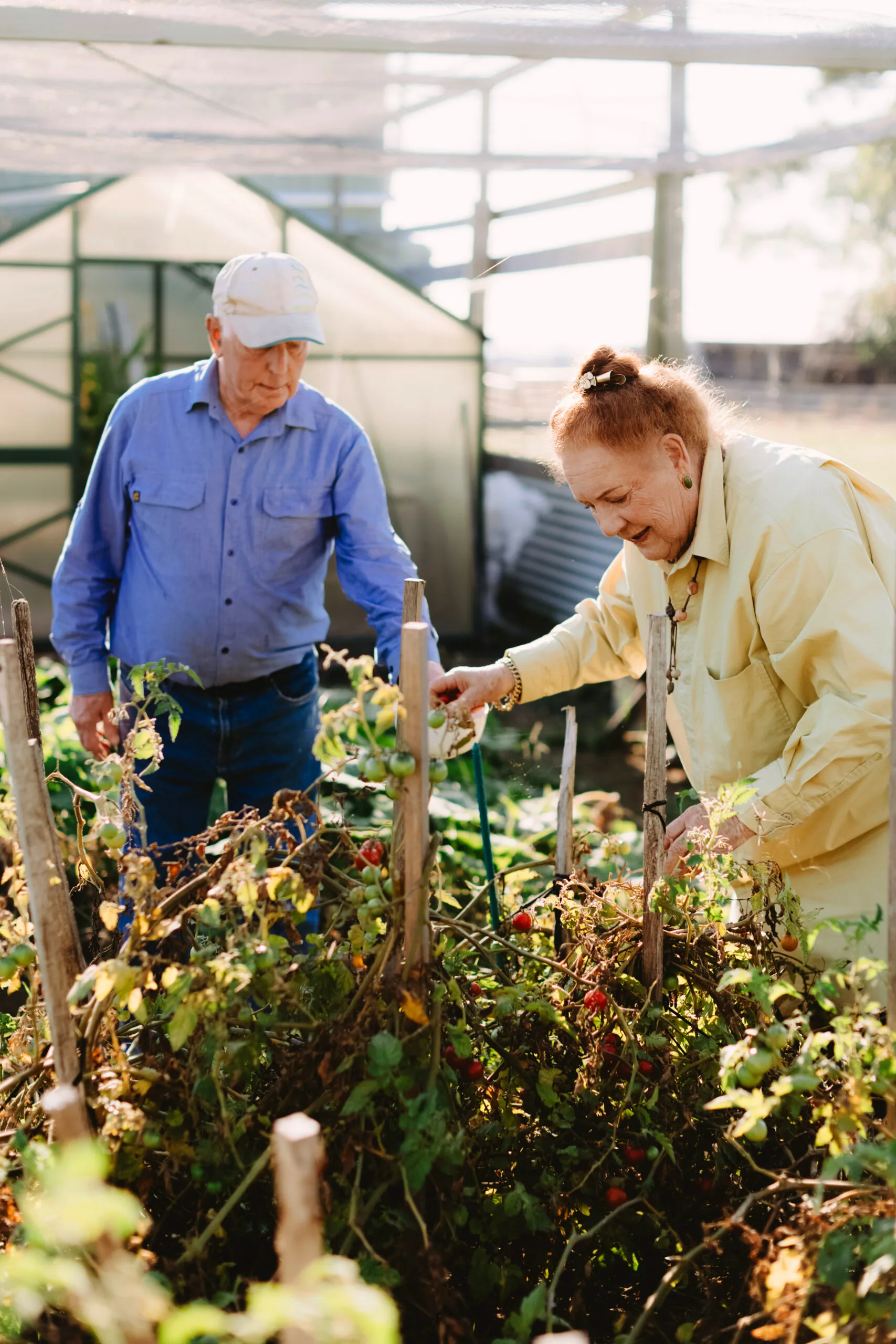
Tea is what Dr Mary Cole prescribes for safeguarding the future of Australia’s farmers. Compost tea, that is, and soil aeration, molasses, and planting multi-species crops. For more than 45 years, Mary has been using her expertise in plant pathology and soil microbiology to teach farmers how to grow food in a way that preserves the health of the soil and ultimately makes the crops more nutritious.
Her passion springs from her happy childhood spent on Queensland’s Atherton Tablelands, where her father, James Madsen, learnt how to cultivate the land from a local Aboriginal elder, and her childhood treats were hot jaffles straight from the AGA stove and wild honey.
Mary was promoting organic and regenerative farming long before concepts like permaculture became trendy. It hasn’t always been easy. She has faced resistance from farmers and endured being called a liar by executives from companies that produce chemical fertilisers, but public opinion has come around, she says, chuckling softly.
“What I’ve done through my career is talk to farmers about how they can still be successful, but they can be successful with a footprint that is far kinder and softer than the imported European style of ploughing the hell out of the land,” she says. “My reason for being is to try to help farmers.”
At the age of 80, Mary has just been named the Victorian winner of the 2025 AgriFutures Rural Women’s Award for the work she does through her company, Agpath. When The Weekly phones her on her farm in south-east Victoria, she’s been helping one of the other finalists overcome a problem that had been stumping her.
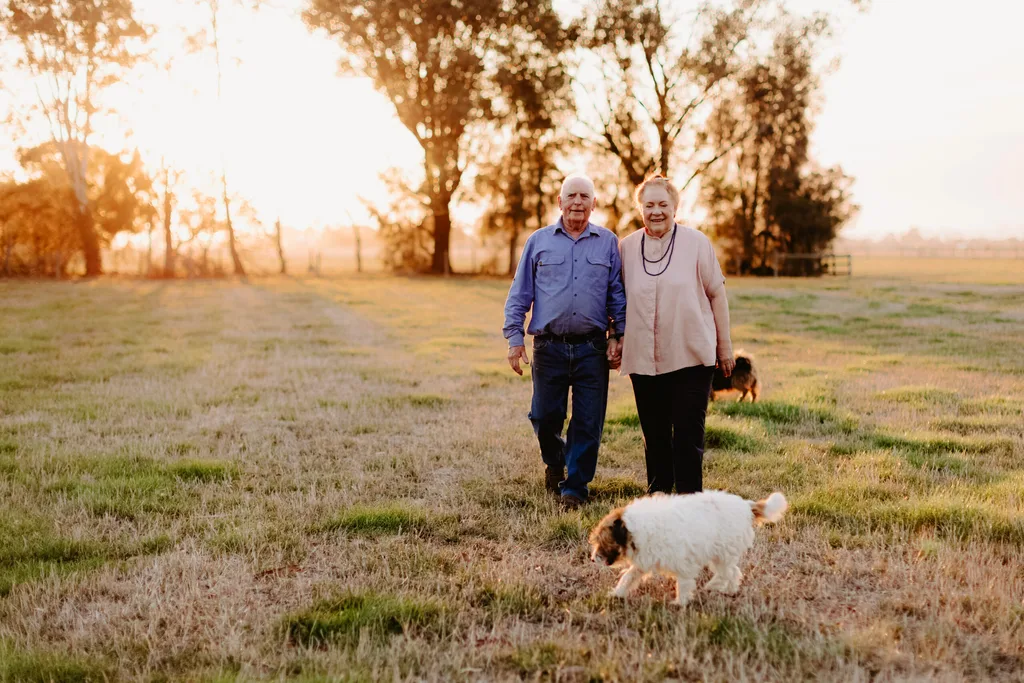
“I’m at an age now where it’s my time to give back,” Mary says. “I’ve been so fortunate to have never gone to work a day in my life, because I’ve just loved what I’ve done. Now I’m able to give back and that gives me a whole lot of joy.”
Her deep, abiding love of the natural world started with her father, who was enamoured with the flora and fauna that coloured their corner of the country.
“He would tell stories about the Bunyip up in North Queensland,” she says. “As a small child, my first memory was when we were out foraging for mushrooms. Dad used to say, ‘Gosh, bub, do you see that mushroom there? Can you see the smoke coming out of the chimney? You don’t touch those because there’s someone living there, but these ones we can have.’ My father was teaching me which mushrooms were edible and which ones were poisonous.”
James Madsen’s philosophy was that the land and all living things deserved respect.
Mary was a good student and was aided in her studies by her father’s extensive collection of National Geographic magazines dating back to the 1940s. She wanted to study science but was discouraged by her school principal.
“The headmaster at the time said that I really should consider not doing hard sciences … because I’d fail. So, I went home and told my mother, and my mother got straight on the telephone to a friend of hers who was a class teacher, and she said, ‘Mary’s just been told she’s going to fail maths. Will you tutor her?’ Nobody’s going to tell me I can’t do anything. So off I went.”
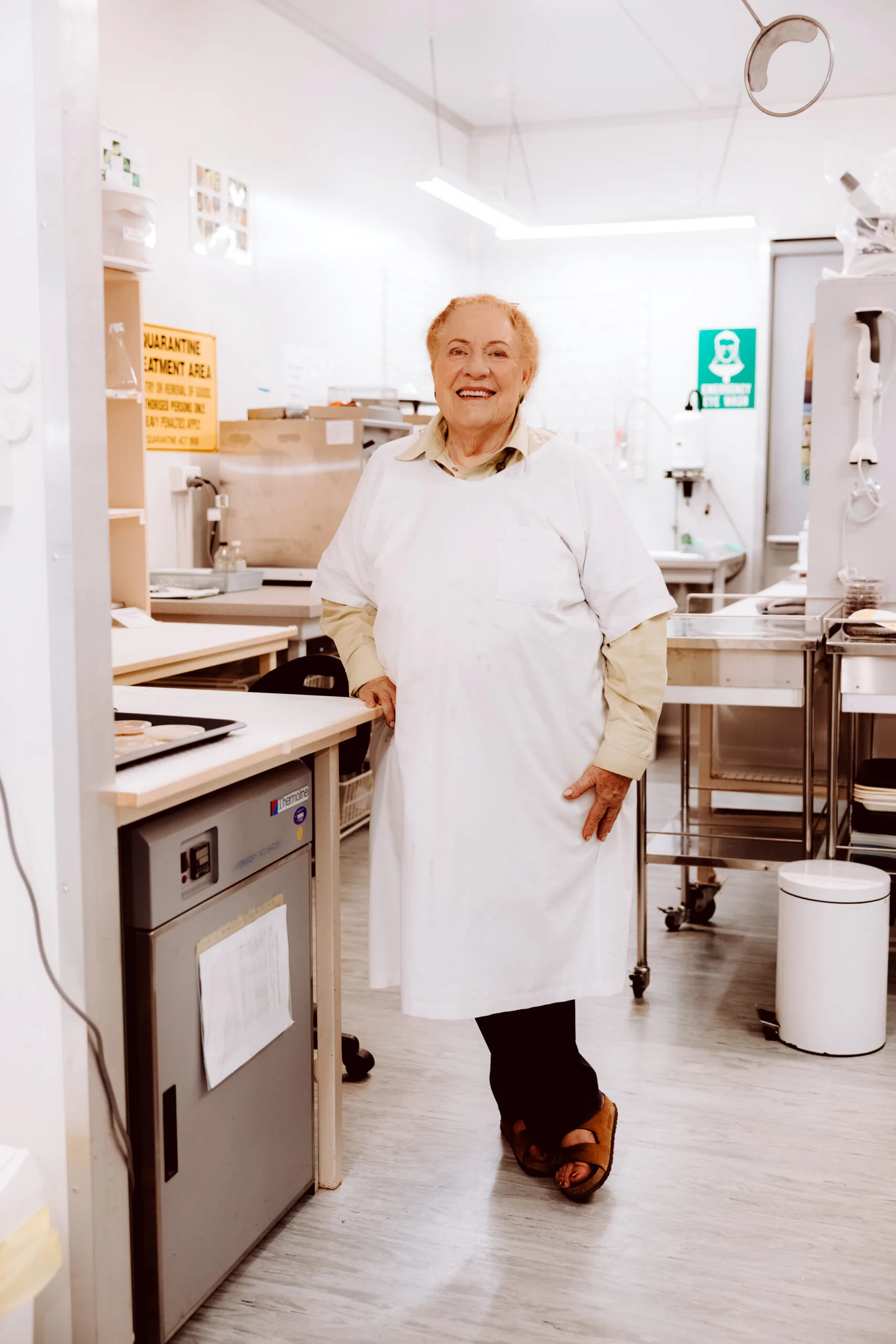
Mary went to university and eventually gained a PhD in plant pathology. She worked in academia before starting Agpath in 1980. “I’m trying to live so my father would be proud of me,” she says.
Her study and practical experience fostered a passion for soil.
“The soil is so important if you want a future on this earth,” she says. Under the surface, it’s teeming with life. Nutrient-rich soil produces nutrient-dense food, she says, so the work of improving farming outcomes has to start in the ground. It hasn’t always been a popular opinion, and she has had to learn to be tough.
She recalls once addressing a pavilion of about 50 viticulturalists alongside a representative of a chemical fertiliser company.
“I spoke through the morning and … this man got up and said, ‘You have just heard three hours of bullshit. I’ll tell you the real story.’”
Mary was in the front row of the audience and couldn’t leave.
As soon as there was a break, she made a swift exit. “I was going across the carpark so fast there was dust coming up until I heard, ‘Mary stop!’ A group of men and women asked her to come back. They apologised. The audience had questions. “I answered every question that was put to me,”
Mary says. “They asked [the executive] questions and he couldn’t answer them.”
She is glad to report that attitudes have changed, and she has great faith in the younger generations. “There are people out there listening. Australia has more organic farming than any other country in the world,” she says. “We’re going to be able to take agriculture into the future by simply going back and caring for the country because nature knows how to do it. It’s so simple, really.”
Winning the AgriFutures Rural Women’s Award justifies a lifetime of work, Mary says. She wants to use the $15,000 prize money to create a film in which farmers who’ve transitioned to biological farming tell the story of how it has changed their lives. It will be her legacy to the future, she says. The message she wants to leave is this: “Be kind to the country. It will give you everything you want if you look after it.”
Applications for the 2027 AgriFutures Rural Women’s Award open on Wednesday, 9 September 2026. Apply here.
This article originally appeared in the July 2025 issue of The Australian Women’s Weekly. Subscribe so you never miss an issue.

