




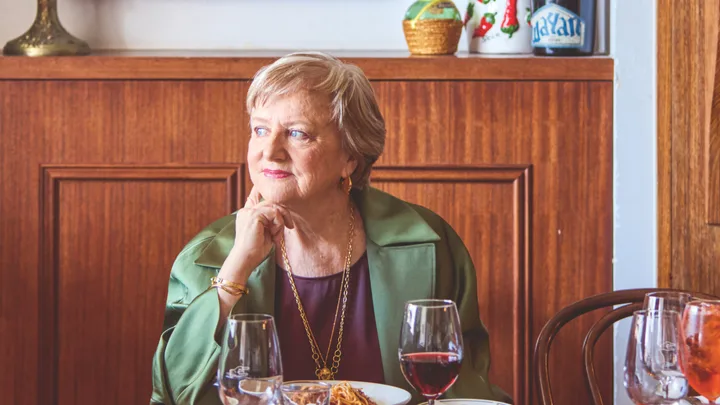
After an 18-month battle with breast cancer, which she admits was “absolutely shocking,” Denise Scott is back with a warm-hearted sitcom, some hard-earned dark humour and absolutely nothing to prove.
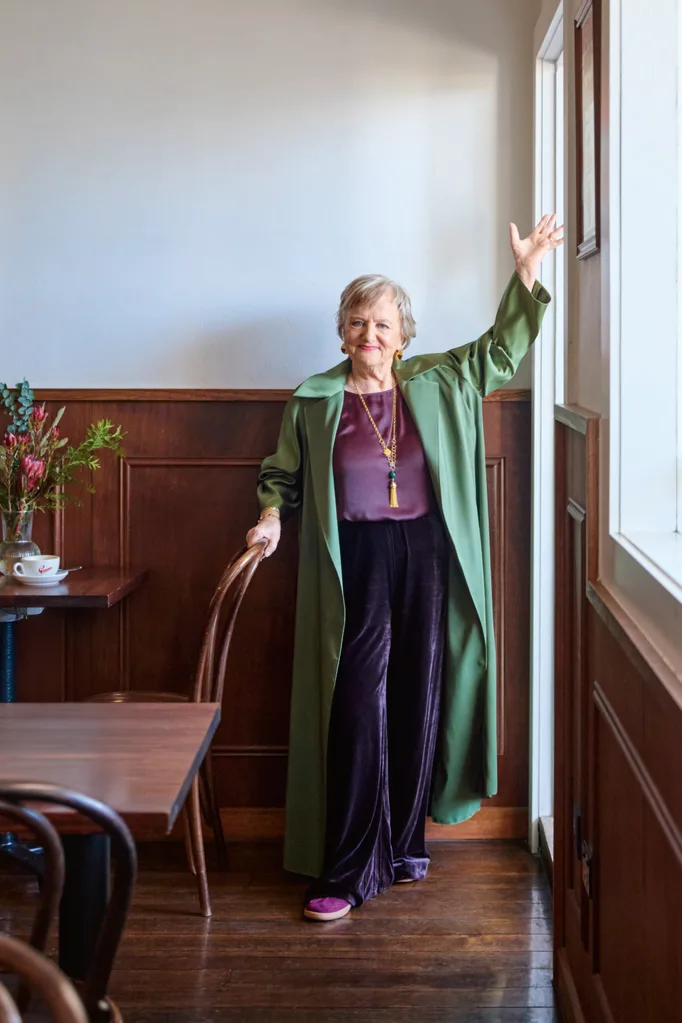
Sunlight streams into the warm, wood-panelled dining room at one of Denise Scott’s favourite Melbourne haunts. When she turned 70, in April, this was where she celebrated – with a tiny group of her closest family, over bowls of pasta and glasses of vino rosso, upstairs at Umberto espresso bar.
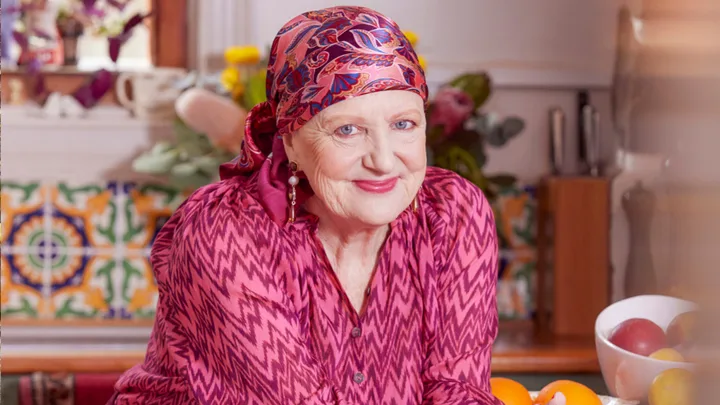
It’s also where her first grandchild was very nearly born when her daughter Bonnie’s waters broke three years ago, during dinner here. And today, Denise has brought The Weekly along to celebrate her – “touch wood”, she says – robust health and her return to television after a handful of exceptionally rugged years.
Coming back to the screen with Mother and Son
In recent weeks, Denise has run rings around comedy and chat-show hosts with her quick, self-deprecating wit and repartee. She’ll also be back on the ABC in September in the second season of Mother and Son, the clever, warm-hearted sitcom in which she stars opposite Matt Okine.
“What a gem of a human Matt is,” she says, “to create a beautiful, older character like Maggie. She’s funny, somewhat hip and dignified – even, dare I say, a little bit sexy.”
On the subject of which, the first episode features an on-screen kiss.
“Maggie has a romance,” Denise explains, mock-breathlessly, “with [a character played by] Mark Lee, who was in Gallipoli. He was the blonde; Mel Gibson was the brunette. He’s a marvellous actor, so funny, and it was quite romantic.”
Denise had experienced an on-screen kiss just once before.

“I had to brush lips with Francis Greenslade on Winners & Losers,” she chuckles. “I remember it because it’s just so intimate – lip on lip – whoa!”
Mark Lee, however, won the accolades. “He was just great,” she confesses. “They offered me an intimacy coach, because you have to these days, and I was thinking, ‘But we’re just going to kiss, aren’t we? Is there something I don’t know about?’
“We didn’t have the intimacy coach, but I asked Mark, ‘What do we do?’ And he said, ‘I’m going to close my eyes and pretend I’m a teenager.’ And I loved that. I said, ‘Oh, that’s great. I’m going to do that too.’ And we quite happily did it. Just like the old days.”
Denise says Mother and Son has been a blessing. “What a gift, to get to 70 and not just be in a sitcom, but have a lead role, because that had never happened to me. It’s a wonderful show… And personally, it was also such a lesson in ‘So, life’s handing you this gift, and now life’s handing you this pretty horrific cancer treatment.’ It’s been a weird combination.”

Filming while undergoing treatment
Filming for the first season was punctuated by a constant and gruelling course – 18 months in total – of chemotherapy for breast cancer. Looking back, does she marvel at how she made it through?
“I sort of do,” Denise admits. “I can recall how I was feeling at each moment. The pain, and I was feeling so sick, and my back would ache, and there was nothing for it. I’d just be so achingly tired.
“I only cried once on set. We had to keep repeating a scene, and I was getting so tired. I said, ‘I need five minutes to weep,’ and that’s what I did. We were filming on a street location. I had nowhere to go but to sit on a fold-out director’s chair in this busy shopping street, and weep. I said, ‘I’ll be done in five minutes,’ and I was.”
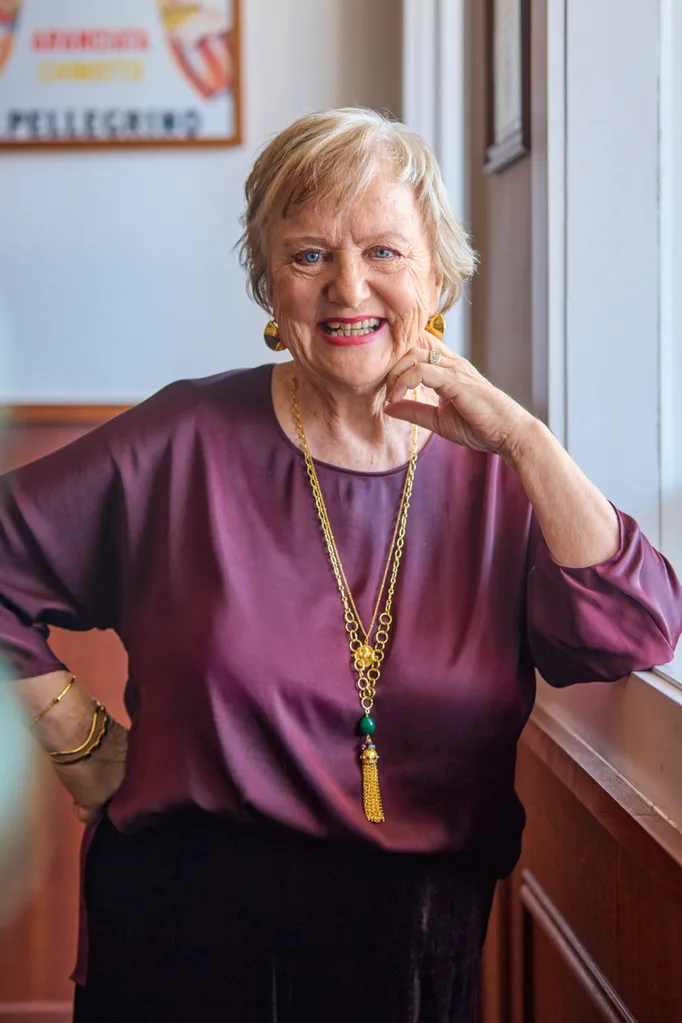
She coped, she thinks, by separating a part of herself from the pain.
“I reckon I was bordering on dissociation,” she says. “Like feeling I’m not here; I’m not present.
“I remember my oncologist saying he hoped I’d be all right mentally afterwards. No one knew if I could do it. No one on the production, my management, or I had ever dealt with someone having such full-on chemo and having to be in every scene. And afterwards, I thought I understood what the oncologist had meant. It’s like you just cannot let go for the entire shoot. You can’t drop the ball because that will absolutely f**k everyone up. It’s got to keep going, so I’m not going to let myself think or feel anything, because if I start feeling anything, I mightn’t be able to continue.”
Looking back now, Denise says, she feels as though she lived through a quite traumatic experience.
“But the people on set were very supportive. And what did amaze me about the first series was that I felt like I’d done as well as I would have without cancer – in fact, maybe even better because I was so focused. There was nothing else – just this scene; got to get through this scene – and I’d put all my energy, or what energy I had, into that.”
Understandably, “the second series has been a lot more fun,” she says. “The producers continued to look after me – making sure I was coping, mentally and physically. The atmosphere was so happy and celebratory, and I just felt continuously grateful.”
“The radiation was absolutely shocking”
We’re sitting in a sea of velvet jackets, gold shoes and mounds of sparkling costume jewellery that were collected for today’s photo shoot. Trams rattle by on High Street, and an Italian pop tune drifts up from the espresso bar downstairs. She lights up for the camera, but this is a quieter, more pensive Denise than the woman we met two years ago, just prior to the premiere of Mother and Son.
“The last time I spoke to you,” she says, “I really thought life was going to be pretty good from there. I remember feeling really positive and thinking, ‘Oh wow, I got through the chemo.’ But I went downhill quite a long way after that.
“I had a lumpectomy, not a mastectomy, so surgery was no problem. But there was still some cancer in the tumour they cut out – the chemo hadn’t done its job. So
I had to have nine more months of chemo, which I wasn’t expecting. It’s the only time I cried in the oncologist’s room. I was all right, and then as I left, I was like, ‘I can’t do nine more months of this’.”
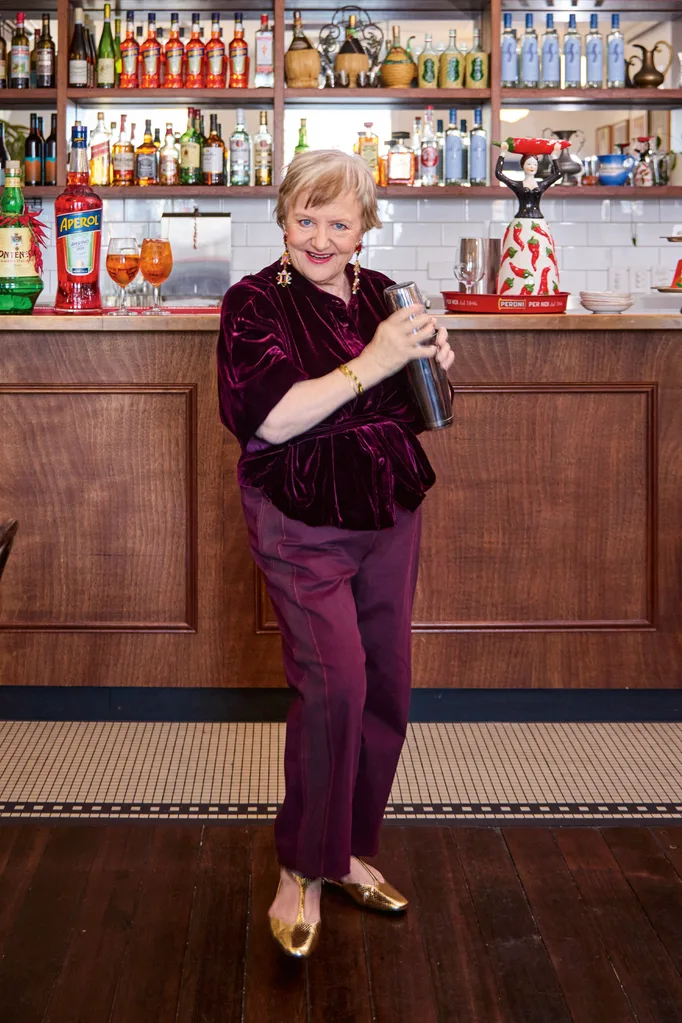
There was radiotherapy too, and “the radiation was absolutely shocking”. She received four severe burns from the treatment, which took an hour to dress each morning and an hour at night.
“It was horrendous,” she says. “That’s when I unravelled. It was a nightmare, and I hadn’t expected it … being that ill; it was really, really humbling.”
Denise Scott’s husband was there through it all
The experience – all 18 months of treatment and beyond – has deeply affected Denise’s relationship with her husband, fellow performer John Lane. Today he’s at home, preparing for a visit from the grandkids, Lenny, three, and Angelina, one, whom John and Denise take care of one day each week.
“Oh my goodness, he’s the best grandpa,” Denise says. “He has an office full of stuff. It’s just a wonder world for kids. Weird, old musical instruments, costumes and old toys. They’re not in any order. It’s not like he has shelves. It’s just this room of things, and in they go.
“John has been and continues to be the most amazing carer. He always played that role in our family. My kids would never come to me and say, ‘I feel sick.’ … John would be the nurturing one.”
During that second round of chemo, Denise says, “I became very dependent on him. I couldn’t do most things for myself. He came to every appointment with me. As a result of the treatment, I became very anxious – out of my mind with anxiety – so John would take me places where I was scared to go alone.
“Our relationship changed. It’s changing back again now, but I feel much kinder towards him because … Oh God, he’s been incredible. Incredible.”
The impact of friendships during this “horrendous” time
Friendships also shifted while Denise was unwell. Some of her dearest friends drew closer, while others stepped away, and people she’d not known terribly well at all lifted her spirit with unexpected acts of kindness.
“Clearly, there are people who lean into their sick friends and others who run the other way,” she ponders. “When I was sick, that did bother me. But once treatment finished and life was getting back to normal, I really understood the leaning away. I think I can be like that. I don’t imagine I’ve got much to offer, so I’ll just stay out of the picture for a while. But it was interesting. There were a couple of friends who were there every step of the way.”
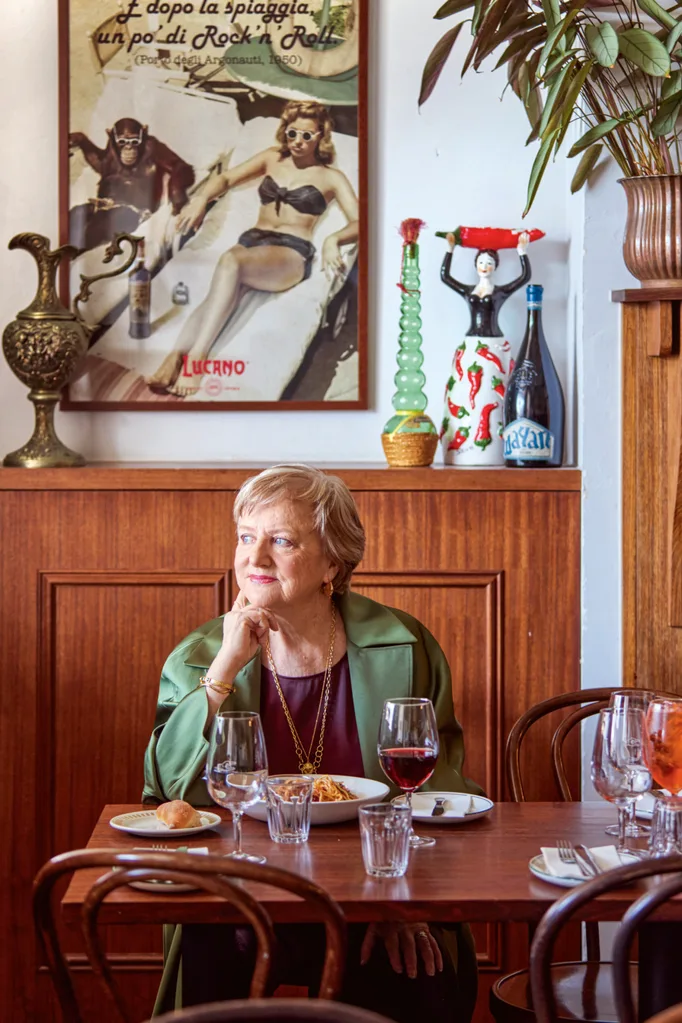
Denise’s long-time partner in comedy, Judith Lucy, was one of the staunch friends. “Prior to this, she wouldn’t have struck me as a carer,” Denise says. “I wouldn’t have expected her to be by my bedside, but there she was. We had this green velvet chair in our bedroom, and she’d get public transport from the other side of the city and come once a week and sit in that chair and have a cup of tea …
“There were a few friends like that. One woman, named Terry, lives quite a long way out, but I’d go to the doorstep and there’d be flowers from her garden and a freezer bag full of homemade food and biscuits. It happened quite a lot. I never saw her. She’d just message and say, ‘There’s something on your porch. ’ Isn’t that lovely?”
Another dear friend swung into action when Denise mentioned that, after her cancer treatment finished, there was no celebration, no ringing of a bell.
“It was the Winter Solstice last year,” Denise recalls. “My friend, Sally-Anne Upton, rang me and said, ‘I’m going to take you somewhere. I’m not telling you where. Just wear something warm and comfortable.’
“So, she picks me up and we drive across town and pull up at this church. And I’m like, ‘Oh my God, what? Is there going to be a circle of priests and nuns? Am I going to be exorcised?’
“We go into this old church and it’s all very solemn and serious and I’m thinking, what the f**k’s going on? She still hasn’t told me anything. Then this guy, Bill, arrives and he says, ‘So, are we ready?’ And I’m like, ‘Ready for what?’
“We climbed into the steeple, up all these stairs. I was really unfit and still sort of bald, and the bell was heavy, so Sal had to help me. But we did it. We rang the church bell. She’s a great friend.”
All those gestures, from the close friends who sat by her bedside to the anonymous neighbours who dropped food at her door, made an immense difference. “You felt,” she says, “like you were being held.”
Her newest hobby
For her 70th birthday, Denise bought herself a truly magnificent present.
“I don’t know if I should tell you,” she says.
“I won’t judge you,” I reply.
“Oh,” she responds, “you might… I bought myself a Japanese, wooden, limited-edition box of 150 coloured pencils. And it weighs five kilograms. It came from England.”
It’s every primary schoolgirl’s dream of a box of Derwent pencils writ large – who could judge that harshly? She also bought a very elegant colouring book of William Morris wallpaper designs.
Colouring was the hobby that helped relieve anxiety all throughout Denise’s treatment, and she’s not only kept it up, she’s teaching herself to draw. Though she has less time for it now that she’s dipping a toe back into comedy.
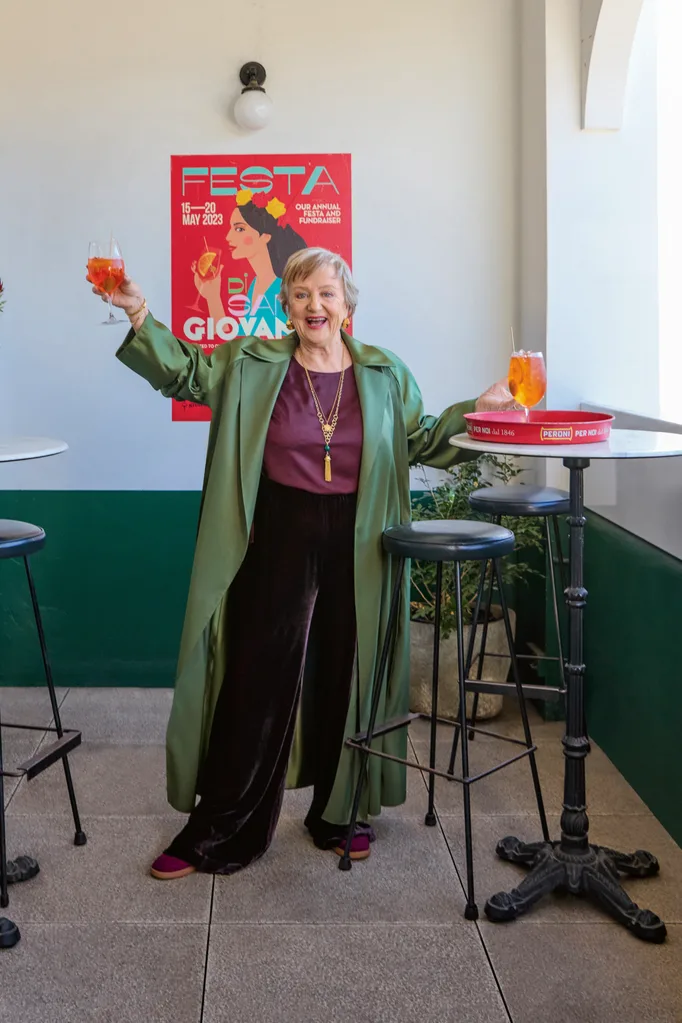
Denise Scott on her comedy style and menopause jokes
Denise’s comedy has always been wonderfully female-centric and honest, and on a game show, it can explode all pretence. I mention that when women of a certain age speak publicly about sex or romance, younger people still seem shocked – even horrified.
“I think older women talking, in general, is kind of a revelation because you don’t see it all that much,” she says, “and because we’re at an age where we do say what we think.”
Denise has noticed that even professionals will often respond to her humour by making an age-related joke at her expense. “That’s occurred quite a lot,” she admits. “I won’t name anyone, but there have been jokes about my age, and I think, ‘Are you kidding me? You can’t do that. I can make jokes about being old, but you can’t.’ It happens nearly everywhere I go.”
As she rightly points out, comedians making jokes at the expense of any other minority group would be frowned upon. But there’s a sense in which women – post-menopausal women particularly – are still considered fair game. Moreover, having barely turned 70, Denise says: “I’m not that old!”
Is Denise Scott heading back on the comedy circuit?
Time away from the comedy circuit and the trial by fire that was cancer treatment has made her more likely to speak her mind and, she adds, “more liberated”. She’s less concerned about success and other people’s opinions, and more interested in creating work she’s pleased with and enjoying herself.
“I really think, ‘Oh, what the f**k does it matter?’” she chuckles. “I don’t feel obliged to prove myself. And up until cancer, that’s what I still felt I had to do. Now I feel like I can just get out there and be funny or share a story, and I feel much more at ease with that.”
Is there a chance this new Denise Scott might return to stand-up? It’s not a no. “I haven’t got much to talk about except cancer,” she begins, “but perhaps there’s enough there. You get a great perspective on life … I do want to write again, though I’m not at all disciplined.”
And as far as touring is concerned?
“I don’t like being on my own much these days,” she protests. And then she’s reminded that Marcia Hines takes her dog on the road, and Taylor Swift tours with her cats.
“Yes, John and the dogs,” she muses. “I guess they could come on tour.” Then she smiles. “And perhaps the grandchildren too.”
In fact, in September 2025, Denise announced she is heading on her first solo tour in over a decade: Tickety Boo! Head here to read more (and secure your ticket).
No template / Incompatible templateMother and Son season 2 premiered on ABC TV and ABC iview on Wednesday, September 24 at 8.30pm.
This article originally appeared in the September 2025 issue of The Australian Women’s Weekly. Subscribe so you never miss an issue.


