




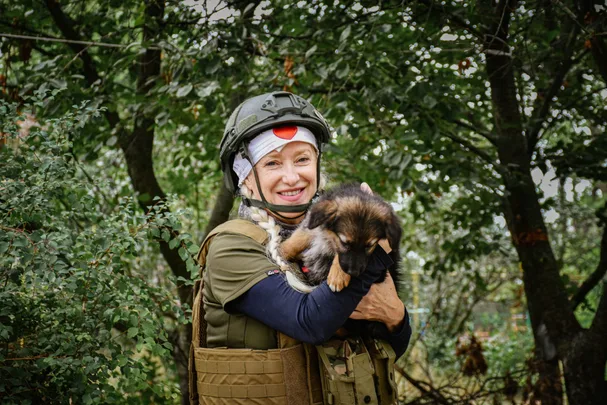
After rushing to help at ground zero after the World Trade Centre attacks, Dr Alison Thompson OAM has devoted herself to bringing humanitarian aid to the world’s disaster and war zones. Her grassroots movement, Third Wave Volunteers, has delivered relief to more than 18 million people in countries including Ukraine, Syria, Afghanistan and Sri Lanka.
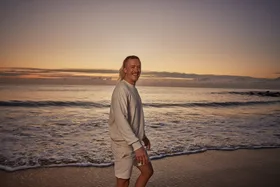
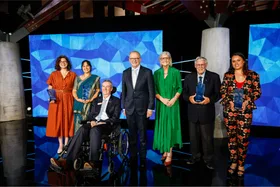
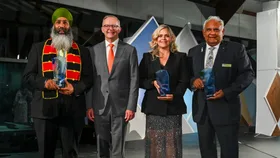
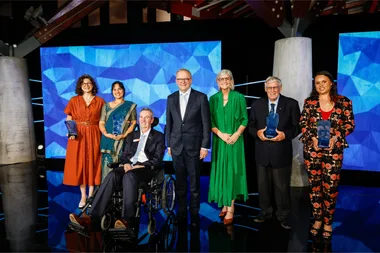
Her courage and compassion have earned her an Order of Australia Media and a US President’s Volunteer Service Award, and now, she has been named the 2026 Australian of the Year for NSW.
The 61-year-old who grew up an “Aussie surfer girl” and first responder has spent her year bringing hope and medical aid to disaster zones from Puerto Rico to Ukraine. She spoke with The Weekly in 2022.
Wrong place, right time
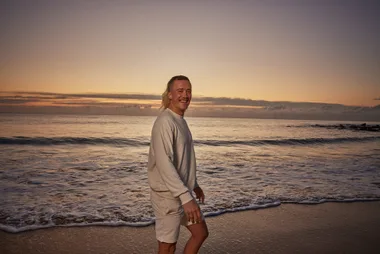
The day that changed Dr Alison Thompson’s life – as it did so many – was September 11 2001. A blonde-haired, blue-eyed surfer girl, maths teacher and nurse from the Sutherland Shire in Sydney, she was living in New York City when the World Trade Centre buildings were attacked. As dust and smoke billowed through Manhattan streets, Alison rollerbladed into ground zero with a backpack full of medical supplies and began pulling survivors from the rubble.
There was a moment that day when she realised this was her true calling – that she would spend her life offering what help she could in disaster zones around the world.
“It was at that moment that I realised that everybody is needed,” she tells The Weekly, “and I understood the importance of being in the wrong place at the right time.”
Since then, Alison, has won numerous prestigious humanitarian awards, helped to construct the first Tsunami Early Warning Centre in Sri Lanka, volunteered after the 2010 Haiti earthquake and assisted in a long list of other natural and human-made disasters. She was on the frontline during the war in Syria and administered aid to refugees who crossed the Mediterranean to Greece. Now “56 years young”, she is both a United States nationally certified rescue SWAT paramedic and a trained nurse.
On the frontline
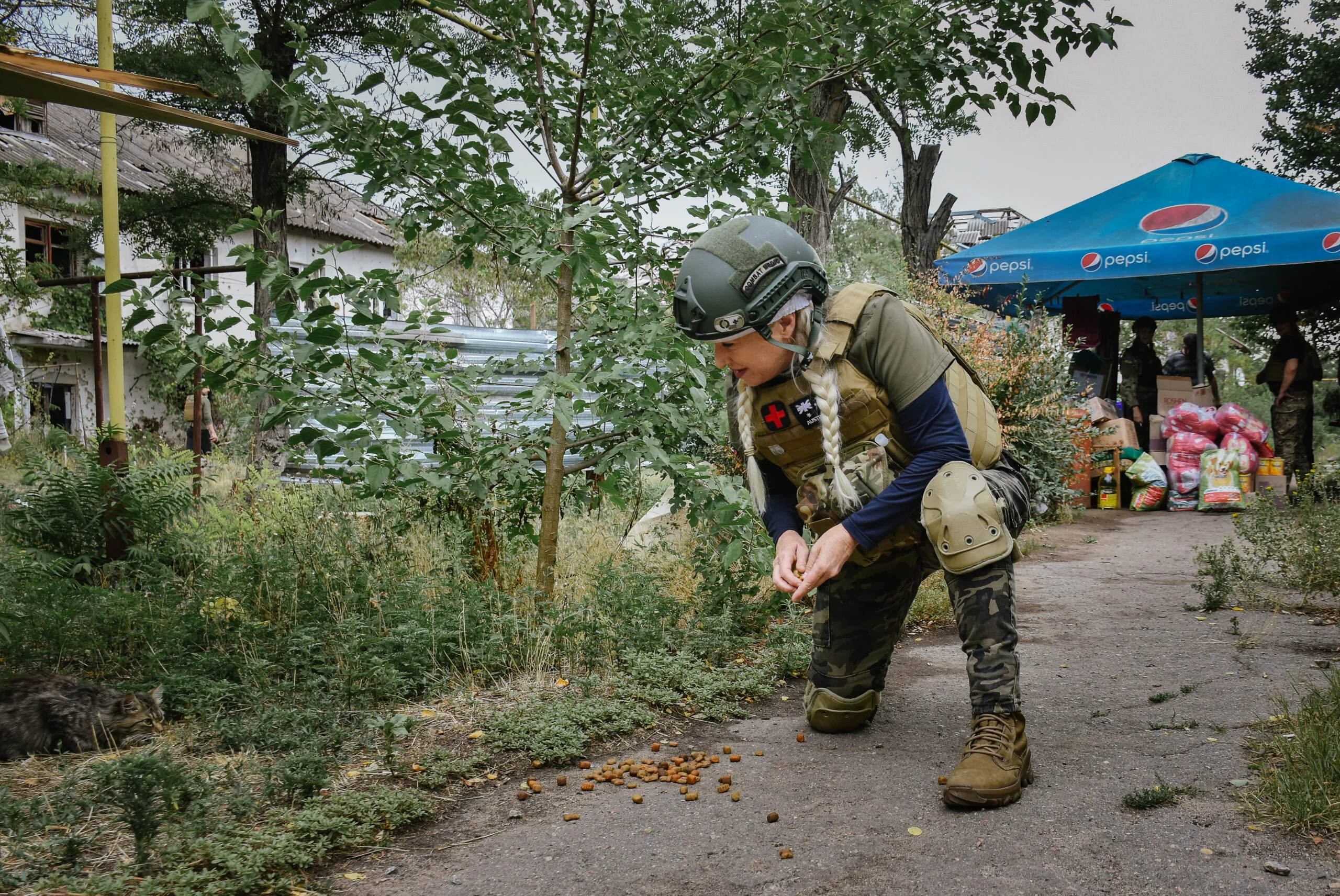
Most recently, Alison has been dividing her time between responding to the deadly hurricanes in the USA, delivering aid, rescuing orphans and training citizens to become combat medics on the frontlines of the war in Ukraine.
In just the last few weeks, Alison has travelled from Ukraine to Australia to spend time with sick relatives, then on to Puerto Rico to respond to Hurricane Fiona and finally to the United States. As she speaks to The Weekly, Hurricane Ian is about to make a direct hit on Florida, which is home base for Alison nowadays, and she has been mobilising her Third Wave Volunteers.
Third Wave, an NGO she founded in 2001, now has 30,000 volunteers internationally, and some of them are on standby, ready to respond to the oncoming destruction of Hurricane Ian. “Big orgs too often become stuck in bureaucracy,” she says, “so it is all the grassroots orgs that work the best and often have good systems in place working on the ground.”
Love to the rescue
It was while she was working on the ground in Haiti, with just such a small and agile team, that Alison met her husband, Albert Gomez. The Cuban-American businessman had been delivering aid to the team at a refugee camp that Alison was managing alongside Hollywood actor and humanitarian Sean Penn.
One day, Albert emailed, saying he was on his way, and asking whether there was anything she needed for herself. “No, don’t worry,” was Alison’s response. “I’m fine, just help the people in need.” However, he insisted, and finally she admitted she’d like some lemon juice. After all, she didn’t want to get scurvy because she was living in a tent, had no access to fresh vegetables and could only eat beans and rice. She also asked for a towel because she hadn’t been able to wash properly for weeks.
Fast forward a week, and Albert arrived with ten large bottles of lemon juice and two big yellow towels. The two looked at each other and hugged. Their first kiss was at midnight overlooking the refugee camp of 90,000 people. Although Alison remembers cheerfully, they later realised that the US 82nd Airborne Division had been hiding in the trees nearby with their night vision goggles on, and they’d witnessed the whole thing.
That was 12 years ago. She and Albert married in 2015, but that has slowed Alison down a bit.
“I met the love of my life on a mission and we fell in love in service to others,” she explains. So he understands.
Into Ukraine
Even so, this year has been a particularly challenging one. Natural disasters, driven by climate change, seem to be bearing down one after the other. And the call of the citizens of Ukraine was one Alison couldn’t ignore. As we speak, she is at home just briefly but is soon to embark on her eighth mission to the war zone this year.
“I’ve been helping to rescue orphans, delivering food and medicine to the elderly, and training civilians in combat medicine in recaptured Ukrainian frontline cities,” she explains. “Winter is coming, which is going to be harsh, so I will help to get the soldiers winter clothing. When I bring things to them, they often burst into tears and touching moments like that fill my heart up.”
Ukrainian soldiers keep in touch with Alison every day, no matter where she is in the world, sometimes asking for medical advice or just sending heartfelt messages. They tell her they are taking back more occupied cities and villages, and pushing the invading Russian forces back, but the toll on Ukrainian soldiers and civilians is enormous.
“It was very intense when I was last over there, there were a lot of bombings,” Alison says. She had a few close calls, in which Russian missiles barely missed vehicles she was travelling in, and landed nearby her in the street.
She survives on a little bit of fortitude and a lot of faith. “I believe in a higher power,” she says, “and I just say a prayer to myself and say, ‘if it is my time, it is my time’.”
Alison has spent days and weeks in bomb shelters with Ukrainian civilians and has witnessed extraordinary acts of courage in her time there.
“I met this heroine, an old Ukrainian grandmother or babushka, and when the Russian tanks were moving towards her city she would hide behind trees and report Russian tank positions to the Ukrainian mayor. She helped to save her city,” Alison says.
Courage rewarded
Alison’s own courage and compassion earned her an Order of Australia Medal in 2010. Earlier this year [2022], she was honoured in New York at the 9/11 Memorial Museum for her service in the aftermath of the September 11 attack. And in November [2022], Alison was presented with the US President’s Volunteer Service Award, which honours “outstanding volunteers and recognises the impact they make”. It is a significant lifetime achievement, as these awards are almost exclusively given to American citizens.
“I don’t do this work to get awards or for my ego,” Alison is quick to point out in her still humble Aussie twang. “But awards can help raise awareness about the people I am trying to help.”
They can also inspire others to do good where they can which, Alison explains, needn’t necessarily mean travelling the world or putting one’s life on the line in a war zone.
“Disasters are happening all around us where we can help,” she says. “It doesn’t mean you have to go overseas or to another state. If you take a look around, and look for the gaps, you’ll see many outside your front door. The opportunities to serve others are limitless and you don’t have to belong to another organization … Identify a problem and then come up with a solution and just do it. It may only be something small, but I’ve found that, once you start doing something small, it grows into something much larger and it fills your heart with happiness and future volunteer missions can grow from there.”
Inspirational force
The person who first exemplified that philosophy for Alison was the renowned humanitarian, Saint Teresa of Calcutta, who she met when she was just 12 years old.
“I got to meet Mother Teresa a long time ago,” says Alison, “when my father [Keith Thompson, a Church of England minister] was speaking at a really big event with Billy Graham. Just seeing her and listening to her stories, and even if there wasn’t the God element in it, or the religious element, she was all about finding the lowest beggar in the street and just holding their hand and showing them love. She said, ‘I do that because that might be the only time in their whole life that they’ve ever been loved,’ and so I’ve taken that with me over the years.”
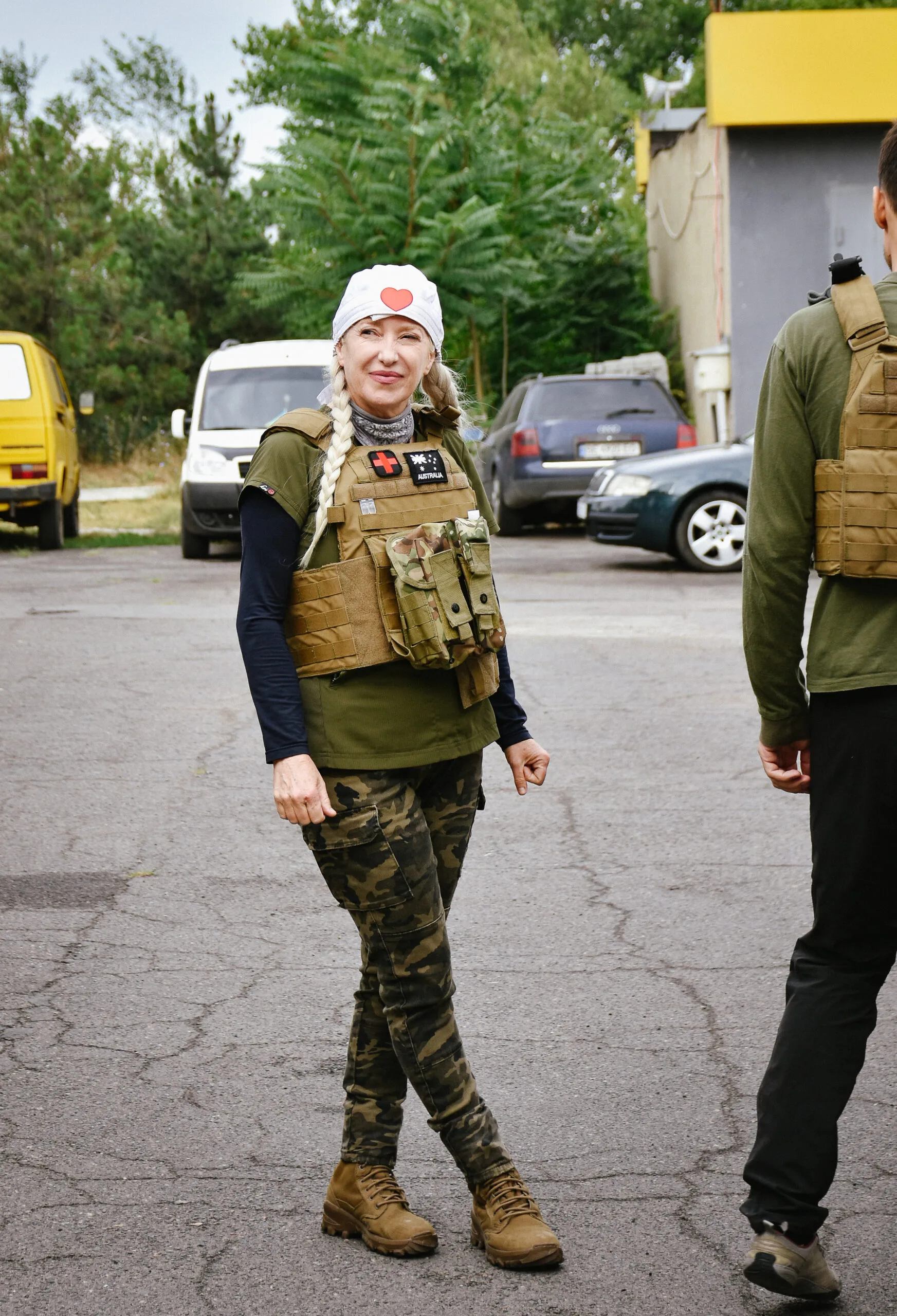
Alison takes that message of love into every disaster, wearing her trademark white hat with a red heart printed on it.
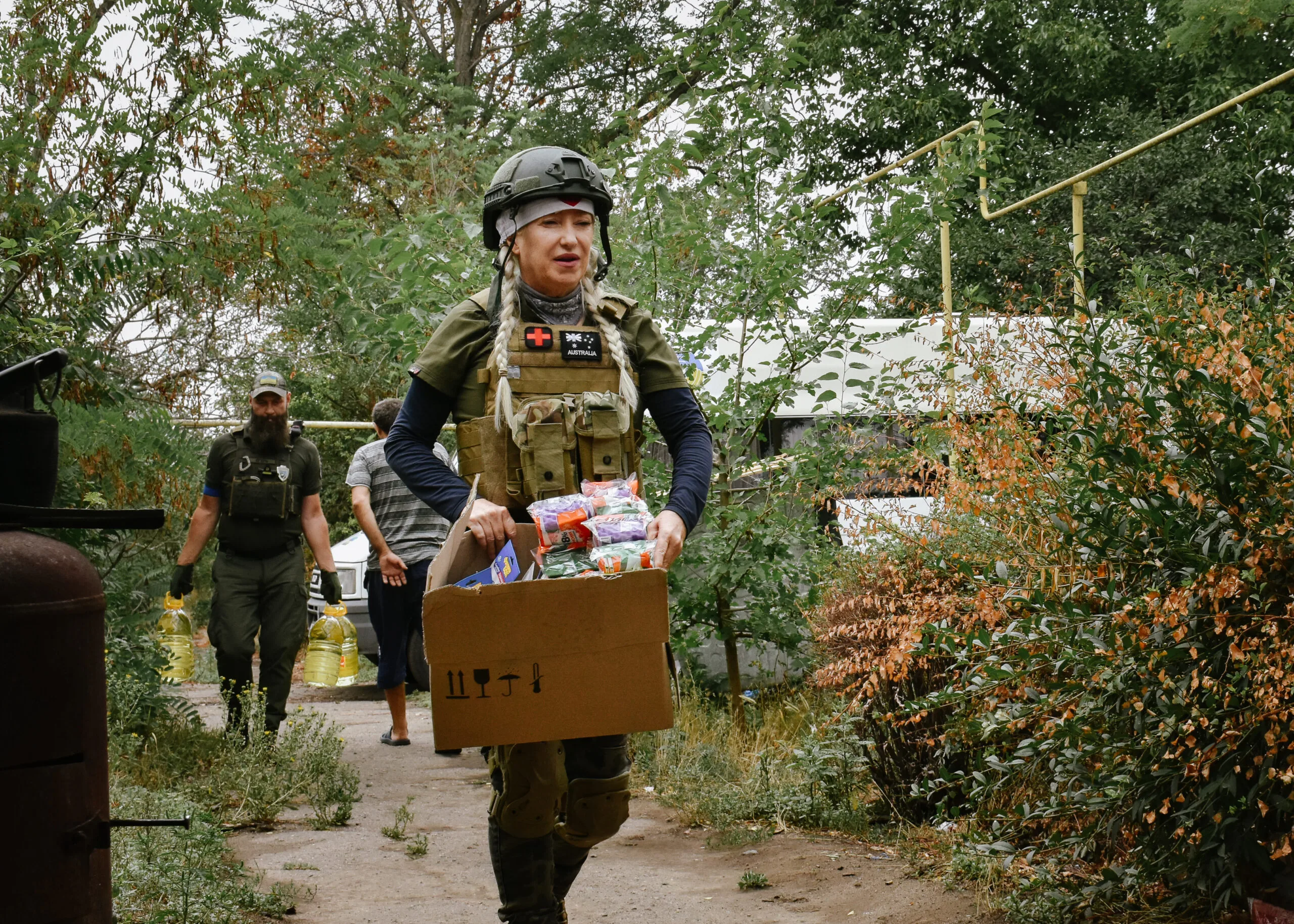
“We used to have a medical cross on our hats,” she explains, “so people in developing countries would bring out their wounded to us, but in the Syrian crisis we changed it to a heart because the cross would’ve made us targets for ISIS.” And the heart symbol just felt right, so it stuck.
Spreading the love
After 20 years as a full-time humanitarian, Alison says, it’s sometimes hard to predict where she’ll be next week, let alone at Christmas, but wherever she is, she’ll be spreading that love.
“I have no clue where I’ll be on Christmas Day,” she admits, “but I do know I’ll make sure I’m with my husband.
“Right now, it looks like I’ll be back in Ukraine around Christmas time with the troops and all the local Ukrainian volunteers we work with on the ground. I just want to cheer them up and give them a message from the world that we still love them and we still believe in eventual peace for them. Wherever I am, I know there will be a lot of hugging going on!”
This feature originally appeared in the Christmas 2022 issue of The Australian Women’s Weekly. Subscribe so you never miss an issue.

