




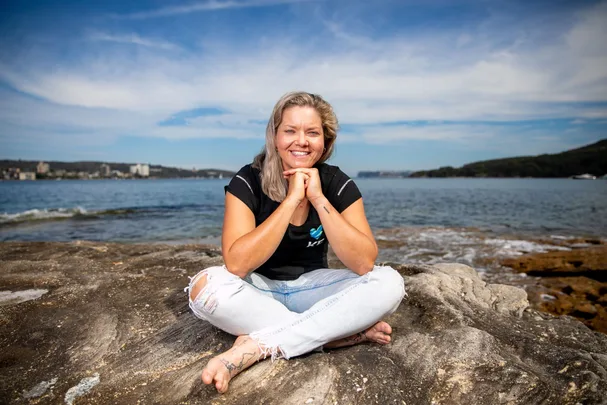
A life-altering injury and the unexpected death of her partner set Kath Koschel on a journey to explore how kindness – both to ourselves and others – can transform the world. The founder of The Kindness Factory and 2025 NSW Australian of the Year shares her crucial building blocks for developing.



An elite cricketer, 23-year-old Kath Koschel made her 2011 debut for the NSW Breakers – the start of what promised to be a stellar career. But months later, she broke her back, entering a long and arduous rehab – her dream cruelly cut short.
It was a hard place for a young person to be, but it was here Kath met Jim – a wonderful, kind man she fell deeply in love with. The pair planned a future including marriage and children. Together, they lifted each other and those around them.
His death by suicide was unexpected and devastating, and as Kath grieved, she was hit by a car while cycling – suffering a second broken back and undergoing more rehab. Tragic, yes. But Kath turned that pain into purpose after reflecting on the kindness of those who helped her along the way.
What is the Kindness Factory?
In 2015, Kath established The Kindness Factory – a not-for-profit through which she documented a trip around Australia, logging small acts of kindness she performed while encouraging others to do the same. Today, over five million acts have been logged.
Then she began speaking about her kindness journey. Michelle Obama was in one audience; Reese Witherspoon’s Hello Sunshine company optioned her story for a movie after another. Still, Kath felt she was missing a crucial piece in the ongoing kindness puzzle.
In 2019, she was flown to New York to give a talk to a large corporation’s staff – instead, one executive was the lone listener. She felt dejected, but it became a turning point.
“I was on the way back to my hotel and walked past a school,” she tells The Weekly, “and thought, ‘I’ve been flown here to do a talk; I wonder if they’d like to hear it?’”
After assuring the school of her authenticity and that the talk was free, Kath returned the next day and had another epiphany.
“I thought, ‘Kids are who I need to be in front of,’” she reflects. “They just get it. Adults will feel inspired and moved, but is it sparking them to change? To go out and act with kindness, which is the goal? It’s not a big conversion rate. Whereas kids – 60 per cent will say, ‘I don’t need more evidence. I’m doing it.’ So, I made a deal with myself that for every corporate gig I did, I’d reach out to a local school and speak free of charge.”
Still, she’s only one person. How, Kath wondered, could she keep the message going on a wider scale? Enter educational partner Kaplan.
Together, they conceived The Kindness Curriculum – a free-to-access program that details the 12 attributes of kindness, how to recognise them and enact them. In 2020, it launched in 60 schools. Today, it’s in over 3000 – across Australia, the US and the UK.


“These 12 concepts underpin everything I know to be good and important in our world,” says Kath. “They work together and separately, but they’re all part of the DNA of kindness.”
In writing her memoir, Kindness, Kath saw how much adults were struggling too. Here, she gives her insight into how we can all learn and use these building blocks to kindness – no matter our age.
Kath Koschel’s 12 Steps of Kindness
Step 1: Self-acceptance
“This is where we should all start,” says Kath. “If we don’t accept ourselves and our imperfections and be a little kinder to ourselves, then our inner critic is so harsh. With self-acceptance, you are calmer, more peaceful and definitely kinder.”
First, she advises, think of what your top five values are. “Mine are a work in progress, but would be gratitude, kindness, family and friends – so connection, essentially – loyalty and fitness. Everyone has different values, but not many people can rattle theirs off.”
The reason this is important is that when you are in crisis or conflict – be it the loss of a loved one, a personal disappointment or more – turning to these values allows us to recalibrate and treat ourselves and others with kindness.
“Google “personal value’s”,” advises Kath. “They’re really easy to find online – see what resonates and feels important. Another way to help get there is to ask a trusted partner or friend, ‘What are the things you love about me? And what can I do better on?’ If you’re close enough, they’ll tell you. Even if you disagree, it’s good to consider why you’re thinking differently.”

Step 2: Perspective
While it’s easy to see this as an attitude of “other people are doing it worse,” Kath advises that we need to reframe our view.
“Perspective literally is to see through the lens of another,” she says. “On the journey I was on, I had every right to be struggling; I was a complete mess. The people I met would never have said, ‘We have it worse than you, ’ but by giving me their perspective on my own struggle and sharing their story, it gave me a different perspective to get out of my own head. And that was vitally important for me. We all struggle on a daily basis, and perspective is often the welcome distraction that we need.”
To that end, Kath says connection plays a huge role. Talk to others around you – from strangers to loved ones – share your stories, and your perspective will naturally grow.
Step 3: Humility
“Humility is something I personally struggle with,” admits Kath. “When overplayed, it can be detrimental and lead to not communicating well because you don’t want to be seen as having a ‘big head’. But you don’t need to be self-deprecating.”
Humility, she adds, is not the same thing as being humble. Take Ash Barty: people admire her because she is humble. “But you need a lot of self-belief and confidence to be the world’s best tennis player. Humility doesn’t mean that we can’t celebrate ourselves. It’s more the acknowledgement of the other people on our journey.”
Kath’s tip: “If someone makes the effort to pay you a compliment, don’t disagree with them. Say thank you.”
Step 4: Gratitude
“Science says that if you write down three things that you’re grateful for every day, 21 days in a row, you will actually rewire your brain,” says Kath.
So far, so simple. But how do you start the path to gratitude?
For Kath, it began by writing down a list of people who’d shown up for her, then calling them to express her heartfelt thanks. “It wasn’t a magical pill I swallowed, and my life was amazing. I still had a lot of work to do, but it was a pivotal moment.
“Have you told the treasured people in your life of your gratitude for them?” she asks. “It takes two minutes and is the most powerful gift you can give that person and yourself in that moment. It’s powerfully transformative and can change and strengthen your relationships.”
Step 5: Mindfulness
It’s the buzzword of the moment, with plenty of programs and apps that claim to help you achieve mindfulness. But while breathing, meditation and more can definitely help, you don’t need to overcomplicate things.
“It’s being present in the moment you’re in,” says Kath. “I’m at my most mindful when I’m riding a bike because I don’t think about much else except the road ahead or the nature around me. Or when I’m with my friends and am 100 per cent giving them my attention because I’m so invested in who they are. For my nephew, it’s digging holes. For my brother, it’s fishing.”
Find what works for you – the time when you feel calmness envelop you and your attention shifts from the distractions and worries of the world.

Step 6: Positivity
Unwavering positivity is not only unachievable, it can end up being toxic, says Kath. It’s okay to struggle, and it’s okay for things not to be okay. The positivity comes in how you look at things in the long term.
“When you’re in a struggle, the last thing you want to hear is, ‘It will get better, ’” she explains. “Be it a loss, an accident, whatever it is, you can think, ‘This is s**t and there’s no way around this. I’ve got to sit in this for as long as it takes.’ Positivity for me is believing that one day it will get better. Not necessarily today or tomorrow – being realistic – but hopefully, one day I can look back at this time and be glad I got through it.”
Step 7: Honesty
How many times have you heard someone follow up a potentially hurtful statement with the words, “I’m just being honest”?
Honesty is important, says Kath, but so is the kindness trait you pair it with. “For me, I’d pair it with humility. Say you’re talking to someone who’s screwed up at work. Start with, ‘Hey, thanks for being here, you’re doing really well for the most part. When I was in your position, I made a big error and put parameters in place so it didn’t happen again …’
“Immediately, what I’m saying is, ‘I’m not perfect, I don’t expect you to be, but we need to address the issue.’ Nobody means to make mistakes – it’s all about hindsight.”
Step 8: Humour
Like honesty, humour can be used as a weapon instead of a salve. “People can feel excluded or bullied because jokes being told with ‘humour’ are exclusive or at the expense of another,” Kath warns.
“Humour needs empathy and compassion attached to it. Use humour to put people at ease. Draw those feelings excluded into the humour as well.”
Step 9: Collaboration
Many teachers and parents reported that collaboration became something children struggled with in the aftermath of COVID homeschooling. But they’re not the only ones who have issues with the concept, says Kath.
Working on a common goal requires both self-awareness and the knowledge that you are striving towards something bigger than yourself, and that requires unity.
First, identify what your goal is. Then use your self-awareness (see Step 1) to get there. “Collaboration is all about saying, ‘These are my skills, what are yours?’ This way, when we are working together, we will have a better understanding of how to do it.”

Step 10: Trust
Collaboration, many argue, will lead to trust. “But there’s a lot of research that suggests that trust needs to come before collaboration – we need to trust each other if we are going to get a result,” says Kath.
“But trust can be hard to gain and easy to lose. Trust building takes time.”
There are exercises you can do, she says, that help the process – like the old childhood trick of falling backwards, trusting your friends will catch you. But in the end, it really comes down to one thing: consistency.
“There’s not a person on the planet who doesn’t hate ambiguity,” explains Kath. “The people I trust most are not hot and cold. They have self-awareness. They are unapologetically themselves. If someone is constantly changing their mind about certain topics, you are left thinking, ‘Well, how am I supposed to feel about them?’ Consistency in character makes trust easier for people.”
Steps 11 and 12: Empathy and Compassion
These two steps go hand in hand, says Kath. “To empathise with someone is to try to understand their situation. You don’t need to have the answers. Empathising makes people feel they’re not alone. The difference is that compassion requires empathy in the first place. Compassion is action-oriented. It says, ‘I see you and hear you and I’m going one step further and walk in your shoes for a while to help.’”
As an example, when someone is grieving you may send a bunch of flowers with a note saying you are sorry for their loss. That’s empathy. Compassion is taking action to do something helpful – say, dropping over meals, offering to help with funeral arrangements or another practical task.
Both are vitally important today – not just personally, but professionally, adds Kath. “Post-COVID, for the first time, empathy and kindness are in employers’ top 10 traits of employability. Pre-COVID, it was coding, AI, all kinds of techy stuff.”
Some people are naturally equipped with empathy, which makes compassion easier to grasp. To teach it, however, requires perspective (see Step 2).
“It’s defining some of the attributes so kids can go, ‘Well, I see why they are sad, but why is it important for me to understand it?’ If you understand it, you can give them the space they require, or the help they need.”
Where are we at with Kindness today?
Unsurprisingly, people like kindness and kind acts. However, one could otherwise with the conflicts around the world and divisions breaking out online and in person. Despite that, according to research undertaken by Australian mindful makeup brand, KIND Collective, one in three Aussies say kindness is the most important quality in our communities. Furthermore, it found that 71 per cent of us donate to charity, and Australians perform seven acts of kindness each week on average, from holding a door for someone to smiling.
“While many Australians find kindness comes naturally, certain groups face barriers. Younger people are much more likely to report challenges. Gender differences are notable too, with men, particularly young men, finding it harder to practise daily kindness than women, as highlighted in these latest survey findings,” Kath said on the findings, as the study found that 30 per cent of men find it challenging to be kind.
Furthermore, more than half of older Australians say nothing stops them from being as kind as they want to be. But constrastingly, just 23 per cent of Gen Z and Millennials feel this way. Some of the barriers to kindness, they stated, were finances, stress, and social anxiety.
“Kindness isn’t just personal – our research shows it has the power to build lasting loyalty,” says Lynda Chapman, Co-founder of B Corp-certified, cruelty-free KIND Collective. “Two in three Australians are more likely to support brands that live their values of kindness towards people, animals and the planet. When customers see their own values reflected, it creates genuine connection and loyalty that goes far beyond a single purchase.”
KIND Collective are putting its money where its mouth is, by partnering with Kindness Factory to raise $40,000 to support programs to teach kindness to children across Australia. You can take part by purchasing any KIND Collective product at Big W on World Kindness Day. Find out more here.
Kindness (Allen & Unwin) is on sale now. Find out more about Kath’s work, plus free resources for The Kindness Curriculum, at thekindnessfactory.com.
World Kindness Day happens annually on 13 November. Mindful makeup brand KIND Collective has partnered with Kindness Factory to raise $40,000 to support programs that teach kindness to kids nationwide. By purchasing any KIND Collective product at Big W on World Kindness Day, you will contribute to these school initiatives. Find out more here.
If anything in this story causes you distress, you can contact Lifeline on 13 11 14.
This article originally appeared in the March 2023 issue of The Australian Women’s Weekly. Subscribe so you never miss an issue.

