




At a glance…
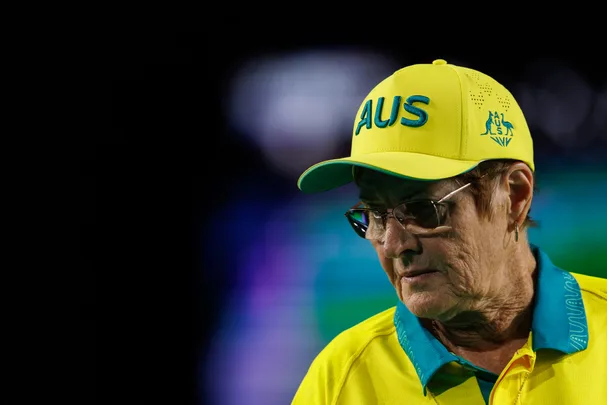
- At 76 years old, Louise Hoskins became the oldest gold medallist in Commonwealth Games History.
- When her sporting life was derailed by spinal surgery complications, she had to learn how to walk again.
- She speaks with The Weekly following her historic win.
Nothing in life has come easy for 76-year-old Louise Hoskins but becoming the oldest Commonwealth Games gold medallist in July has definitely carried a few perks lately. “There was a congratulatory cake waiting for me at the bowls club,” she tells the Weekly from her home in Innisfail in far north Queensland. “And a beautiful bunch of flowers.”
Best of all, there’s a new golden glow to her life with Kevin, her husband of over 30 years. “We met playing indoor cricket,” she tells me. “He’s a very nice person, very easy to get along with. And I’ve trained him well,” she smiles, as he lays down another loving cuppa. “And when I faced my greatest challenge, he saved me. Everyone should have a Kevin.”
Louise’s active life hit a crossroads in 2009 aged 60. “I had an operation that went horribly wrong,” she tells me. “It started as a bulging disc pressing on my sciatic nerve. The prescribed keyhole surgery to fix it was supposed to be an easy procedure which would have me walking out of hospital the next day. But there were complications.”
Those complications have a name: cauda equina syndrome, a rare but severe condition in which the bundle of nerve roots at the base of the spine require emergency surgery. When Louise’s discectomy failed to remedy the damaged disc pressing on her spinal cord, she had to endure an emergency laminectomy the same day to remove the disc.
“It all happened within 24-hours and if they’d left it any longer, I’d have never walked again,” she explains. “I spent two years in hospital, and it was 12 months before I could even get up out of bed and start using crutches. And even with the surgery and the rehab, my injuries were so bad they left me a partial paraplegic. It was not a good time.”
Having tenaciously got back on her feet in hospital, Louise then found herself with more mountains to climb when she made it home. “Where we live there was no rehab centre,” she says. “Kevin was a pillar of strength and drove me everywhere I needed to go. But when he went back to work at the sugar mill, there was no one to give me any support.”
In an empty house with a broken body, Louise’s spirits hit rock bottom. “I suffered terrible depression,” she admits. “When something like this happens, you tend to hide away. I didn’t want people to see me. I was embarrassed. So, I cut myself off socially. But I also wanted to get better and if you can’t help yourself then no one else can either.”
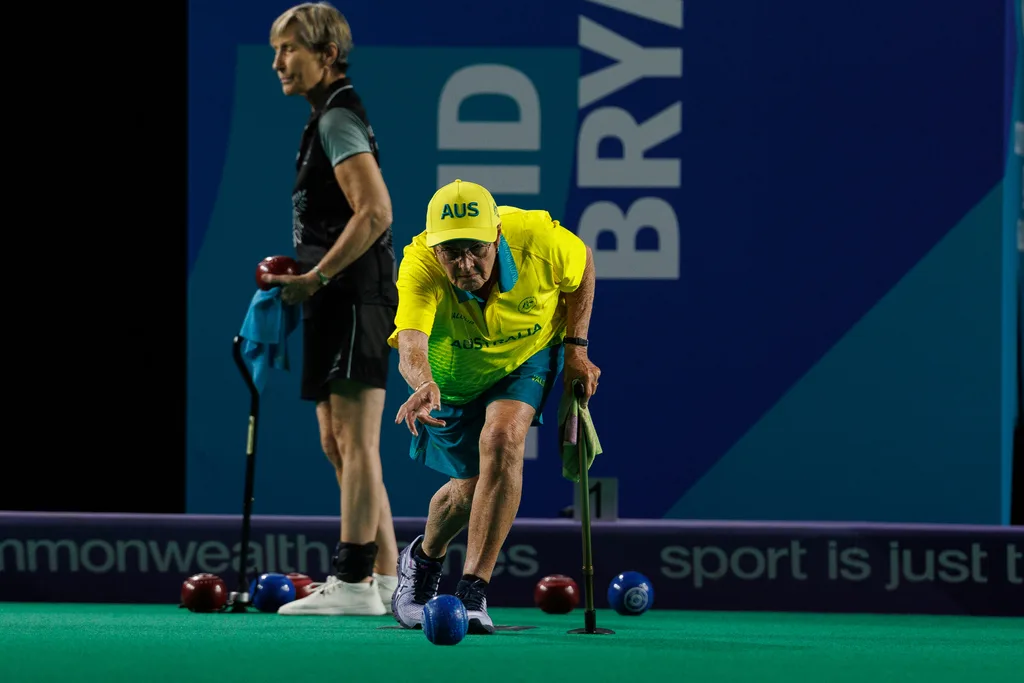
With the help of a little bamboo cane which Kevin had specially modified for her, Louise hit the comeback trail via the water. “I’ve always been a sporty person and now I needed to find my own way to exercise. I decided to try hydrotherapy, but the nearest pool was 20 minutes out of town and with legs that don’t work properly it was often a scary drive!”
Although she admits her feet occasionally slipped off the accelerator and almost sent her scything through cane fields, Louise persisted, making the drive three times a week. “I don’t know where the strength came from, but I had to be determined. Slowly, bit by bit, I got stronger. My body started to heal, and my mind was getting more resilient too.”
As far as she’d come physically and mentally, Louise admits she was still socially adrift. “That’s when Kevin started suggesting I come to the bowls club with him,” she recalls. “We’d done a bit of bowls before my surgery, but it was still very hard for me to be seen in my condition. But Kevin was patient and he kept encouraging me. So off we went.”
Despite being in her early sixties at the time of her return, Louise considered lawn bowls “an old person’s sport.” She laughs about that now. “Even though the older members of the club welcomed me back to the greens, the ladies were so formal in their white skirts and hats,” she laughs. “They were very strict and firm with me – I had to earn my place.”
At Louise’s nominated club, South Johnstone, only a handful of women play socially. But as her confidence grew and her game got better, she became a member of the busier Innisfail and Edmonton clubs too. “Bowls was very hard for me. My body was at 40% functionality. My legs swelled, my back hurt and my balance was challenged.”
Yet her grit was undiminished. Louise’s sporty past and newfound inner strength soon made her a force to be reckoned with. Her talent was quickly recognized. Louise was classified for representative bowls in the multi-disability categories in 2013 and rose through the state ranks in the next decade to make her international debut in 2022.
Silver at that year’s Australian championships in the B5-8 pairs became gold at the Para Nationals the following year (with a silver in the singles too). Louise then took her gifts to the global stage, picking up bronze at the 2023 Multi Nations Para Pairs. “I was only bowling once a week,” she shrugs, “but I’m blessed to have always been good at sport.”
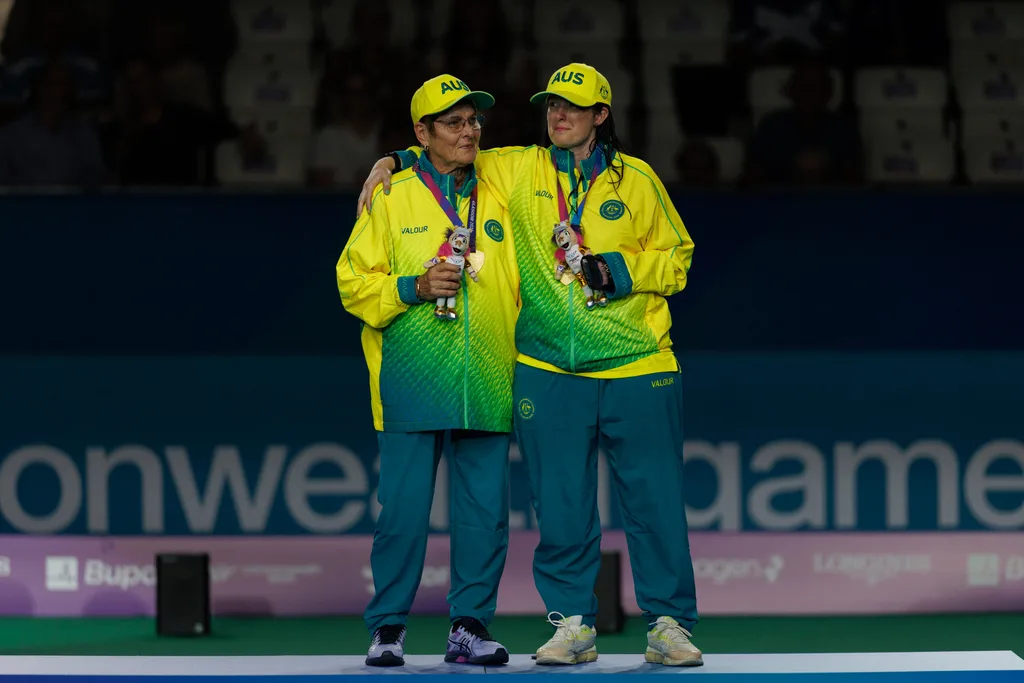
Even so, Louise was a real underdog at last month’s Commonwealth Games in Glasgow. “New Zealand are very tough and they’ve had the wood on us for years,” she admits, “and Scotland at home were always going to be hard. We knew it was going to take something pretty special to win, especially after New Zealand beat us in round one.”
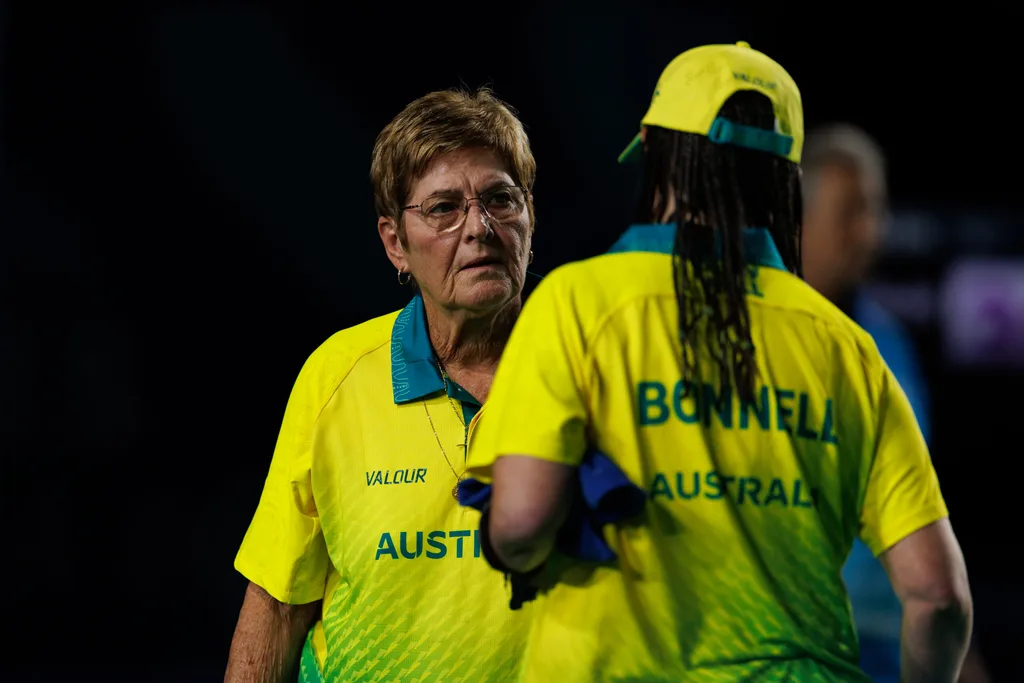
But Louise had a secret weapon: her friendship with playing partner Serena Bonnell. “We’re chalk and cheese in many ways – she’s always helping me doing things on the phone – but we’ve always blended beautifully whenever we’re paired up on the green,” Louise laughs. “She’s in early 40s but I call her ‘Mum’, and we’ve always hit it off.”
Despite a rough start to the campaign, Louise and Serena scraped their way to the final for a showdown with 2023 world champions, Kiwis Julie O’Connell and Teri Blackbourn. They won the first game but found themselves down 4-1 in the second and heading to a tiebreaker. “I’m used to 21 sets, but this was five, so it was sudden death,” says Louise.
Although pundits described Louise as “the dominant figure” in the B6-8 competition, the final bowl was her partner’s. “I’d had my moments during the competition,” Louise admits modestly, “but Serena and I have each other’s backs, so I just told her that.” Serena says it too: “Louise settled me down and supported me and that was enough.”
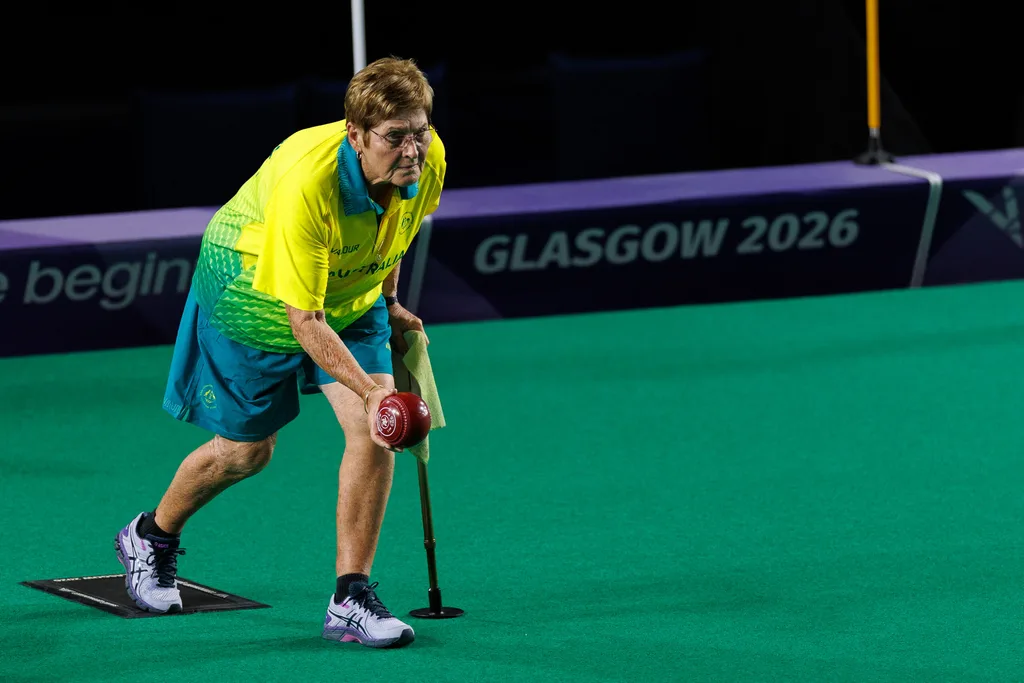
Louise reckons she knew it was a winning bowl from the moment it left Serena’s hand. “Everything went very quiet and I moved from the right to the left so I could see it all the way. It was a deadly bowl from the moment Serena released it and I just knew it was heading for the jack. Sure enough, it nudged through, drew the set 4-all and we won.”
Louise had defied the odds to walk again. Now she was standing on the dais at the Commonwealth Games with a gold medal, the oldest competitor to ever achieve it. “Every time I hear our anthem, I get teary. But after all I’d been through, and at my age, getting that gold was amazing. I’d never thought I’d make it back, let alone go so far.”
Now she’s a shining light to anyone trying to get back on their feet after a setback. “Life is full of highs and lows but if you have the will – and the support – you can do anything,” she says. “I hope I’m an inspiration because it doesn’t matter how old you are or what your condition is; get out there and have a go, even if it’s just social. Never give up.”


Share this post