




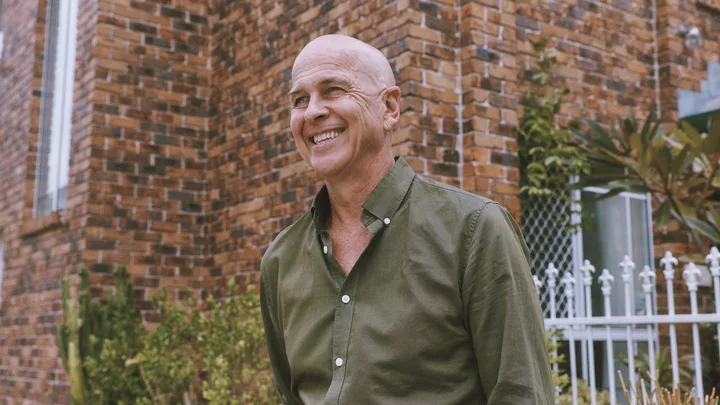
We will never know, most of us, what we are really made of. If we are fortunate, we will never be tested. We will never know what we would do to survive.
When something terrible or tragic happens you find your inner resources. Some people, like the Greste family, find fortitude and purpose.
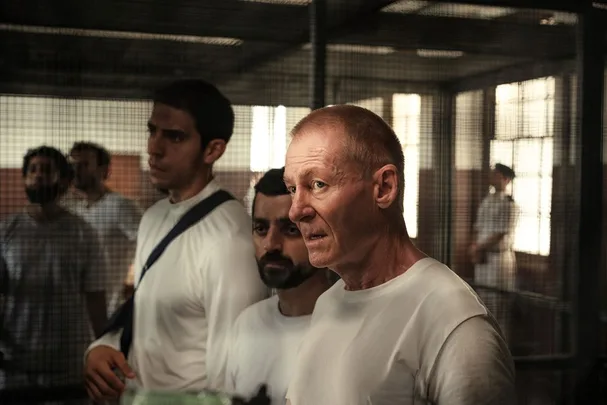
Retirees Lois and Juris Greste had no idea that they were campaigners. Or that they could front the media day after day.
What they would be capable of if one of their three sons – Peter, Andrew and Michael – were in trouble.
At Christmas 2013, they had just moved into a townhouse in Brisbane and were breathing in the tranquillity of their hobby farm in the Laidley valley. Juris and his boys had built the timber house there.
Their eldest son, Peter, was happy in his life in a community of journalists and photographers in Nairobi.
“We were all foreign correspondents in some form,” he tells The Weekly today. “I lived in a wonderful place, I had a job I loved, friends that I cared deeply about.”
During his 25 years as an esteemed foreign correspondent in the world’s most volatile countries, Peter’s parents often didn’t know where he was.
He wasn’t particularly excited about the latest assignment he had accepted in Cairo for three weeks for the Al Jazeera network.
He was just filling in. “Not a major assignment.”
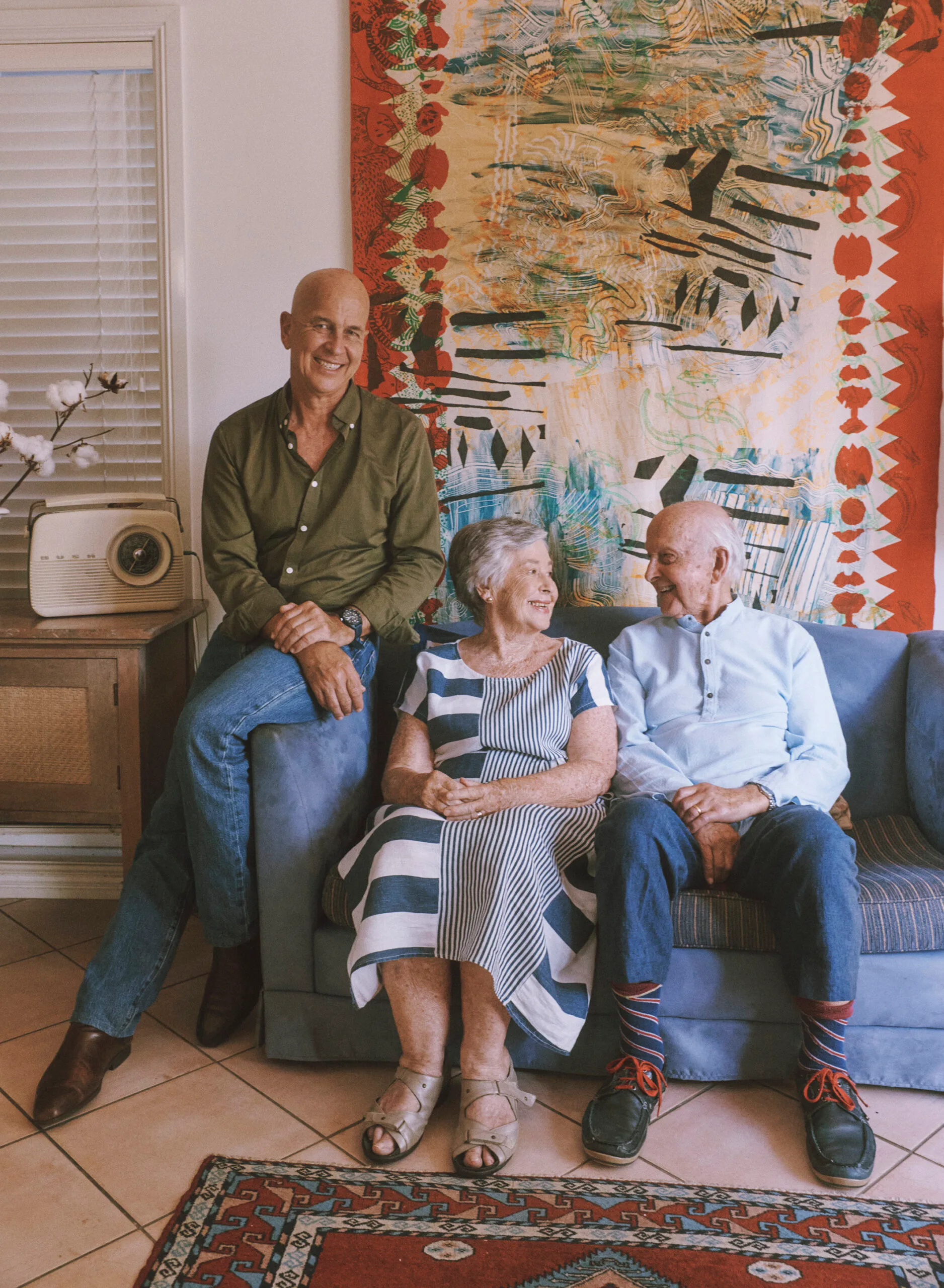
We are meeting at the Grestes’ townhouse, a lived-in home with books on sideboards.
On December 29, 2013, Lois and Juris were sitting down here for dinner in the soft flickering light of hurricane lamps and candles when the phone call came. The evening was shattered.
Peter had been arrested and was in prison in Cairo.
“The news came like a bolt of lightning, sharp and fearsome,” Lois would write in a book penned by the entire Greste family, Freeing Peter.
Lois and Juris soon discovered that this was a particularly turbulent period in Egypt.
Mohamed Morsi, the first democratically-elected president in the country’s history and leader of the Muslim Brotherhood, had been overthrown in a military coup six months before.
The Egyptian government had become hostile to the foreign press and believed that Al Jazeera was supporting the Muslim Brotherhood.
While Peter was being held in appalling conditions with no idea why he was there, his parents flew into action. They sent emails to parliamentarians and the Department of Foreign Affairs, “doing everything we could think of,” Lois tells The Weekly.
“We had to get him out of prison. Full stop.”
This would be their life for the next year as the campaign gathered momentum and became an international cause célèbre. And they would all be changed by that year.
“None of us is the same person we were in December 2013,” adds Juris, a former architect, now 80. Lois, 78, agrees.
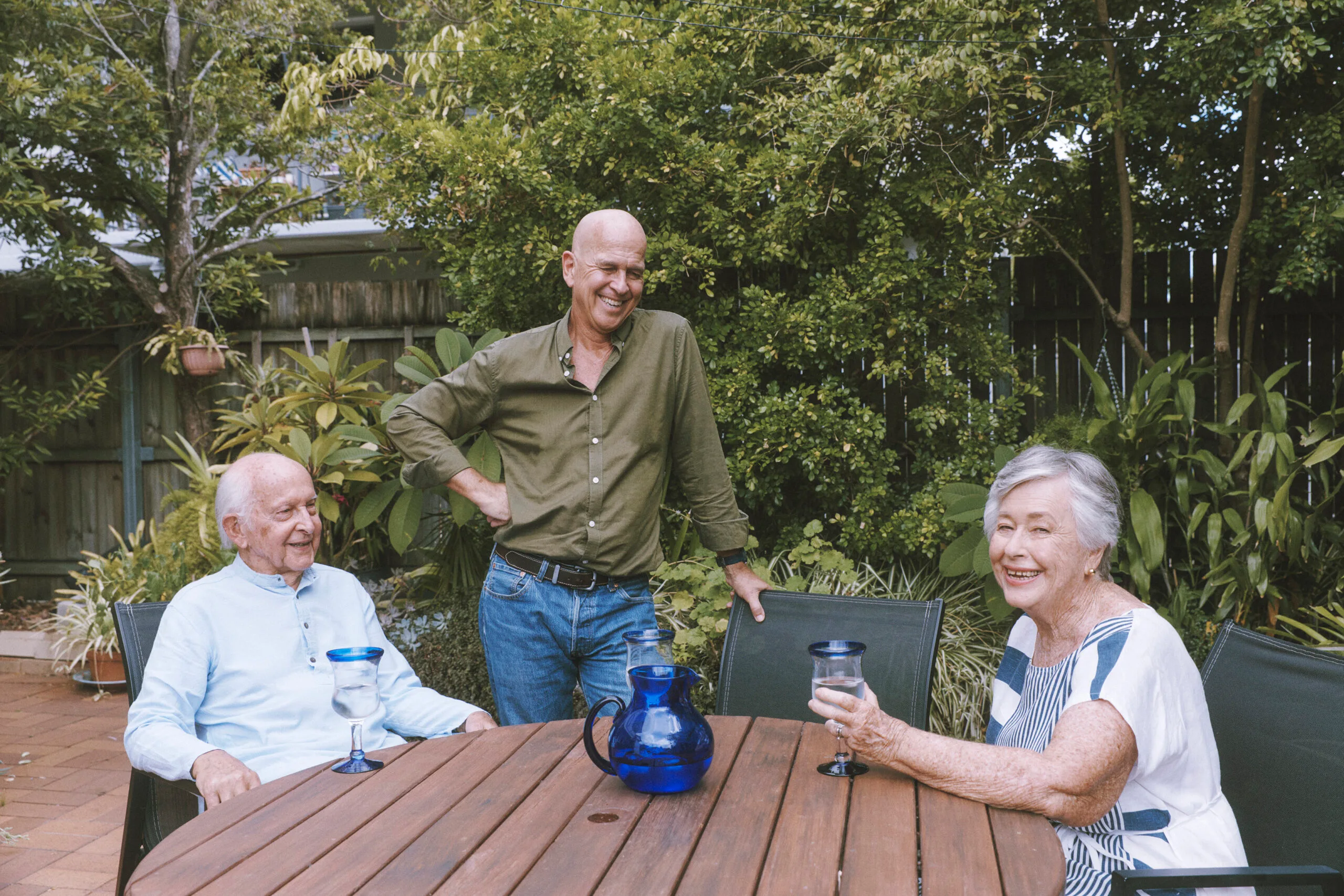
“We found out about ourselves and found out about each other,” she says. “It affected our sleep badly and we were on sleeping pills, which we had to use for most of that year.”
Everything stopped so they could work on Peter’s case. For his part, Peter would discover how mentally strong he was when he was put in solitary confinement for 10 days at the start of his ordeal.
He was in the political wing of the notorious Tora Liman maximum security prison. He didn’t even know what time of day it was. His expansive world as an international correspondent had shrunk to a concrete box.
“That is a really difficult psychological challenge because your mind starts to eat itself up,” he says.
He beat himself up about the end of his marriage, about the death of his producer, Kate Peyton, who when working for the BBC in Somalia was shot dead in front of him.
Maybe, he thought, the universe was punishing him for the sins of the past.
“In the silence and emptiness of a prison cell, the mind starts to kind of replay the movie of your life on the walls of the cell,” Peter explains.
He set himself a rigorous exercise regime and, having recently done a course in Vipassana meditation, was able to meditate and find calm.
“If you see it as a psychological problem and then you start to take control over it, over time your mind imposes its own order on it and then it becomes survivable,” Peter says.
Vipassana gave him the ability to deal with a “lot of really toxic emotions that often bubble in those types of environments … One of the things was accepting that this is the reality I have to deal with.”
He kept this up over 400 days.
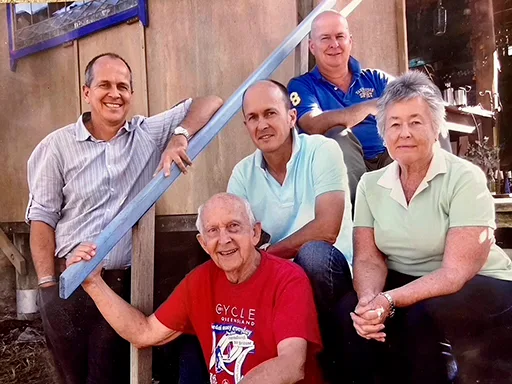
Peter, his Egyptian-born Canadian producer Mohamed Fahmy, and their colleague, the Egyptian journalist Baher Mohamed, had been charged with being members of a terrorist organisation; financing a terrorist organisation; supporting a terrorist organisation and knowingly broadcasting false information to “spread fear and discontent”.
The charges, says Peter, were so ridiculous that he was initially sure they would be dismissed within a day. Soon, it became clear that he was a political prisoner. This was a delicate situation:
The Grestes couldn’t risk offending the Egyptian government, which held all the cards and, more importantly, held Peter. His life depended on it.
Aware that Peter was what his brother Andrew would call “a small piece in the chess game of international relations”, the entire family was on edge.
“Every second of every day, we were conscious of the fact that anything we did could possibly negatively affect the whole outcome,” Juris explains.
From the beginning, the family made a decision that Peter would always have a family member in Cairo – not only for personal morale but also to show Egypt their unflagging support. The brothers would take leave from their jobs – Andrew as a farmer and Mike as a forensics officer with the Queensland Police.
They all knew that people without support could and did disappear into the system. Peter’s family was not going to let that happen.
“I was blown away by the level of commitment and devotion the family showed sticking with it as long as they did, never walking away,” Peter says.
The fortnightly 45-minute prison visits could be fraught, with so little time and so much to download. If there was a misunderstanding or disagreement, they had to stew on it for two weeks. They would smuggle out letters Peter had written on toilet paper.
Lois and Juris spent long periods of time in Cairo, battling the dirt, dust and decay. They had to find a lawyer in a culture that was fundamentally different from anything they knew – a different language, an “alien system of government,” says Juris. “And, dare I say it, a highly corrupt legal system.”
Many lawyers were too scared of the government to take the case on.
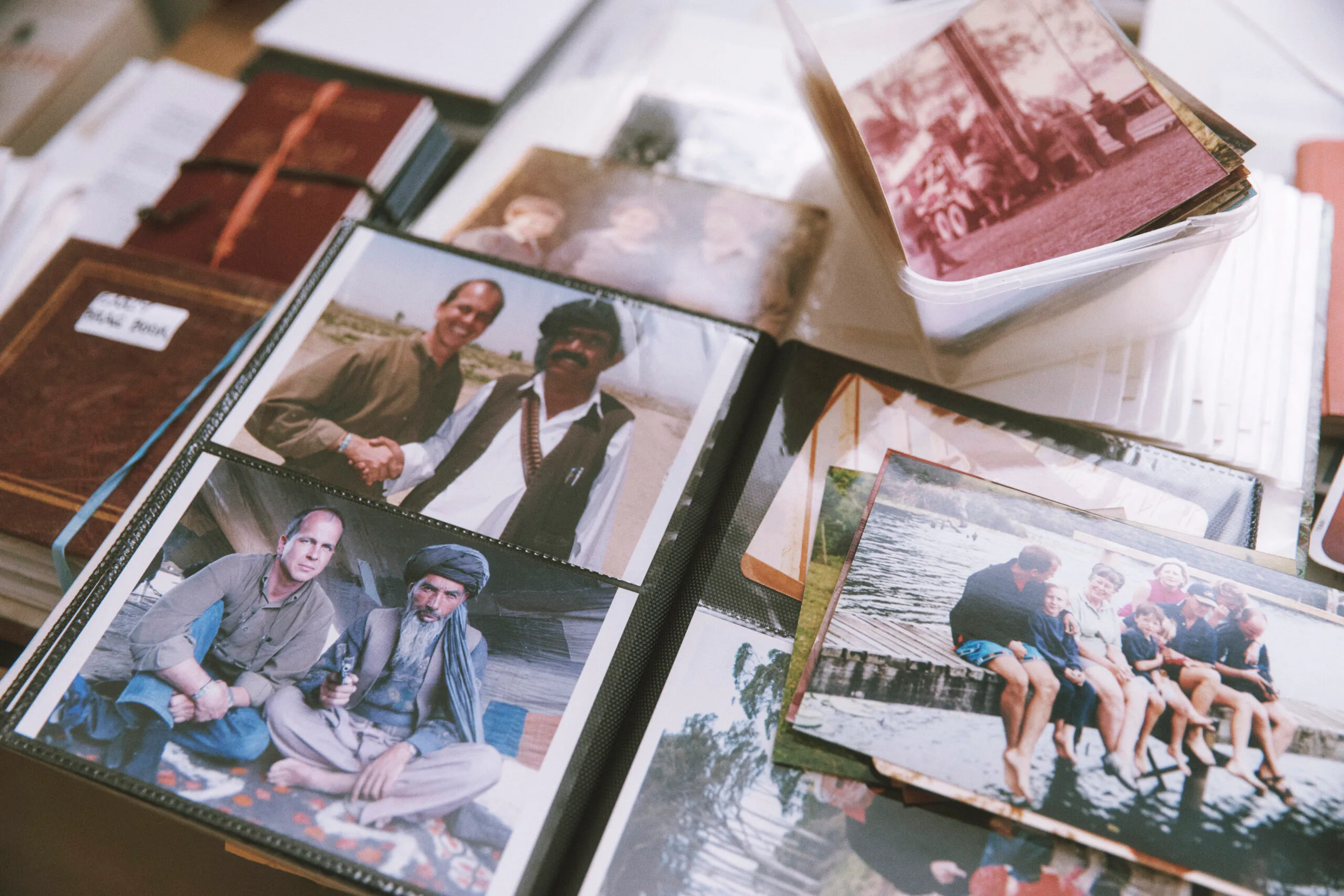
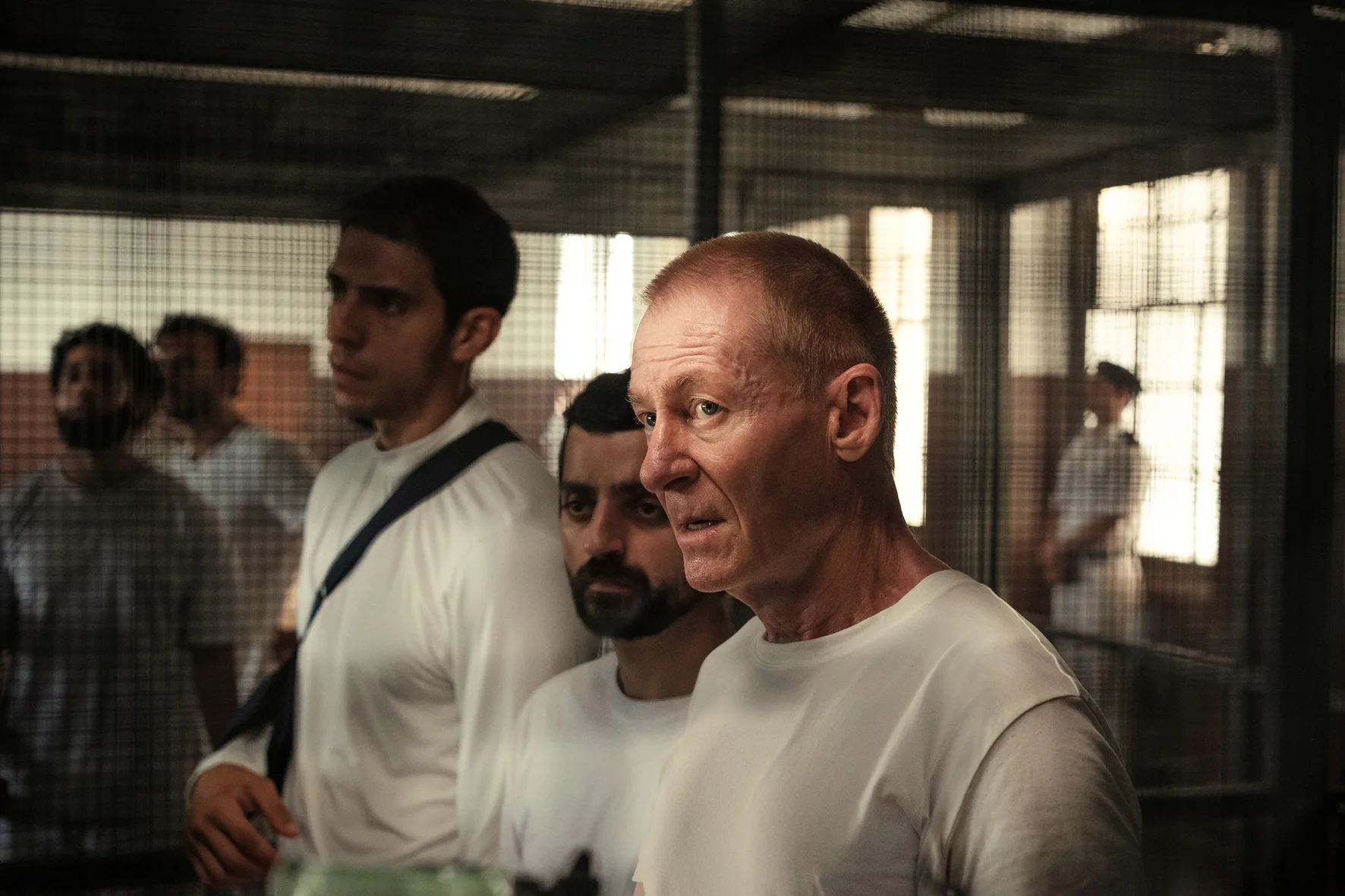
The next year would be one of dashed hopes and crushing disappointments. While Peter was sure his charges would be thrown out at trial for lack of evidence, instead it was a chaotic sham, pure theatre with the defendants in cages as if they were dangerous terrorists.
To the Grestes’ horror, the trio was convicted and sentenced to seven years. “That was the lowest point,” says Lois.
“I know this might sound counterintuitive, but I learned to give up on hope,” Peter explains. “At each point, that hope being dashed becomes really crippling because hope is the cross-your-fingers strategy. You recognise that all you can deal with is what’s in front of you.”
However, the international outcry was loud and clear. Barack Obama advocated for Peter in a meeting with Egyptian President Abdel Fattah el-Sisi at the United Nations, British Prime Minister David Cameron spoke out in the UK. Australia’s Foreign Minister, Julie Bishop, was indefatigable.
Across the world, fellow journalists, human rights activists, Amnesty International, the United Nations, politicians and citizens were voicing their outrage. Peter’s friends in Nairobi started the zipped lips campaign, taping their mouths shut and photographing it. It went viral.
“It was all over the world, even the Philippines and Kabul,” Peter marvels.
Yet, as Lois says in the book, “Peter was still in prison.”
Difficult decisions had to be made on a daily basis. There were disagreements on strategy, heated Skype exchanges. The strain was wearing the whole family down. One call ended in “tears, grief and confusion, with a lot of unresolved tension. Distance was aggravating every conflict,” Juris recalls.
“At times,” agrees Lois, “we were extremely short with each other.” But they couldn’t let these abrasions get in the way of the main game.
In prison, Peter grew herbs from seeds brought by his uncle Ojar, he cooked and studied for a Master’s degree in international relations.
“He made a little lamb roast,” says Lois, to share with his prison friends. He thought and wrote about media freedom.
Making sourdough was “symbolic”, Peter says. “It’s a living, breathing thing. It occupied us. I wanted to do things that would stretch the boundaries, that prison authorities would struggle to deny without seeming ridiculously petty and stupid.”
Warm slices of sourdough were also handy to bribe the guards with.
At the end of January 2015, one year and one month after his arrest – as Peter and other prisoners were about to go on a hunger strike – he was told he was leaving. He didn’t know it then, but President el-Sisi had granted a presidential decree.
He felt conflicted, disoriented and agonised about leaving his colleagues behind. (Fahmy and Mohamed would be released by presidential decree seven months later.)
A huge crowd was waiting to greet Peter when he arrived in Brisbane at 2am on February 5, 2015.
“I thought there will be one or two insomniac photographers and maybe morning news breakfast shows might send a crew,” he says, still in disbelief. “But there were literally hundreds of people. I didn’t understand how big it was, I really didn’t.”
When it ended as suddenly as it had started, Lois says, she briefly felt “deflated”.
“It was only a moment,” she adds hastily. The campaign had been all-consuming.
“The whole focus for the family was this, and all of a sudden it stops,” Peter explains. “There really was no preparation at either end.”
Peter’s life in Kenya and his work as a foreign correspondent was over. He remains a convicted criminal with an outstanding sentence to serve.
“As far as the Egyptian judicial system is concerned I am on the run, evading justice and there is a prison cell waiting for me in Egypt if I ever set foot in a country that has an extradition treaty with Egypt. In any politically unstable country, you just need one arsehole and it is all on.”
He admits he misses the adrenaline, the importance of the stories he was covering “every single day”.
“I couldn’t really visualise what my life would be like without being a correspondent and I couldn’t work as a correspondent from Brisbane. But that job I pined for doesn’t exist any longer – that world has largely changed.”
Still, he wasn’t quite ready to give up his old life. “That took a long time to get past. I kept one eye on going abroad until it just didn’t make sense.”
But he found new meaning and purpose. He wrote his first book in 2018, The First Casualty.
“One of the reasons I wrote the book was to say that what happened to us was an emblematic example of what has been happening to journalism all over the world,” Peter says.
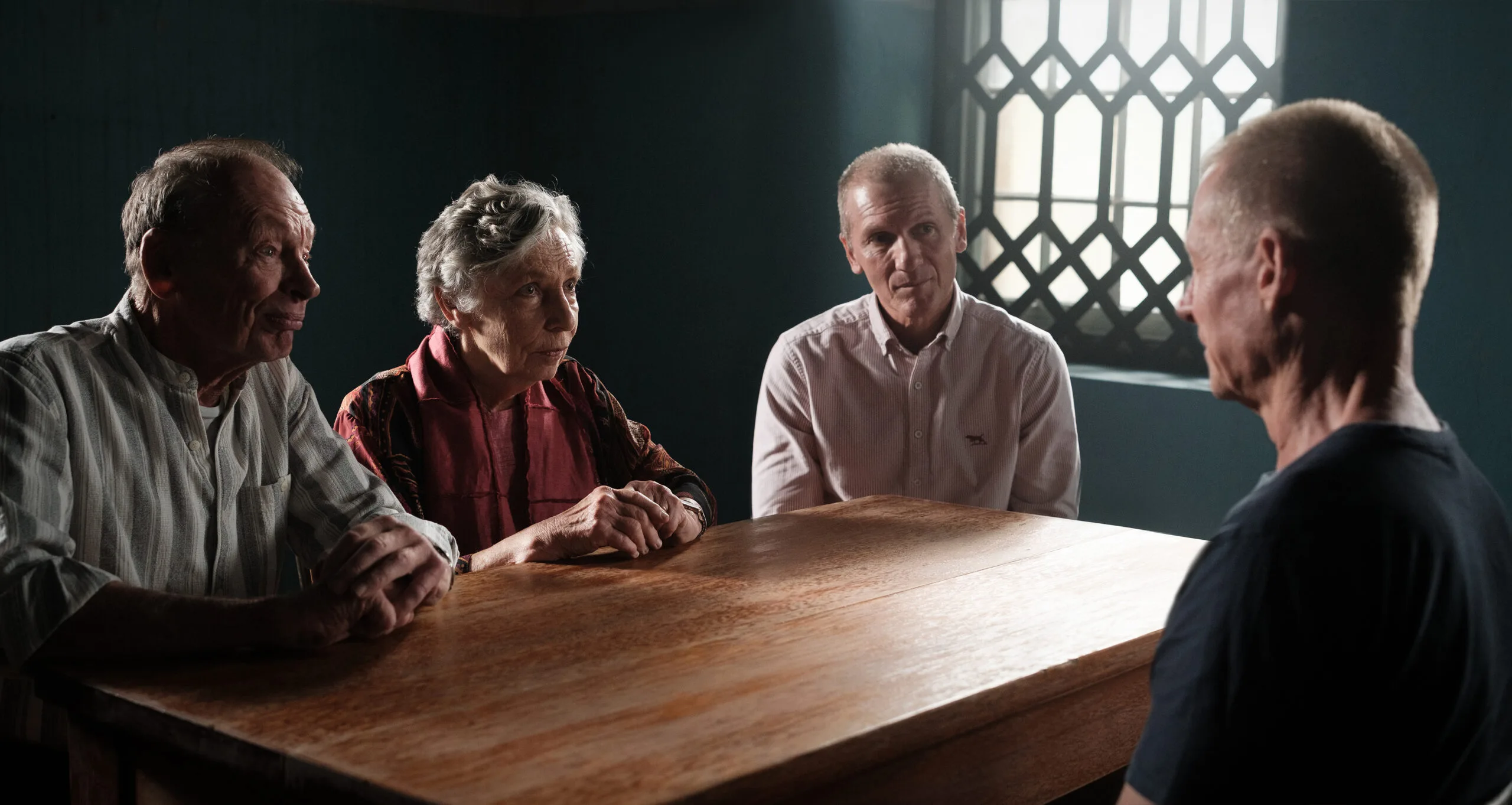
Now there is a film about Peter’s time in prison – The Correspondent, based on the book of the same name that Peter penned about his experience.
Making a film about a man trapped in a concrete box takes an actor like Richard Roxburgh who can show what was happening to Peter internally. The frustration, the boredom, the anger that he is not out there living the life he had so enjoyed. The injustice.
Peter says he was “weirded out” about the film in the beginning.
“Until I realised I was trying to identify too much with what was happening on screen. And inevitably there are some deviations but those are minor. I was very invested until I realised that it’s not about me any longer. I recognise that there has been a whole series of layers of creative processes added onto the book I wrote. The story I wrote is no longer mine. And now I can see it in a much more detached way.”
He and Richard talked and texted before and during the film.
“His performance is fantastic. What matters is that it is a fantastic thriller, a brilliant piece of filmmaking.”
He is pleased that it starts, he says, “the conversations” about the things that matter to him. “About the injustice of arbitrary detention, the love and strength of family, and media freedom issues.”
In January, Peter and Laila Soueif, the mother of Alaa Abd el-Fattah, went on a 21-day hunger strike in London, and held vigils outside Downing Street.
A young, charismatic activist, Alaa had called to Peter when he was in solitary saying, “It’s okay, you’re with friends here.” Alaa had helped him survive. Now, even though he had finished his sentence last September, Alaa is still in Tora prison.
Peter is now a professor of journalism at Macquarie University. He advocates for media freedom.
“People assume that trauma means the same as damage. I don’t think that is necessarily true. I think in a lot of ways it has made the family stronger.”
For Lois, it took a little while to reorient after all the excitement. “But our lives are pretty full. Grandkids started to be in Brisbane which they hadn’t before because they were at school. It is just a natural process of weddings and family things.”
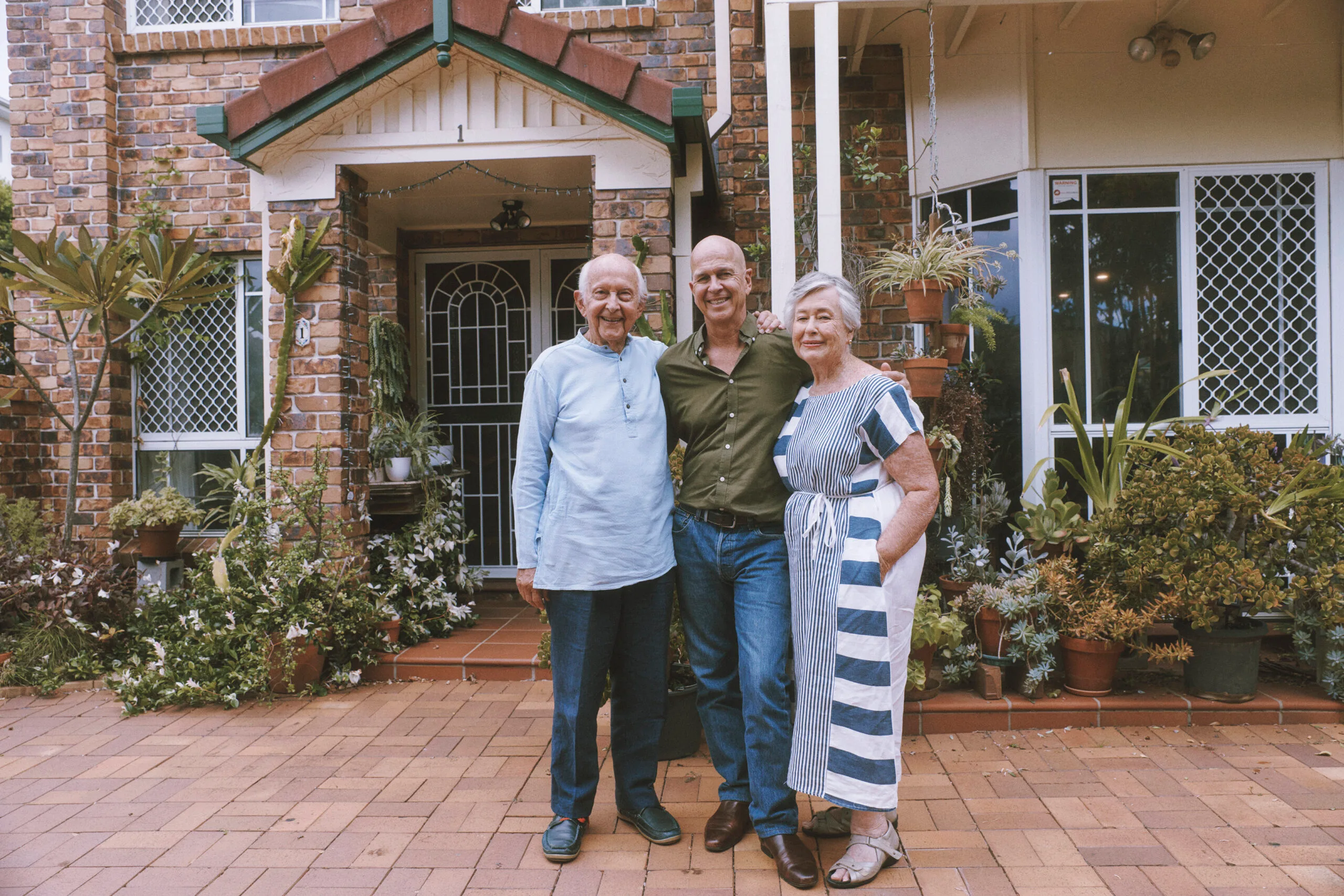
Juris believes they were able to work together on such a huge campaign “because we have always thought of ourselves as a family rather than as a group of individuals”. Peter agrees.
“We’ve got a long history of working together. One of the things I remember is that Mum and Dad bought a small, 20-foot yacht on Pittwater. You can’t sail a boat unless you work together as a crew. When we came to Brisbane, we went on quite a few long-distance camping trips. We’d load up the gear and drive to Cairns, or Broken Hill, down to Adelaide. You have to work together as a family to make those things work.”
“Every one of us went to pieces at some stage,” says Andrew in Freeing Peter, “but there was always another person to pick us up.”
Now, looking back down the years, Peter says, “It had taken this crisis for me to finally see the family love that had always been there. I had lived so selfishly for so long, and it was incredible to find that their love was so steadfast.”
As he says in Freeing Peter: “We fought, struggled, argued and ultimately loved our way through the ordeal, and in the end we all came out better for it. Normal family life, in other words.”
This feature originally appeared in the May 2025 issue of The Australian Women’s Weekly. Subscribe so you never miss an issue.

