




At a glance…
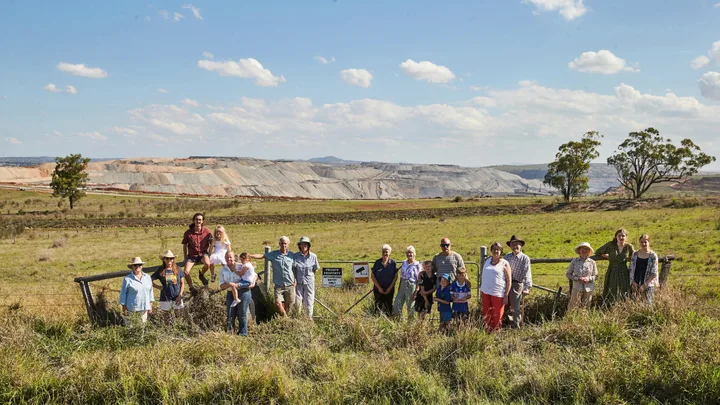
- In the Hunter Valley of NSW, a ragtag group of teachers, farmers and townsfolk pitted themselves against an international mining company and won.
- On 7 October 2026, the High Court of Australia ruled in favour of community group Denman Aberdeen Muswellbrook Scone Healthy Environment Group Inc (DAMS HEG)’s appeal against MACH Energy’s Mount Pleasant coal mine expansion. A ruling that will reshape fossil fuel planning and approvals across Australia.
- Read our feature with the community group from the February 2024 issue of The Australian Women’s Weekly.
Tony Lonergan was a farm kid. He has vivid memories of growing up in the grazing country of NSW’s Upper Hunter Valley in the 1950s. “My neighbour, Gavin Casey, and I would ride our horses for hours over the rolling hills, along the ridge line, beside creeks and dams, across paddocks dotted with sheep.”
He remembers helping to harvest fields of golden wheat and walking through wide, open paddocks to his grandparents’ farmhouse. There, he’d cross the garden where his grandfather grew 100 varieties of roses, climb the back steps and run into the cool kitchen. “Then I’d sit in the kitchen, chatting to my grandmother over a pot of tea and a slice of homemade lemon cake.”
Tony’s family farm was named ‘Athlone’ after the picturesque town on the River Shannon in Ireland. The Lonergans hailed from Ireland but have been farming in the Upper Hunter since the 1890s, and further down the valley before that. Much of Athlone is now in the path of the Mount Pleasant coal mine.
In 1998, Tony’s father signed a sale option agreement with Rio Tinto, which later sold its Mount Pleasant mining rights on to an Indonesian-owned company, MACH Energy. Tony’s dad wasn’t the only farmer who sold up, and since then much of the valley has been reshaped by open-cut coal mines.
Then, in 2022, MACH Energy presented the NSW government with a proposal to create one of the state’s largest open-cut coal mines by doubling Mount Pleasant’s output to 21 million tonnes of coal per year and extending its closing date from 2026 until 2048. Tony was shocked when that proposal was approved.
“Enough!” he says, concerned about the loss of the community life he loved, the devastation of the landscape and, even more importantly for him, the “failure to respond effectively to the existential threat of climate change”.

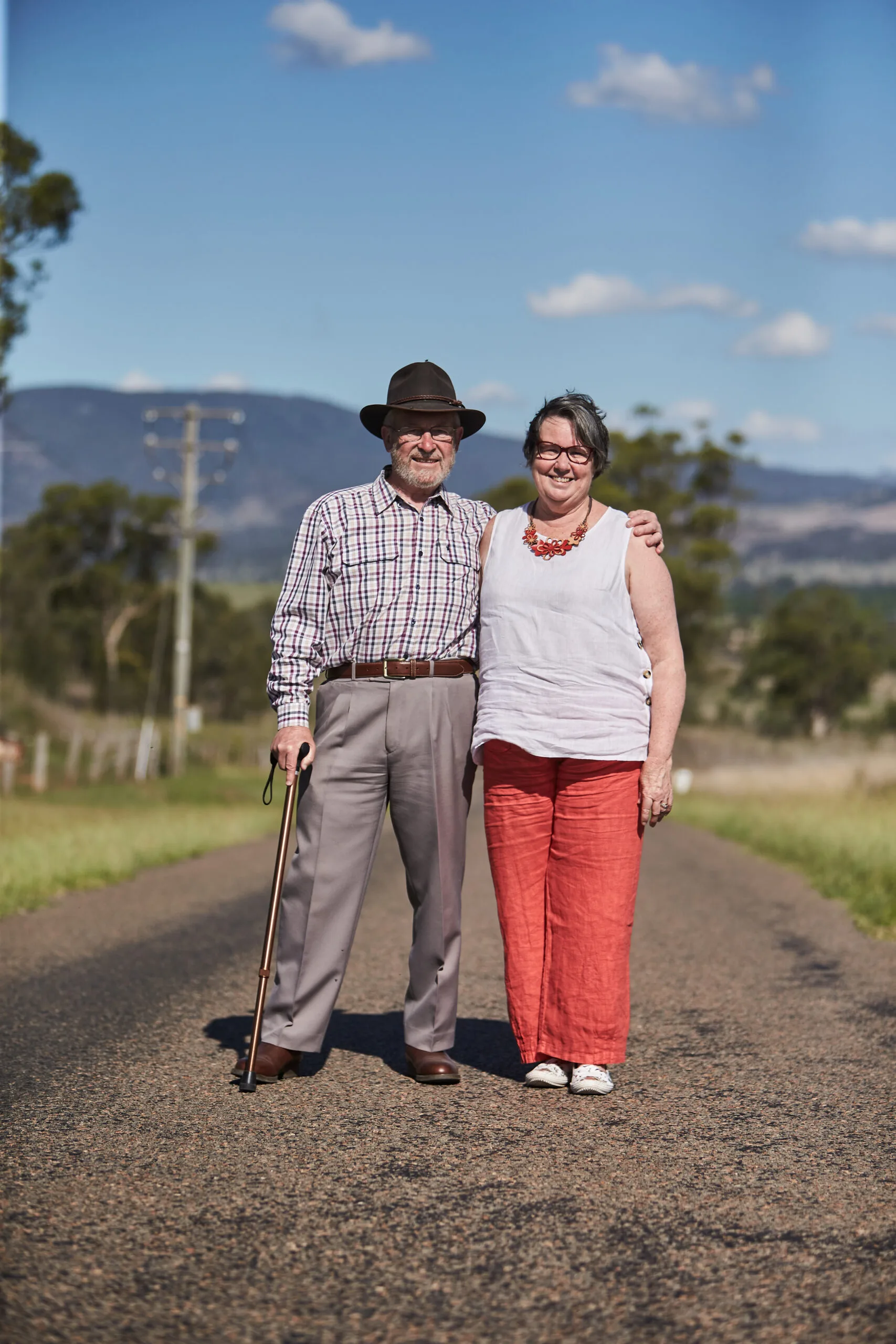
Tony is not alone. Ten years ago, a group of Upper Hunter locals, concerned about the escalation of open-cut coal mining, got together to share information and brainstorm possible solutions. They called themselves the Denman, Aberdeen, Muswellbrook and Scone Healthy Environment Group (DAMS HEG). Now, working with a team of lawyers from the Environmental Defenders Office, DAMS HEG is opposing the expansion of Mount Pleasant. In November 2023, they made their case in the Land and Environment Court, and Tony and his partner, Wendy Wales, were at the centre of the fight.
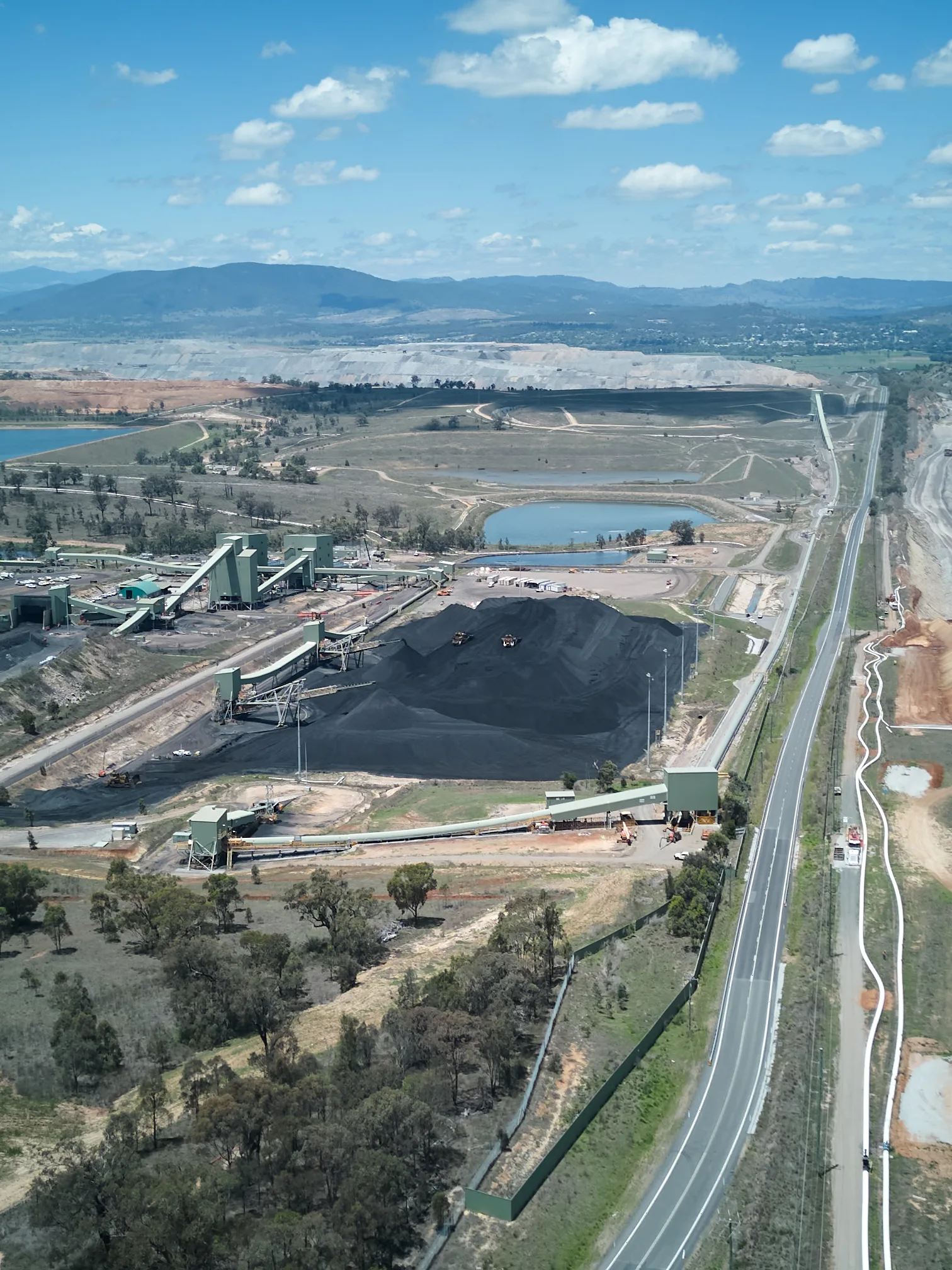
When The Weekly visits the town of Muswellbrook, it’s a perfect blue-sky summer’s day. Driving north-west along the New England Highway, we bypass the vineyards of the Lower Hunter and head into coal country. We’re just shy of Singleton when the landscape becomes a series of immense, gaping black holes, mounds of grey rubble and rising coal dust that forms clouds and eddies above the mines. Rix’s Creek, Glendell, Mt Owen, Liddell, Mount Arthur, Hunter Valley Operations, Bengalla, Mount Pleasant – on and on they go.
They are relentless, visible everywhere. The Mount Pleasant mine is just three kilometres north-west of Muswellbrook, population 16,000. It was once a regional hub for the local sheep and dairy industries, as well as underground coal mining, which began in the Hunter in the early 1900s. Mount Pleasant’s walls of grey rock and coal tower over the town, and when the wind picks up from the north-west, those eddies of dust drift across houses and sports fields, cafes and picnic grounds. When the wind is from the east, the dust blows inland across neighbouring farms.
“The dust is everywhere,” says Margo White, who lives on a property between Mount Pleasant and the nearby Mangoola mine. She’s brought a tissue with her that she used to wipe her flyscreen door this morning. It is black.
“If the grandchildren lean against the screen doors they end up with a chequerboard pattern on their skin,” she explains. “We have a little one crawling around on the verandah getting black hands and knees. If I walk in the garden in bare feet, my feet will be black because there’s coal dust all over the lawn. I’ve put a bucket by the door to wash my feet in before I step onto the carpet.


“Every 12 months someone has to come out to flush the rainwater tank. They empty it and vacuum it, and the stuff that comes out is revolting. But even with that, sometimes I run a bath for the grandchildren, and when I let the water out there’s black on the bottom of the bath.”
And of course the dust in the air is the dust the locals breathe. Air quality in Muswellbrook is amongst the worst in the nation.

Coal mining produces microscopic particles of rock and coal known as particulate matter. They’re produced through all stages of mine activity from blasting to transportation, and are also emitted by the diesel used in mining equipment. The smallest particulate matter is the most insidious. Particles which measure 2.5µm (micrometres) in diameter and below are small enough to be inhaled deep into the lungs and transfer into the bloodstream.
According to Dr Gabriel da Silva, Associate Professor of Chemical Engineering at the University of Melbourne, “this allows those particles [commonly known as PM2.5] to impact almost every bodily system”.
In a report on the Mount Pleasant expansion to the NSW Independent Planning Commission, he explained that “exposure to PM2.5 is linked to a host of diseases affecting the respiratory and cardiovascular systems, such as heart disease, stroke and lung cancer.”
The World Health Organisation recommends a yearly mean PM2.5 exposure limit of 5µg, but Dr da Silva and many other academics insist that “there is no known safe exposure level” and “any increased exposure of the public to PM2.5 would be expected to have an increased health burden”.
This is one of the reasons DAMS HEG is fighting so hard to oppose the Mount Pleasant expansion. Even without the doubling in production, Muswellbrook has already exceeded the national yearly PM2.5 standard every year since 2011, when reporting began. Of course, not all pollution in the town is the result of coal mining. Chemical
analysis indicates contributions by agriculture, other industries and residential wood smoke. And MACH Energy insists that the increased PM2.5 production generated by the expanded mine would not cause significant health risks beyond the mine site itself and a handful of private properties where “acquisition upon request” and “mitigation upon request” rights are already in place. However, DAMS HEG argues that any increase will be a significant health burden.
Dr Barry Thomas was a GP in nearby Singleton for 30 years before his recent retirement, and he has found – both in his practice and speaking with friends and family – that the health impacts of mining are already far-reaching.
“Since about 2008,” he says, “the mines have expanded hugely and with that the health impacts have become more pronounced. You get kids, particularly young kids, with chronic coughs and wheezes … I have seen an increased amount of coronary artery disease and even cerebrovascular disease.” He has also noticed an increased incidence of some cancers.
As a result of the pollution, he says, people who used to live in town are voting with their feet. “Even many mine workers don’t want to bring their kids up in the place where they work,” he says. “They live closer to the coast where the air is cleaner and the amenities are better and it’s cooler. The temperatures are higher here because we’ve lost so much vegetation. We’re getting hotter, windier, dustier days.”
The mine workers are not the only ones voting with their feet.“There’s a shortage of doctors,” says Dr Thomas. “They’ve had to shut the obstetrics unit at Muswellbrook Hospital.”
“So you can no longer have a baby in this town,” adds Wendy Wales, who was a science teacher at Muswellbrook High School for 20 years and is now the President of DAMS HEG.
“And the state school is struggling. Last I heard, the local high school was eight teachers down.”
The mines insist they’re creating jobs, but at least two-thirds of their workers live out of town and the great, grey behemoths deter others from making Muswellbrook their home. There is a significant pro-mining lobby in the district, but even so, more than half the town’s residents told a recent council survey that they were keen to see less reliance on the coal industry in the future.
“It’s having such a dreadful effect on the community,” Wendy sighs. “Shops have closed. All the things that are community-driven are disappearing.”
Mother of two and fifth-generation Upper Hunter farmer Kirsty O’Connell also sees her community crumbling but, like Wendy, she is determined to stay.
“I look at what’s happening with the air, I look at this continuing encroachment of the mines onto farmland, and part of me wants to run, but the other part says, ‘Damn, I’m not going to give up. Why should we be pushed out? Why should we lose our connection to these areas?’”
Like Tony, Kirsty’s family owned a farm on the site of the Mount Pleasant mine. She was 12 “when we first began to hear murmurings that a mining company was going to explore for coal”.
Even then, she was a fighter. “When I was 13 or 14, I was attending the commissions of inquiry for the original Mount Pleasant mine – wading through environmental impact statements – I was that kind of kid. I was just angry about it mostly. I was mad that people didn’t see that it was a bad idea. And it was really upsetting because we had this beautiful community of people, most of whom have left the area now.”
Despite her best efforts, Kirsty’s family eventually moved further up the valley. “Once you start having the rocks land on your roof from blasting, it’s kind of hard to stay,” she admits. That early experience as an activist led to work in journalism and community engagement. She’s run as an Independent in the local electorate, and now with Friends of the Upper Hunter she has also spoken out against the expansion of the Mount Pleasant mine.
One of the things that worries her most is that this mine expansion comes at a time when Australia has committed to – and the world needs to – rapidly reduce greenhouse gas emissions to limit climate change.
“Part of me says, ‘Why am I putting my family through this?’” Kirsty says. “But then you think about it on a global scale, and you think, actually, we’ve got a responsibility. We are at the coalface – literally – of what is happening. When you look at the scale of the pollution [caused by what’s] being mined here and exported overseas, it’s frightening.”
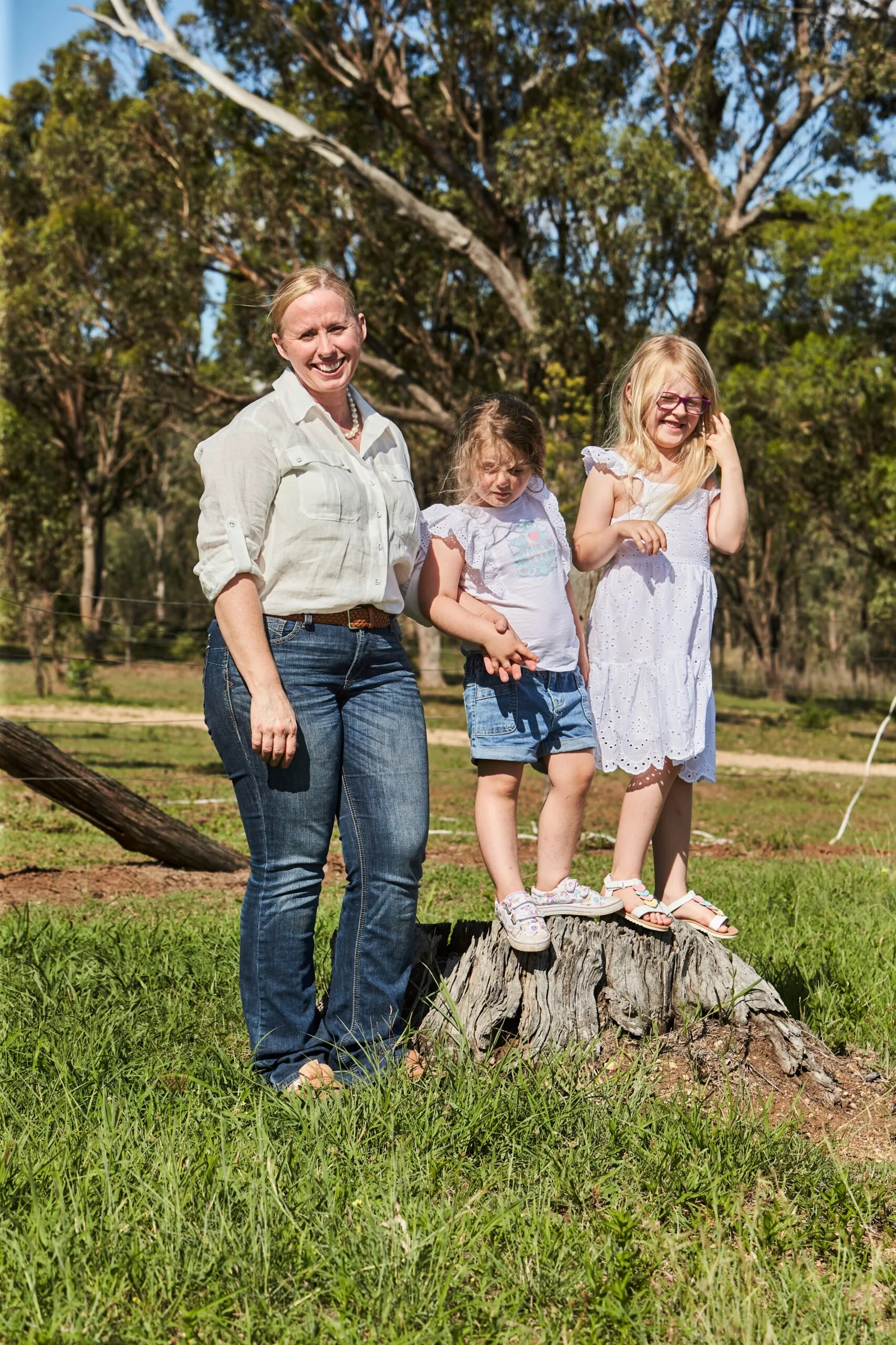
Kirsty recently enlisted an economist to help her crunch some numbers, and they concluded that “when you bring in all the production around Muswellbrook and extend it as far down as Singleton, the emissions from the coal we produce, just in the Upper Hunter every year, have an equivalent greenhouse gas output to a G7 nation. So we are bigger than Japan’s footprint, bigger than Germany, bigger than the UK. International governments should be sanctioning NSW, but because we’re exporting our pollution, that’s okay. We don’t have to count it at the point of origin.”
Professor Penny Sackett from the ANU Institute for Climate, Energy and Disaster Solutions is also concerned.
“Simply put,” she says, “approving new coal mines or extensions to existing ones, such as the Mount Pleasant Optimisation Project, is not consistent with holding warming to 2°C, let alone well below 2°C,” as committed to by 196 nations in the COP21 Paris Agreement.
Professor Sackett adds that a temperature rise of 2°C or above would be “associated with grave consequences and compounding risks to ecosystems and humans”.
Wendy says she’s understood that party politics isn’t the answer. “We’ve realised that Labor, Liberals, Nationals – they can’t get out of mining. So it needs to be people power.”
That is what led DAMS HEG to the Environmental Defenders Office, their lawyer Kirsty Ruddock and their four days in court last November. As we go to press, a judgement in their case is expected imminently.
“If we win, it is an administrative decision, and it doesn’t mean the mine can’t reapply; the matter can’t be reheard. So it’s not a complete stop to the mine … It’s a pretty hard battle,” says Kirsty Ruddock.
And if DAMS HEG loses?
“Then the mine will have approval and that approval will stand,” she explains, “although there is still the Commonwealth decision to be made. So we would probably advocate for DAMS HEG with the Commonwealth Environment Minister [Tanya Plibersek] … She can veto it, she can say no.”
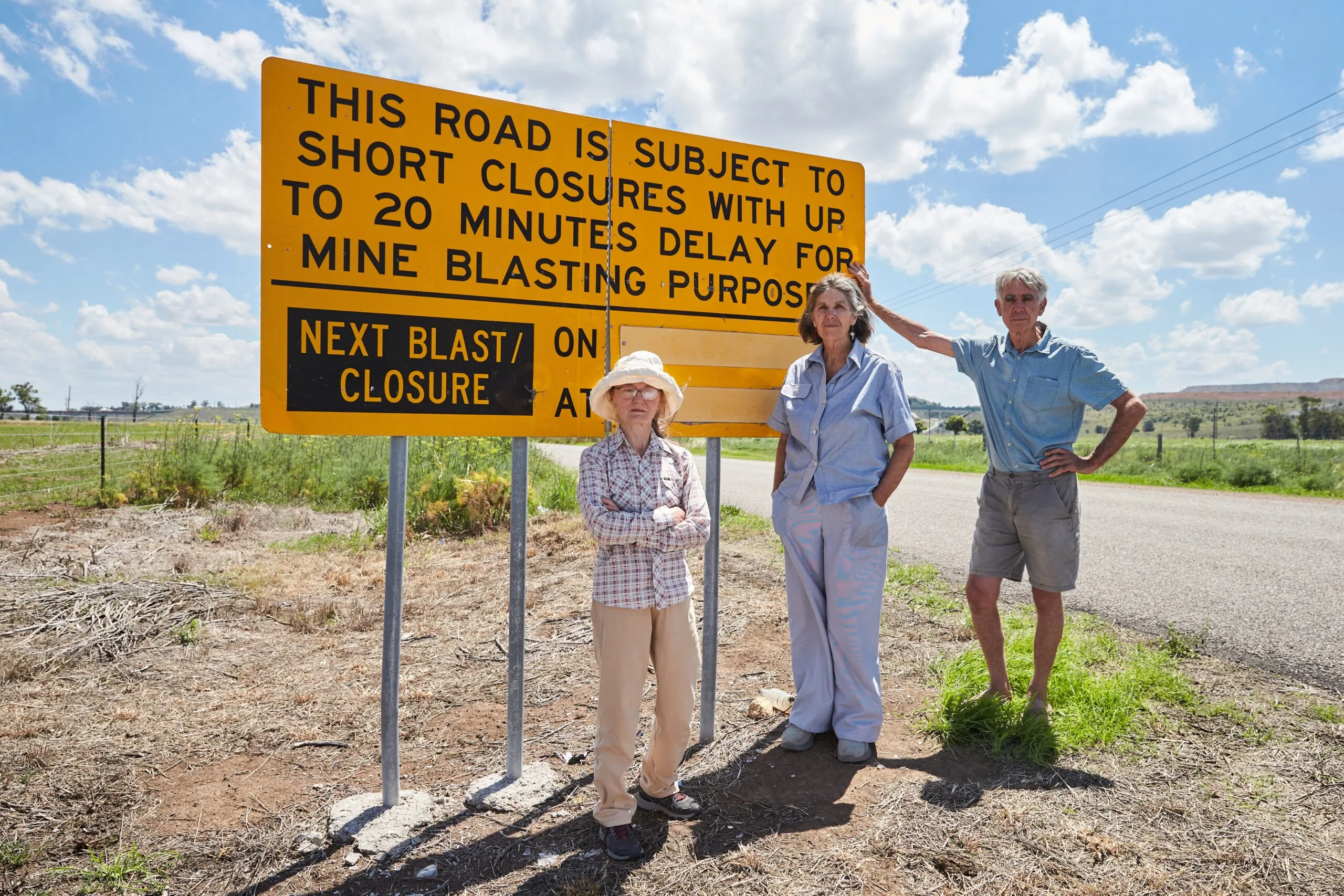
Sometimes now, when Tony gets up early to tend his vegetable garden and wanders back through long grass to put the kettle on for breakfast, a note of ‘solastalgia’ kicks in. He hears the grinding of machinery and the rumbling of explosives across the valley, and he longs for the mornings of his youth.
‘Solastalgia’ is a term that was originally coined to describe the experience of loss felt by Upper Hunter communities. Anthropologist Dr Hedda Askland, who has studied the impacts of mining here, describes it as a form of homelessness whilst still being at home. It is caused by lived environments changing in ways that feel negative to those who remain there. “People can become displaced, dispossessed,” Dr Askland explains, “without leaving their home.”
Tony takes us back to those perfect childhood mornings when he still felt at home on Mount Pleasant: “Dad would have already milked a cow or sometimes two by the time my brother and I were up,” he says. “We’d separate the milk and wash the separator before the school bus pulled up at half past seven.”
Birdcalls, the lowing of dairy cattle, the bleating of sheep, the call of his cousin Jack who dropped by most mornings for breakfast, and the scuffing of schoolboy shoes on the gravel drive as they ran for the bus were the only sounds that broke the crisp, dewy silence of the farm. Tony wishes his grandkids could experience it. And that’s one of the reasons he’s determined to explore every avenue to stop not just the expansion of Mount Pleasant but any new Upper Hunter mine.
“As long as we have breath, we will keep going,” says Wendy. “We will keep fighting this.”
Update to story in October 2026
The High Court of Australia has ruled in favour of DAMS HEG. It upheld a NSW Court of Appeal’s ruling that the Independent Planning Commission had failed a mandatory legal obligation when it approved the expansion of MACH Energy’s Mount Pleasant coal mine. SPecifically because it did not take into consideration the environmental impacts of the expansion.
“Today the High Court has said what we have always known: we cannot dig up coal, ship it overseas, watch it drive climate change, and then pretend the consequences have nothing to do with us and won’t be felt by us,” Wendy said after the ruling. “The droughts, the bushfires, the floods — are directly connected to greenhouse gases, and massive fossil fuel projects like Mt Pleasant Optimisation simply “add fuel to the fire”. We can’t ignore physics, chemistry and biology. We must live within Nature’s limits, and this ruling endorses that.”
“Wendy and I have seven grandkids between us. We did this for them, and for all the kids across the Hunter who are going to grow up in a world shaped by the decisions being made right now,” Tony added. “Today, the highest court in the country agreed that those decisions have to account for the damage they cause. That matters more than I can say.”
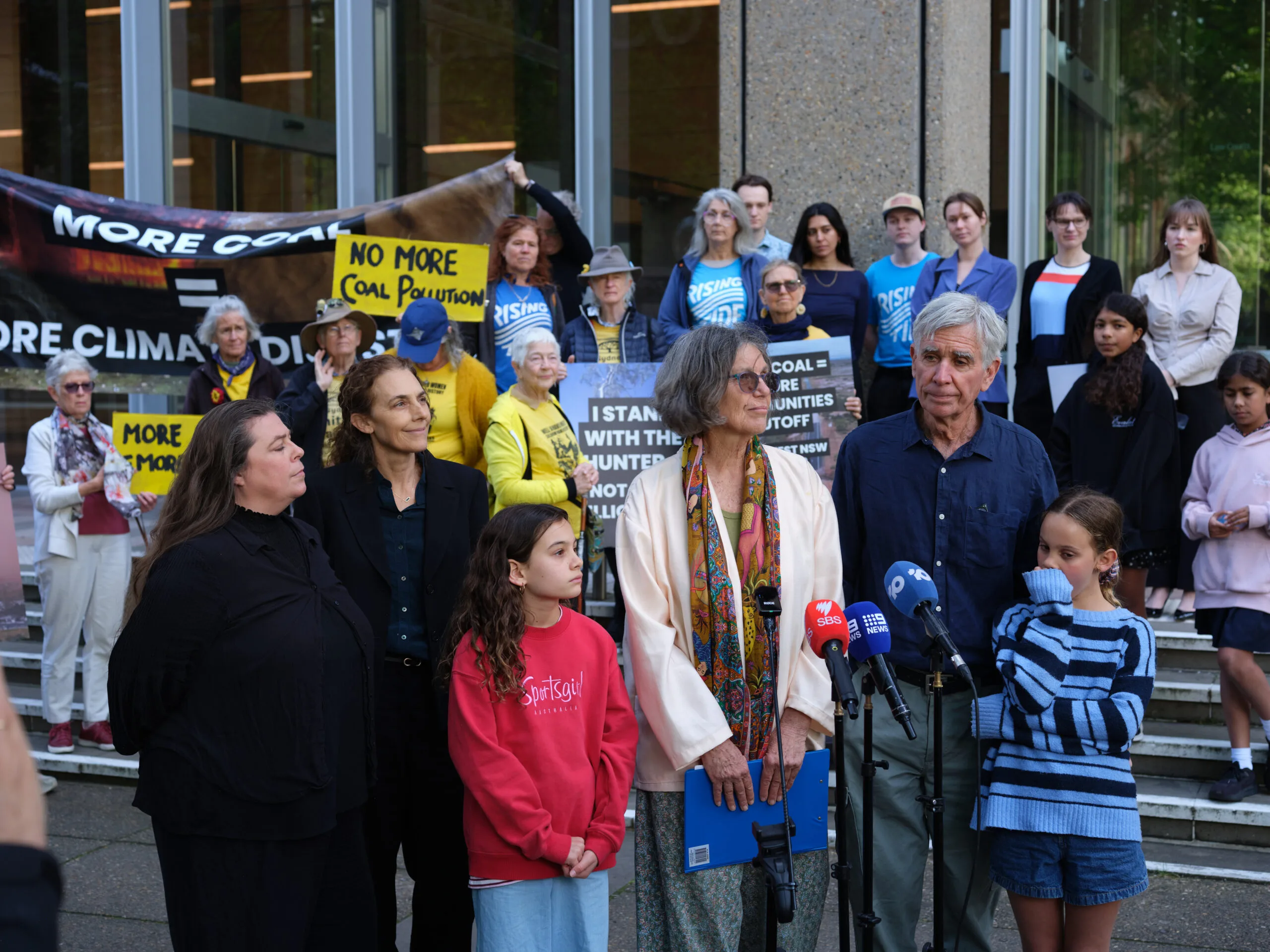
But both campaigners know their work isn’t done. However, this is a reason to celebrate.
“This isn’t the end of coal overnight. But it is the end of coal mine approvals that look the other way on climate. Every planning authority in Australia now has to take this seriously. That is a fundamental change.”
The ruling sets a precedent across NSW, legally requiring applicants to investigate the environmental impacts of new mines and expansions. According to a media release, it directly impacts 17 current coal mine proposals. The approval of the Mount Pleasant coal mine will now be referred back to the NSW Land and Environment Court or the Independent Planning Commission to assess the application’s validity and environmental impact.
The original version of this feature appeared in the February 2024 issue of The Australian Women’s Weekly. Subscribe so you never miss an issue.

