



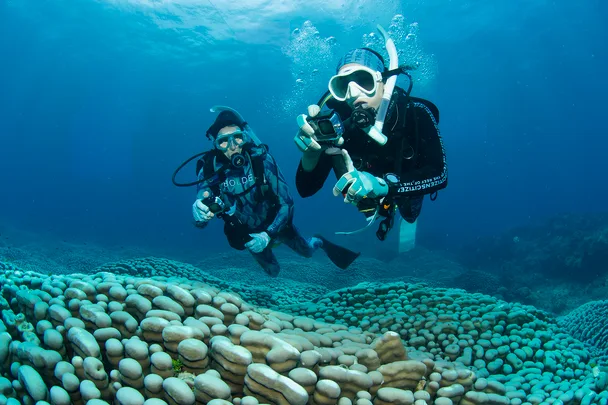
Sophie Kalkowski-Pope learned to snorkel in the pool in her backyard in Mirriwinni, south of Cairns, at the age of five. As a young child, she explored coral in Hawaii, and by 12 years old, she was working towards her scuba diving licence. Since then, she and her mother, Jan Pope, have travelled to vibrant archipelagos and seen the world from a perspective most never do, diving in Bali and in the clear blue waters of Raja Ampat and Komodo in Indonesia.
“When you have someone as passionate as Mum as a mentor, that enthusiasm for the natural world rubs off on you,” Sophie says. “We love exploring and going out into parts of the world no one else has been to. There’s a real adventure side to it that keeps me hooked.”
Jan, Sophie says, was “a bit of a trailblazer back in the day”. Born in Hobart, she also began snorkelling as a child and took up scuba diving in uni. She would dive off the coast of the Apple Isle and in the D’Entrecasteaux Channel, between Bruny Island and Tasmania’s mainland.
“I did my very first snorkel on Green Island on the Barrier Reef when I was 14,” Jan says. “It just takes your imagination completely.”
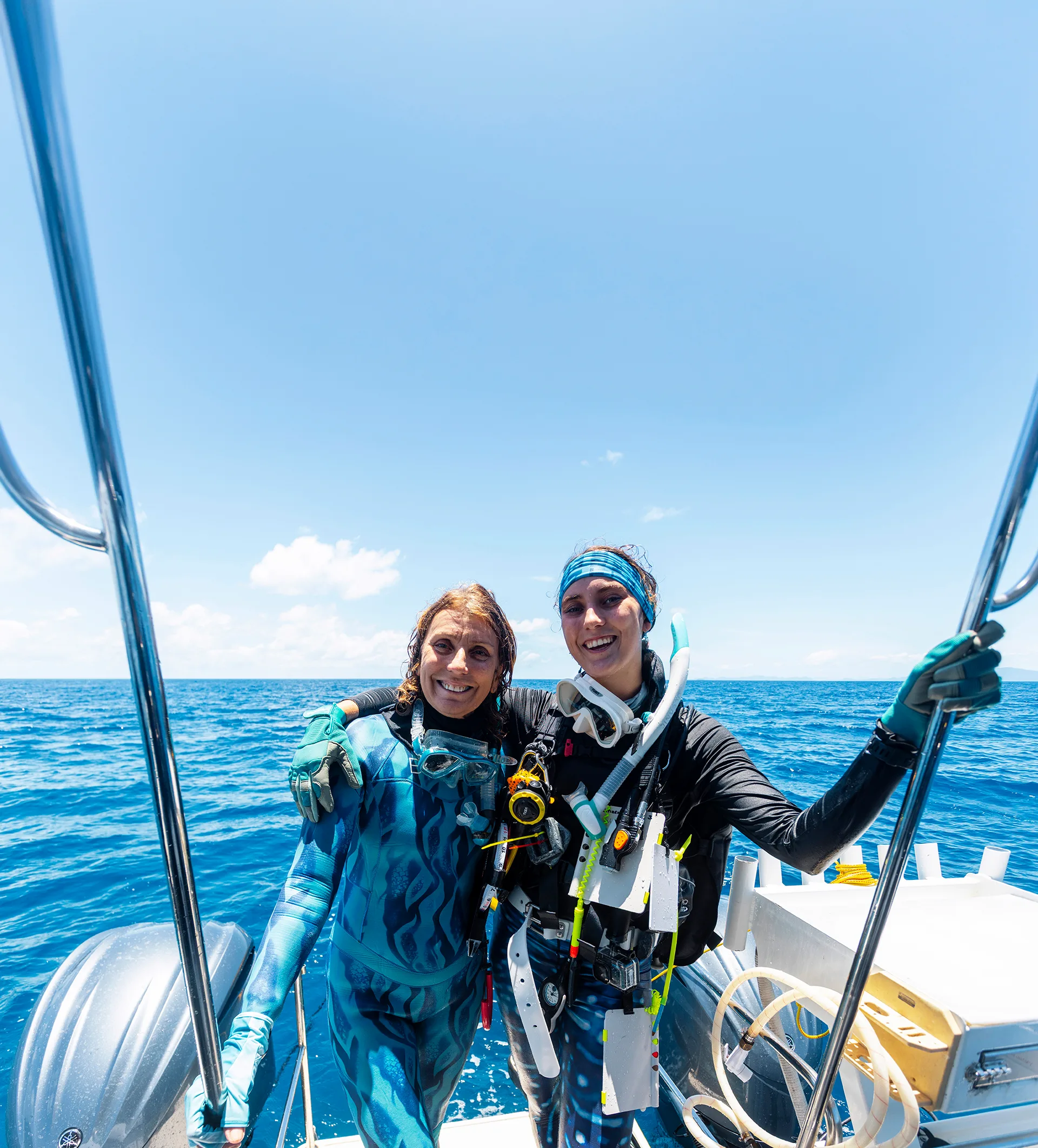
In 1987, Jan swapped Tasmania full-time for the tropical waters of Far North Queensland, where she spent her spare time diving along the reef. Sometimes she would give talks about marine biology on dive boats. It was not her job, but a passion she pursued assiduously. And when Sophie was born, Jan shared her love of the underwater world. “We’ve had some really great adventures together,” Jan says. Jan and Sophie’s expeditions were wondrous, but in 2017 they went on a dive that changed everything, and it was right in their backyard.
Shock bleaching
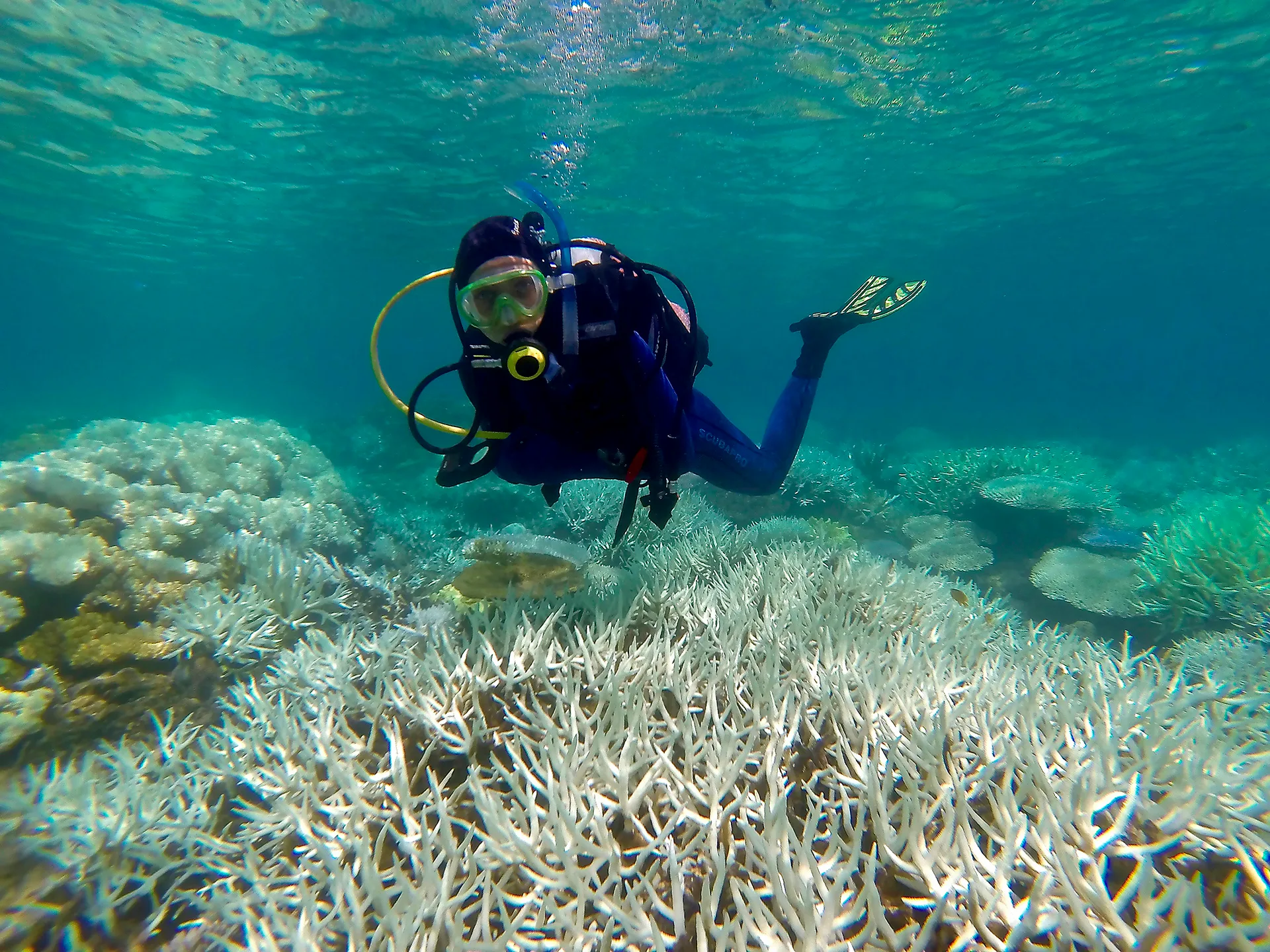
They were in the Great Barrier Reef and could see that the ecosystem was in severe distress. Some of the corals were glowing bright in almost neon colours. Others were bone white.
“There’s a phase the corals go through when they’re bleaching where they go into really psychedelic colours,” Jan says. “It looks beautiful if you don’t know the corals are stressed. It was like a sort of technicolour dream.”
The coral was a “glowing distress beacon,” Sophie explains. “The water was sickly hot. I remember diving down deeper to get in the cooler water because it felt uncomfortable. Entire meadows of branching corals were glowing this ghostly white. Even the anemones, with little Nemos in there, were bleached. It tended to be in that top two to three metres, where the hot water was, that we really did see those impacts.”
“It was a big shock,” Jan adds. “You realise you can’t take for granted that something is going to continue.”
An unprecedented event
The Australian Institute of Marine Science called the 2016-2017 back-to-back marine bleaching event “unprecedented” and said it collectively affected two-thirds of the Great Barrier Reef.
For Sophie, the bleaching would clarify her purpose in life.
“I’d always had interest in the ocean, but that was probably the tipping point that changed it from a hobby to something that really lit a fire under me in terms of wanting to conserve our underwater world,” she recalls.
“I talked about it at my school assembly, and I presented to my local marine counsel. I studied marine science at university. It was this chain of events that was a long time coming.”
“We went back a couple of months later, and we could see a lot of the shallow water corals had died,” Jan adds. “They didn’t recover.”
The reef is a resilient ecosystem, though. In the years since, Sophie says, there has been a decent recovery in general. “The coral bleaching does not mean it has died; it means that it’s under stress.”
Nevertheless, global changes and regional protections are needed to preserve this vulnerable environment, she says. “There are multiple threats to the reef,” explains Sophie, “but a lot of them are connected to climate change. There are many things that need to be addressed.”
A stunning discovery
Sophie now works for the conservation charity Citizens of the Reef, which runs The Great Reef Census, a citizen science initiative that enlists monitoring volunteers.
Last year, Jan and a friend went out on a boat to a site Jan wanted to revisit. “I hadn’t been there in a long time because of the strong current,” she says.
When they arrived, conditions were perfect. “It was a really nice, glassy day, and I looked into the water and said, ‘That is just the weirdest-looking pattern down there.’ Usually, you can look down and see staghorns and plate corals, and you get an idea of what it’s going to be like, but I didn’t recognise what it was.”
Jan did one dive and didn’t see anything remarkable. But the second time she slipped into the water, she was stunned. “I said, ‘This is amazing!’ This coral just kept going and going.”
It was like a big, rolling meadow of coral. She took some footage and sent it to Sophie, telling her, “You’ve got to come and have a look at this.”
They arranged a two-day diving trip, and this time Sophie was amazed.
“I hopped in, and it stretched as far as I could see underwater,” she says. “I remember looking back up at Mum and saying, ‘This isn’t just huge. This could be record-breaking.’”
Record-breaking find
They knew they were looking at something very special. “It made us think, ‘This is something unusual. This is something that deserves to be studied. This is something that deserves extra protection,’” Sophie explains. “It was a really, really unusual ecosystem.”
Jan filmed Sophie swimming the length of the coral, and Sophie used the footage to convince the Citizens of the Reef team to take a closer look.
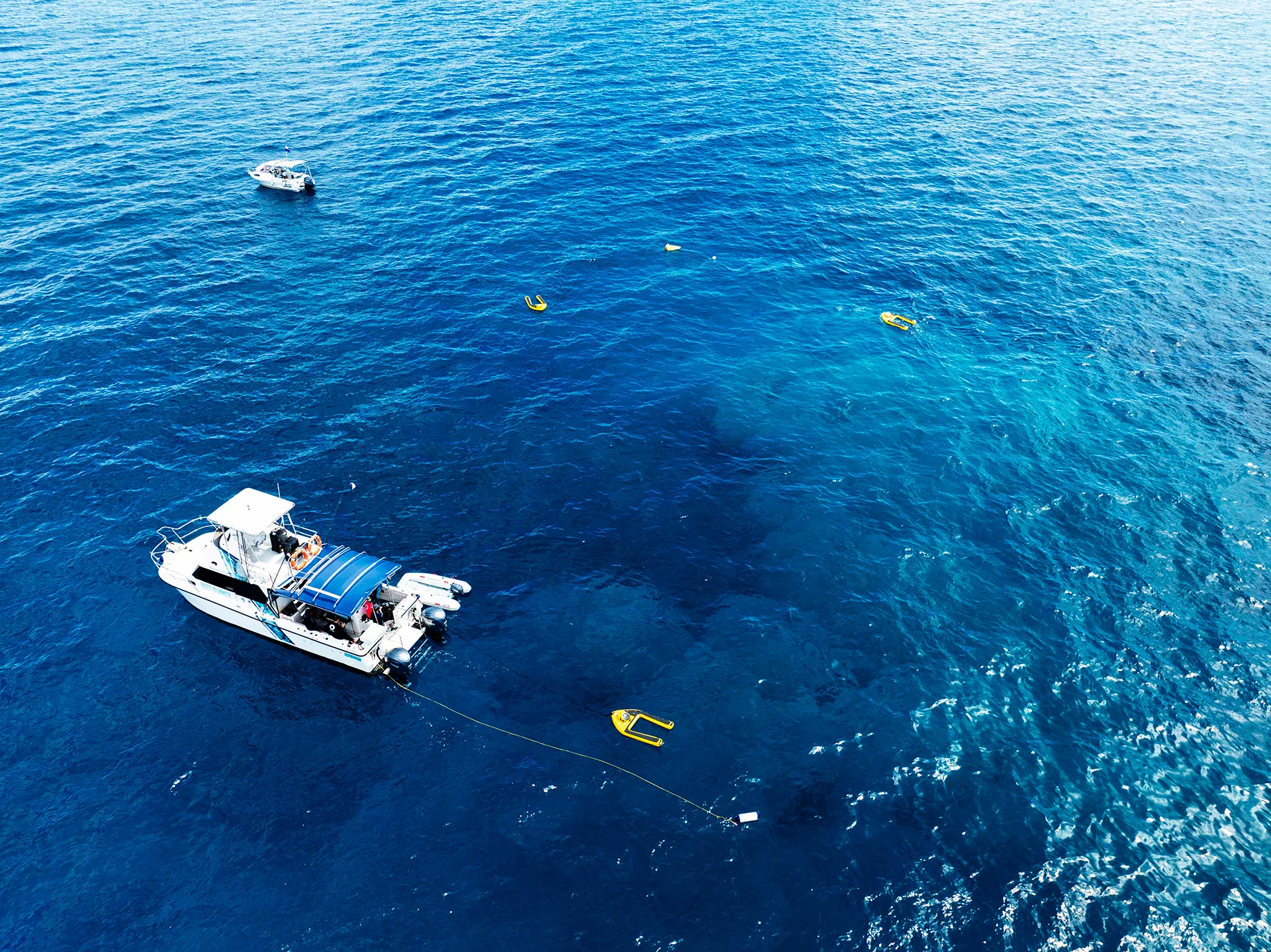
The Queensland University of Technology’s Centre for Robotics got involved with drone boats and underwater autonomous vessels (UAVs) to measure the structure and created a 3D model of what Jan and Sophie had discovered. The UAVs crawl over the coral structure like lawnmowers, collecting data.
The model can take weeks to process, and Sophie was excited to know the size of the coral colony.
She went down with measuring tapes, “putting them down with lead weights and measuring one section to deal with the current and get the tape straight,” according to Jan.
“I was frantic underwater, my heart beating out of my chest,” Sophie remembers. She counted: “‘24 plus 15, plus five’, doing all this maths … Checking it three times to make sure I hadn’t made a typo.
“Our measurements ended up being pretty close to what we found out later from the model. It was more than 100 metres, which is record-breaking. Nothing of that size has been documented before.
It was really special.”
Half a soccer field of coral
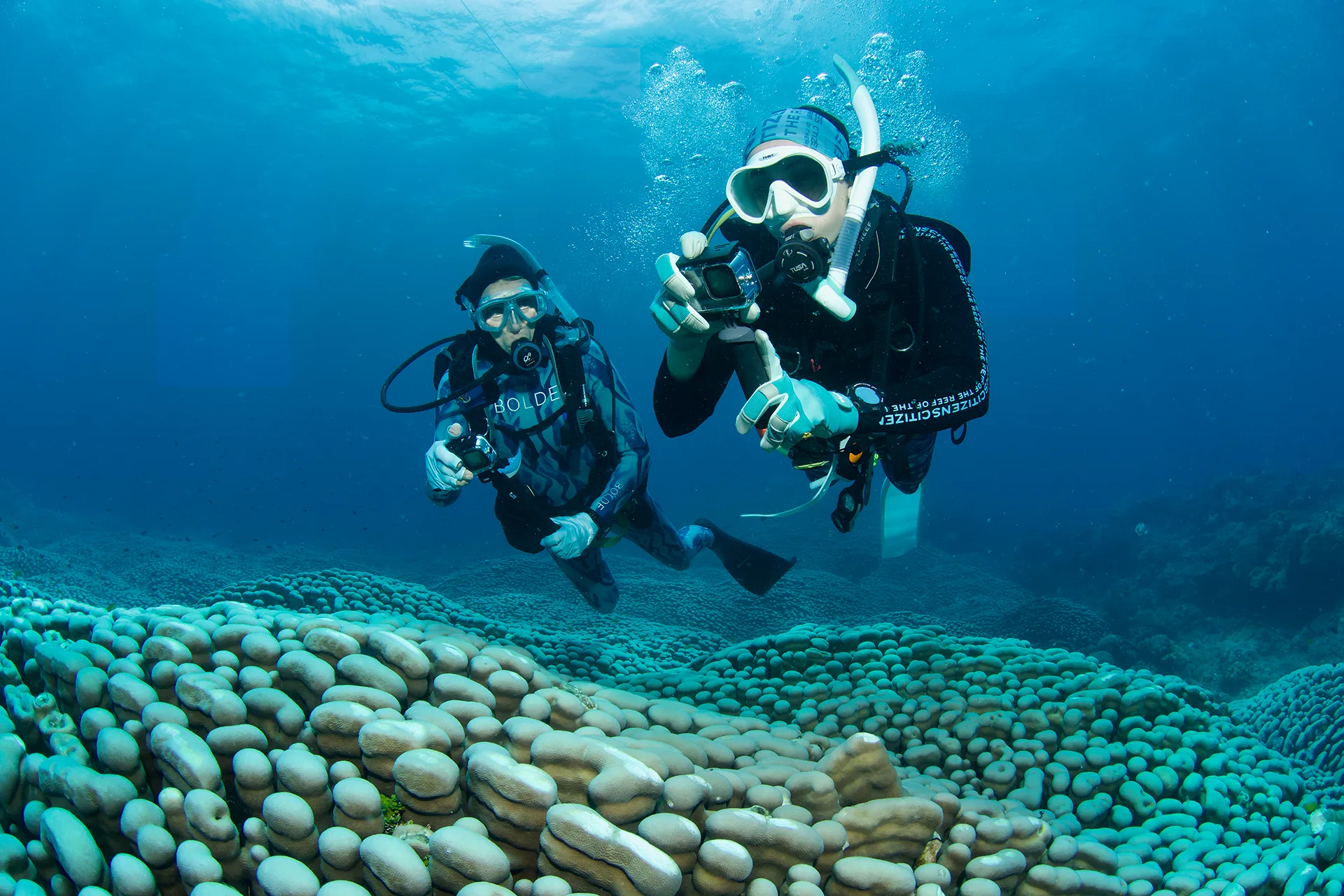
The colony of Pavona clavus coral that Jan and Sophie had discovered turned out to be 111 metres in length, covering an estimated 3973 square metres. It is roughly half the size of a soccer field and is among the most significant coral structures ever recorded on the Great Barrier Reef.
Andy Ridley, CEO of Citizens of the Reef, called the discovery “epic”. And it raises a lot of questions.
“How is it so big? Why is it so big?” Sophie asks. “Why is this area specifically so good at supporting the coral? In the face of climate change, reefs are threatened around the world. How has this area survived so long? Are there factors that could increase the survival of corals in other areas?”
Citizens of the Reef would like to investigate the structure’s genetics.
“Is this one continuous living structure that originated from a single polyp? Is it multiple colonies that have grown together into one superstructure? We don’t have the exact answer for that,” Sophie says.
Under protection
The location of the coral will be kept secret, and it is now under the protection of the Great Barrier Reef Marine Park Authority. In praising Jan and Sophie’s discovery, the Authority’s Chief Scientist, Roger Beeden, paid tribute to all volunteers who contributed to the census.
“Protecting these extraordinary places can’t sit with the government alone. The role of communities, and the people within them, is becoming increasingly critical, not just in Australia but globally,” he says.
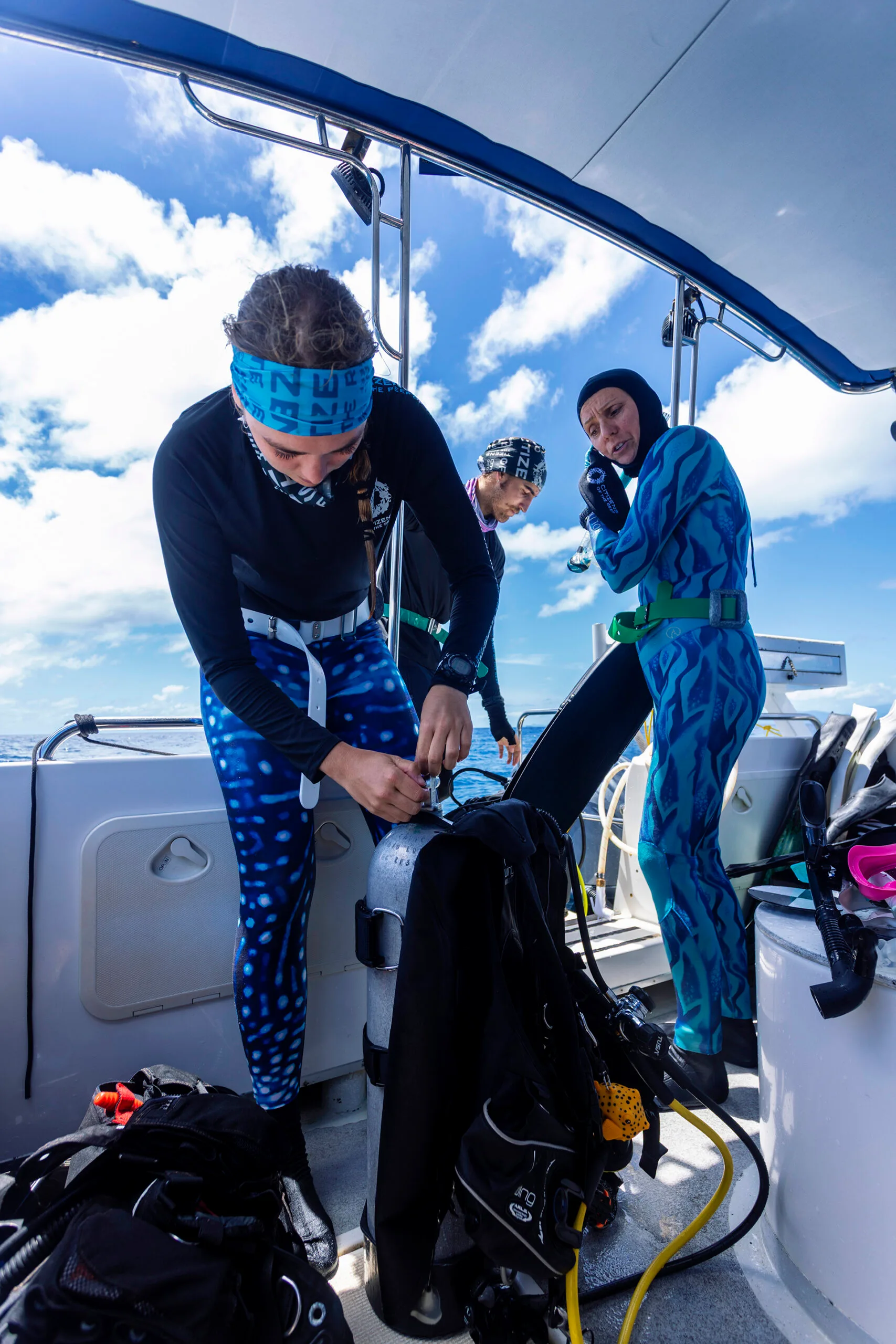
The census brings together dive-boat owners, Traditional Owner groups, tourism operators and even maintenance vessels, which take divers onto the reef with GoPros to capture underwater images.
It’s a huge job. About 10 per cent of the Earth’s coral reef ecosystems are in the Great Barrier Reef. The reef covers about 344,400 square kilometres and includes 3000 individual coral reefs. There are scientific surveys, but there isn’t the people power or money to monitor the entire reef, says Sophie. Since the census started, Citizens of the Reef has been able to monitor about a quarter of the reef, up from five per cent.
“The key mission of this program is really to fill in the data gaps,” she says. “In the last year, 86,000 photos were collected from more than 300 reefs, which is absolutely enormous.”
Anyone can get involved
Volunteers help analyse the images. Each image gets analysed by four humans, and once by AI.
“If some of your readers are environmentally inclined, they can actually get involved in this project right now from anywhere in the world on their computers,” Sophie says.
“We reach out to schools and to corporate groups. Sometimes we have people who are so passionate and involved that they’ve analysed more than 1000 images for us, which is incredible.
“Even hopping on for five minutes and analysing a couple of photos of coral can help. All we ask you to identify is plate, branching and boulder coral. It’s so simple, school children can do it.”
Citizens of the Reef encourages people to replace their screen time with reef-saving.
“Instead of scrolling, you can contribute to the conservation of the Great Barrier Reef, which we all care about,” Sophie explains. “People can feel disempowered, but this is something you can do right now, and you can do from your phone.”
She says the story of the reef is nuanced. The ecosystem is resilient, but there are limits to that resilience, and those limits are being tested, so it needs protection. It’s vital to communicate how dire the effects of climate change are so that people act – but it’s also important to be clear that there is a lot that can be done, and is being done, to care for this precious natural wonder. “Giving people tangible hope is really important,” Sophie says.
To become involved in The Great Reef Census, visit greatreefcensus.org/analysis
This article originally appeared in the June 2026 issue of The Australian Women’s Weekly. Subscribe so you never miss an issue.