




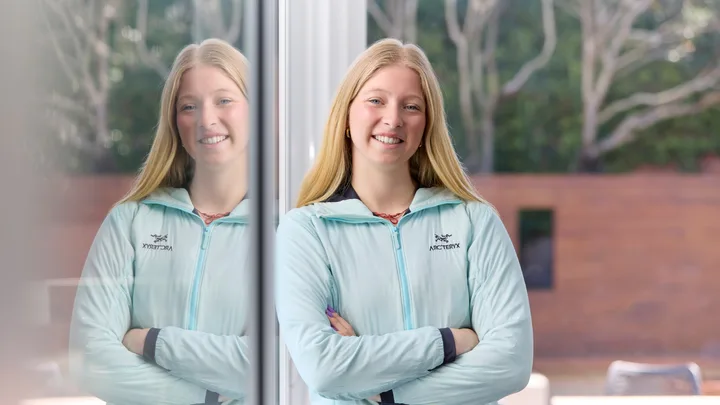
At a glance…
- Bianca Adler became the youngest Australian to summit Mount Everest in 2026.
- For her achievements, she has received the Young Melburnian of the Year award.
- The Weekly spoke to Bianca shortly after finishing her final Year 12 exam. We talked about all things Mt. Everest, her inspiration and women in sports.
It is almost overwhelming to consider all the milestones Bianca Adler has achieved at just 18 years old.
This year alone, she climbed 8,848 metres to summit Mount Everest – an achievement most of the population will never even attempt – becoming the youngest Australian to do so.
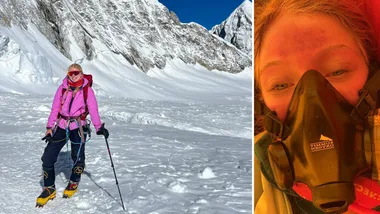
A daily video diary of her journey on the unforgiving mountain captured the attention of millions around the globe. People watched as Bianca gasped for breath, barely capable of whispering, her cheeks red-raw from the freezing temperature.
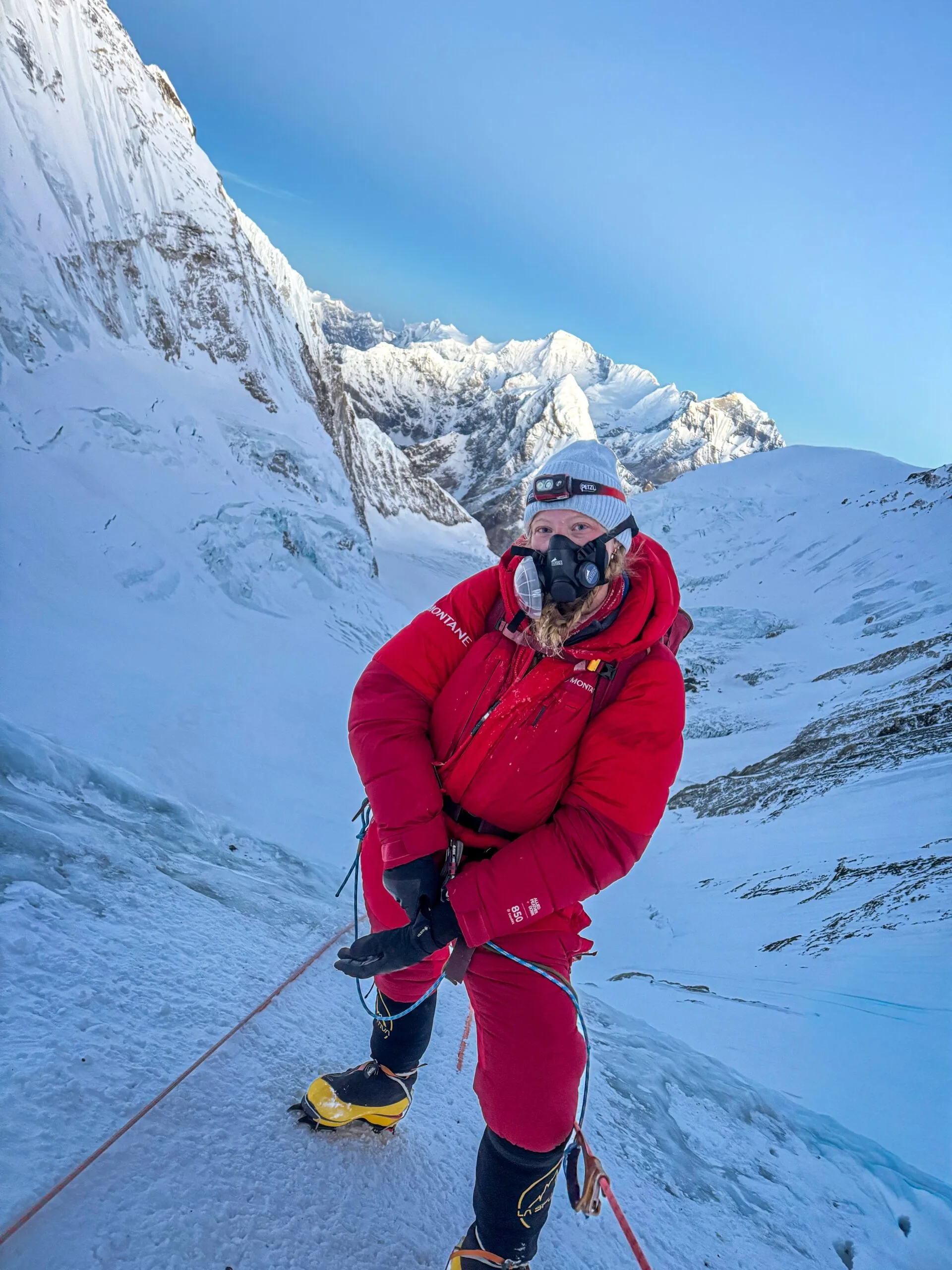
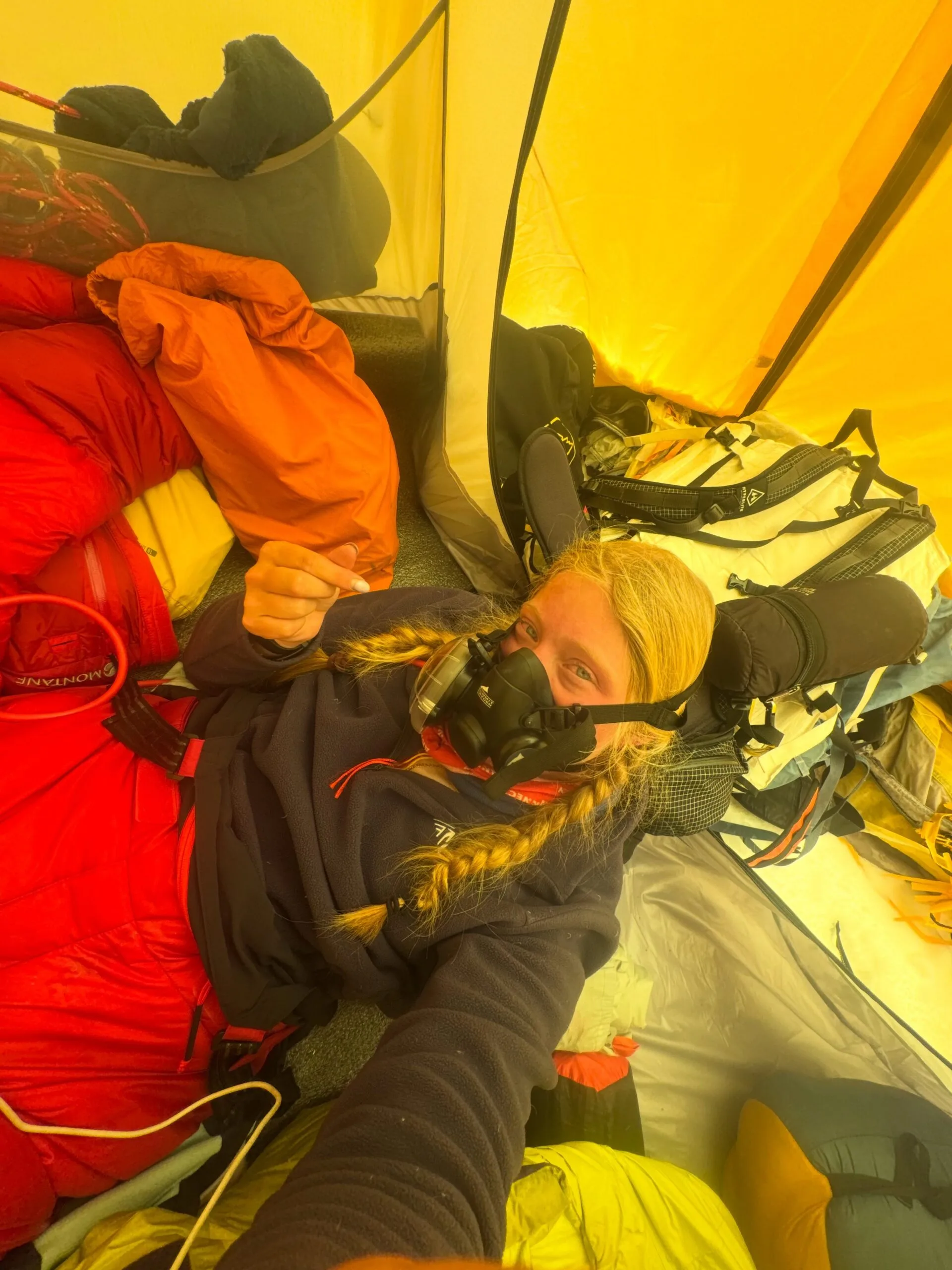
But through the exhaustion and pain, she remained a determined young woman.
It’s a dangerous sport. When Bianca was 17, hazardous weather forced her to turn away from the summit just 400 metres away. She didn’t return a year later to make an age record; she did it out of passion. “I love the idea of standing on top of the world,” Bianca says.
What many didn’t see in her videos, however, were her notebooks.
When The Australian Women’s Weekly spoke to Bianca, she had just finished her final Year 12 exam and was already planning to study commerce at University. But when she climbed in mid-2026, she was still in the thick of her studies.
“I tried my best to do some schoolwork,” she laughs. “It was a very difficult decision to leave for two months during my last year of school.”
“It [was hard] because there are not the same facilities that we have here at sea level. But I was also one of the youngest people on the mountain and no one else was doing any school work.”
Her mountaineering parents joined her for some of the journey. Her mother bid farewell at base camp, while her dad stopped at camp two. “It was really difficult leaving them… there’s just so much uncertainty, especially within the ice fall, which is arguably the most dangerous part.”
But the young woman who returned to her parents was very different from the one who bid them farewell. Tackling a “lifelong goal” earned her national and global acclaim and a Young Melburnian of the Year 2026 award. “I was over the moon! I was so happy and proud of myself, so it felt amazing to have this recognition from my country and school. It just felt like there were so many people supporting me.”

On the mountain, isolated from the outside world, Bianca found inspiration from Norwegian mountaineer Kristin Harila. The 40-year-old set a speed record for the ascent of all 14 mountains that rise above 8,000 metres with guide Tenjen Sherpa. Her record was 92 days; the previous record was 189 days.
“That just inspired me so much. A lot of the time, when you hear about records – especially sporting records – it’s always the record, and then the woman’s record. That completely opened up a new world for me; that women can break these physical records,” Bianca expresses.
“Kristin was on the Everest expedition with me, and it meant so much to share so many experiences with her. Now, we’re really good friends.”
Like any friendship, it’s made over shared interests. But with so few women in mountaineering, it can be daunting. Nepal reported that just 20 per cent of the Everest climbers this year were women.
Women in sports are getting more recognition, awareness, and even coverage. During the Milano Cortina 2026 Winter Olympics, the world became obsessed with skier Eileen Gu and Ice Skater Alysa Liu. Australia rallied around the Matildas during the 2023 FIFA Women’s World Cup, putting a spotlight on the players, particularly Sam Kerr. But the progression is painfully slow.
Bianca hopes that her mountaineering achievements will encourage other women to challenge themselves – you don’t climb the world’s tallest mountain without some other feats under your belt. She holds the title of the youngest woman to summit both Mount Manaslu (8,163 metres) and Ama Dablam (6,812 metres).
But if we never push ourselves, we will never learn our potential.
“I just hope that more young people, and especially young women, can understand that their gender or age should never be a boundary to what they can achieve in life,” she says.
“Every climb I’ve done has been incredibly difficult in one way or another. There’s been so many times where I’ve broken down in tears because I didn’t think I could do it. Sometimes I haven’t summited; sometimes I have. But every time, I’ve shown myself that I’m just so much stronger than I think.”
This strength doesn’t just come from training. Mount Everest is just as much a mental game as it is physical. You can hear this strength in Bianca’s voice, speaking with such intelligence and grace.
“It’s quite overwhelming [being on the mountain], and really easy to compare yourself to other people on the mountain – if they’re stronger than you, fitter than you, climbed more mountains than you,” she confesses.
“But mountaineering isn’t a competitive sport. It’s really you versus you. I’ve learnt to focus on myself and not worry about the other people around me. I’ve taken that with me in other parts of my life.
“It’s my own life; my own mountain to climb.”

