




Turia Pitt is many things to many people. She’s a mum, a partner, a hero, an author, a daughter, a sister, and a friend. But, there’s one thing you wouldn’t ever describe her as, and that’s selfish. Yet that is the title of her defiant new book, Selfish: How to Unlearn the Rules That Are Breaking You.





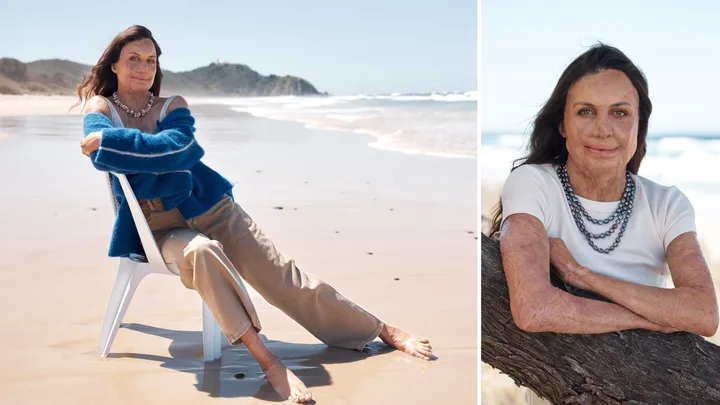
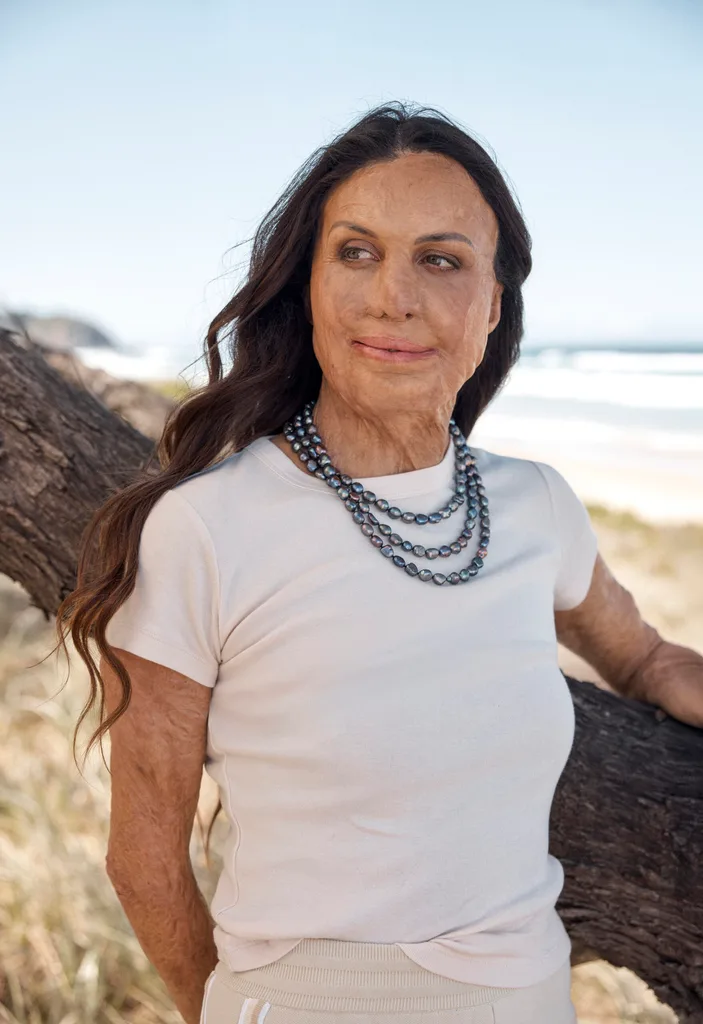
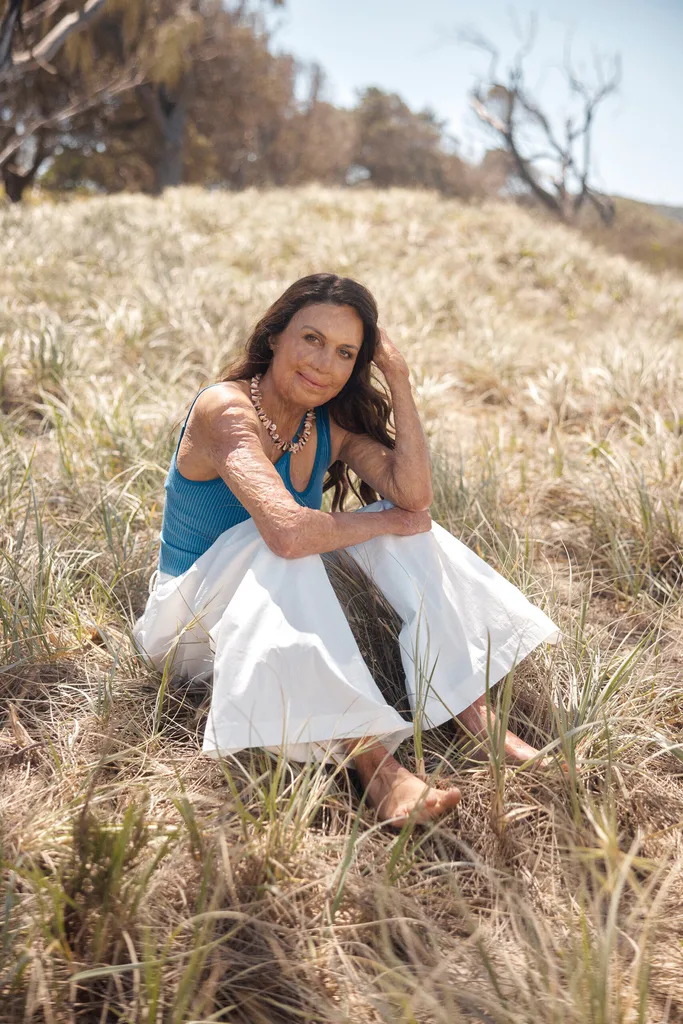
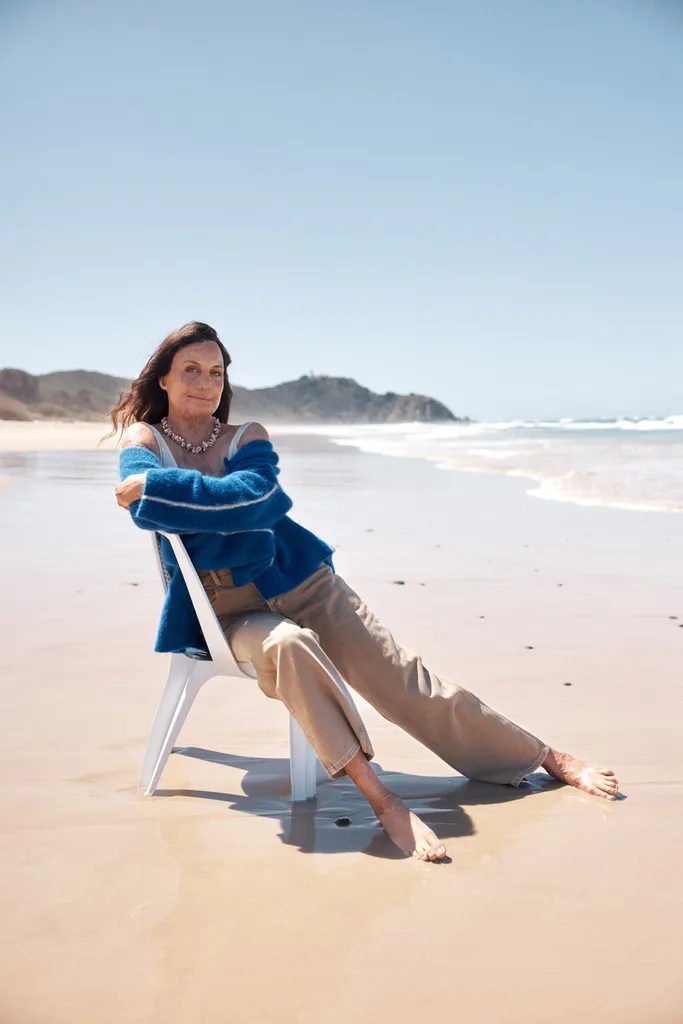
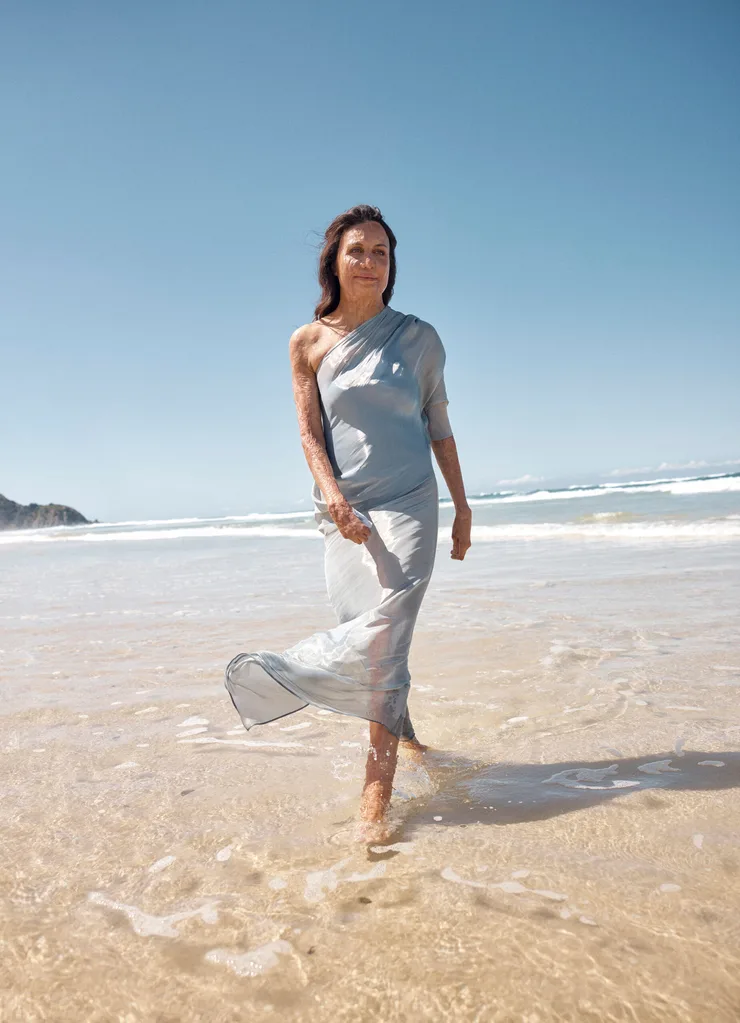
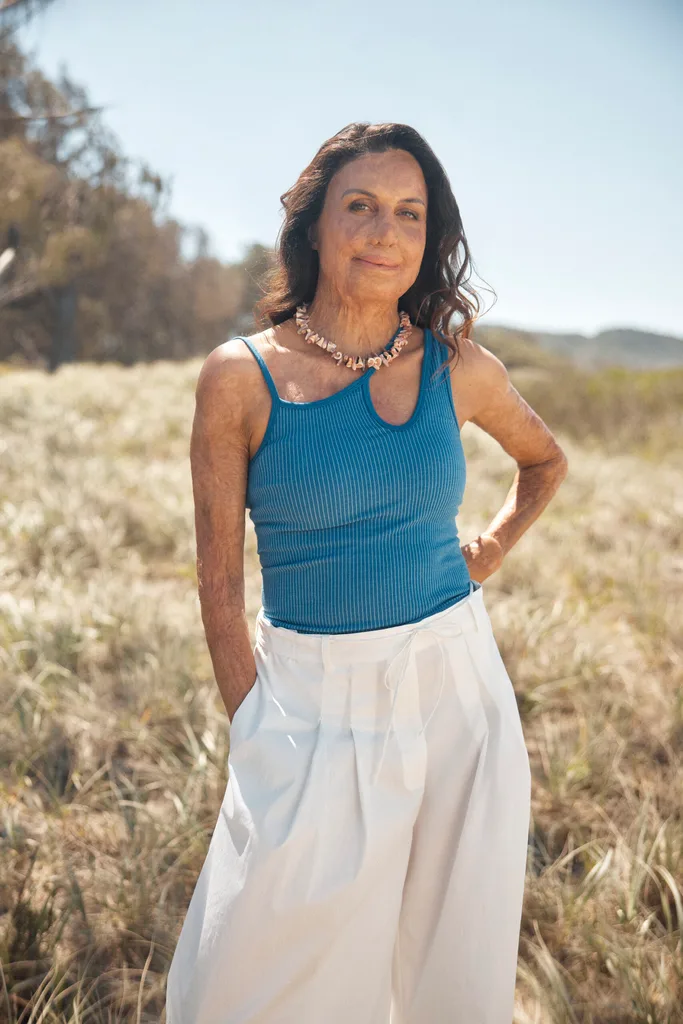
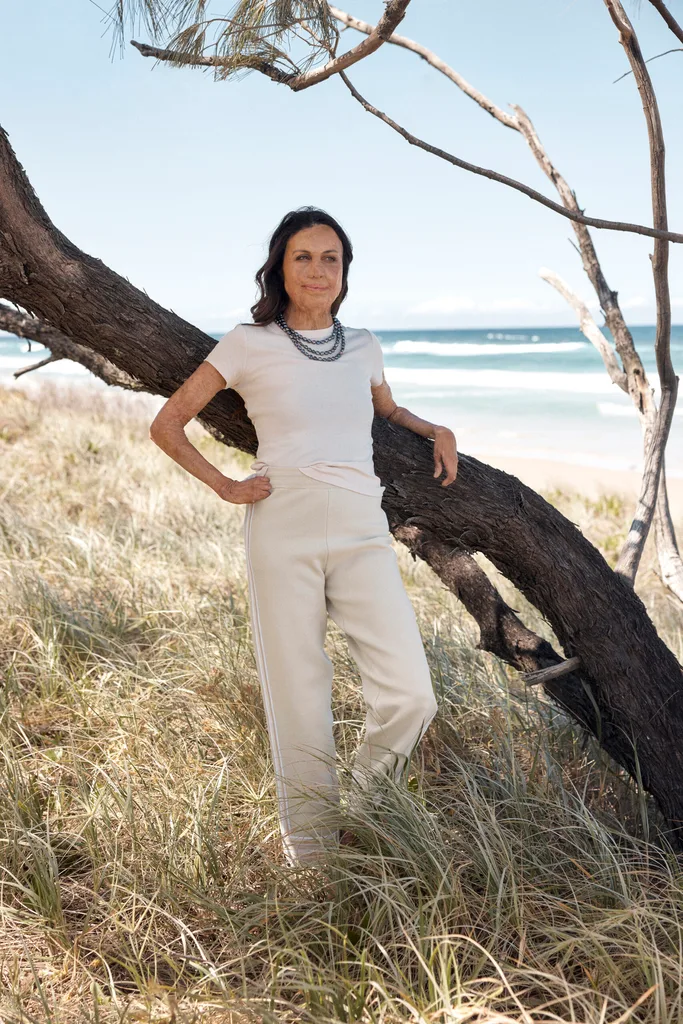
It’s a beautiful spring day, the kind that feels like summer. The Weekly is in Byron Bay to meet with and profile its new resident, Turia Pitt. The setting for our photoshoot is a local beach with nothing except sand, dunes, and stellar views. The sun is scorching, but the surf is dangerously rough thanks to strong winds. Only a few brave souls splash in the shallows while others, rugged up against the fierce gusts, linger to watch Turia pose for the camera.
When we wrap, Turia drives us to a nearby café, where we settle in to talk about her latest book, Selfish.
This book is different from her others. She’s written many since she was caught in a bushfire while competing in a 100 km ultramarathon in 2011. Turia survived full-thickness burns to 65 per cent of her body. This horrific event started her on a new path; now she motivates millions to embrace confidence and face their fears. In Selfish, she delves into varying topics from parenting to Polynesian geography to Goop, all while pointing back to a central question: what is it to be selfish? Is it uncaring to put yourself first? Or is it the ultimate act of self-care?
“This book was really hard for me to write,” she admits, tucking into a steaming bowl of congee. “It is the hardest book I’ve written, which is weird because there’s no catastrophe, there’s no burn.”
Instead, the challenge she was dealing with was burnout. A topic that gets its own chapter in the book, one that took Turia an entire year to write.
“I kept sitting down [pushing myself to] finish this chapter,” she says. “Then, when I wasn’t able to write anything, I got angry at myself. Thinking I have to finish it. I have to do it now.”
At the time, Turia was at a low point. She and her family – her fiancé, Michael and their sons, Hakavai and Rahiti – had left Ulladulla and their support network to move to Cairns for Michael’s new job. However, after acclimatising to the humidity and building a community of friends there, they moved again to the Northern Rivers, then back to Ulladulla, before shifting again to Byron Bay.
“I think moving so frequently messed up my nervous system; it can be quite discombobulating,” she says now.
Striving to be the perfect mum with the picture-perfect family and high-flying career with no help, Turia was writing a recipe for burnout.
“I said no to help. People did offer, and I said ‘No, I’m all good. I’ve got this. It’s fine’,” she admits. “And I got really bad burnout and depression.”




And what was waiting for her in the waiting room of her doctor’s office, where she finally went for help? Her previous book, Happy (and Other Ridiculous Aspirations). The universe has a sense of humour at times. The irony was not lost on her, and she describes feeling like a fraud in that moment in Selfish. Being pushed to her brink is a mental state she reckons she shares with many across the country.
“I really think it’s fair to say we have a mental health crisis in Australia. One in five Aussies has a mental health condition in their lifetime. Average waiting time for a psychologist? Four to six weeks. That’s a long time if you’re in crisis.” She pauses, reflecting. In fact, the wait can be longer. The University of Melbourne cited eleven weeks, with some waiting as long as eight months.
“I had support, I had resources. But I thought about the vulnerable people who don’t. That angered me because our system values independence and autonomy… but it also leaves people feeling isolated and alone.”
“I’m always so proud of our healthcare system. The only reason I’m alive is because of how great our medical system is, our brilliant surgeons, and professional nurses. But I feel like there’s still a bit of a stigma around mental health, maybe because it’s invisible.”
And compounding that is the expectation of women to be the primary caregivers, and typical hobbies for women are, in Turia’s words, seen as “frivolous” and “trivial”, something to make women “look better”. She adds, “It’s not really seen as something you do for yourself, for self-empowerment, to get stronger.”
Her book is, on the surface at least, about being “selfish,” but Turia is careful to unpack what that really means.
“I was just considering my own needs,” she says. “For a lot of women, we’ve been raised to be polite, smile, not rock the boat, not say what you think. Make other people feel comfortable. And when you have children, you want to look after them, care for them, but you’ve also got to do that for your partner, you’ve got to make sure the house runs smoothly, but you’ve also got to be hot.”
That frustration was the inspiration for the project. “I thought it was a bit cheeky,” she says, explaining the title of the book. “One of the most hurtful insults for a woman is to be called selfish. I think for a guy, if a guy is acting selfish, we kind of allow it.”
Selfish opens with “The Hot Chocolate situation” when (spoiler alert) her son admonishes her for buying (and serving) the wrong hot chocolate.
“That moment was a catalyst,” she says. She had already been musing on the divisions of labour in their household. Like any of her projects, she dove into the research and the methodologies, which Michael, her ever-supportive partner, was game to test out. One of those methods was Eve Rodsky’s Fair Play card game. Each card has a task, and whoever picks it must do it in its entirety with no help. So if you choose “make dinner”, you can’t ask your partner to pick something up from the shops on their way home. Did the system last? “No.”
However, it did leave a mark.
“It was good for Michael to see everything I did around the house. Also good for me to realise everything that he did.”
Michael is present throughout the book, even when he’s away on motorcycle jobs or Turia is halfway across the world. He’s been a constant since even before her accident.
“I don’t think I could have written this book if Michael were an a***hole. He’s supportive and encouraging… non-judgmental.”
However, there’s another person who permeates nearly every page: Turia’s mother, Célestine Vaite.
“I use my mum as a bit of a motif as I was writing it,” Turia explains. “In every chapter, I had to call my mom to get her take on it and contrast the two philosophies.” Meaning her Tahitian and Australian sides.
When Turia last sat down with The Weekly, it was for her children’s book Koko and the Coconut, which she wrote with her mother. In that interview, Turia shared that her confidence and self-worth come from her mum. Célestine has always been an avid supporter of her daughter. However, when Turia first broached the subject of her latest book with Célestine, she wasn’t on board.
“I had this idea of this book about being selfish, and my mum didn’t agree with it,” she tells me. “She was like, ‘It’s not a good look for Polynesians to be selfish.’”

The last interview with The Weekly happened on the eve of her mother’s big move back to Tahiti, and in Selfish, Turia and her sons go there to experience true island living where the community relies on one another.
“She lives in a traditional village. Everyone is related, everyone is connected… You teach someone English, they drop you off some fish.” But Turia realised that a reciprocal community can’t work in our Western culture, where independence and productivity are prized.
Turia reflects on the model her own mother set: “She raised four kids, had a full-time job, wrote these best-selling books, and she just gave, gave, gave, gave. She worked at night, burned the midnight oil. Like, she was a great mum, but she was also stressed and tired, a lot of the time.”
It was that pattern that Turia found herself repeating, which led to her mental health crisis. “If you are selfless, you end up being burned out. You’re just giving and giving and giving and giving. That doesn’t work in the long term.”
So was she ever able to take time for herself? To say no and “treat herself” to “self-care”?
Well, no. Even simple acts like sitting down to eat lunch felt indulgent. “I’d think, ‘I’ll just get up earlier. I’ll just stay up late at night and finish this. I just won’t eat. It’s fine,” she says with a sigh. “Because you don’t want to kick up a fuss, you don’t want to be demanding. You want to make sure everyone else is good. I’ll sort myself out later.”
In Selfish, she investigates the notion of “self-indulgence” vs “self-care”. She quotes American writer and professor, Audre Lorde: “Caring for myself is not self-indulgent, it’s self-preservation.” It was a quote that stayed with her and helped reframe the concept of selfishness in her mind.
“I always thought self-care was quite indulgent. Not everyone’s going to have the time or resources or support to be able to go to a day spa for three days, that’s not realistic for the majority of Australians.”
“The interesting thing about self-care is that it was a movement popularised by the Black Panthers. They realised it was essential for their survival. That if they were going to be advocating for equal rights and going to all of that, they needed to make sure they were doing those basic elements of self-care.”
And it’s true. The Black Panthers’ leaders, like Angela Davis and Ericka Huggins, promoted mindfulness and yoga to their fellow members to cope with the demands of their fight for social justice; it wasn’t a luxury.
Turia explains, “I used to feel really selfish about [self-care] too, but now I see it as essential. That’s what I need to do to feel good about myself, to be able to give my kids more, to be able to give some to my husband, because the other alternative of never doing anything for yourself is being tired, resentful, and stressed. I’m not the best mum when I’m like that. I’m not the best boss, and I’m not the best friend.”
And it doesn’t need to be three days at a day spa.
“Self-care can be sitting down to eat your lunch, having a proper meal, spending 10 minutes out in the sun, just taking time in nature, calling your girlfriend or calling your mom. So, whilst it’s probably going to be a lot cooler to go to the day spa, there are still things that you can do in your everyday life.”
But even with the work she’s put in, pangs of guilt haunt her.
“I still feel a bit guilty. Sometimes I feel I’d be dramatic and like, this is good for my mental health. But it’s also true. It’s good for my sense of self.”
Her own practices evolved. “I do try to take time for myself every day. When Michael’s away, it’s harder because I’m solo parenting. Sometimes I just make a cup of coffee. That’s it. I can’t always do it. I’m human…Last year, I was really quite vicious with myself. I mean, we always are, though.”
We can read her “vicious” thoughts in Selfish; she interrogates them in that space, wondering why she allows herself to speak to herself like that when she would never speak that way to another person.
“I’m learning that I don’t need to be perfect. I need to be a good enough parent, a good enough person. That’s so much easier than striving for this impossible superwoman ideal.”
Boundaries were a crucial part of this journey. Turia admits she still struggles with them, even the boundaries with herself.
“For years, my mana had been slowly leaking out,” she explains. “Mana” is a life force of energy which ebbed as she neglected herself. “I didn’t have boundaries with work or people. Saying yes when I didn’t want to… all little needles in my mana. Now, when I set a boundary, it still feels awkward, but I feel empowered. Proud of myself. Proud of my mana.”
When I ask if she would have considered herself a perfectionist, she takes a minute.
“I think I’m someone who’s always really prided myself on my work ethic, so much of my identity comes from my work.” She takes a moment to articulate her thoughts.
“If I say I’m going to do something, I’m going to do it. It doesn’t matter what it is, but that way of thinking is very rigid.”
This bleeds into her parenting, an area where societal pressures and personal expectations can collide. “What I was expecting from myself in terms of parenting…to expect that we’re going to be able to work, cook dinner, take the kids here, do Lego with them…it’s not realistic. There’s only so much one person can do.” Writing helped her realise that “you don’t need to be a perfect parent, you need to be a good enough parent.”
As we converse on the nuances of self-care versus self-reliance, locals come by for their flat whites and fresh pastries. They wave as they pass. Some stop for a quick chat and even a hug. It’s clear she’s found a community and home here.
Will they move again? “Now that we’re here, I don’t want to move. I think I just need time not to be constantly changing everything, to know where the cafes are, have my kids in the one school, at least for a few years.”
As we finish up our conversation, I ask about her Master’s in Women’s Health, her next project.
“I am loving it. It’s so good to be doing something outside of my work. I tie a lot of my identity to my work. So it’s been good to uncouple that and realise there are other things I could do, too.”
So, at the end of it all, has she become “selfish”?
“I wrote [the book] for three years. It’s taught me a good lesson. Sometimes you can’t manufacture things, and you can’t force things. It made me realise that that doesn’t always work. It’s made me more relaxed.”
Turia has learned the delicate art of being “selfish,” and in doing so, finally put herself first.
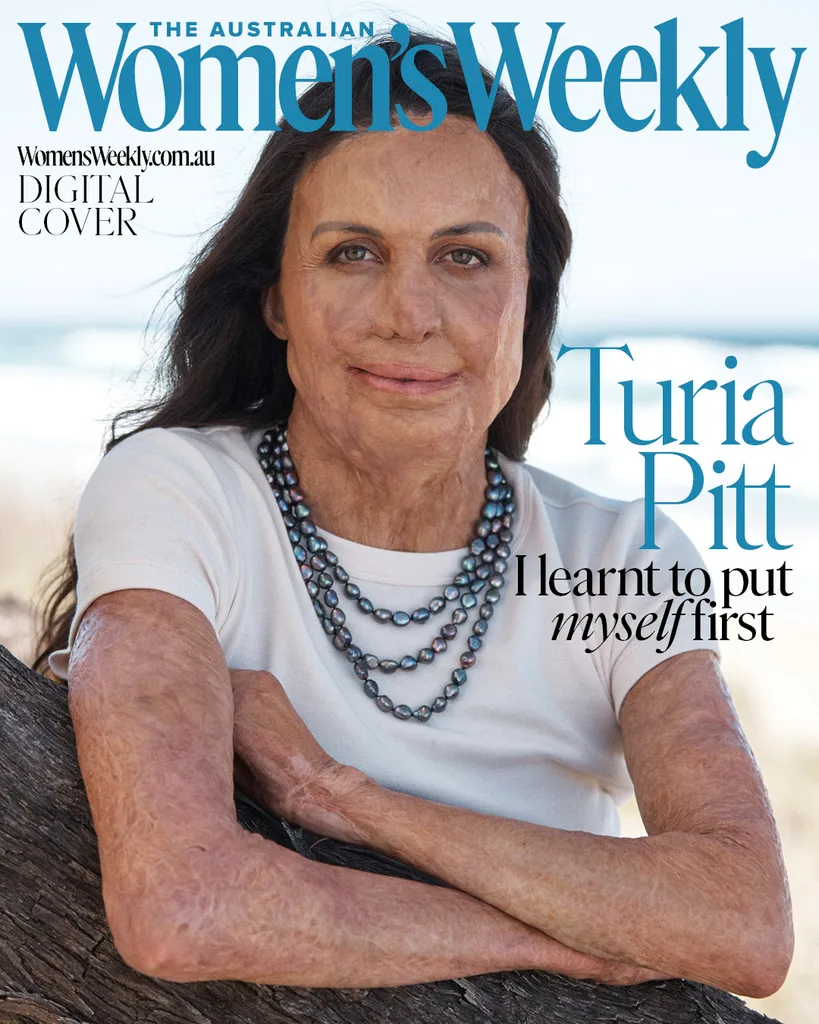
Selfish: How to Unlearn the Rules That Are Breaking You by Turia Pitt is out now through Penguin Books.
If you or someone you know needs help, contact Lifeline on 13 11 14.
This article originally appeared in the December 2025 issue of The Australian Women’s Weekly. Subscribe so you never miss an issue.

