



At a glance…
- Content warning: This article discusses the Robodebt scandal, which may be triggering for some readers.
- In the ABC series Shakedown, premiering on 22 November, Justine Clarke portrays real-life Centrelink whistleblower and public servant of over 30 years, Colleen Taylor, who tried to prevent the Robodebt scandal.
- Speaking to The Australian Women’s Weekly, Justine reflects on Colleen’s extraordinary integrity and the human cost of Robodebt.
When Justine Clarke was cast in the ABC drama Shakedown, she knew she was taking on a significant responsibility. The four-part series revisits one of the most devastating chapters in recent Australian history: the Robodebt scandal.
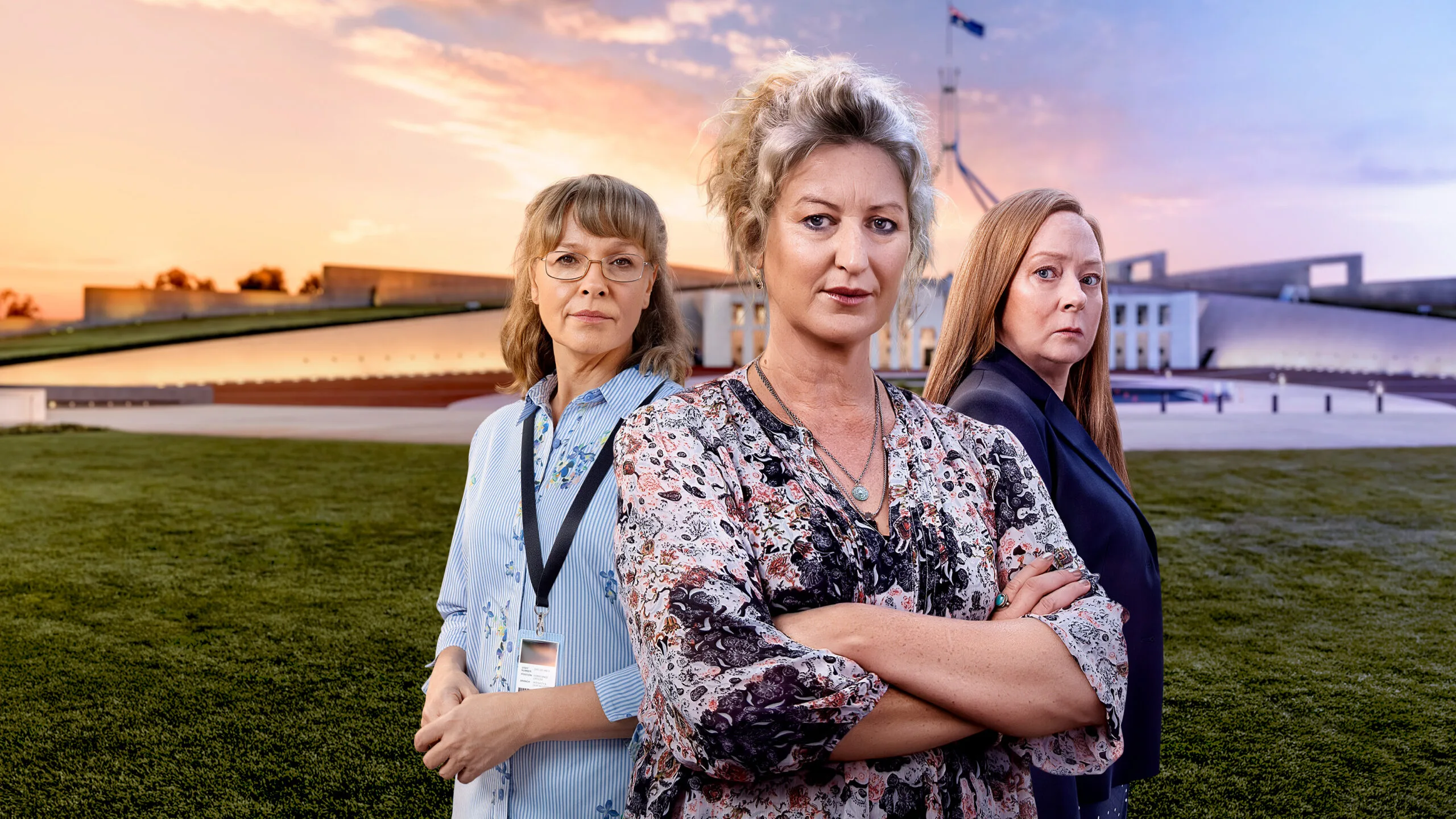
The series centres on three women: Jenny Miller (Kate Box), a grieving mother determined to find answers; Malisa Golightly (Mandy McElhinney), a senior departmental executive; and Colleen Taylor (Justine Clarke), an experienced Centrelink compliance officer who recognises the problems with the system and repeatedly raised concerns about the scheme and the harm it could cause.
Justine, who previously portrayed former prime minister Julia Gillard on stage, understands the responsibility that comes with bringing a real person’s experiences to life.
“It’s one I obviously don’t take lightly,” she tells The Australian Women’s Weekly.
“I think that everybody in the series has handled it very delicately, and I think what we’ve all tried to do is create impressions of people rather than impersonations, more about their qualities and their spirit than necessarily the exact representation of the way they look or the way they sound, but what they embody that serves this particular story.”
Although she didn’t meet Colleen while preparing for the role, Justine immersed herself in interviews, written accounts and the former public servant’s evidence to the Royal Commission. It was Colleen’s integrity and unwavering commitment to helping vulnerable Australians that particularly resonated with the actress.
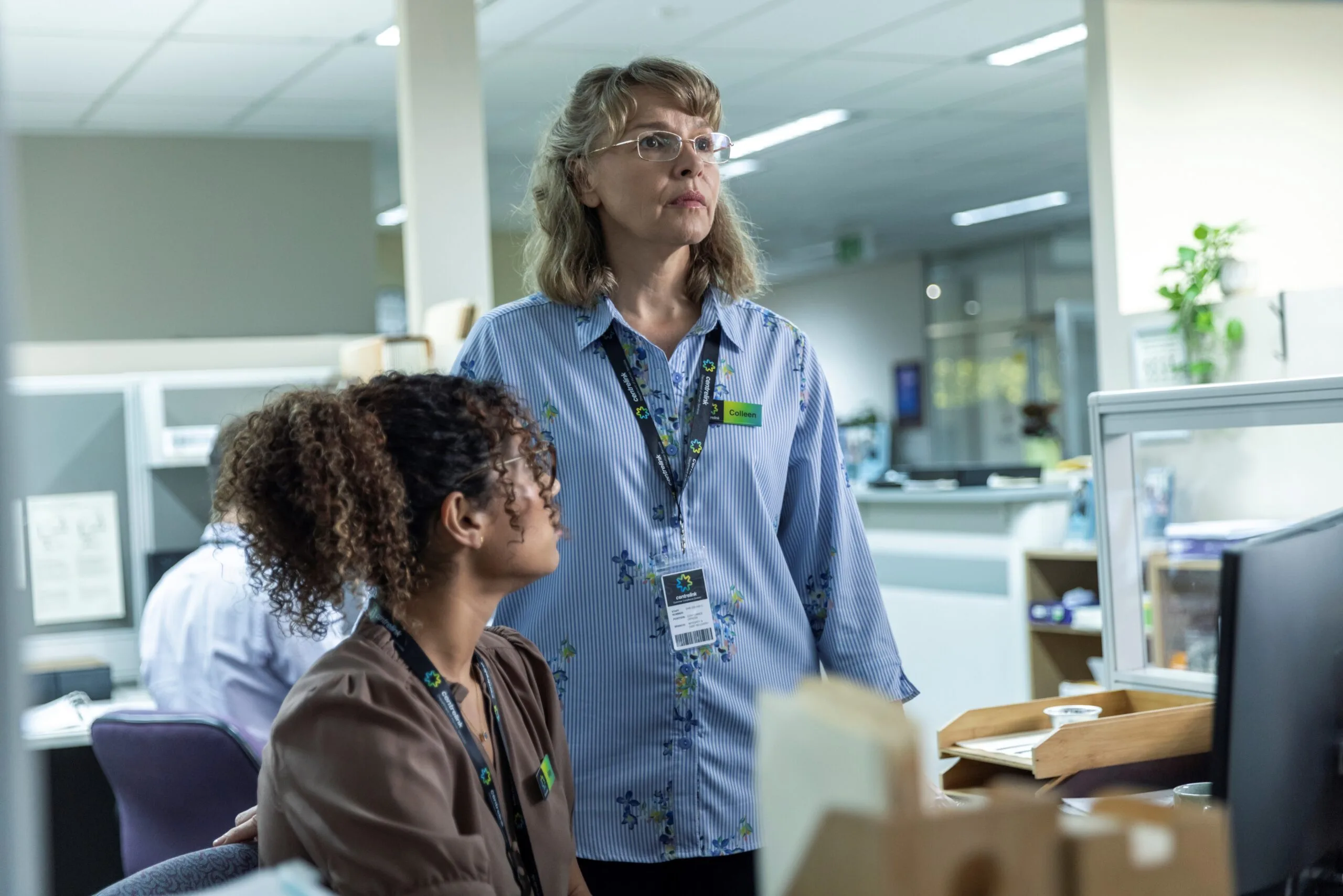
“She’s a proper and true and honourable public servant, and they’re very important people in our society.”
The real Colleen Taylor had dedicated more than 30 years of her life to the Australian public service when, in 2015, Centrelink introduced the new system for assessing and recovering debts. From her experience working within the system, she felt those changes could result in devastating consequences for vulnerable Australians. She repeatedly raised her concerns to superiors, refusing to back down and even wrote directly to the secretary of the Department of Human Services. But her warnings went unheard. By July 2017, Colleen had left the job she loved.
For Justine, it is this sense of duty, and the personal cost of standing by one’s convictions, that makes Colleen’s story so important.
“She’s not politically motivated; she believes that she’s providing a service that’s incredibly important for vulnerable people,” Justine says. “And she’s right.”
What was Robodebt?
For the uninitiated, the Robodebt Scheme was a program for automated debt assessment and recovery for welfare payments. It removed the human element of the assessment. Instead, it averaged a person’s annual income to calculate debts, often producing inaccurate or entirely false amounts.


Between 2015 and 2019, hundreds of thousands of Australians were pursued for alleged welfare debts. This left hundreds of thousands of vulnerable Australians facing debt notices for money they did not owe.
The scheme was later found to be fundamentally flawed, unlawful, and became the subject of a Royal Commission.
The woman who knew something was wrong
When Colleen first raised concerns about the changes to Centrelink’s compliance processes, she knew what she was talking about. She spent over three decades at the department and knew how welfare payments, overpayments and debt assessments operated.
According to her Royal Commission testimony, Colleen recognised that the new processes could lead to debts being issued without sufficient evidence.
Previously, compliance officers could examine existing customer records and seek information from employers to establish whether a debt was genuinely owed. Changes to the process reduced those checks, placing greater responsibility on welfare recipients to provide information themselves.
But Colleen knew that not everyone would have the knowledge, documentation or capacity to challenge a debt notice.
In correspondence to the department in early 2016, she expressed her concerns frankly:
“…as a Compliance unit, we should not be the ones stealing from our customers.”
When questioned about that statement during the Royal Commission, Colleen explained:
“Well, if we know there’s no debt, and yet we’re sending a debt notice out to someone, isn’t that stealing?”
She continued raising concerns internally, eventually writing directly to Department of Human Services secretary Kathryn Campbell in February 2017.
“Please allow me, as a loyal employee of many years standing who has only ever raised concerns in-house, to respond to you directly as your statement tells me that you are being misled and I want to ensure my words reach you…”
Her correspondence outlined the problems she had identified, including the risk that Australians would be pursued for debts they had never incurred.
The Royal Commission later found that Colleen’s concerns were well founded. But at the time, they were effectively ignored. Following a telephone conference with senior departmental officials, Colleen told her team leader:
“I don’t think she listened to a thing I said.”
The Commission found that senior officials had failed to properly understand the system and its effects, while legitimate concerns raised by people such as Colleen were dismissed.
For Justine, the experience went far beyond a disagreement in the workplace.
“I don’t think she went in there thinking they were going to turn on her in the way that they did,” she says. “And I can’t imagine what it would be like. It would be like being horribly gaslit.”
Especially she says because she believes that Colleen wanted fairness and clarity in the system and that that situation undermined her “deep-seated values.”
“It’s an attack on her identity, not just her job. It’s not just a job.”
The real people behind the Robodebt scandal
While Colleen was trying to raise the alarm from inside the department, Australians across the country were attempting to make sense of debt notices they had received. Like Rhys Cauzzo, who tragically died by suicide in January 2017 after receiving unlawful debt notices. Rhys and his mother, Jenny Miller, who went on to become an advocate for victims of the scandal, are also dramatised in the Shakedown.
For Justine, understanding the scale of the harm caused by Robodebt also meant confronting uncomfortable questions about Australia’s attitudes towards people receiving welfare, so-called “dole bludgers.”
“I don’t know if we’ve ever lost that,” she admits. “And I think there’s some level of shame that people who are on benefits live with. As a country, I think we are insecure about that. And I think that’s what the government preyed upon at the time.”

She adds that those attitudes fed into “ungenerous” and “suspicious” feelings the wider public had towards people receiving government assistance.
The Royal Commission also addressed this issue in its final report, describing anti-welfare rhetoric as “easy populism” and calling for an end to the narrative of taxpayers versus welfare recipients.
Justine believes drama has an important role to play in helping audiences understand those experiences.
“I think that’s what this series does really well is that it lays it out for everybody to understand,” she says.
“So that they can actually invest in the characters.”
The personal cost of speaking up
Colleen’s attempts to raise concerns ultimately came at a considerable personal cost. As mentioned, in July 2017, she retired from the public service.
“Before Robodebt was introduced, I loved my job,” she said in her statement to the Royal Commission.
“I felt I had expertise in my area and I felt I was making a contribution as a public servant. Having tried my hardest to get something done at the highest levels of the Department to change the scheme, I felt I had no option other than to leave my position and retire from the public service.”
In the final report, the Commission observed that while some evidence raised serious concerns about the Australian Public Service, there were others, like Colleen, “who restored faith”.
“The shame is that people of her calibre were not listened to,” the report stated.
For Justine, Colleen represents the kind of person whose contribution to Australian society deserves greater recognition.
“I think what she thought she was doing was saying, I understand this system, and you are making a mistake,” she says.
“I don’t think she went into it attacking anybody; she just wrote an incredibly comprehensive e-mail and outlined exactly how the system was working against helping people.”
Why the story of Robodebt still matters
Robodebt happened, and the human cost was real. People are still to this day fighting for justice. The scandal raised so many questions about government oversight and automation. And in a world increasingly full of artificial intelligence (AI) systems, it’s important to recognise what the country has already lived through.
This was something that Justine and I ruminated on in our conversation. For Justine, one of the most important lessons is the danger of allowing systems and processes to take precedence over the people they are supposed to serve.
“We all believe in a fair go as a country. We talk about it a lot,” she says. “But I think a fair go isn’t always guaranteed.”
“We as humans are very susceptible to respond to those systems rather than to people… I would hope that going forward, our government puts people first before systems.”
When I ask Justine what she would say to Colleen Taylor if she had the opportunity to meet her, her answer is simple.
“I would probably say thank you,” she says after a pause. “I would say thank you for your integrity and your loyalty and your quiet determination and your moral strength. It’s incredibly inspiring.”
“And the way that she did it, just through her knowledge of every single aspect of the system. Only a person can do that. And actually only her.”
Shakedown premieres Sunday, 22 November, at 8.20 pm on ABC TV. All four episodes will be available to stream on ABC iView.
If this story causes you distress, help is available at Lifeline on 13 11 14 or chat 24/7 on the website here.
Read the full report of the Royal Commission into the Robodebt Scheme here.

