




 Getty Images
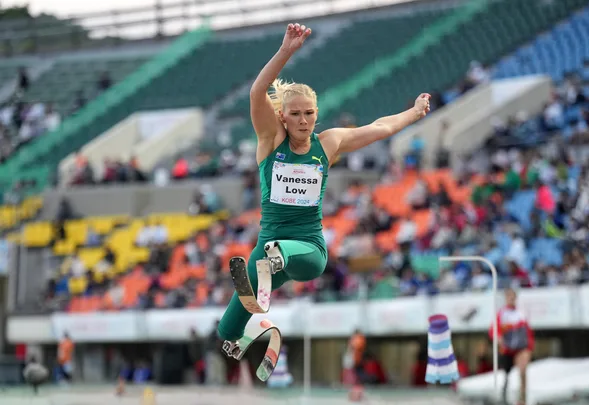
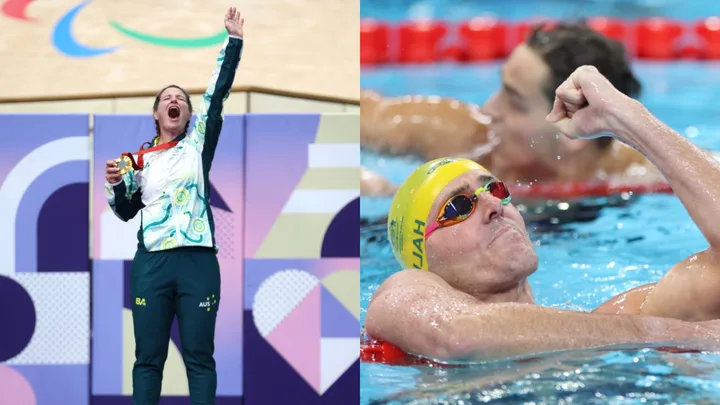
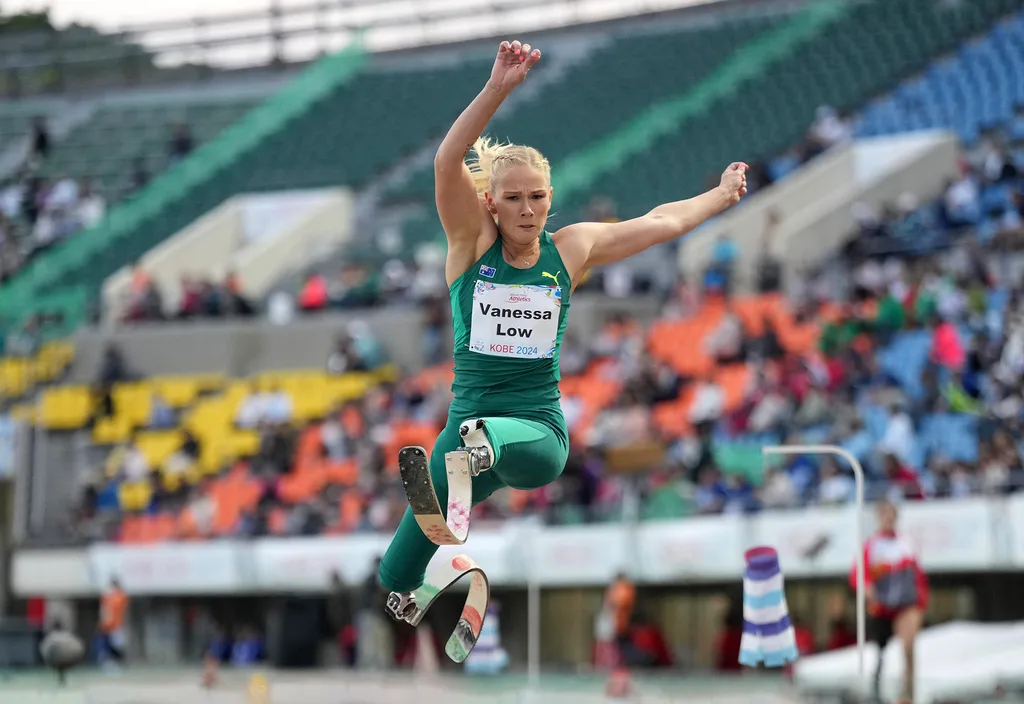
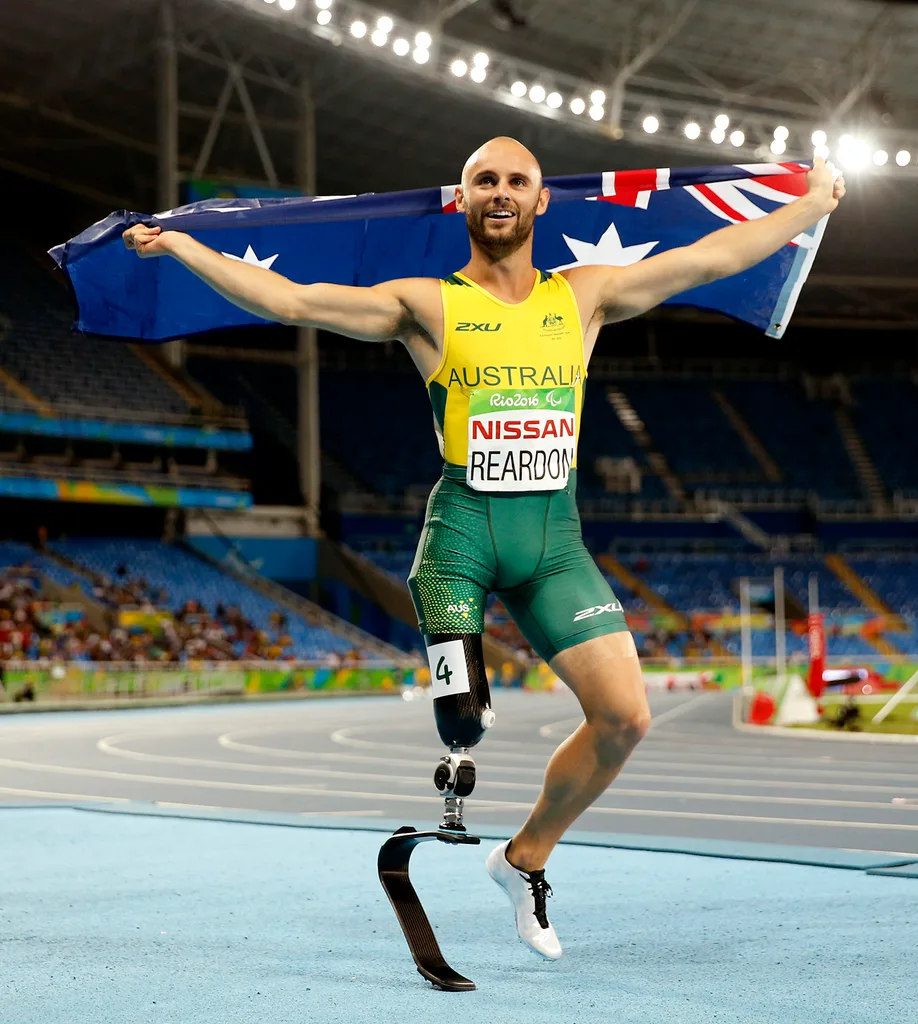
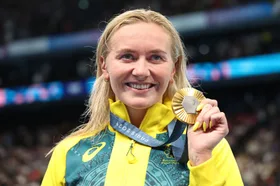
Australian Paralympic icon Vanessa Low has won gold at the 2025 World Para Athletics Championships in India. It’s a momentous achievement for Vanessa, who has now claimed her first-ever back-to-back world titles in the Long Jump T63. She entered this year’s event as the current world record holder.
In 2024, ahead of the Paris Paralympic Games, Vanessa Low and her husband, para-sprinter Scott Reardon, spoke with The Weekly about their love story, the road to the Paralympics, finding inspiration in parenthood, and advocacy. Read the article below.
Meeting Vanessa Low and Scott Reardon
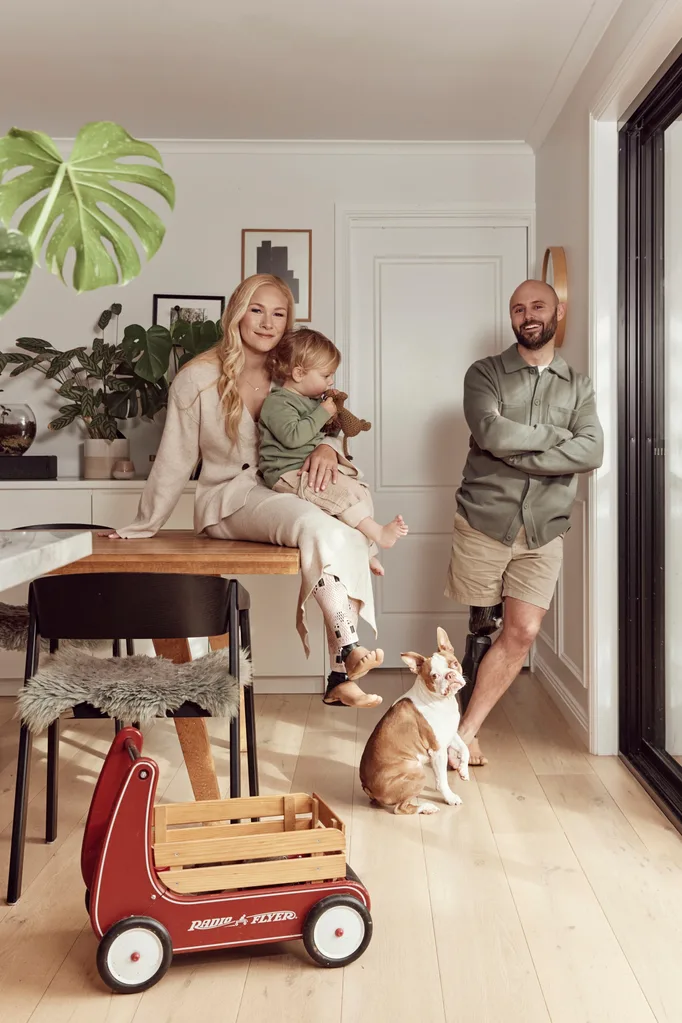
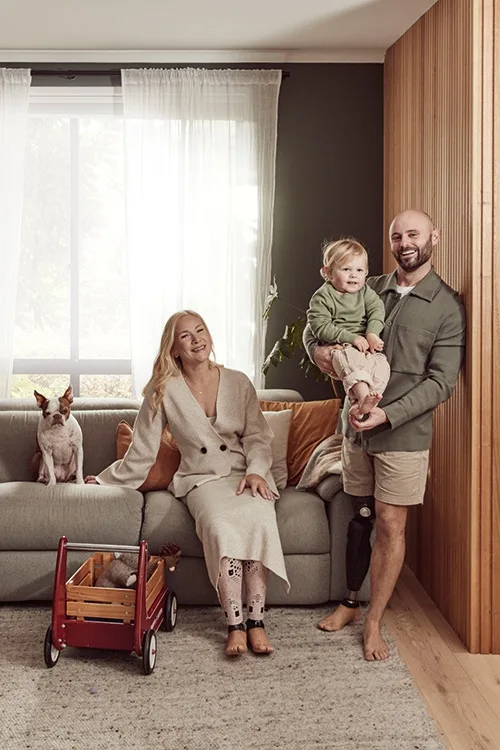
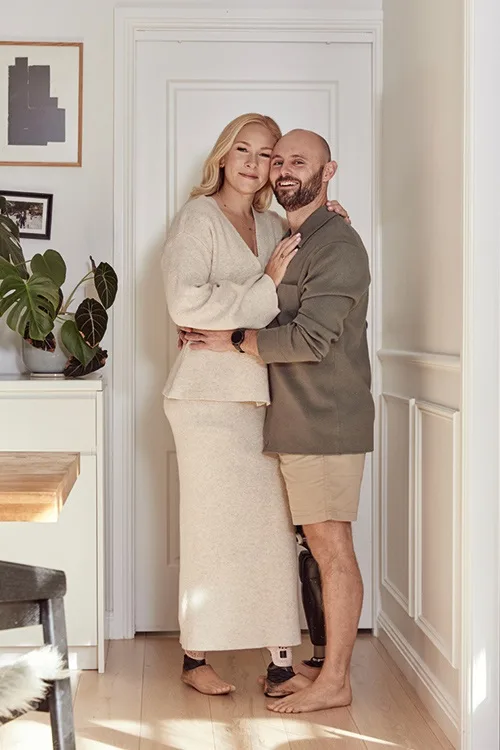
There’s frost on the lawn outside Vanessa Low and Scott Reardon’s townhouse. It’s a bitterly cold, clear Canberra morning, and were it not for this visit from The Weekly, Australia’s most famous Paralympian couple and their two-year-old son, Matteo, would be rubbing their hands and blowing clouds of steam on their way to the Australian Institute of Sport. The Paralympic Games begin in Paris on August 28, and Vanessa (twice a gold medallist and the current world record holder in the T42 long jump) is deep in training.
Matteo loves to watch his mum compete – he’ll be cheering her on in Paris, and he’s often on the sidelines at training – and this morning he’s demonstrating that he’s already pretty speedy himself. Vanessa tussles his hair as he dashes by with his block cart.
This family is a tight tri,o and Matteo and Scott play an integral part in Vanessa’s career. “You gain a lot of perspective being a parent,” she begins. “I still love training, and I still love running and jumping in competition – doing what I love.
“But I also love being able to do that with the people I love around me … The journey has become more about us, not just me. It has become our journey.”
This will be Vanessa’s fourth Paralympic Games. In London and Rio, she competed for Germany, where she was born. But then Vanessa and Scott’s extraordinary courtship unfolded – across three continents and as many years – and as a result, this will be her second Games with the Australian team.
“And we’re hoping for another gold,” says Scott, who was acknowledged during his sprinting career as one of the greatest para-athletes in the world, and is now Vanessa’s trainer.
Vanessa Low’s childhood
Vanessa’s childhood reads like a fairytale. She grew up in Ratzeburg, a tiny town on an island surrounded by sapphire-blue lakes in the north of Germany, not far from the Baltic Sea.
She loved sports, like athletics, snowboarding, and European handball. Her parents had spent their early years in East Germany, so they valued freedom and education, and encouraged their children to explore life and make their own decisions.
Then, at 15 years old, on a crowded station, Vanessa accidentally fell into the path of a train. She sustained catastrophic injuries to her head and back, and both her legs were amputated above the knee. She spent six months in the hospital (two weeks in a coma) and underwent nine surgeries.
Vanessa remembers being lonely – “missing my friends and missing home” – but much of that time remains a blur.
She recalls making the transition to rehab, but realising that no one believed she would walk out of there. “It was always the assumption that I would live life in a wheelchair.”
The video that changed Vanessa’s life
Vanessa met her first prosthetist, and they talked about legs that might support her to take a few steps. “I remember asking, ‘Oh, could I snowboard?’ And he looked at me funny because he definitely thought that was never going to be an option,” she explains … But then he stopped and thought for a moment.
“‘Actually,’ he said, ‘I have seen someone with your disability who is running.’ And that was the first time I realised that someone like me could walk, and could potentially even run. He was an American kid called Cameron Clapp. He was missing both his legs, like me, but also missing an arm. And he was one of the first people to really test out the limits. My prosthetist showed me a clip of him on YouTube.”
That video changed Vanessa’s life.
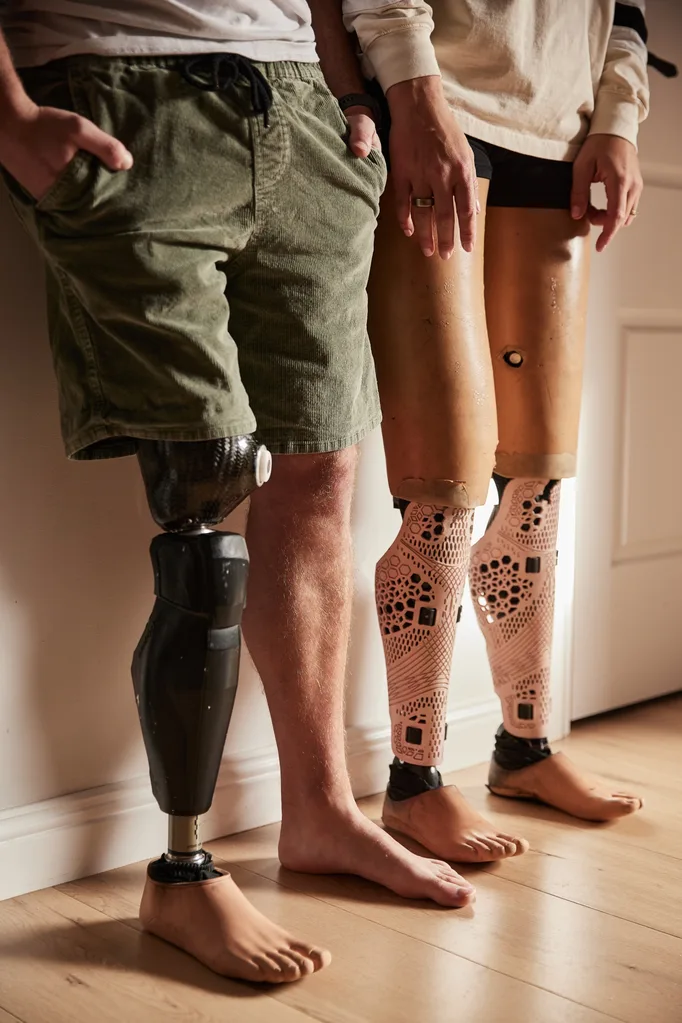
“I began exploring what it would take to get prosthetic legs that I could walk with on a daily basis,” she says. “The kind of prosthetic that is needed to walk as an above-knee [amputee] has to be computerised, so they’re expensive. The price tag of the ones that I’m currently using is like $150,000 per leg, so it’s not as simple as your mum and dad buying them for you.
“We asked whether my health insurance would cover it, and the reply we got, I still remember today, was: ‘We do cover those legs but not for someone who gets up and walks five steps a day’. They didn’t think that a person like me would walk more than that.”
Accepting her greatest challenge
That didn’t stop Vanessa or her family, who went into battle for those legs.
“We finally landed on a compromise where they said I would get a pair of test legs for a month, and if I could prove that life on my feet was possible, then they would pay for them. I was 16, it was about nine months after my accident, or maybe a bit less. I had a month to learn to use those legs.”
The pressure was immense, but Vanessa wasn’t about to give up. She worked with a physio; she practised before and after school. There were some heartbreaking false starts, but then …
“It was, ‘Okay, challenge accepted, ’” she says. “Within a month, I was walking on one crutch, which I needed for balance. I was able to go to school without taking my wheelchair. That was one of the best things that could have happened to me.”
Scott Reardon’s story
Meanwhile, half a world away on a mixed farm near Temora in the NSW Riverina, Scott’s family was battling through a string of tough years on the land. Their crops – wheat, barley, canola – were hit by two years of killer frosts, and then the 10-year drought kicked in. The farm was struggling.
“It was really difficult for my family,” Scott explains.
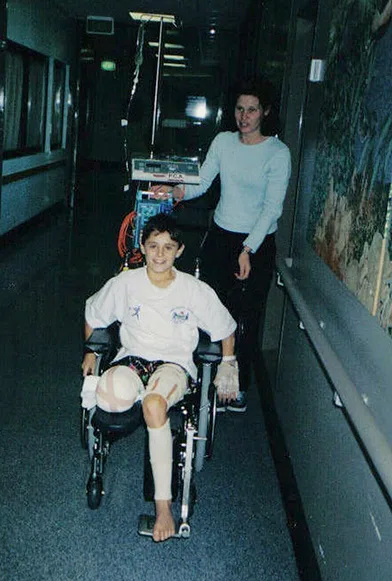
When it felt like things couldn’t get worse, the very worst thing happened. In 2002, when Scott was just 12 years old, out digging post holes for new fencing, he was involved in a machinery accident. He was rushed to the hospital, where his life was saved but not his leg.
Scott remembers some dark days in the hospital.
“My mum was always beside me, but I remember waking up one time and she wasn’t there,” he says. “I was really emotional. I kept repeating, ‘Why me, why me, why me?’ Probably 20 minutes passed, and then I realised that I had to make a decision. Either I was going to go home and feel sorry for myself for the rest of my life, or I was going to continue to live my life. Obviously, you know which decision I made.”
“Let’s keep on with the life”
Scott learned to walk with a prosthetic leg in just one week, and from there, the challenges kept coming.
“It’s probably fortunate I was the age that I was,” he says. “I think the older we get … we put up more restrictions on what we feel like our life can be. That picture that we have in our mind becomes quite rigid.
“So when adversity happened to me at 12, it was like, ‘Okay, that’s happened, but let’s keep on with the life’. I made my first Australian team for water skiing three years after I lost my leg … I didn’t know that somebody with one leg could run until 2008 [when Scott was 18]. That’s how invisible the Paralympics were back then. But for somebody who loved running, to see that was incredible.”
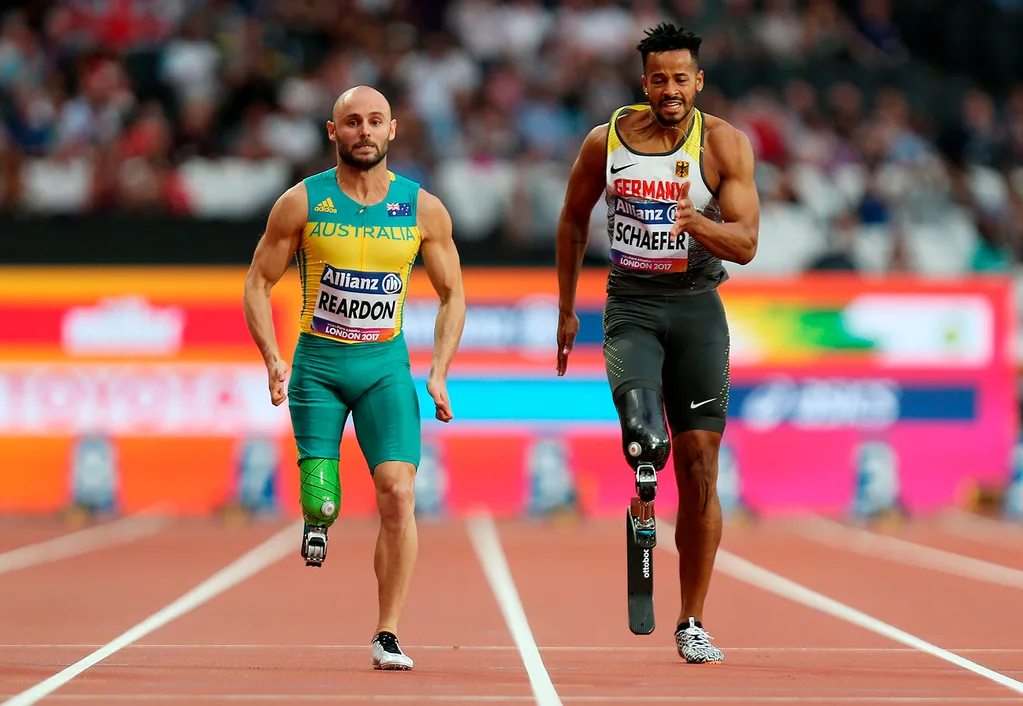
Scott was determined to become a Paralympic sprinter.
Vanessa and Scott’s long-distance love story
Scott remembers, in his early years on the international para-athletics circuit, seeing Vanessa’s name come up in the rankings and following her results.
“The first time I saw her in person, I’m not sure whether she saw me, was 2in 011,” he recalls. “We were both at the World Championships in New Zealand. I knew Vanessa had a boyfriend, but I admired her from a distance.”
The young athletes actually met at the World Championships in 2013, then again at a competition in London, “where we ended up on the podium together,” Scott recalls with a grin. “From there, we became Facebook friends. That was a big, big thing back then. And we started chatting a little bit and then FaceTiming. Over the next 12 months, we got to know each other on a different level than we would face-to-face. And over that time, we realised there was something there.”
Vanessa had split with her boyfriend, quit her job as a TV news editor and moved to the US, away from family and friends, for a physically and emotionally challenging three-year training program. “As much as it led me to winning medals, it was one of the most challenging times of my life,” she remembers. And her conversations with Scott became a lifeline.
The realities of athletic training
To be clear, this was no ordinary training program. Vanessa was training outdoors in sub-zero temperatures. Her nearest long jump pit was infested with snakes, so she was doing no long jump practice at all. To build resilience, her trainer had her carry all her equipment – starting blocks, running legs, heavy backpack – to the track, while he walked along with his hands in his pockets. After her first session, she called Scott in tears.
“Then we went to our first comp,” she says with a grin, “just hoping for the best, and I jumped close to the world record. It felt a bit surreal, but I also knew I was on the right path …
“I realised I was capable of so much more than anyone had ever thought.”
Vanessa had moved to America on the back of a single conversation with the trainer, who had said he thought he could help her win Paralympic gold. But if she did, she needed to promise she would get a tattoo of his signature.
“It started out as a bet of winning a gold medal, and I did get the gold,” she says, and the tattoo, “but I don’t think it was really ever about the medal at all. I think it was always about someone actually, truly believing in that journey. And it was all worth it.”
Taking a leap of faith
In the years that followed, Vanessa visited Australia, Scott travelled to the States, and they met up in Germany and at international competitions. Then, at the 2016 Rio Paralympics, they realised the time had come to take their long-distance love to the next level.
Vanessa flew to Australia later in 2016 on a visitor visa.
“It was a big shift,” Scott says. “We lived together, trained together, did everything together.”
“And I think three months down the track, we figured out that we wanted to give it a shot,” Vanessa adds. “We thought it was going to work, and that’s when I got really lucky.”
The pair wrangled a morning tea with then Prime Minister Malcolm Turnbull, who likes a love story (and a gold medal) as much as the next person. With a nod from the PM, Vanessa applied for a Distinguished Talent visa, sponsored by Athletics Australia, and in 2018, she became an Australian citizen.
Love and marriage
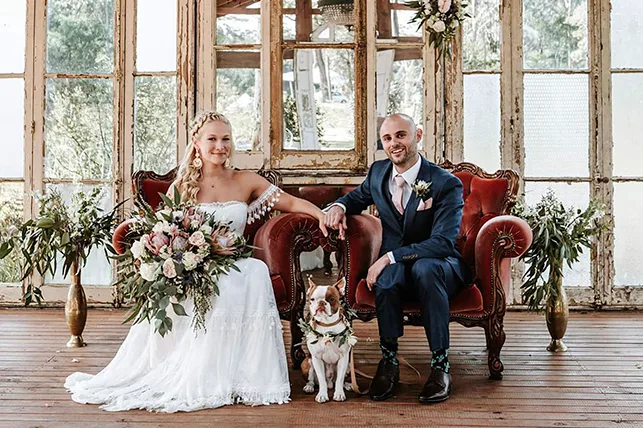
“Honestly, I told Vanessa very early on that I was going to marry her,” Scott admits. He popped the question beside the white-sand beaches and crystal waters of Jervis Bay.
“I was like: Scott’s got great eyelashes and he had curly hair then too, so I thought, our baby’s going to be very cute,” she laughs, then adds: “No, the reason why I thought Scott was my perfect partner was because he’s probably the kindest person I’ve ever met. He has a way of making everyone feel so loved and welcomed and appreciated for who they are, and I knew that he was also going to be a great dad. That’s why I wanted to spend my life with him.”
They married surrounded by family and friends from around the world on a farm in the NSW south coast hinterland.
Scott’s family swiftly adopted Vanessa as their own. “From the moment she said yes to a beer, and I said no, she’d won them over. She’s the favourite.”
Vanessa’s family would rather she were closer to home, of course, but they see one another every year, and they’re looking forward to an extensive catch-up and lots of cuddles with Matteo this September in Paris.
The next chapter for Vanessa Low
Vanessa says she and Scott “weren’t actively trying to have kids, because we were obviously still involved with our careers, but we had stopped trying not to have kids”. On the day Scott announced his retirement as a sprinter, they learnt they were expecting.
“At that point, if it meant my career was over, that was fine with me,” Vanessa says, “but I felt like I wanted to give this journey a go and try to be both an athlete and a mum.”
According to her coach, that journey is going very well indeed. And when he’s not coaching, Scott’s mission is to remind the world, through public speaking, workshops and interviews, of the lesson he learned in that hospital bed – that no one’s life needs be defined by their disability.
“One in five in Australia has a disability; one in five in the world has a disability,” he explains, “and visibility matters.
“If you can see somebody doing something at a level that you want to do it, it’s so much easier to start.”
That’s why both he and Vanessa are such passionate advocates for the Paralympics, and why they would like to see more diversity in the media between Paralympic games as well.
It’s also why they’ve given up their morning to chat with The Weekly.
One YouTube video changed Vanessa’s life forever, Scott reminds us. “This article could change a person’s life, too. You simply never know.”
The article originally appeared in the September 2024 issue of The Australian Women’s Weekly. Subscribe so you never miss an issue.

