



If you’ve taken a look at the July 2026 issue of The Australian Women’s Weekly, you may have noticed something special: It’s the Rural Issue!
This special issue, guest edited by Edwina Bartholomew, who also graces the cover, features regional Australian designers and producers from the length and breadth of the country.
We wanted to celebrate the heartland of our readers and celebrate those creatives, who are just a taste of what this incredible country has to offer.
Below we’ve collected some of those creatives. So many more creatives, artists and producers feature in the rural issue. Pick up a copy today or subscribe now to explore the regional producers who are keeping the heartland of Australia alive.

PHYLLi
Dubbo, NSW
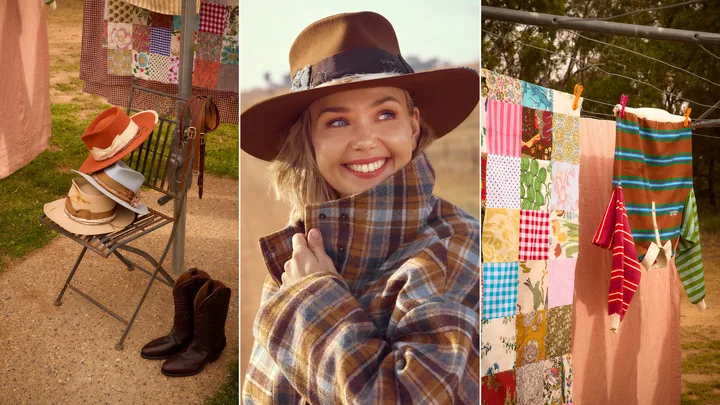
Who doesn’t love a great hat? Founded by milliner Laura Hall, PHYLLi Designs creates handcrafted hats and headpieces that blend traditional craftsmanship with contemporary Australian style. Made from premium European felt, designer silks and carefully sourced materials from around the world, each piece is designed to be both practical and enduring.
Based in Dubbo but originally from Scone in New South Wales’ Upper Hunter, Laura creates both everyday hats and one-of-a-kind pieces inspired by the Australian landscape. Her designs champion slow fashion, with each hat intended to become a lasting heirloom.
PHYLLi has gained national and international recognition, appearing at New York Fashion Week and the Virgin Australia Melbourne Fashion Festival. Laura’s creations have been worn by celebrities including Elsa Pataky, Delta Goodrem and Matt and Lucy Damon (and Edwina on the cover!) while her popular hat-making workshops and hat parties offer participants a hands-on introduction to the art of millinery.

Sailsbury & Maude
Beechworth, Victoria
This was one of, if not my own personal favourite (Orlaith, digital editor speaking here), pieces in the entire issue.
Sarah Stamm is the founder and creative director of Salisbury & Maude, an Australian studio celebrated for its handcrafted quilts, botanical works and original artworks inspired by the natural landscape. Drawing on more than 25 years of experience in interior design, Sarah creates bespoke pieces that reflect a deep appreciation for texture, craftsmanship and timeless design.
Working across quilting, knitting, botanical art and fine art prints, Sarah uses locally sourced materials and sustainable practices to create one-of-a-kind works that have been collected across Australia and internationally. Each piece is released exclusively through Salisbury & Maude’s social media channels, with no custom commissions accepted!
For Sarah, being featured in The Australian Women’s Weekly Rural Issue held particular significance. “To see my work amid such a theme, your issue celebrating everything regional and rural, is an honour and aligns perfectly with the very core of who I am,” she said in a post. The accompanying fashion shoot, photographed in Tasmania, also carried a personal connection, with Sarah describing the island as having a “deeply personal, gravitational pull” through her family’s Tasmanian heritage.

Lindner Socks
Crookwell, NSW
In the NSW town of Crookwell, 10th-generation sock maker Andrew Lindner continues a family tradition dating back nearly 300 years. Using vintage knitting machines brought from Germany by his parents, Wilfred and Gisela, Andrew crafts socks using traditional techniques passed down through generations, with each pair individually hand-finished.
The Lindner family’s sock-making heritage began in Thalheim, Germany, in the early 1700s. Since Andrew, his mother Gisela and wife Lucy took over the business in 2008, Lindner Socks has expanded its range, adopted plastic-free packaging, created local jobs and strengthened ties with Australian wool growers while working towards a fully Australian supply chain.
Today, the company sources wool locally through Wool Connect and offers four collections: Heritage, Tablelands, Pure Merino and Renew, each designed to suit different seasons, occasions and the changing climate of the Southern Tablelands.
You’ll spot them in our “Wild at Heart” fashion spread photographed on the banks of the Huon River in Franklin, Tasmania.

Binny
Unley, South Australia
After dreaming up Binny in a garage in the Sydney beachside suburb of Bondi, Belinda Watson followed her heart home to where she was raised – the rolling plains of South Australia.
Inspired by the unique, vibrant beauty of Australia, each collection includes playful prints and eye-catching details – a label made for women who embrace individuality. Since launching in 2008, Binny has grown from a dream into one of Australia’s much-loved independent brands.

Foemina
Brisbane, QLD
Foemina, the Latin for woman, was founded by Rebecca McKensie and Holly Chandler. It was born to fill gaps in the modern woman’s wardrobe. Rebecca and Holly’s vision reflects a foundational approach to dressing.
Their designs – created almost entirely in cotton poplin – focus on longevity and the integrity of materials. Versatile and refined, each piece is designed to wear for seasons to come.

Iris and Wool
Burra, South Australia
Founded by Emily Rigg, whose story is one of triumph over tragedy. Diagnosed with Non-Hodgkin’s lymphoma aged just nine, Emily was a year into treatment when her mother sadly passed away from breast cancer aged just 43.
To ease her grief, Emily turned to fashion. Fifteen years later, Emily fell in love with a Merino sheep farmer and moved to Burra, in South Australia, where, in 2019, Iris & Wool was born.
Emily puts the success of her label down to pure Australian Merino wool. Renewable, biodegradable and sustainable, it’s the ideal choice for her low-impact fashion label.

Carlotta and Gee
The Hills Hoist clothesline in our long lunch shoot with Edwina and other regional producers was draped with stunning sustainable linens from Australian brand Carlotta and Gee.
This all-natural and 100 per cent French linen brand was founded by two friends: Carlotta and Georgie. Carlotta’s family has a rich history in textiles and interior design in her home country of Spain, and Georgie is a communication expert who brings their story to the world. Following a girls’ trip to Byron Bay, the two fell in love with pure linen bedding. And thus, their brand was born in 2018.
They source the flax for their linen products from Normandy in France, which then makes its way to China to be made into everything from bedding to tableclothes to loungewear, travel bags, aprons and more. The founders are happily open about all their business practices and share their journey with their fans, friends, and family on their social media and website.

Merry People
Melbourne, Victoria
We’re big fans of these boots and the woman behind them, Dani Pearce. Founded by Victorian farmer-turned-entrepreneur Dani, Merry People was born from a desire to bridge the gap between country practicality and city style. Growing up on a farm, gumboots were a staple of Dani’s childhood, accompanying adventures outdoors and long days spent in nature.
After moving to Melbourne for work, she struggled to find a waterproof boot that was both functional and stylish enough for everyday wear. So, instead, she created them herself!
What began at local farmers’ markets has since grown into one of Australia’s most recognisable footwear brands. Dani continues to champion colourful, versatile boots designed for both city streets and country paddocks.
Our model wears Merry People Fergie Tall Gumboots throughout our Tassie fashion shoot in The Rural Issue.

Romy
Tasmania
Born in Tasmania in 2022, Romy was founded by creative director Emma Petterwood to create distinctive, thoughtfully made fashion for women seeking something beyond fast trends. The brand is built around original prints, created in collaboration with artists and transformed into limited-run collections designed to be treasured for years.
Working with an all-female Australian team alongside manufacturing partners and artisans in India and China, Romy prioritises small production runs, timeless design and considered sourcing. Based in Tasmania, the label is known for its bold prints, vibrant colours and versatile pieces that balance everyday wearability with a strong sense of individuality.
You’ll find her design on the cover of the magazine! Edwina Bartholomew wears The Jacket by Romy.

Smitten Merino
Hobart, Tasmania
Founded in Hobart in 2007 by husband-and-wife team Nicola and Carl, Smitten Merino was born from a desire to create stylish, lightweight merino clothing made entirely in Tasmania. After moving from Western Australia, the couple fell in love with the island and its wool industry (hence the name) and set out to design practical garments that showcased Tasmania’s finest natural fibre.
Still proudly family-owned, Smitten Merino remains a hands-on business, with Nicola leading design and photography, Carl overseeing marketing, and their children playing various roles across the company. The brand is committed to local manufacturing, creating timeless merino clothing designed to be comfortable, versatile and long-lasting.

Waverley Mills and ELK
Tasmania and Victoria
Founded in Tasmania in 1874 by Scottish migrant Peter Bulman, Waverley Mills began with a simple belief: that Tasmanian wool could be transformed into exceptional local textiles. More than 150 years later, the company remains Australia’s last fully vertical woollen mill, continuing to produce blankets, throws and textiles entirely on site.
From carding and spinning to weaving, finishing and sewing, each stage of production takes place at the historic mill. Many of the workers represent multiple generations of textile makers, helping preserve a rare and enduring Australian industry. And what better place to showcase it than in our rural special’s fashion section, shot in Tasmania. Technically a blanket, but who doesn’t love a blanket scarf to rug up with in winter?
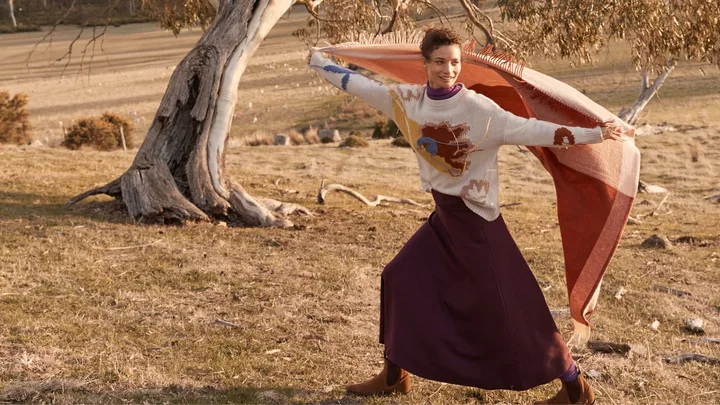
Also, in this image, our model is wearing an ELK jumpsuit.
We love ELK, you’ll find their designs throughout many issues of The Weekly. Founded in Melbourne in 2004 by Marnie Goding and Adam Koniaras, ELK has become one of Australia’s leading independent fashion brands, recognised for its distinctive design aesthetic and commitment to conscious fashion. Built on the principles of creativity, innovation and ethical production, the label has established a loyal following both in Australia and internationally.
The brand places a strong emphasis on natural and lower-impact materials while continually exploring more sustainable approaches to sourcing, production and circular design.
In 2019, ELK’s leadership in responsible fashion was recognised when the company received the inaugural Australian Fashion Laureate for Sustainable Innovation, cementing its reputation as a pioneer in Australian design and sustainability.

Long lunch producers
Regional NSW
On a dairy farm just outside Dubbo, The Weekly gathered 12 creative country women around a table to share the bounty of local produce. But we had to feed and drink them, too! Here are the producers that were part of that stunning lunch:
The Little Big Dairy Co.
Dubbo-based farm producing single-sourced milk, butter, cream and cottage cheese.
Racine Bakery
Artisanal breads and pastries which are handmade on site in Orange.
Cured
Orange-based smallgoods and butcher offering smoked meats.
High Valley Cheese Co.
Small-batch artisan cheese made in Mudgee.
Printhie Wines
Family-owned vineyard, winery, cellar door and restaurant on the outskirts of Orange.
Aril Estate
An award-winning olive and pomegranate producer in Mullamuddy.
Indigiearth
Ethically sourced and sustainably harvested native bush foods.
Binjang Tea
Indigenous Australian native teas and tea experience workshops.