




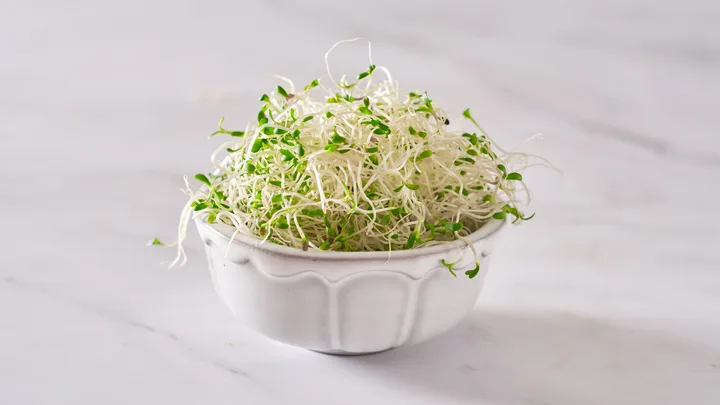
A nationwide recall of alfalfa sprouts has been issued after dozens of people across Australia fell ill with salmonella. Food Standards Australia New Zealand (FSANZ) is urging anyone who’s recently bought sprouts to check their fridge and be alert for symptoms.
So far 44 people have been diagnosed with an ‘unusual strain’ of salmonella linked to alfalfa sprout products made by Parilla Fresh, which were sold in Coles, Woolworths, and IGA stores across New South Wales, Queensland, Victoria, the Northern Territory, the ACT, and South Australia.
“There is a risk that if these affected alfalfa sprouts are consumed, you could become ill,” Keira Glasgow, the director of the One Health Branch at NSW Health, said in a recent statement. “Anyone who has consumed alfalfa sprouts should be on the lookout for symptoms, which include headache, fever, stomach cramps, diarrhoea, nausea and vomiting.”
The affected packets include Aussie Sprouts, Alfalfa Sprouts, Hugo’s Alfalfa Onion and Garlic Sprouts, Hugo’s Alfalfa Radish Sprouts, Hugo’s Alfalfa and Onion Sprouts, Hugo’s Salad Sprouts, Hugo’s Alfalfa and Broccoli Sprouts and Hugo’s Trio Sprouts Selection with use-by dates up to 20 November 2025. If you do find a packet in the fridge, health authorities advise you not to eat them and return them to the store for a refund (or throw them out).
What is salmonella and how do you catch it?
Salmonella is a bacteria that causes a common food-borne illness known as salmonellosis. It’s usually caught from eating contaminated food – particularly raw or undercooked eggs, meat, poultry, or unwashed fruits and vegetables. Sprouts are especially risky because they’re grown in warm, moist conditions where bacteria thrive.
The infection can also spread from person to person if good hygiene isn’t followed. Washing your hands thoroughly with soap after using the bathroom, changing nappies or handling raw food is one of the simplest ways to stop the spread.

What are the symptoms of salmonella?
Symptoms typically appear 6 to 72 hours after exposure and can last up to a week. They include:
- Headache and fever
- Stomach cramps
- Nausea and vomiting
- Diarrhoea, which can sometimes be severe
Most people recover within a week by resting and drinking plenty of fluids, such as water or oral hydration drinks.
However, young children, older adults and people with weakened immune systems may experience more serious illness and should see a doctor if symptoms are severe or persistent.
How is salmonella treated?
In most healthy adults, salmonella will clear up without medication, but dehydration is common, so drinking plenty of fluids is key. Antibiotics are sometimes needed for those with weakened immune systems or more severe infections.
Even after symptoms subside, some people can continue to carry the bacteria for several weeks – meaning good hygiene remains crucial to prevent infecting others.
How to protect yourself against salmonella
Health authorities recommend a few simple steps to reduce your risk:


- Wash your hands thoroughly before and after handling food
- Keep raw meat separate from ready-to-eat foods
- Cook foods like poultry and eggs thoroughly
- Wash fruit and vegetables well
- Refrigerate food promptly and don’t leave perishable items sitting out
- Avoid eating recalled or past-use-by foods
FSANZ notes that sprouts are safest when cooked rather than eaten raw, especially for pregnant women, young children, older adults and those with compromised immunity. If you’re concerned, be sure to check in with your GP.

