




Content warning: This article touches on issues relating to mental health, suicide, and eating disorders, which may be triggering to some readers.
On Saturday, 27 September 2025, The Australian Women’s Weekly‘s Health Summit series continued on our national roadshow with our first event in Adelaide at the Hilton Adelaide. And this Health Summit was the food-lovers’ special!
This year, we are going national thanks to our sponsors: Priceline Pharmacy, together with Blackmores, Colgate, and Boost Labs.



We covered all things health (specifically women’s health), with more than 170 guests. Throughout the day, our guests were treated to several informative panel discussions, interactive installations and delicious healthy food!
In case you missed it (or if you did attend and want to relive the day), here’s a rundown of everything that happened. Plus, the best learnings from the panellists.
Opening proceedings with Sophie, Shelly, and Mel
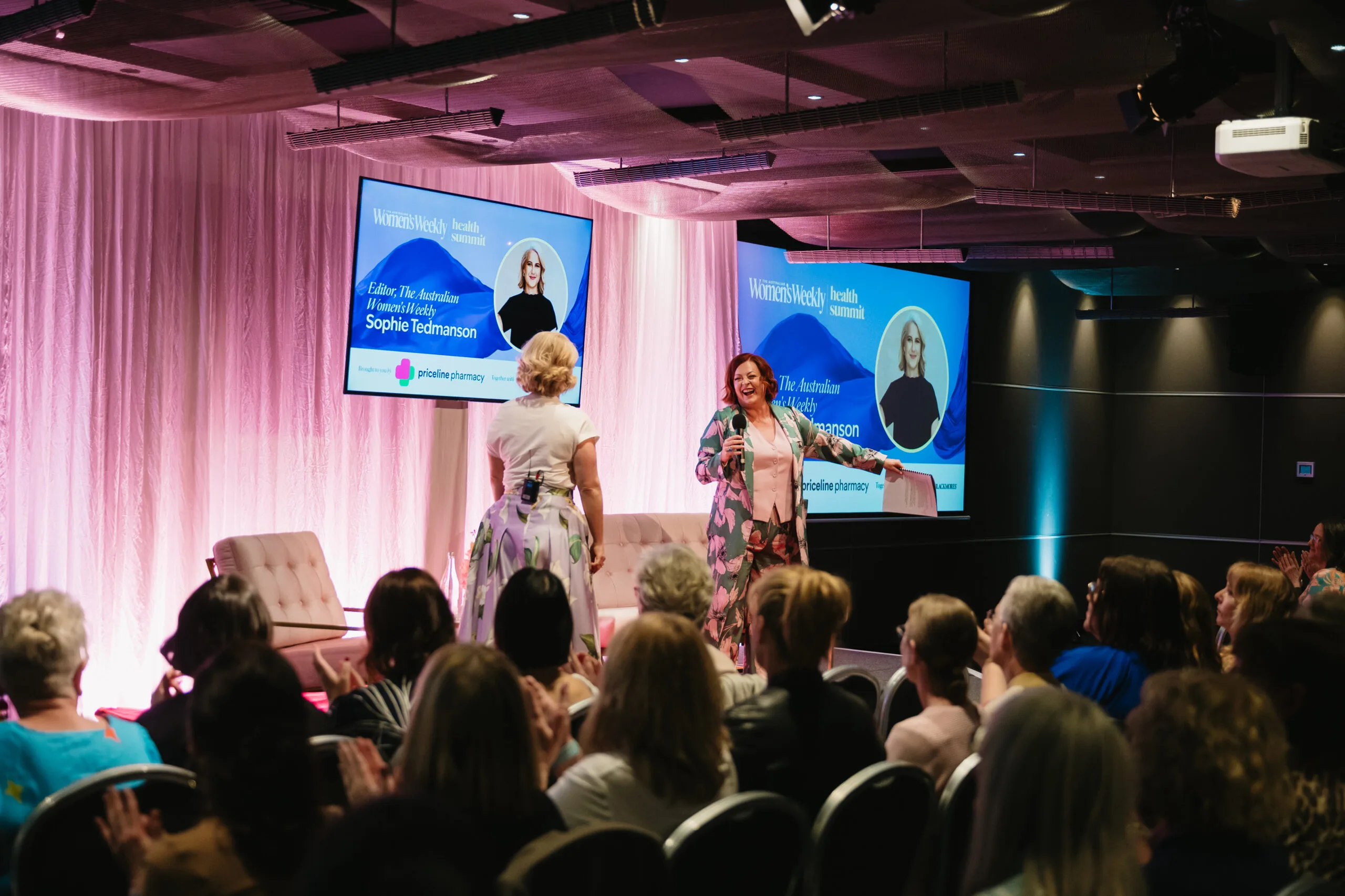
The Weekly Editor, Sophie Tedmanson, hosted the event, and it was a special one for her as Adelaide is her hometown! Sophie’s entire family came to support and even did a family war cry!
Everyone’s Peri-Godmother, Shelly Horton, was our emcee for the day. Shelly started the event with her journey towards finding out what perimenopause was. When she started exhibiting symptoms, one that hit her hard was perimenopausal depression. She experienced what she described as “periods that were like a crime scene.” Her doctor told her it could be stress…or it could be cancer. It wasn’t until her husband told her there wasn’t something wrong with her, but there may be something wrong with the chemicals in her brain. He came with her to a doctor’s appointment, and that doctor was trained up on menopause, and she finally got the help she deserved.
But she wasn’t happy. She was mad. She was mad that her original doctor wasn’t educated on the topic. And she was mad that there wasn’t enough information out there. So, she made it her mission to be the champion of peri and menopausal people. And thanks to her and her campaign, she was instrumental in getting hormone replacement therapies on PBS. Not satisfied, she has written a book, I’m Your Peri-Godmother and runs seminars on menopause in the workplace, called “Don’t Sweat It.”
Before we began the panels, Mel Gannon from Priceline announced the launch of Priceline’s Anything Menopause Program to support women experiencing menopause.
This program offers resources and guidance, including training for pharmacists and pharmacy assistants, to help women manage symptoms and access to services like the InstantScripts Menopause consultation service, which is a female GP-led initiative. Find out more here.
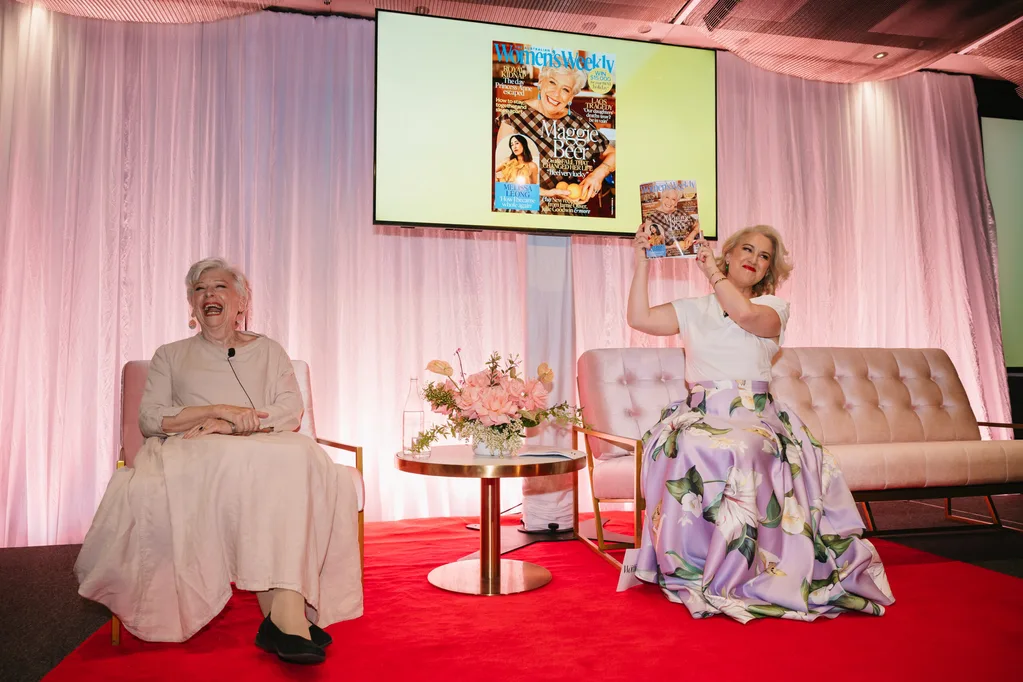
One-on-one with Maggie Beer
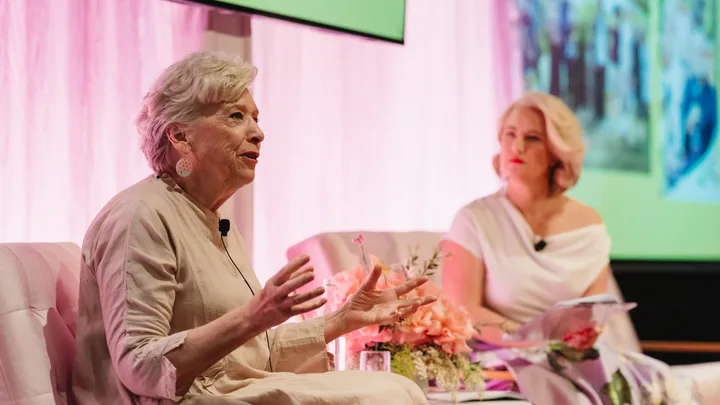
Guests in the room were the first in the country to see our November cover star: Maggie Beer! A lot of things have been happening in Maggie’s life. She recently turned 80 years old, celebrated her 55th wedding anniversary, and recovered from quite a serious fall. All of which she discusses in our cover story.




Her wedding anniversary is just two days apart from her birthday, and she shared the week of celebrations she had with friends and family, and she even hired a caterer who she admits was a little nervous serving the foodie elite of the Barossa!
She did share the circumstances around her fall. Their home is a cottage with very steep stairs, and she fell from the top storey, where their bedroom is, to the bottom floor.
“It was pretty awful,” she shares. “15 days in ICU and five weeks in hospital.” She just started to recover before her birthday and claimed that “adrenaline and Champagne” was the past push she needed.
Maggie said she always believed that she would get better. But she had to learn to walk again, and the recovery was intense. However, she says she’s 95 per cent.
She attributes her recovery to her positive attitude and the care and attention of her family. In fact, she refers to herself as a “guinea pig for aged care.”
“I’ve never been good at looking after myself, except with food,” Maggie said. “You can’t do this alone.” What got her through to recovery was laughter, kindness, fresh air and connection.
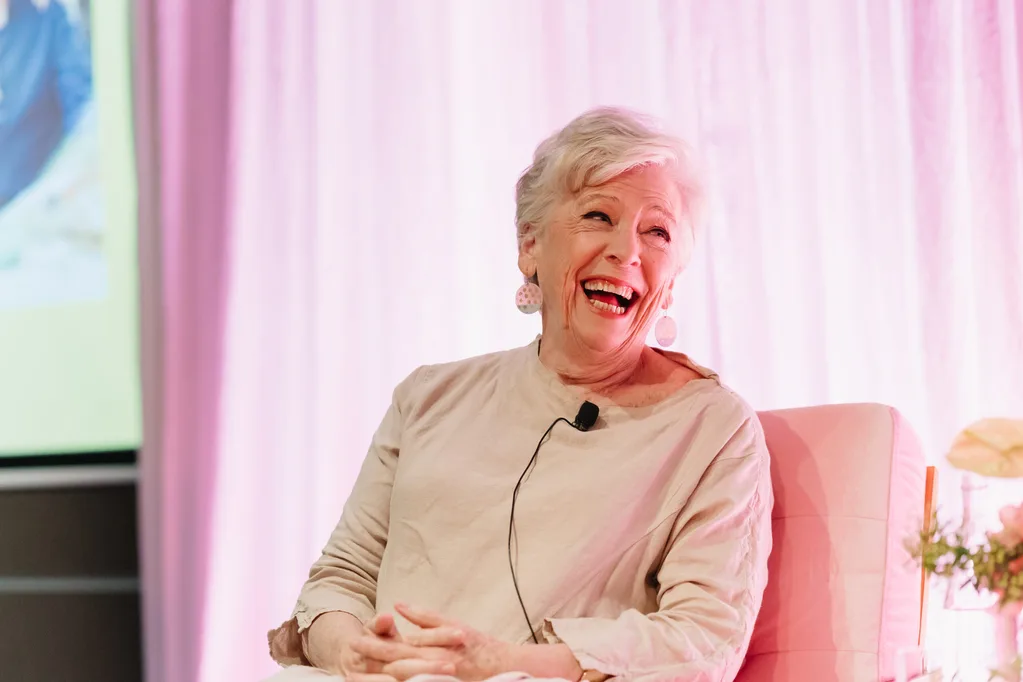
Although Maggie is all about food, the sweetest moment in their conversation was her gushing about her husband, Colin.
Maggie shares that he never felt put upon while caring for Maggie after her accident, and they spent 6 months of her recovery mostly by themselves and which led her to really appreciate the love and friendship they have. He even learned how to cook!
“I’m very lucky,” she shares. “His kindness and his humour are so beautiful.”
Of course, we couldn’t talk to Maggie without bringing up the Maggie Beer Foundation.
“My aim is to raise the bar of food being truly important in aged care, and in the home too. It is the most direct line to well-being.” The next stage of the Foundation is to re-engage a love of cooking in people.
“Cooking should never be a chore, but a joy,” Maggie says.
So what is her daily routine to maintain her recovery? She walks every day, sleeps without an alarm, has a coffee with Colin, plays some piano, and tries to add in some extra strength training to get back her strength after her accident.
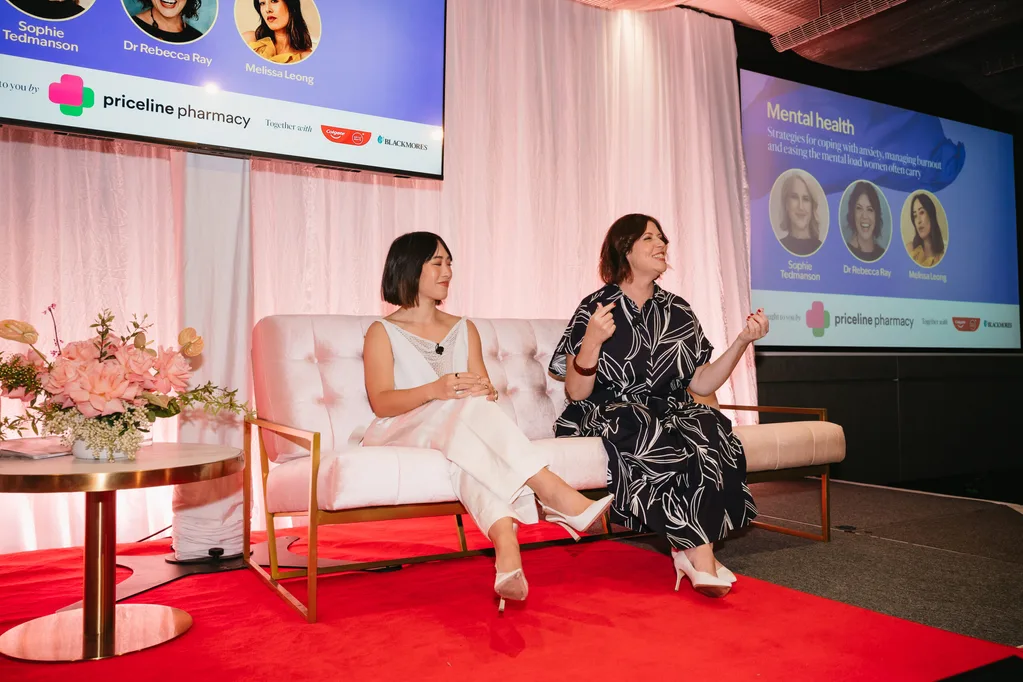
Melissa Leong got candid on the Mental Health panel
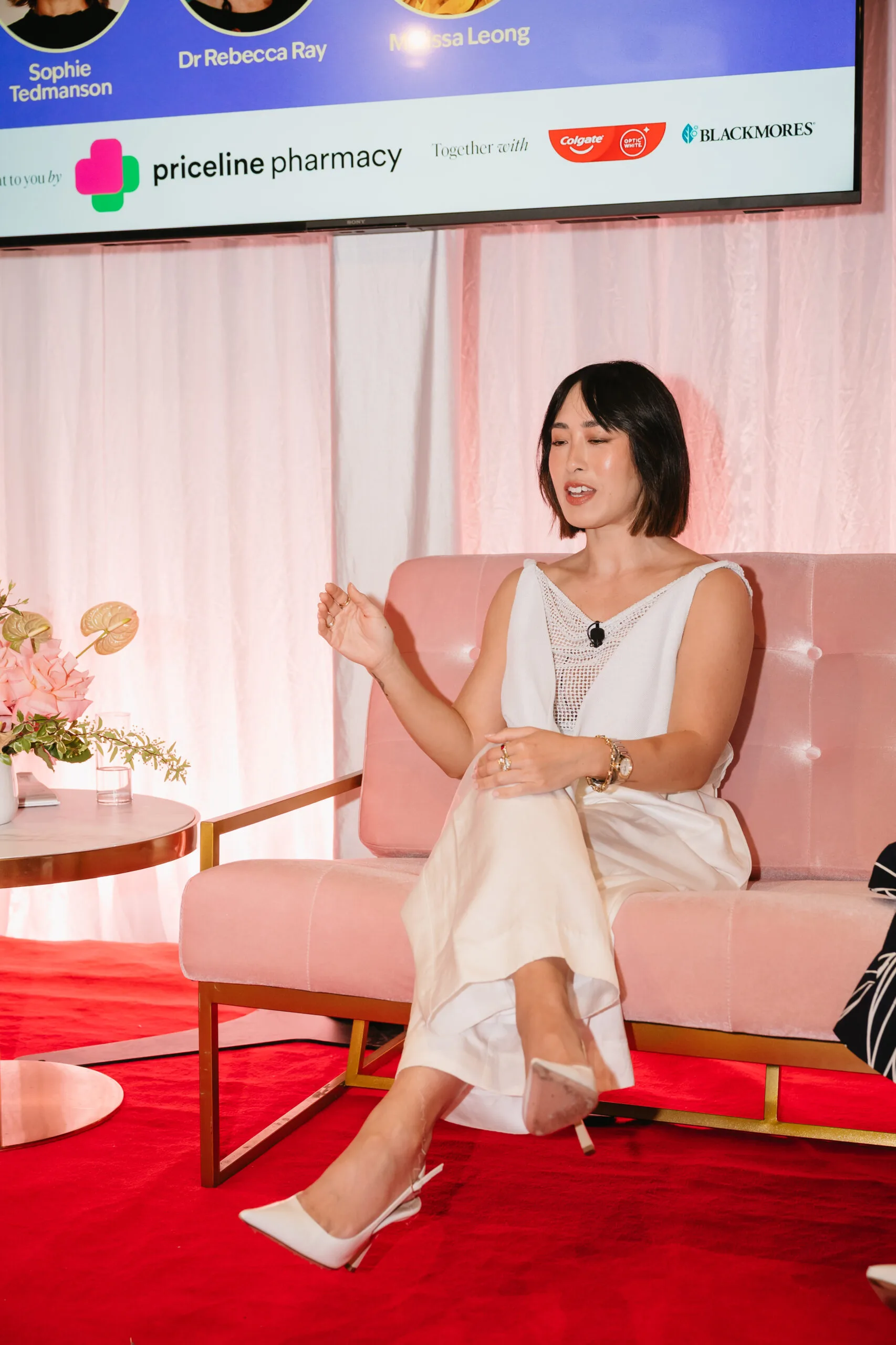
The Health Summit in Adelaide was Melissa’s first event on her book tour for her raw memoir, Guts. Our November Digital Cover Star delves into trauma, abuse, and burnout in her latest book and spoke about that journey on the mental health panel.
“I did not at any point think that at 43 I would be asked to write a memoir…they just kind of make you,” Melissa started. But she didn’t immediately know what she was going to write about.
“I asked myself, “What is the purpose of this book?” At 43, I still have a lot of life left to live.”
“I’m a very private person…I think having these conversations out in the open destigmatises some of the experiences that we all experience going through life. I kind of figured that if I can process what has happened, share it with an open mind and open heart, then if it makes people feel a little less alone in their struggles or it might inspire people to go seek some help, open up a conversation…Then I figured that’s worth letting go of my need for privacy in order to share, and then hopefully in that process of writing that book and meeting you beautiful people out there, I get to do a little healing as well.”
Her book is already garnering great reviews for her honesty, but she admitted that she was apprehensive of the response:
“It’s been really stressful… because of the themes involved, I nearly handed the deposit back to the publisher because it wasn’t about not being able to write this book…80,000 words is a different kind of beast, but I knew I could write it. But this part, talking about my trauma in a public capacity, has always been a terrifying proposition.”

It’s not all doom and gloom; it’s about prevailing against the negatives. She shared advice from Maggie Beer that she says is going to get her through it: “You find your grit and that’s what’s going to get you through it.”
Melissa also shared that through her work on MasterChef and food being in every facet of her life, she lost her joy of food: “It became more about the job than it came about the joy of what it gave to my life”. She also shared that she developed an eating disorder after her divorce. Now, she’s in the midst of a healing journey, and food is becoming joyful once again.
” It took a while, it took letting go of forcing myself to love food.”
She closed the mental health panel with some advice: “You run your own race.”
“Failure is actually awesome; it teaches us so much. Failure teaches us more than if we always succeed…Seeing our flaws and the flaws in each other is not an alienating thing but a connecting thing.”
Read our full feature interview with Melissa here.
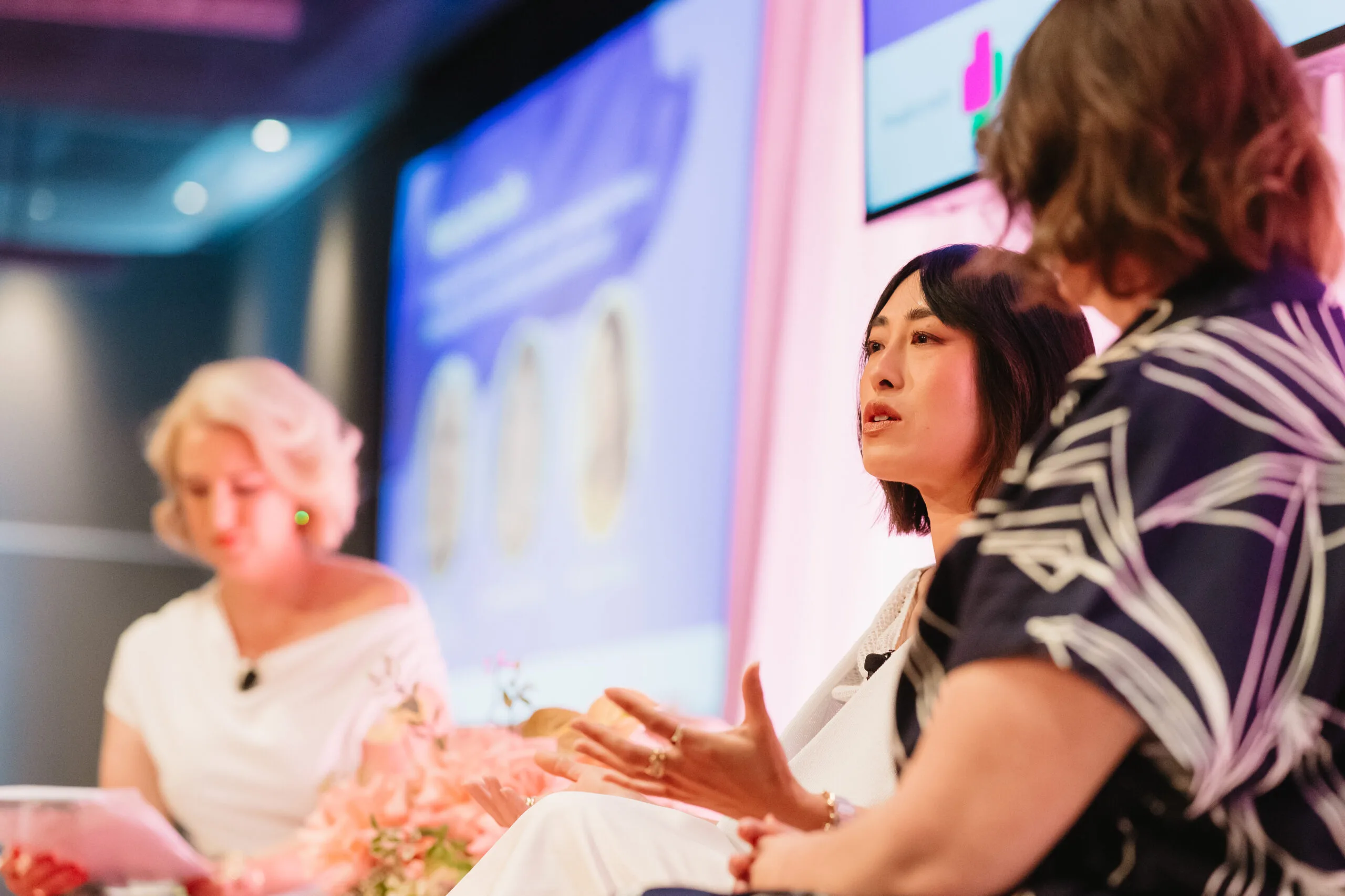
“You’re not failing”, said Dr Rebecca Ray
Rebecca is an expert and literally wrote the books on burnout and boundaries. She started the mental health panel by saying that nowadays women are conditioned to look after others and not themselves, leading to burnout and feeling like failures. She says that society tells us that if we aren’t being productive or making money, we are wasting our time.
“For as long as we’re socialised to continue doing that, well-being remains aspirational. That’s bullsh*t,” she says.
“We think we are abnormal,” she shared. “We think that there is something defective about us, that we are getting it wrong, that everyone else knows how to be an adult. I still don’t. I can’t cook…If you don’t protect you, who is going to do it? Being human is really fucking hard, and whatever we can do to make it easier is incredibly important.”
She warned that burnout can show itself in different ways for different people. People consistently crossing your boundaries can lead you to suppress your hurt and let it fester until you implode. But as she says, “You’re allowed to have your own back.”
And if someone pushes back against your boundaries and gets upset, she clarifies that “What you’re experiencing is someone else who has benefited from having unfiltered access to you is now a bit disappointed.”
Her final request: “I want you to say to yourself each day: ‘I’ve got me.'”
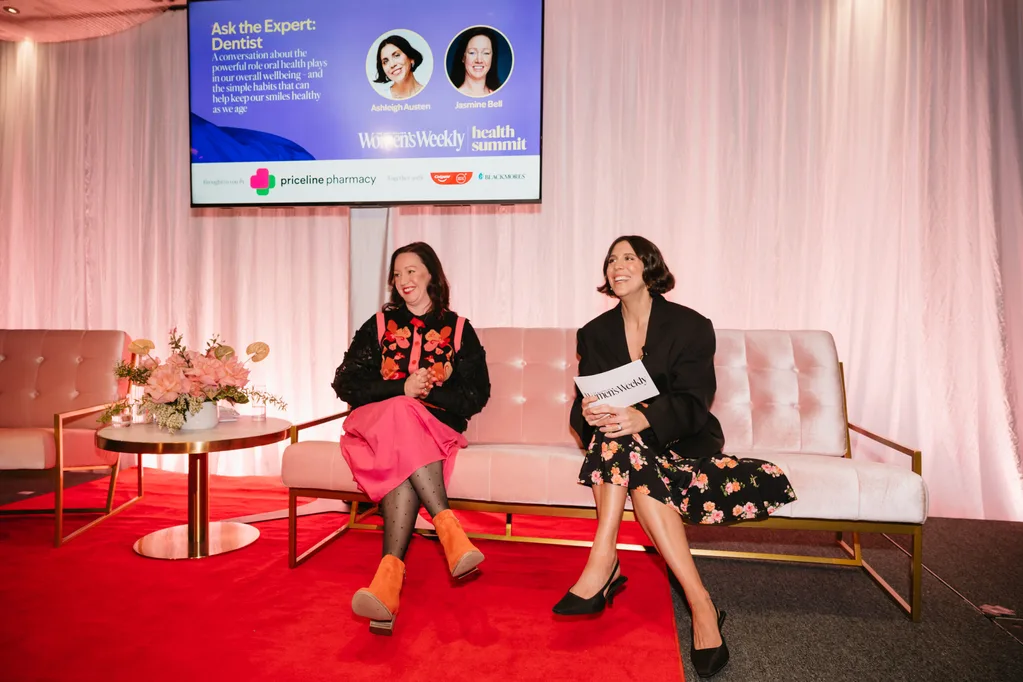
Oral health with Colgate’s Jasmine Bell
Did you know you have estrogen receptors in your mouth? Well, you do, and medications that help with menopause can also impact saliva health.
Jasmine from Colgate helped demystify some of the unsexy parts of menopause and dentistry. She shared that dentists can sometimes find issues in your mouth before other healthcare professionals.

Issues like diabetes, sores that don’t heal, bleeding gums, and sleep apnea.
“There is a lot of information when you look in someone’s mouth,” she shared.
“Really looking after your mouth takes four minutes a day, says Jasmine. Then she dropped the f-bomb: “floss”!
Hormone health with Blackmore’s Jessica Harrison
Natropath Jessica adds to Jasmine’s comments, saying that sex hormones can affect all parts of our bodies and our mood, and impacts can take some time to show themselves!
“There’s not a one-size-fits-all,” she shares.
69 per cent of us experience sleep disturbance, and mindset plays a big part in our sleep quality, so she recommends good sleep hygiene. Some classics she suggests are cool, dark environments, earplugs, and herbs and supplements like magnesium, L-theanine, saffron (which can help build melatonin), sage and Ziziphus.
However, she recommends speaking with a pharmacist or natropath or even your doctor to ensure you take a supplement that works for you.
“Supplements can be very supportive for our health…if there are gaps in our health,” she says. But, you need to answer three things: identify where you need support, check bioavailability, evidence, and quality.
And she recommends that you don’t buy supplements from Facebook, make sure it’s TGA approved and sold at your pharmacy.
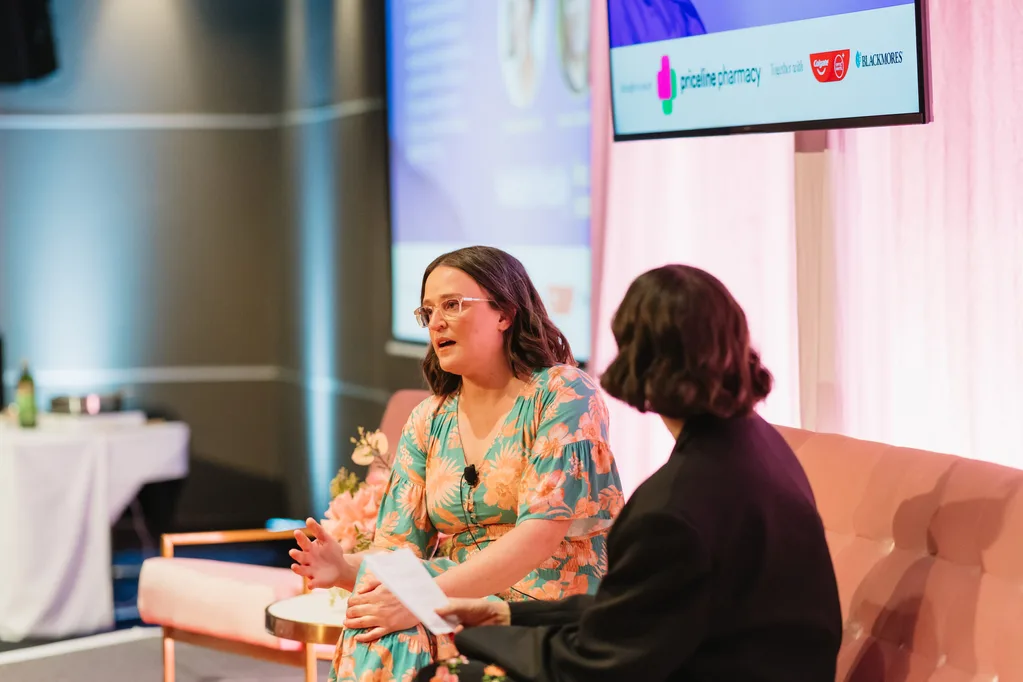
Talking menopause with Mel Gannon from Priceline Pharmacy
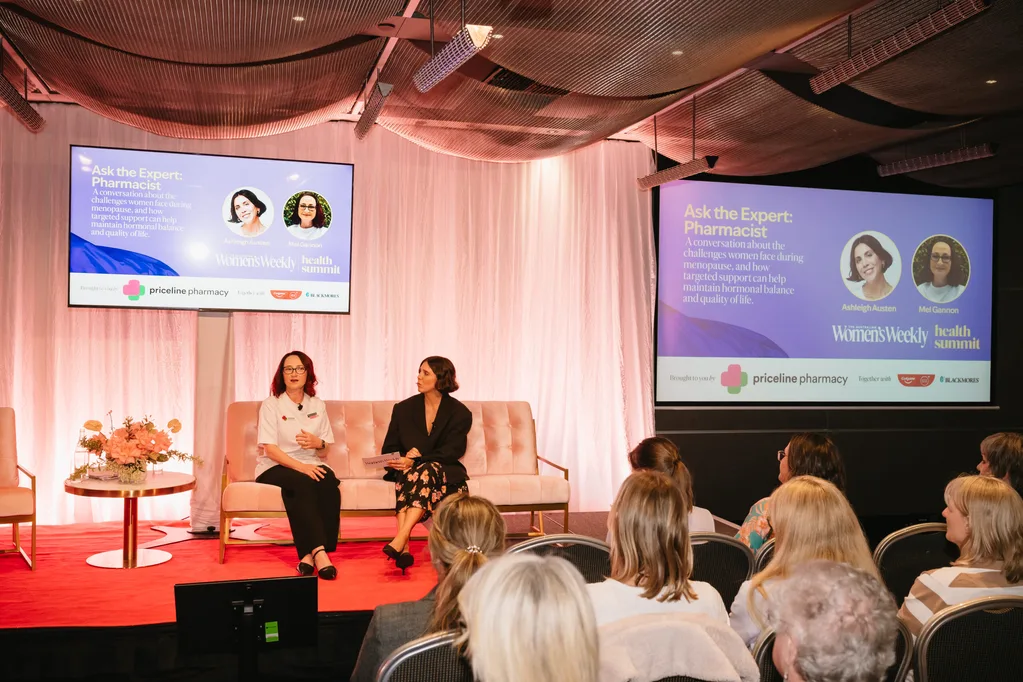
Mel Gannon, expert Pharmacist from Priceline Pharmacy, joined The Australian Women’s Weekly Health Editor, Ashleigh Austen, to talk about the challenges women face during menopause.
She said that even though it can be different for everyone, Priceline Pharmacy can be a great resource for women going through this hormonal change in their lives and connecting people with other allied healthcare professionals.
What we’re seeing in pharmacy is the recognition of so many different symptoms. There are so many more signs and symptoms,” she says, explaining that Priceline Pharmacy wants to explore is that there is so much more to menopause than we realise, and we may “dismiss” our symptoms, including surprising ones like itchy ears!
She urged guests to have a conversation with their healthcare professionals, GPs, or their pharmacists, “We’ve heard it all before.”
And most importantly, she said, “I want everyone to understand more about their cardiac health. It’s really, really important.”
Perimenopop with Sohie Ellis-Bextor
The British pop artist Sophie made a surprise showing after the lunch break! In a pre-recorded video, she shared that she hoped everyone was having a lovely day and praised that we were speaking about this issue, which has recently become a major theme of her life: perimenopause.
Her latest album, Perimenopop, is inspired by this latest stage of her life and is about “coming into your power” and flipping the script so that we can “feel good and joyful”.
Read our interview with Sophie here.


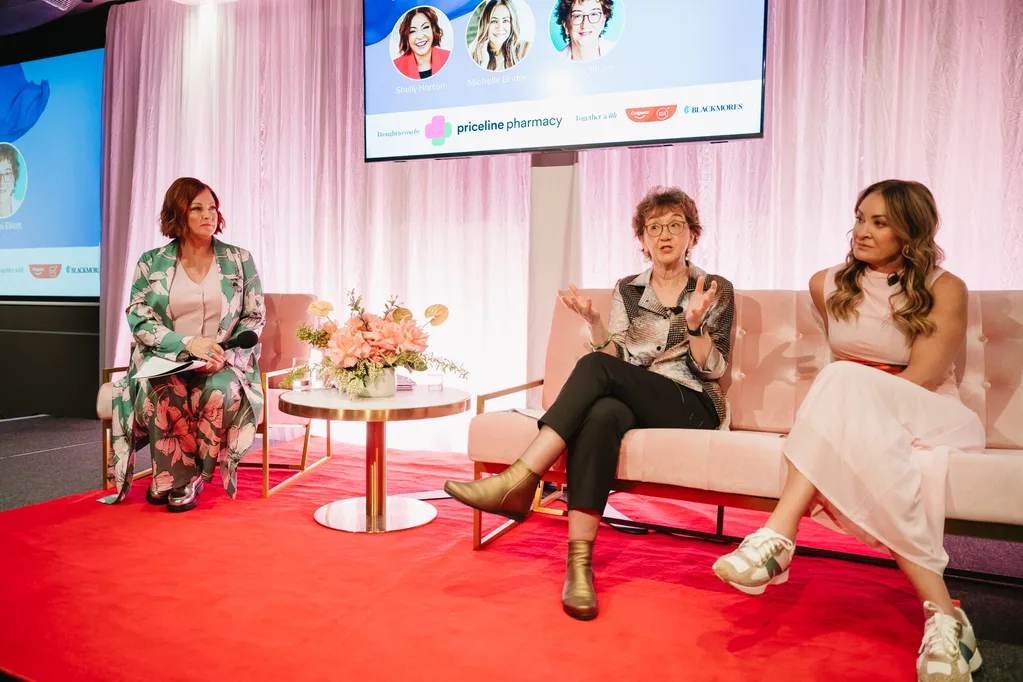
Menopause Mythbusting with Dr Jane Elliot and Michelle Bridges
Dr Jane Elliot starts us off by bringing us back to basics. She states that menopause is simply the ovaries running out of estrogen. The best treatment is therefore adding back oestrogen.
She spoke about the WHI study on menopause, which led to a lot of scaremongering around HRT (Hormone Replacement Therapy) or MHT (Menopausal Hormone Therapy), which is very outdated. Now, the medical world is “catching up” and HRT/MHT is the “gold standard.”
Dr Jane had some more sobering stats to share with the audience. It takes 7.4 years on average for women to become post-menopausal, and for 20 per cent of women, menopause can “go on forever.”
But the symptoms that bring women into her office are brain fog and mood symptoms, not hot flushes: “The funny this is, women want their brains to work, aren’t we greedy?”
More and more doctors and pharmacists are being trained in menopause. If people are looking for help, she recommends that we check out the Australasian Menopause Society’s website, menopause.org.au.
Her co-panellist, Michelle Bridges, shared her own peri-journey. She was suffering various ailments, from a “dial-up sound” in her ears to a “chainsaw pain” in her hip and sleep deprivation. Now, Michelle uses her own experiences and the voices of experts on her podcast, We Have a Situation and her book, The Perimenopause Method, to share actionable tips with her audience on menopause and perimenopause.
Her advice on what to add to your routine: Sleep hygiene, lifting weights, adding a cardio “spike” to your regimen (jumping for 20 seconds), nutrition, and hormone health with your doctor.
She and Shelly also made us jump for 20 seconds to get us started on our health and fitness journey!
Healthy Food with Steph de Sousa
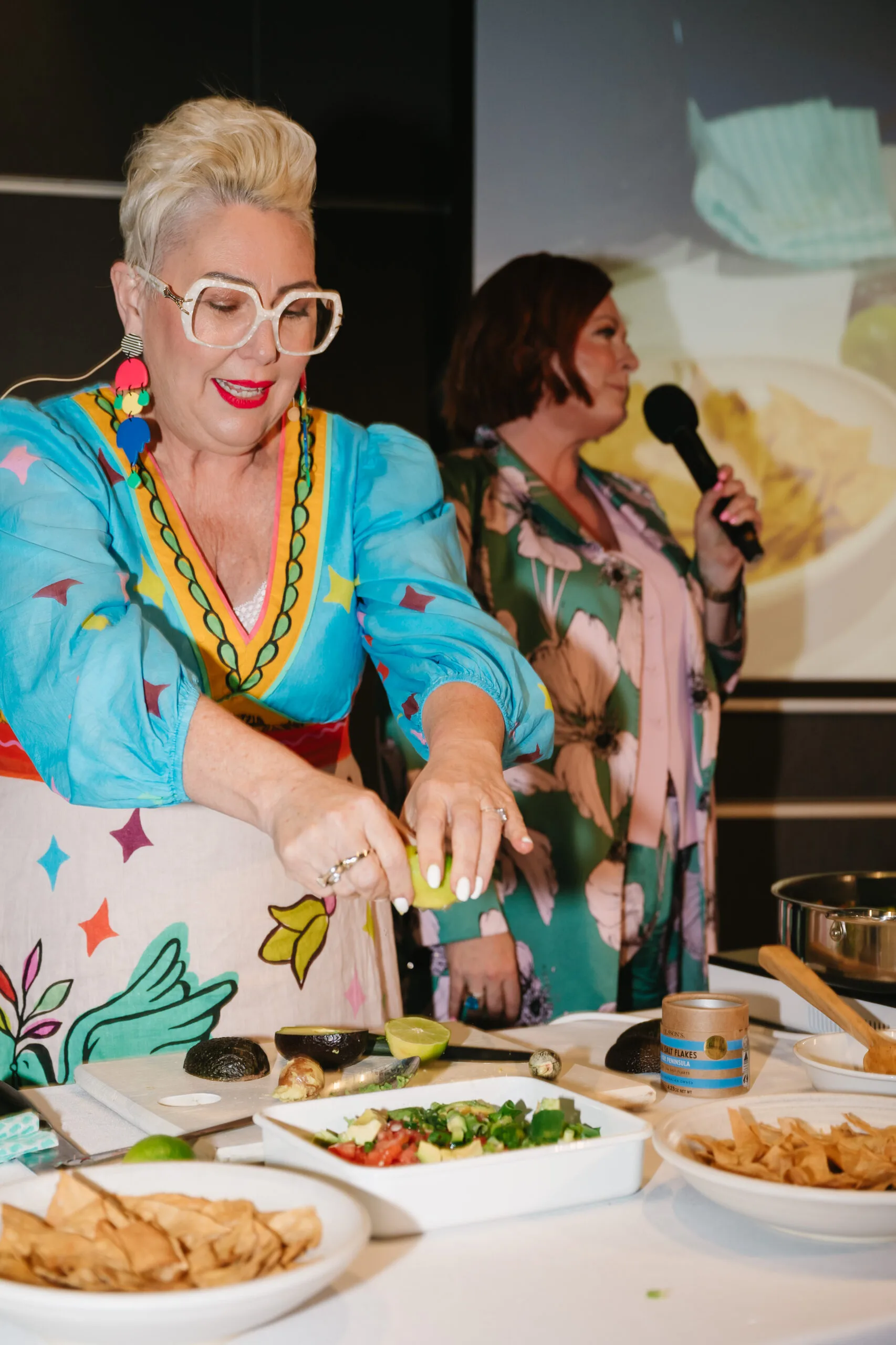
The final panel of the day was the fabulous Steph de Sousa making her airfryer veggie nachos! The day before, Steph went to the Adelaide Markets to source produce for the event and shared a great tip for choosing avocados. Check it out here.
Shelly helped Steph make the nachos by helping to prep and stir the onions and capsicum.
“I’m the Easy Dinner Queen, it is 100 per cent okay to use a taco seasoning mix,” Steph shared. But if you want her recipe, she said it should be: smoky paprika, cumin, oregano, onion powder, and garlic powder. Optional to add chilli as needed!
In her recipe, Steph opted for black beans, but said that you could use any kind of beans or even meat mince if you prefer. And her tip for flavour: fresh herbs and a squeeze of lemon!
Get the recipe here for nachos here.
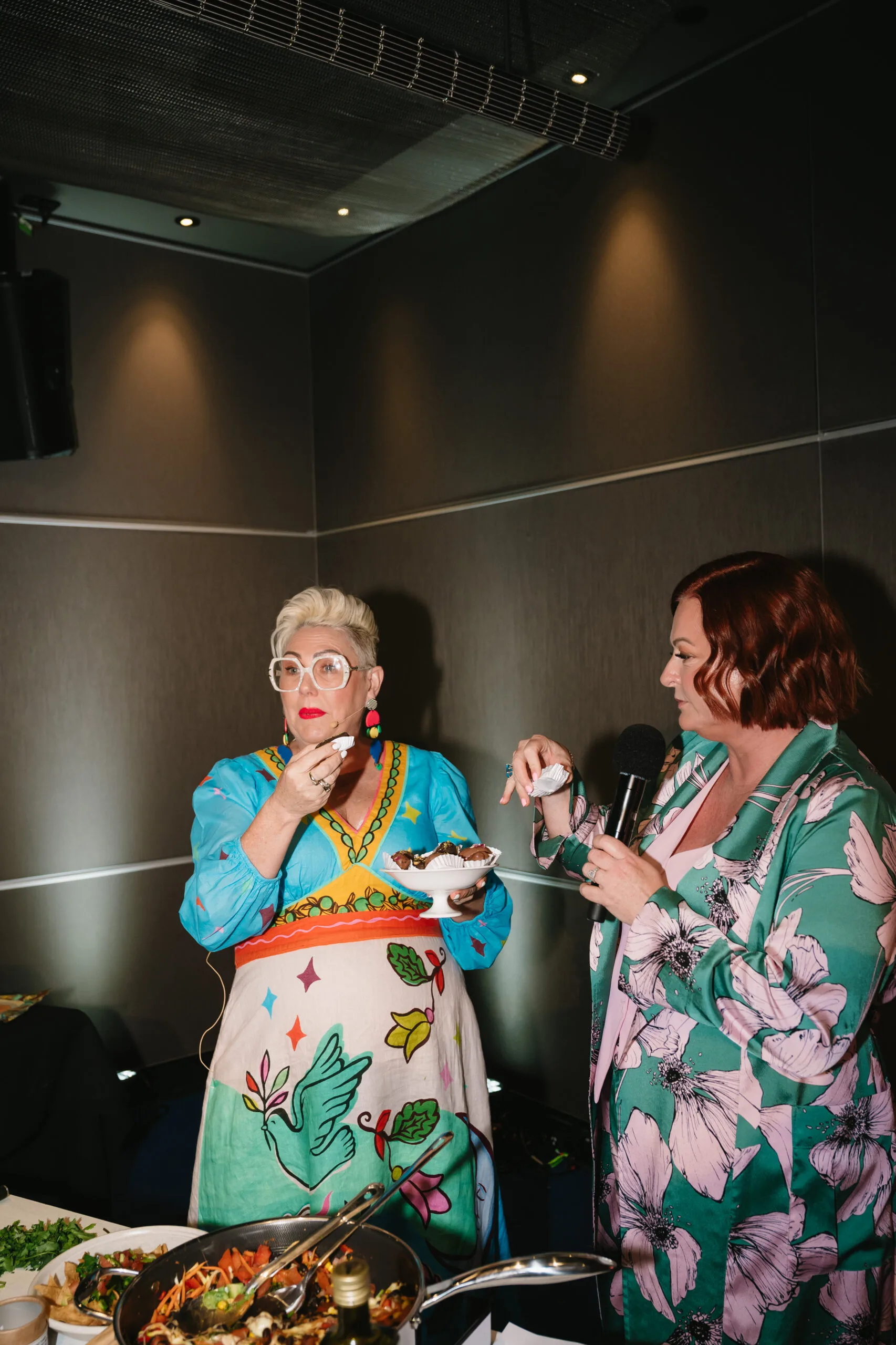
After they served up the nachos, servers also came around to serve chocolate-covered dates stuffed with peanut butter! Super delicious and very handy for snacking! Get the recipe from Women’s Weekly Food here.
Amazing activations
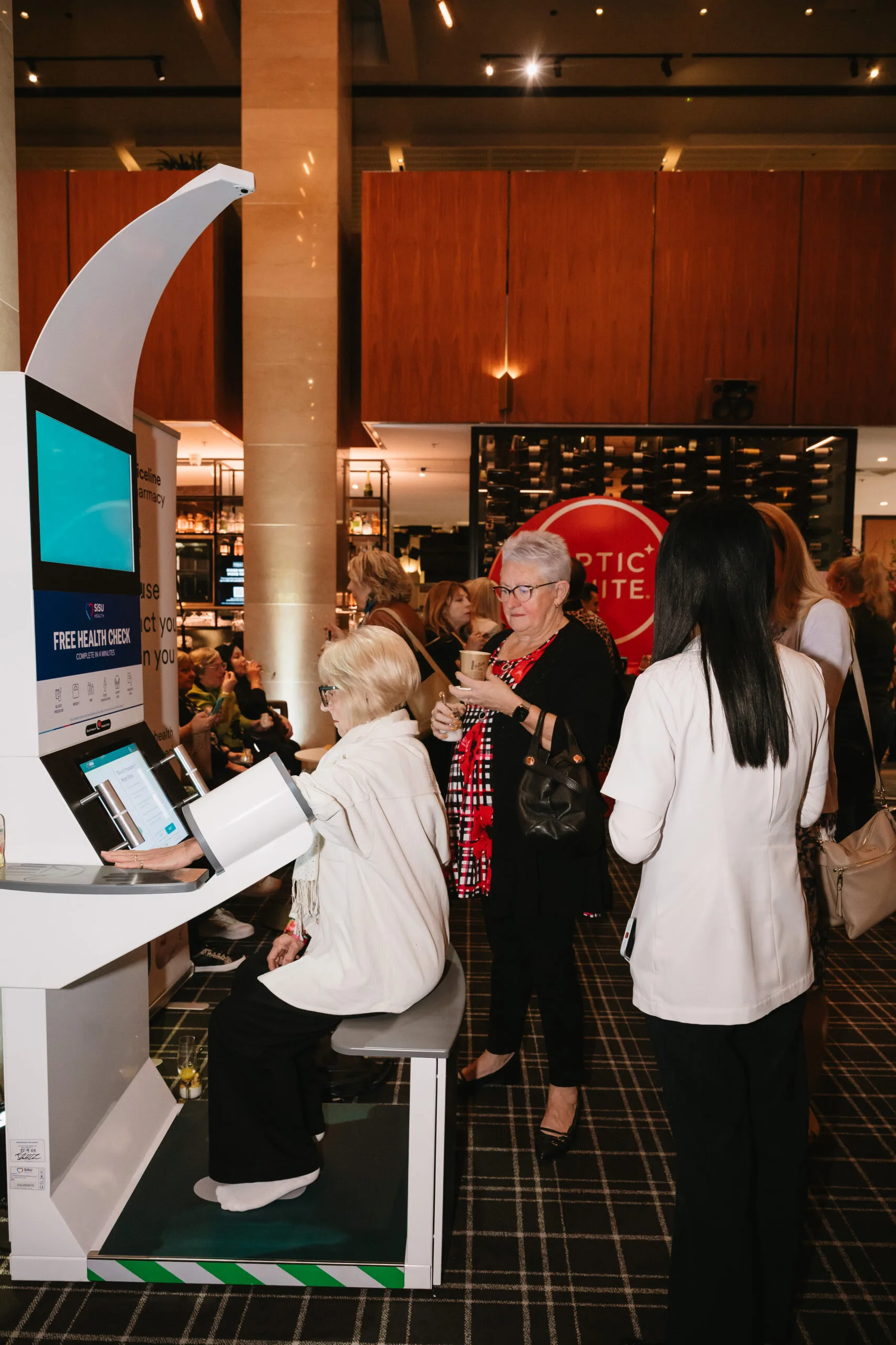
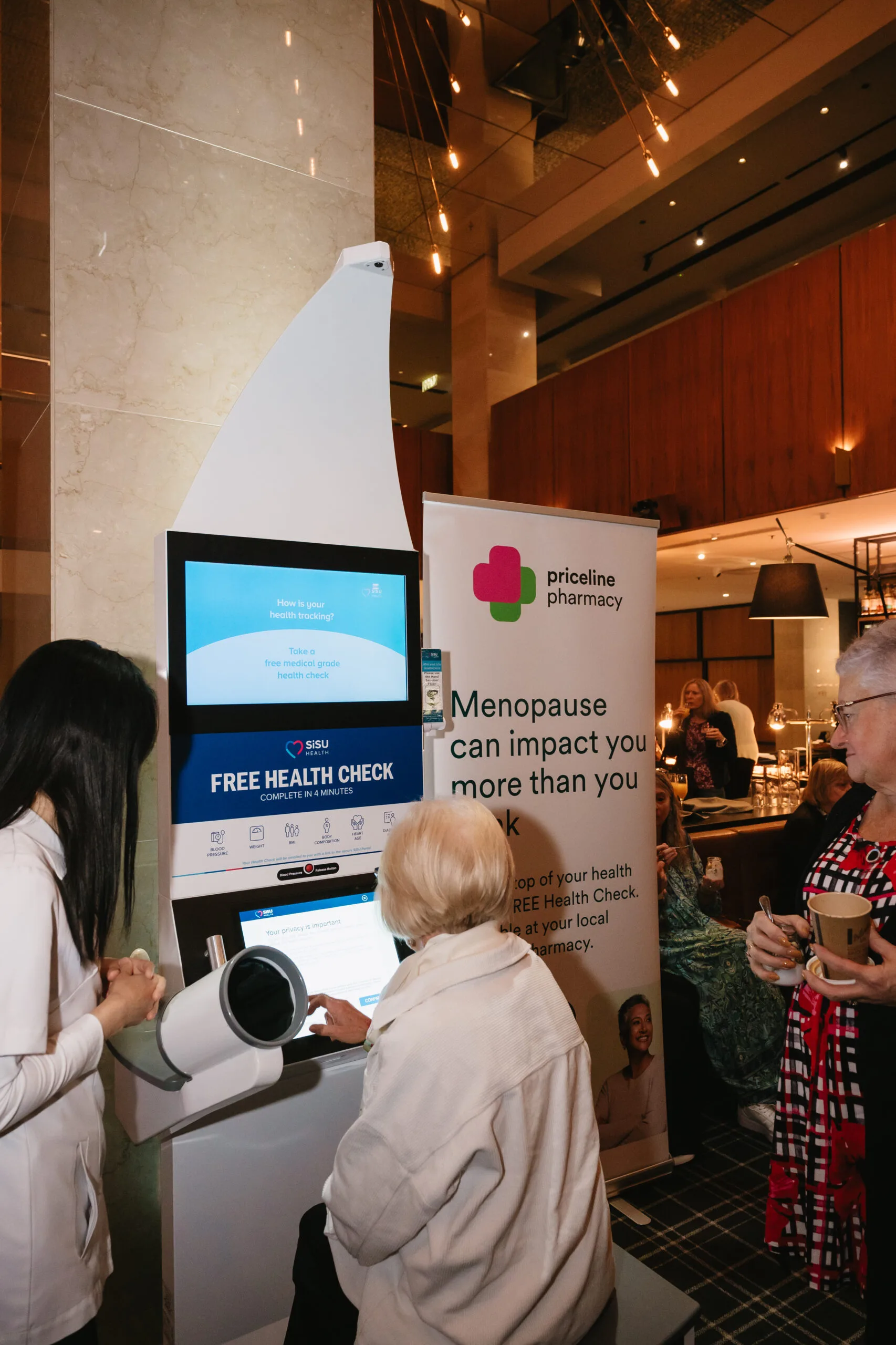
Attendees were able to get their health checked by a nifty gizmo, courtesy of Priceline Pharmacy. The SiSu Health Station, which in under 4 minutes provided our guests with their weight, BMI, blood pressure and whether they were at risk of diabetes.
Also, there was a super fun “Spin the Wheel” where guests could win luxury skincare items and more. It was so popular that the queue for it snaked around the floor!
The next and final summit is happening in Perth on 11 October at the Hilton Parmelia. Buy tickets here and find out who the panellists are here.

If you’re going through a hard time right now, the Beyond Blue Support Service offers a free and confidential counselling service. You can call them on 1300 224 636, chat online, or email them 24/7.

