





I hand my partner, Matt, my phone and tell him to hide it. The time is 7 pm, hour zero of the phone ban I’ve imposed on myself. I was recently separated from my phone for about five hours, and the resulting panic and anxiety were deeply shaming. I’d suspected my attachment to my magic rectangle had the qualities of addiction, but it wasn’t until I noticed my hand repeatedly reaching for my phone when I knew it wasn’t there, fingers twitching, that I had to confront the hold my device had over me.
I’m not alone. There are 1.2 mobile phones for every person in Australia, and we’re spending more than six hours a day on them, according to Red Search’s 2025 screen time report. Cognitive neuroscientist Mark Williams runs workshops in schools and workplaces to help people have healthier relationships with their smart devices, and he agrees to chat to me about how smartphones are changing our brains. I confess my digital sins, and he confirms it’s time to take drastic action.

“It is an addiction,” Mark says of our collective dependency. Smartphones are engineered to tap into our primal systems and get us hooked. App developers do it intentionally.
“Apps cost very little to buy,” Mark explains, “Therefore, the only way to make money out of an app is to make it go viral. And the only way you make it go viral is to make it addictive.”
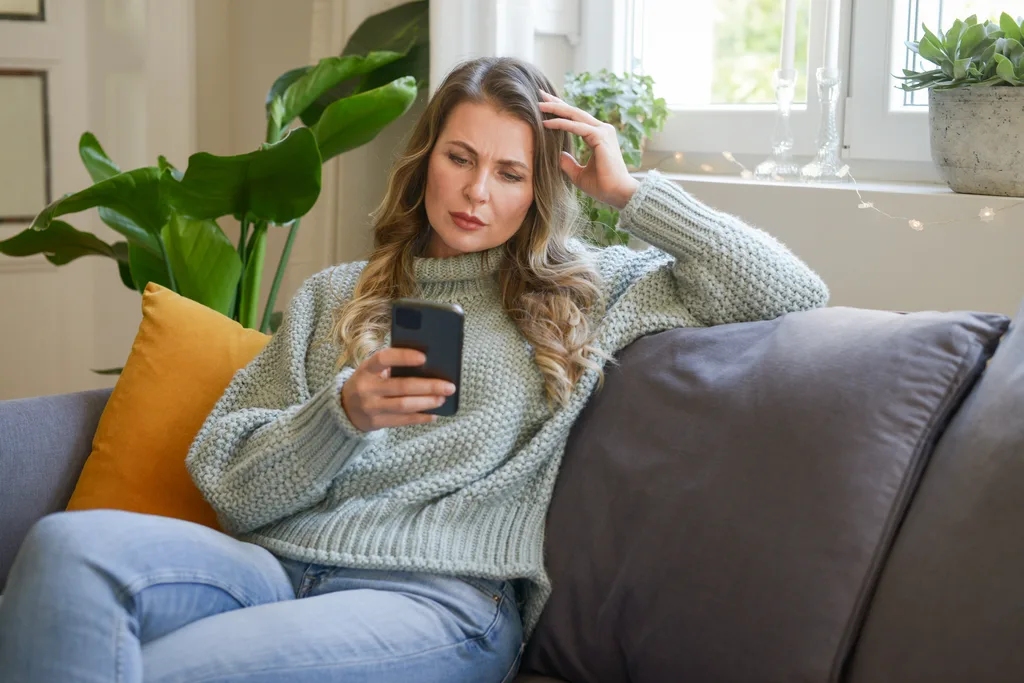
Why can’t I stop looking at my phone?
Smartphones use noise and sound to trigger the parts of our brains that evolved to protect us from predators.
“So that leaves us on high alert. Plus, they’re very colourful, which also helps,” says Mark. These beeps and trills disrupt our alpha brainwaves, which are responsible for keeping us calm, and the dopamine hit delivered by a text or a funny gif leaves us craving more.
“Every time a notification goes off, our attention gets dragged to it, which means we lose 60 seconds of our time, which is why everybody feels like they’re so busy today,” he continues. “We’re getting less done today than we did 10 years ago because we’re constantly getting distracted by our phones. And that’s if you don’t actually answer it. You lose longer if you look at it.”
In her book, How to Break up with Your Phone, US journalist Catherine Price says smartphones took over our lives “so quickly and so thoroughly” we never stopped to think about the effect they were having on our brains.
“We feel busy but ineffective; connected but lonely,” she writes. “Half of us check our phones in the middle of the night. Among 25 to 34-year-olds, it’s more than 75 per cent.”
Catherine recommends a 24-hour break to kickstart healthier phone habits. Ever competitive, I set the challenge at 40 hours. I’ve sent a note to my family and close friends flagging the plan. If something catches fire, they have Matt’s number.
Are our phones making us dumber?
Un-fun fact: At a population level, humanity’s collective IQ has gone backwards in the past 10 years for the first time since researchers started monitoring it. “It’s called the Flynn effect,” says Mark. Named for the moral philosopher James Flynn, the Flynn effect describes a phenomenon whereby people were getting smarter every five years or so. “They think it was because more people were being educated over the last 150 years,” Mark says. Now, “for the first time in our history, that’s going down. The population is actually getting dumber.”


There’s a theory that smartphones are reducing our working memory.
“We believe our working memory was seven slots, plus or minus two, which is why phone numbers used to be six numbers. We can only remember six numbers and we need another [working memory] slot to actually dial the number,” Mark explains. “Now we think it’s actually dropped to about four or five slots in the younger generation because they’re not using their working memory, so it’s slowly atrophying and dropping and getting smaller.”
When I gave Matt’s number out as an in-case-of-emergency to a few friends, I had to copy it from my phone’s address book because I do not know my partner’s phone number. This phone ban couldn’t have come at a better time.
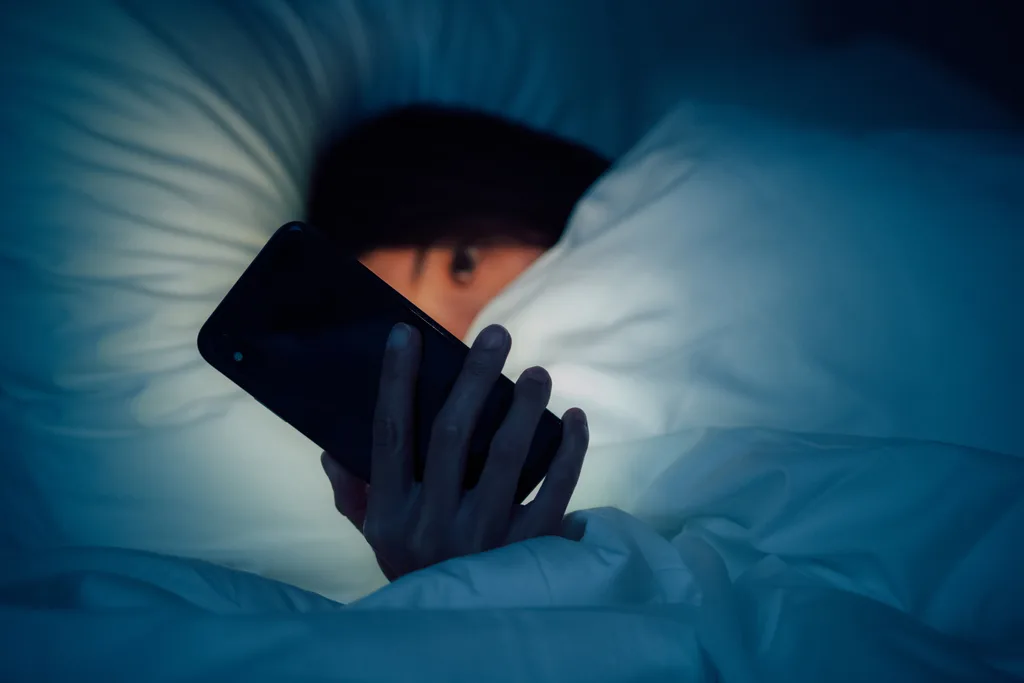
Hour 1
What was once a device to make phone calls on the go has become our calendar, our navigator, our wallet, our news and music supply. It’s a limitless shop. A library. A means to order transportation and home delivery. I open Instagram many times throughout the day. WhatsApp allows me to feel connected to my interstate family and friends. It’s no wonder most of us can’t get through the night without checking our phones.
Putting my phone away will remove the temptation to open the apps for now, but both Mark Williams and Catherine Price recommend removing push notifications from your phone for a peaceful life. I also have a game that I open in idle moments. It features a medieval village, and when I’m harvesting its crops and collecting its resources, I feel calm. I’m confident I’ll be able to get by without the village game, but I worry about some of the other apps I rely on.
In her book, Catherine describes the practise of “app-sourcing” so many parts of her life. “The more I used my phone to navigate my life, the less capable I felt of navigating my life without my phone,” she reflects. Her comment resonates. Minutes into this experiment, I’m apprehensive about how humbling this ban may be.
No template / Incompatible templateHour 4
As I sit on the couch watching a movie, my fingers itch for some apps. The feeling is akin to a craving. I ask myself, “What is it I want from the phone?” It’s late on Friday night. I know that if I open my device, it’s likely to offer the same repetitive Instagram feed and some news headlines. So why do I still want it? This is where our phone dependency gets dark.
“The social media companies have all admitted that they use intermittent reinforcement schedules,” Mark says. “Intermittent reinforcement increases the amount of dopamine that you receive when you get those notifications. You don’t get your ‘like’ when someone likes something. [Social media companies] hold off and give it to you when it’s the best time for the greatest amount of dopamine, so you actually get addicted as quickly as you possibly can to that reinforcer. All of that builds this heightened response where we’re constantly wanting.”
It’s the same principle that poker machines employ to ensnare people. It’s nearing midnight when we go to bed. Somewhere, hidden in my house, hilarious memes about Donald Trump and videos of cats go unviewed. The crops in my virtual village have not been harvested. I worry for my citizens.
Hour 13
My phone is my alarm clock. Usually, after it wakes me, I flick open my work email account, read any texts and WhatsApp messages and scan the headlines. Today is Saturday. There is no alarm. I go downstairs to feed our cat, Cricket.
Cricket emerges from the wooden box she prefers to the expensive bed we bought her, looking dishevelled.

I want to take a photo and send it to my sister, but I can’t. Perhaps it’s not a bad thing. Our relationships and our mental health have been changed by phone use.
“It’s a real concern,” Mark says. When you meet up with someone in person, a “whole bunch” of neurotransmitters are released by our brains, making us feel happy and content for a long time. “You get dopamine, but also oxytocin from touch … and serotonin, which gives you a sense of wellbeing and a sense of contentment with being with that person,” Mark says.
“Whereas if you’re interacting online, you only get dopamine, a short-release neurotransmitter which goes away. So, we’re getting an abnormal combination of neurotransmitters when we’re online, and that makes us feel pretty down because we get a hit of dopamine, and then we’re looking for the next one. We’re looking for these tiny little hits of dopamine rather than what we really need, which is this sustained release of these really good neurotransmitters and the combination of neurotransmitters.”
Hour 16
Since moving to Sydney eight years ago, I’ve gratefully embraced navigation apps. When I lost my phone, I had to collect it from the suburb next to my own (travelling from the other side of town). I studied Google Maps beforehand, printed out a two-page map, and still got lost.
Today, I’m on my way to pick up a requested roast chicken when I realise I don’t know exactly how to get to the chicken shop. I’ve only driven there once before, and an app directed me.
Happily, I find the shop. My triumph is tempered by embarrassment. It is a kilometre from our house. Mark tells me I’m not alone.
“Because they’re telling you what to do most of the time, we’re not mapping out how to get [around],” he says.
A 2011 study by University College London found the part of the brain responsible for long-term memory and spatial navigation was larger in London cab drivers, who must memorise 25,000 streets to get their licence, than people of similar age and intelligence who did not drive cabs. The study, which utilised MRI scans to measure the hippocampus, found the size of the driver’s hippocampus “correlated with the amount of time spent as a taxi driver”.
In other words, the longer they’d been driving, the bigger their long-term memory centres.
“The more someone uses one of those apps, the smaller their parahippocampus gets because they’re not using it,” Mark says.
I do not love the idea that part of my brain is shrinking.
Hour 24
Then we cue up a Saturday night movie. “What does it say?” I ask when the text appears on the screen. My eyesight has deteriorated significantly in recent years. My parents both began wearing glasses around the age I am now, but I do wonder if constantly staring at a tiny, backlit screen has hastened the decline.
I happily read until dinner time without any serious phone cravings.
Optometry Australia’s Chief Clinical Officer Luke Arundel says there’s increasing evidence to suggest excessive screen time and holding your device close to your eyes can increase the risk of developing short-sightedness (myopia).
“While smartphones may not be inherently harmful, it’s how we use them, as well as how often, that poses the risk,” he says.
An analysis of 45 studies examining the screen-time myopia link found the risk of developing myopia rose sharply with between one and four hours of daily screen use.
Dr Arundel recommends looking up every 20 minutes and focusing on something in the distance to give your eye muscles a chance to rest, holding your device at least 30cm from your face and avoiding using screens in dark rooms.
Hour 40
When my phone ban ends at 11 am, I find myself wanting to prolong the digital hiatus, but by noon, I’ve sheepishly asked for my phone back.
The dopamine reward is faint. None of the life-changing invitations or opportunities I’d feared I’d miss have arrived. I’m relieved to be reunited with my device; however, I do wish I could somehow access its benefits without feeling like I have no control over it.
The experiment gave me the push I needed to delete the Instagram app.
I also disable push notifications. I set my colour settings to greyscale, removing the vibrancy from the apps that nestle temptingly on my homepage. Of all the little adjustments I make, the greyscale is by far the most effective. It’s a small step, but one I hope will reduce the temptation to pick up my phone so often.
We can unwind the effects of smartphones, Mark says.
“It’s a technology, right? We should be using it in a positive way that benefits us and how our brains work.”
In his household, the phones all live in a central location. If a family member wants to use their device, they have to stand at the console where the phones reside, like in the landline days of yore. Before we get off the phone, he encourages me to purchase an alarm clock.
“No devices should be in the bedroom or bathroom,” he says. In our hurry to embrace convenience, we’ve removed all the safeguards. It’s time to put some back in.
“There are solutions,” Mark says. “We just have to act on them.” AWW

