


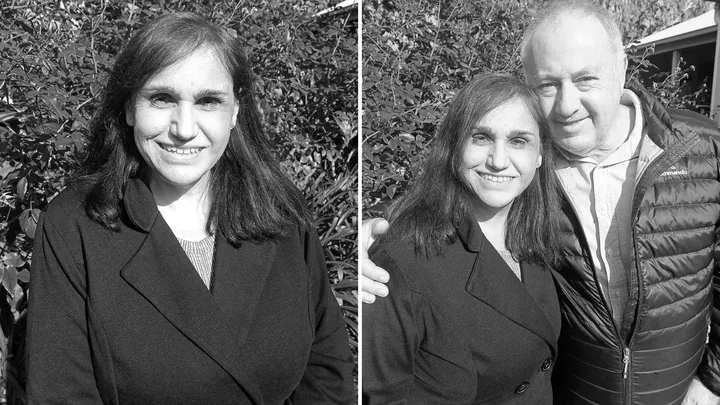
Dementia is the leading cause of death in Australia, with more than 446,000 men and women living with the disease. In 40 years, dementia will affect one million Australians. Around 29,000 have younger onset dementia, meaning they were diagnosed before the age of 65.
Caterina Cirillo, 58, from Adelaide, was diagnosed with younger onset dementia at 54. Here, she and her husband, David, share how their lives have changed and how they navigate the challenges of dementia day to day.
Caterina’s story
When I first felt things were falling apart, like I was losing the threads, I thought it was stress. I was a team leader at a bank and under a lot of pressure at work. But there were plenty of good things in my life. I had lots of friends, loved seeing live music and David and I were planning a trip to Italy with our son, John. We’ve now been married for 31 years.
I liked being busy, but then one day four years ago I drove to work and when it was time to drive home, I couldn’t remember where I’d parked my car. David had to come and find me. I knew the city streets well, so couldn’t understand why that happened.
Around this time, I was diagnosed with breast cancer. Luckily, it was caught early, but I was also managing that and so thought all these problems were due to stress.
My GP suspected there might be more going on than stress, so I saw another doctor who did a cognitive test – I remember she asked me to draw squares inside each other and I couldn’t do that. I was referred to a neurologist, who did an MRI and told me I had dementia.
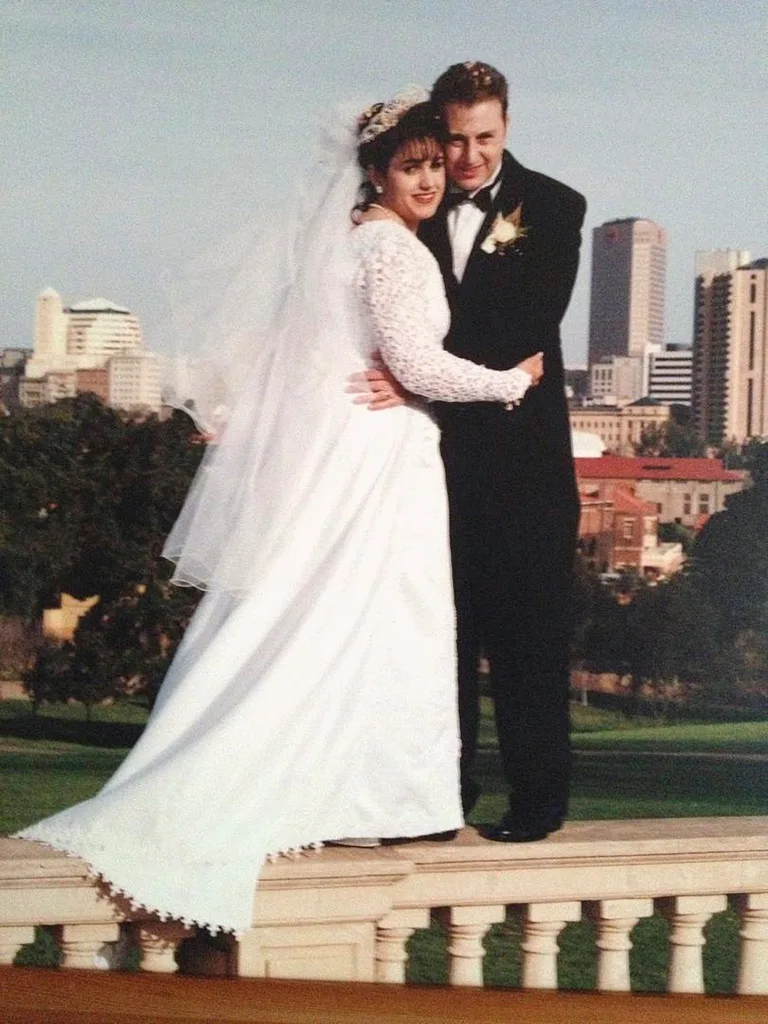
That was a huge shock and I thought my life was over. I was still young. I’d seen my aunty go through dementia and pass away, and I saw her suffer. Towards the end of her life she was non-verbal. Would that happen to me?
Life began to change. My doctor suggested I give up my driving licence. I loved my cars, but I didn’t want to be on the road if I shouldn’t be there, so I stopped driving. Then David gave up his job to become my full-time carer – he’s always around when I need help.
I write what’s happening during the week in my diary – I start on Sunday night and write down appointments, what I have to do each day and what groceries we need. It helps me to have everything written in one place so I know what I’m doing. Some days I forget what day it is, and having a diary helps. David puts everything into a calendar on his phone, too, and every day he gets an alert about what’s coming up.
I was a chatty person, but now there’s a hole because I can’t always think of words to say. I’ve gone from being busy to feeling like I don’t have purpose because I can only do small things at home, like folding washing and cooking. I can shower, dress myself, put on my make-up. Keeping my independence is important because I want to feel ‘normal’. I don’t like people fussing over me.
I still look after the bills to keep my mind active and I still enjoy cooking, but I might have to ask David if I’ve remembered all the ingredients. Or he might get the ingredients for me and watch me cook, in case I forget what I need. Then he’ll say, “Here’s the ingredient”, but he tries to let me cook without him and only steps in when he sees me struggling.
The symptoms change daily. Some days I’m okay, but other days I can’t remember basic things like people’s names and street names. David tells me the information each time.

Some people have become distant because they don’t understand what’s happened or don’t know how to talk to me anymore. They say they’ll catch up but don’t, and I feel like people I’ve known all my life are disappearing. But some friends still call and genuinely make an effort to stay in touch.


David has been with me every step of the way. He takes me to monthly appointments at the Memory Clinic at The Queen Elizabeth Hospital in Adelaide. Last month the specialists told me I’d declined a bit, which was disappointing. We also have a lot of help from Carers SA – a lady there plays games with me to keep my brain active and we go for walks and I enjoy that. We’ve also had a lot of support and understanding from the people at the Dementia Australia centre, too. Their kindness has been a huge help to us.
David and I keep life as normal as possible. We still travel – we love going to Melbourne and went recently for David’s 60th birthday. Usually, we plan each trip with me writing a list of things we need to take and we tick them off. We’re planning a cruise in the Mediterranean for my 60th birthday. We’re looking forward to that.
I read novels, do crosswords and use social media. David and I go shopping, which gets me out of the house and helps me think about what we need. We go for walks and when we bump into people we know, we have a chat.
I know researchers in America are doing some interesting trials to try and find a drug that can slow down the effects of dementia. In the future, there might be a cure.
Anyone diagnosed with dementia needs people around them who can love and care for them, because it is going to be a tough journey and you can only take each day as it comes.
David’s story
I was a night manager in a supermarket when Rina was diagnosed and I willingly left work to be her carer. I am with Rina for better and for worse, in sickness and in health. I’ll be with her until death do us part. But it’s not an easy road. Rina always did so much and now our roles in the home are reversed – now I do more work around the house and supervise the cooking and that’s a shock. The diagnosis changes lives.
Rina often asks me the same question over and over, like what day it is and where she has put this or that. That can be hard for both of us but I try and calmly explain to Rina what she needs to know. Sometimes she starts a conversation and stops half-way through because she can’t remember what she was talking about. Again, I’ll gently remind her what she was saying.
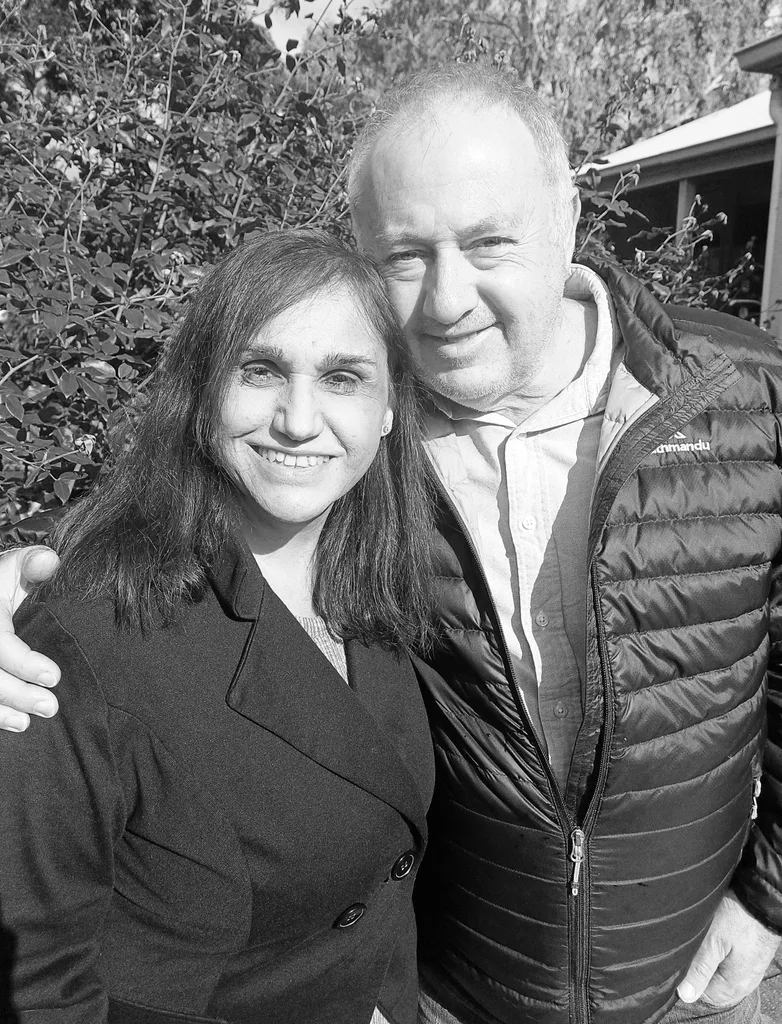
Some days she’s okay with my help and other days she gets upset and feels I’m picking on her. I just remind her that it’s not because I don’t trust her, but I’m there to help because I can see she is struggling. She’s my wife and I want to protect her.
Before, whenever Rina was around, people would talk to her because she was so chatty. Now, it’s like she’s invisible at gatherings and that hurts. Perhaps people don’t know what to say, but they could just say, “Hi, how have you been?” A few words are better than pretending we’re not there.
Some people have little patience. When we pay at the supermarket, Rina can be a little slower putting her card in the machine and people can be rude. I reassure Rina that the other person is the problem, not her. There’s not a lot of understanding sometimes.
People give advice, but listening to others made us feel useless sometimes. Now we only listen to experts and do things in a way that works best for Rina.
We try not to think about Rina’s health declining. We live each day as normally as possible. We still take trips away. Rina wants to be independent because she feels like she is worth something in this world and this illness doesn’t define who she is
What to look out for:
- Forgetting more often, forgetting things you used to easily remember, e.g. names.
- Struggling to remember new things.
- Becoming repetitive, e.g. asking the same question many times.
- Getting lost in the middle of a task.
- Having trouble following steps in preparing a meal.
- Having difficulty finding your way to familiar places.
- Being confused about what time or day it is.
- Forgetting simple words or using the wrong word.
- Judging distance or direction wrongly when driving.
- Misplacing everyday items.
- Putting things in the wrong place, e.g. your wallet in the fridge.
- Sudden mood swings, or becoming confused or withdrawn.
- Socialising less.
- Neglecting personal hygiene or housework.
This feature originally appeared in the September 2026 issue of The Australian Women’s Weekly. Subscribe so you never miss an issue.

