





Lily Schubert didn’t leave her bed for six years.
She lay alone in a dark, silent room. Even the faintest light, the smallest sound or someone’s touch was unbearable. Speaking took too much energy. The most she could manage was rolling over a couple of times a day.
“It was really like human experience stripped back to its barest form,” she tells The Weekly.
Lily was just 16 when she became unwell. She remembers exactly when it was: a couple of weeks after her birthday, when she had just gotten her learner driver’s license.
“I came down with what at the time appeared to be a very, very bad virus,” she recalls. “I was immensely fatigued. I was really sick.”
But Lily didn’t get better. She got worse, missing more and more school until she was barely attending. By the beginning of Year 12, she was completely confined to her bed.
“I had to have a conversation with my parents and my teachers that essentially said, ‘I can’t hold my body up anymore. I can’t go to school.'”
It would take nearly two years for Lily to be diagnosed with the neurological disorder myalgic encephalomyelitis/chronic fatigue syndrome, more commonly known as ME/CFS.
“I was 18 at the time, and you can imagine the shift in the life I had imagined for myself. There was a whole future in front of me, and suddenly it became this closed-off room where my life was the three square metres of my bedroom.”
What is ME/CFS?
Myalgic encephalomyelitis/chronic fatigue syndrome (ME/CFS) is a complex, chronic illness that makes it difficult to function in everyday life. It’s not clear what causes it, and there is currently no cure.
ME/CFS is often misunderstood as simply feeling tired. Although it’s characterised by extreme fatigue, symptoms can also include sleep problems, dizziness, pain and brain fog.
“Fatigue is one symptom of this condition, and it is a defining one, but it is a limiting name,” Lily says.



Anne Wilson, CEO of Emerge Australia, a national not-for-profit that supports and advocates for people with ME/CFS, compares living with the condition to having a phone battery that never properly recharges.
“If you go to bed at night and you charge your phone, your expectation is that you’ll get up in the morning and your phone will be charged and you’ll be able to use it,” she explains.
“But for someone with ME/CFS, they go to bed to get what most of us want, which is a refreshing night’s sleep. And they get up in the morning and their battery hasn’t charged.”
Emerge Australia estimates that up to 250,000 Australians live with ME/CFS. Around 75 per cent are women and almost one in four are housebound or bed-bound.
The symptom most people don’t understand
A hallmark symptom of ME/CFS is post-exertional malaise, or PEM. Often called a “crash”, it’s when even minor physical or mental activity makes symptoms worse. Rest doesn’t make it go away and recovery sometimes take weeks.
“You might have the energy to go to a doctor’s appointment, and you go to that doctor’s appointment and you look like everybody else,” Anne says. “But what people don’t see is that after you come back from that doctor’s appointment, you’ll be in bed for 10 days.”
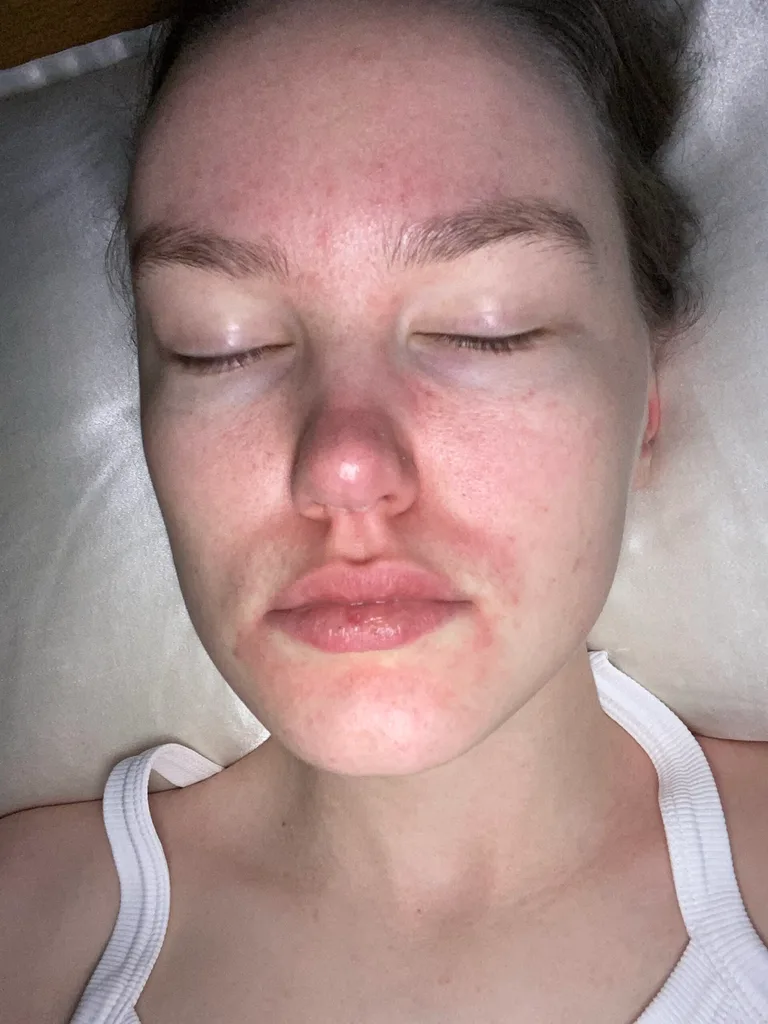
For Lily, almost anything could cause one. “A crash for me could be triggered by something as simple as lifting my head off the pillow, a sliver of light entering my room or a one-minute conversation,” she explains.
“Each crash, in a way, took something from me that didn’t come back.”
Unless you’ve experienced PEM yourself, it’s hard to understand just how bad a crash is. Lily describes it as feeling like “free-falling with nowhere to land”.
“I would descend with this brutal force into a hole of fatigue that seemingly had no bottom to it,” she says. “Those crashes were the worst trauma I endured in the illness.”
‘Would anyone ever be able to help me?’
There is no single test that can diagnose ME/CFS. Doctors usually assess a person’s symptoms and rule out other possible causes.
For many, that means undergoing test after test without getting an answer.
“They do a barrage of standard tests. They all come back normal,” Anne says.
Before she was diagnosed, Lily remembers feeling like doctors thought she was overreacting. She was prescribed graded exercise therapy and told to push through.
“I wasn’t overreacting,” she says. “I was just really terrified because I could feel what was happening to my body even when people around me were struggling to name it.”
Some doctors admitted they didn’t know how to help. “A lot of people simply didn’t understand,” she says.
But one appointment has stayed with her. Lily had pushed herself to attend in person while in a severe crash, hoping the specialist doctor could help.
“For about 45 minutes, the doctor didn’t look at me once and he never spoke to me,” she recalls. “My parents and I left that appointment and I just remember breaking down in tears in the car home, wondering, ‘Would anyone ever be able to help me?’”
Graded exercise therapy is no longer recommended for ME/CFS as it may be harmful. People with ME/CFS are now advised to pace and rest to manage symptoms and stay within their energy limits.
“You can’t push through,” Anne stresses. “You’ve actually got to stop, you’ve got to rest and you’ve got to pace yourself.”
The moment Lily returned to the water
While Lily spent years isolated from the world, her friends finished school, travelled, studied, worked and began relationships.
“I went from being driven, joyful, a teenager, into this state of darkness, cut off from humanity,” she reflects. “I had to stop imagining a parallel universe where I didn’t get sick.”
Her parents cared for her through those six years and with the help of a supportive doctor, physiotherapist and treatment plan, Lily slowly began to improve.
Two years ago, she was able to leave the house and begin “a new version of life”.
One of her biggest milestones was returning to the ocean, which Lily shared in a video on social media.
“I had my parents’ arms wrapped around me, and I couldn’t have gotten there without their support,” she says. “The actual moment of touching the water is something that I’ll never forget.”
Lily later found an old journal. “I wrote in it that I was dreaming of the water, and that when nothing was grounding me, the thought of floating again kept me going,” she shares.
“So it meant everything to me.”
‘What are you going to let me do today?’
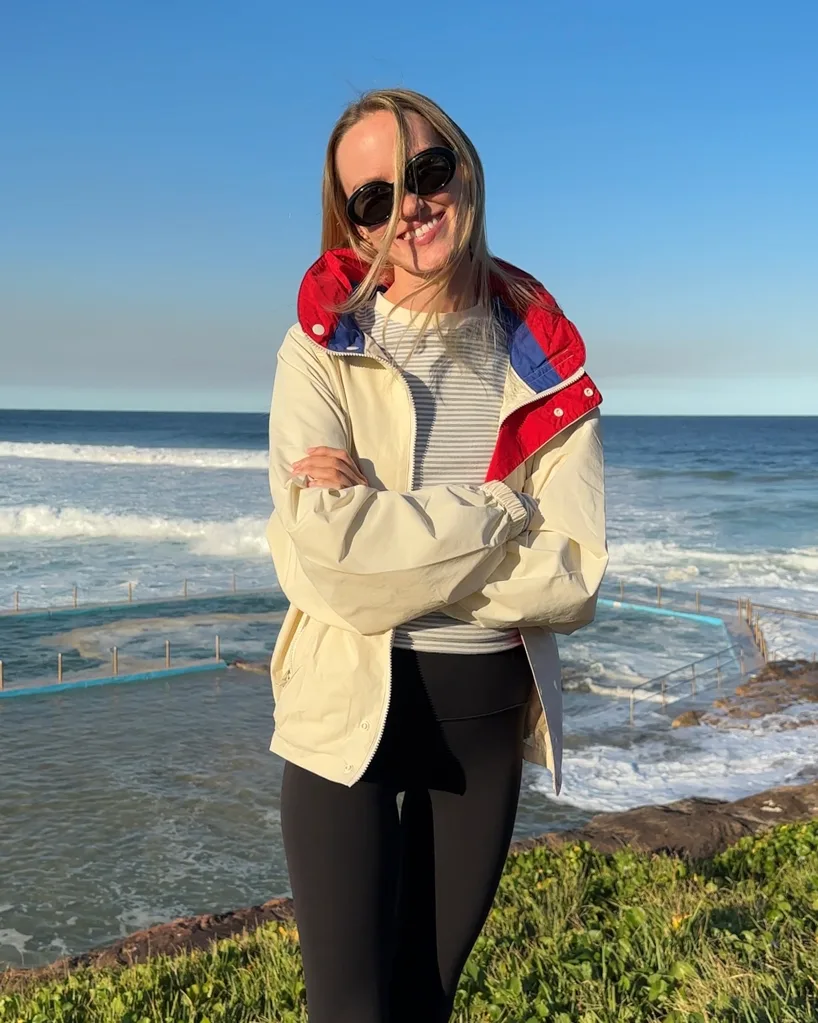
Lily is now 25 and grateful she can do the things that once seemed impossible. She works part-time, spends time with friends and family, goes to yoga and takes short walks.
“I know what it’s like to have lost everything and have gotten some of it back,” she says.
But she is not fully recovered. On her best days, Lily estimates she has around 40 per cent of the capacity of her able-bodied friends.

“I’m 25 years old, and there are so many things that I should be able to do that I cannot,” she says.
Every morning, she has to check in with her body and ask: “What are you going to let me do today?”
Now a chronic illness advocate, Lily shares her experience on social media to show what living with ME/CFS can really look like.
“Using my voice after being voiceless for so long was so important for me,” she says.
“I’m so aware of how many people continue to be voiceless, made voiceless by this condition, so I will continue to use my voice as much as I can.”

