




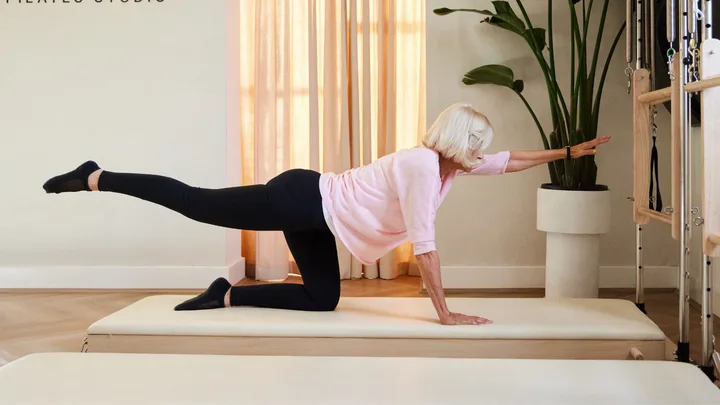
For many women, their sixties mark a powerful shift. Careers may be winding down, grandchildren arriving, priorities recalibrating. It’s a decade often defined not by slowing down, but by asking: how do I want to feel in the years ahead?
Increasingly, the answer is strong, steady and independent. And for a growing number of women, Pilates is helping them get there.
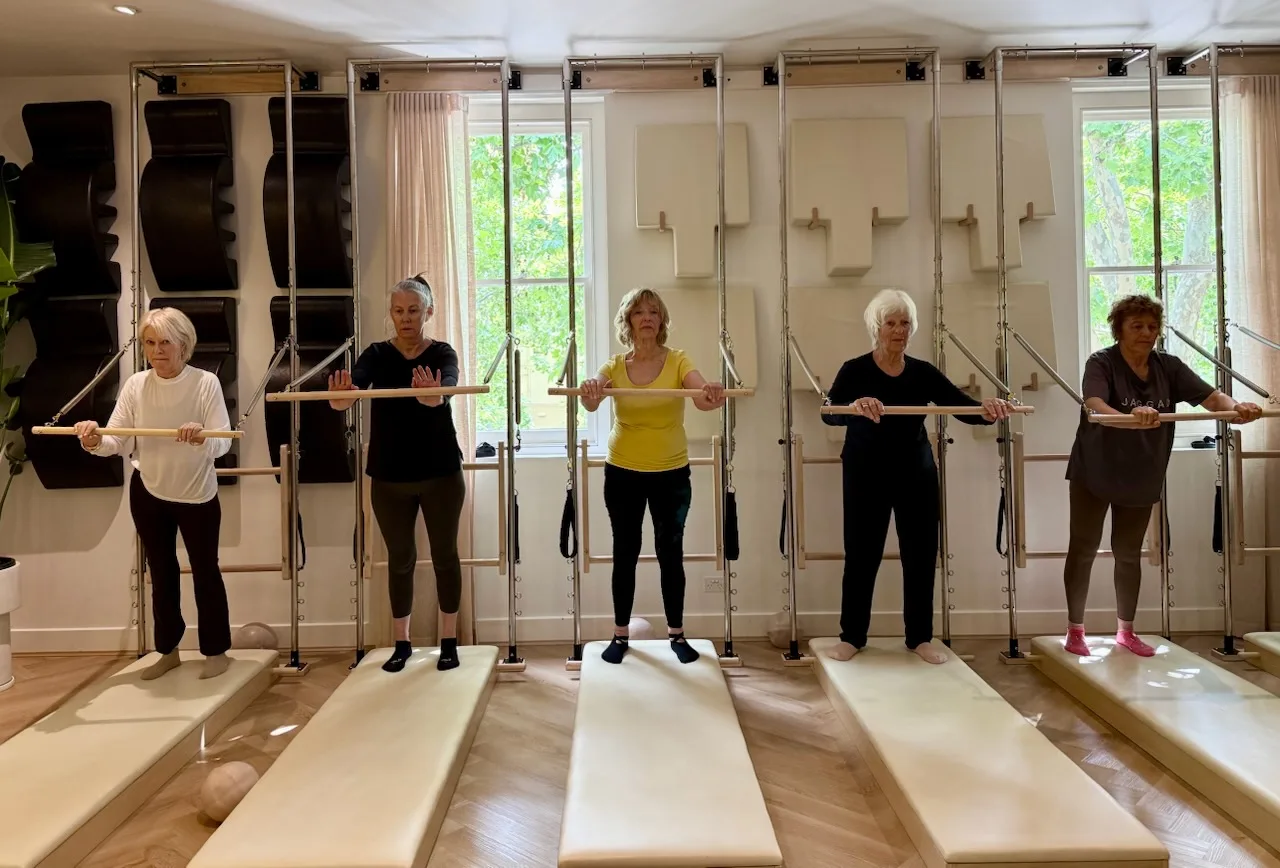
At Harmony Pilates Studio in Albert Park, Melbourne, the ‘Golden Girls’ classes, created specifically for women over 60, have quietly become one of the studio’s most popular offerings. The program was designed for women who want more than a council-run community hall class, but who don’t feel at home in a traditional gym.
Studio owner Aislinn Butler says the idea was born from a clear gap in the market.
“We saw a real gap for women over 60 who wanted to continue moving in a way that felt elevated, intentional and in a beautiful space, not as an afterthought,” she explains.
“Some of these clients were recovering from injuries and wanted a class that supported strength, stability, and longevity but still felt beautiful and inspiring. Traditional community or council-run classes didn’t always provide the small-group attention that we provide.”
Movement matters more as we age
Pilates is often associated with long, lean muscles and toned abdominals. But its true power, particularly in later life, lies in its functional focus.
As we age, we naturally lose muscle mass and bone density. Balance can become less steady, posture may change, and joint stiffness can creep in. Falls are a major health risk for older Australians, and maintaining lower-body strength, core stability, and coordination becomes essential for staying independent.
Pilates works deeply through the core muscles that support the spine and pelvis, improving posture and helping to alleviate back pain. It also strengthens the hips and legs, which are crucial for balance and everyday movements such as climbing stairs or getting up from a chair. Controlled, low-impact movements make it gentle on joints, while still building strength.
“The classes are capped at six clients, and run by experienced instructors with a deep understanding of women’s health, bone density, and postural change,” says Aislinn. “Every session is designed around functional strength, mobility, and balance, but delivered with the warmth and personalisation of a private session.”
Redefining fitness after 60
For 67-year-old Jennifer, the appeal was initially practical, but the deeper impact has been more personal. “I have done Pilates and personal training for many years, but being able to join a group session for the over-60s is unique. We have different goals as we age. It’s no longer about looking slim but feeling strong and managing balance issues.”
That shift in mindset – from aesthetics to function – is one of the most profound changes women describe. Strength is no longer about shrinking, but about capability. Can I lift my grandchild? Carry groceries? Travel confidently?
For 75-year-old Irene Ritli, Pilates has been a revelation, helping her reframe ageing. “Pilates has made me aware that you can maintain mobility, strength and flexibility to lessen the effects of ageing.”

More than exercise
While the physical benefits are significant, Aislinn says the emotional transformation is just as notable.
“The transformation is holistic,” she explains. “We see clients not only improve their posture, balance, and confidence, but also reconnect with a genuine sense of community. The energy in the room is joyful and encouraging. There is no ego and no pressure, just women supporting and uplifting one another.”
Beyond movement, social connection is strongly linked to improved mood and reduced isolation in later life.
“That sense of belonging shifts movement from something they feel they should do into something they genuinely want to do,” Aislinn says. “Social connection is powerful; it lifts mood, reduces isolation, and creates the kind of accountability that keeps people moving, consistently and with ease.”
For women who may have spent decades caring for others, these classes offer something rare: time and space dedicated entirely to their own wellbeing.
Thinking of trying Pilates? Here’s how to start
1. Book a private session first
If you’re new or feeling nervous, start with one-on-one instruction. As Irene advises: “My advice to someone of my age who is nervous about doing Pilates is have a private lesson to help understand how it works. You will be surprised how, even after the first session, you feel better.”
2. Look for small group classes
Smaller classes mean more personalised guidance and closer attention to your technique, which is especially important if you have injuries or balance concerns.
3. Ask about the instructor’s experience
Seek out teachers who understand bone density, muscle loss and postural changes that can occur with age.
4. Focus on function, not perfection
Pilates in your sixties isn’t about touching your toes or achieving a certain body shape. It’s about building strength, improving balance and feeling confident in your body.
5. Give it time
Like any new activity, consistency is key. Many women report improvements in posture, mobility and mood within weeks – but the real magic happens when it becomes part of your routine.

