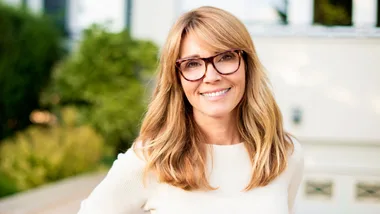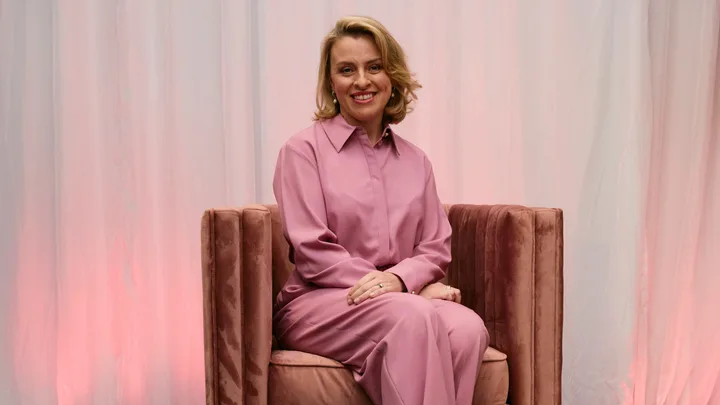
When it comes to championing women’s health, Corrina Brazel isn’t one to sit on the sidelines. As General Manager of Marketing for Wesfarmers Health – the parent company of Priceline Pharmacy – she’s leading the charge on one of the most overlooked stages of a woman’s life: Menopause.
Fresh off the launch of Priceline Pharmacy’s nationwide Anything Menopause initiative, Corrina speaks to The Australian Women’s Weekly about why now is the time to change the conversation, how pharmacists are being equipped to better support women in every community, and why leadership, to her, is about championing others while believing in yourself.
Priceline Pharmacy launched the Anything Menopause initiative last week, which includes accredited specialist training for pharmacists. Why is menopause such an important topic, especially this year?
This journey started for us after The Australian Women’s Weekly Health Summit last year, where we looked at trends in health and some of the big areas that are not currently receiving the level of attention that they should in Australia. Menopause is one of those areas where Australia is very much lagging our international counterparts.
Given menopause will affect half the global population, we could see that this was a chance for us at Wesfarmers Health to really make a difference within communities, and particularly for the more than three million Australian women who are currently experiencing menopause.
We know that 85 per cent are facing symptoms that are severe, and for some, that can affect their quality of life. We also looked at the information that came out of the Senate inquiry in 2024, which highlighted the urgent need for better education and support of women, as well as the education of healthcare professionals. This drove us to create our Anything Menopause program, an initiative focused on education and tailored health solutions for women.
Our pharmacists and pharmacy assistants have been trained through a dedicated program we’ve developed with Jean Hailes for Women’s Health, and that will provide them with the ability to talk with a greater level of insight and confidence to women about menopause.
We’ve also launched our Anything Menopause product bays in stores, where customers can shop a range of products that may help address the more than 30 symptoms that we know women can experience during menopause, as well as a dedicated online hub.
At Wesfarmers Health, we also have some wonderful additional opportunities to help women prioritise their health during this period of life with things like our InstantScripts telehealth service where women can access menopause trained GPs through a dedicated menopause consult and our SiSu Health Stations, available in Priceline Pharmacies, where women can keep a check on their vital stats and numbers by undertaking a free health check.
This is not just a campaign for us. This is a program that forms a core part of our pharmacy offering on going, and we see this as a fantastic way to really show up for women in the communities we service. The role of the pharmacist in the community is important, including their role in connecting women with other allied health professionals. Sometimes women don’t know where to start. We’re hoping we can provide them with a safe space where they can come in and have a conversation.
Priceline Pharmacy has partnered with The Australian Women’s Weekly Health Summit for a second year, including expanding our events to a national tour of five cities. How important was it for you to partner with us to help spread the wider conversation about women’s health?
There are good synergies between our two brands. Priceline Pharmacy has been around for over 40 years and services the needs of Australian women through all health stages. We also know women typically end up being the gatekeeper for the health of their entire family, whether that’s young kids or ageing parents. It was important for us to partner with a brand that aligns to our values and is also driving the women’s agenda. The Weekly has been doing that for a very long time.
Taking the Health Summit national was important because we’re a national brand and we have more than 400 pharmacies across the country. We also know that the Australian health market is growing. There’s an increasing demand for health and wellness products and it’s important to us that we continue to get information and education about the great work of our pharmacies out into the local community, and we see the Health Summit as an opportunity to do that.
In your role as General Manager of Marketing for Wesfarmers Health you are a senior business leader. What does leadership mean to you?
Great leaders have self-awareness, they are empathetic and have an understanding of the challenges in the present and also an eye on future opportunities. They are also good communicators, able to share their vision so everyone in a business no matter what position they are in can understand the role they play in driving toward success.
What advice would you give to other female business leaders?
Be brave! I think it’s important to create opportunities and then back yourself, believe in your capability. Take on new challenges and don’t be afraid to keep learning. And it’s so important as a female leader to keep supporting other women – propelling them up, not pushing them down.
What does wellness mean to you, and how do you maintain a work/life balance?
It is important to carve out time, and that can be hard. The last 12 months for me personally have not been amazing for my wellness. There was a chain of health events that began from about June last year that meant I was not really doing any physical exercise for nearly 10 months, and not feeling good about myself or where I was at.
I have really had to knuckle down over the last couple of months to put dedicated time back in my schedule for my own wellness. That now includes walking the dog first thing every morning, exercising a couple of days a week, strength training, and being more mindful about what I’m eating.
I have also placed strict boundaries around my downtime with my kids. I’ve got two teenage children who are very active from a sporting perspective and with school, so it’s important to me that I have time in the week to do drop-offs or pick-ups where possible and put away the laptop for the weekend.
What have you learnt from the Health Summit this year?
I’ve learnt a lot, it’s been a real eye-opener. The quality of the speakers has been incredible.
I’m perimenopausal and so are several of my friends, so I’ve certainly been sharing some of the advice from the Health Summit with them. In particular, the tips around the importance of strength training, including five serves of vegetables in your diet, and the analogy about the need to put your own oxygen mask on first.
And finally, finish this sentence: “Health is important to me because …”
… I think without good health you can’t really live up to your full potential both at work and at home. I need to be in good health mentally and physically so that I can enjoy my life to the fullest and provide support to the people that need me.

Related stories