


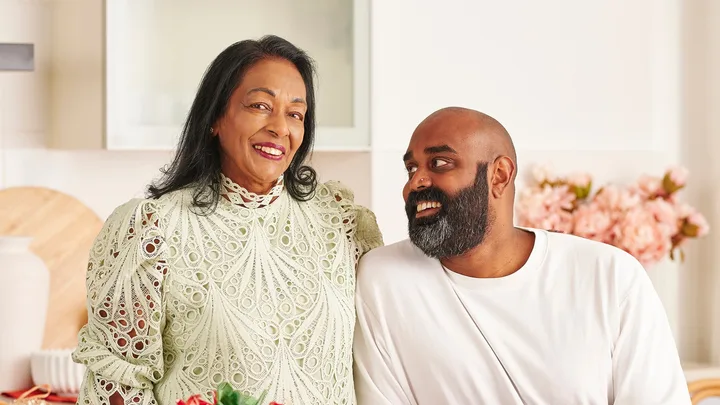
At a glance…
- After fleeing war-torn Sri Lanka in the 1980s, Shiranie Christie-David and her husband found a new home in Sydney, where food became a way to connect with their community.
- Inspired by his mother’s generosity and belief that you should never eat alone, Shaun Christie-David founded Plate It Forward, a social enterprise that has donated more than one million meals.
- Now, the mother-son duo are sharing their remarkable story with The Weekly, along with Shiranie’s treasured Sri Lankan Christmas cake recipe.
It’s a cake, but for Shiranie and Shaun Christie-David, it’s so much more than that. The delicious mix of Australian fruit and South-East Asian spices represents their journey from war-torn Sri Lanka to the safe sanctuary of Sydney back in the 1980s. Today, when they share the recipe with friends, family and strangers – including now the readers of The Weekly – it’s a loving gift to the Australian people who took them into their hearts.
“Food and family were the first things we missed, those tastes of home,” Shiranie says. “But Australians made us feel very welcome. And The Weekly opened our eyes to Australia, the people and the food. We didn’t have much money back then, but every month my treat was to go down to the newsagency and buy the new issue. And when friends came over, I’d cook a dish from Sri Lanka and a dish from Australia.”
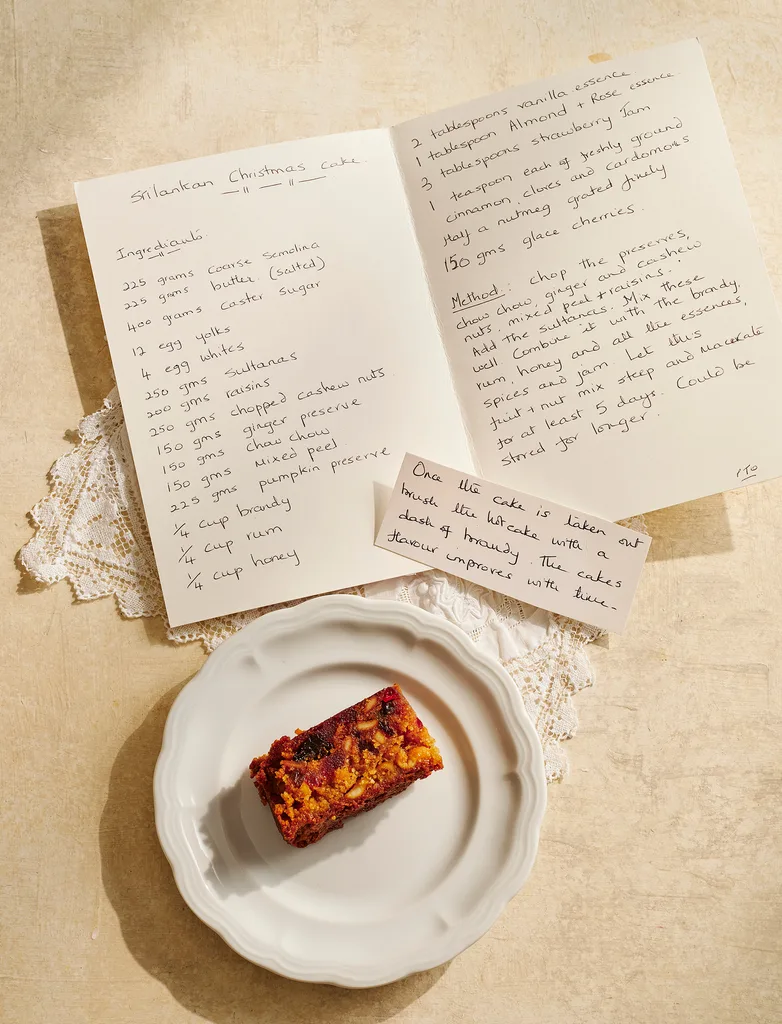
Gradually, the two worlds became one, including the aforementioned cake. “It’s a Sri Lankan recipe, but the English, Dutch and Portuguese had an influence too,” Shiranie says. “Traditionally, it’s made for celebrations: weddings, christenings, important functions. Sri Lanka is a small island, but every area, and each family, has their own version. There’s a lot of history in this cake!”
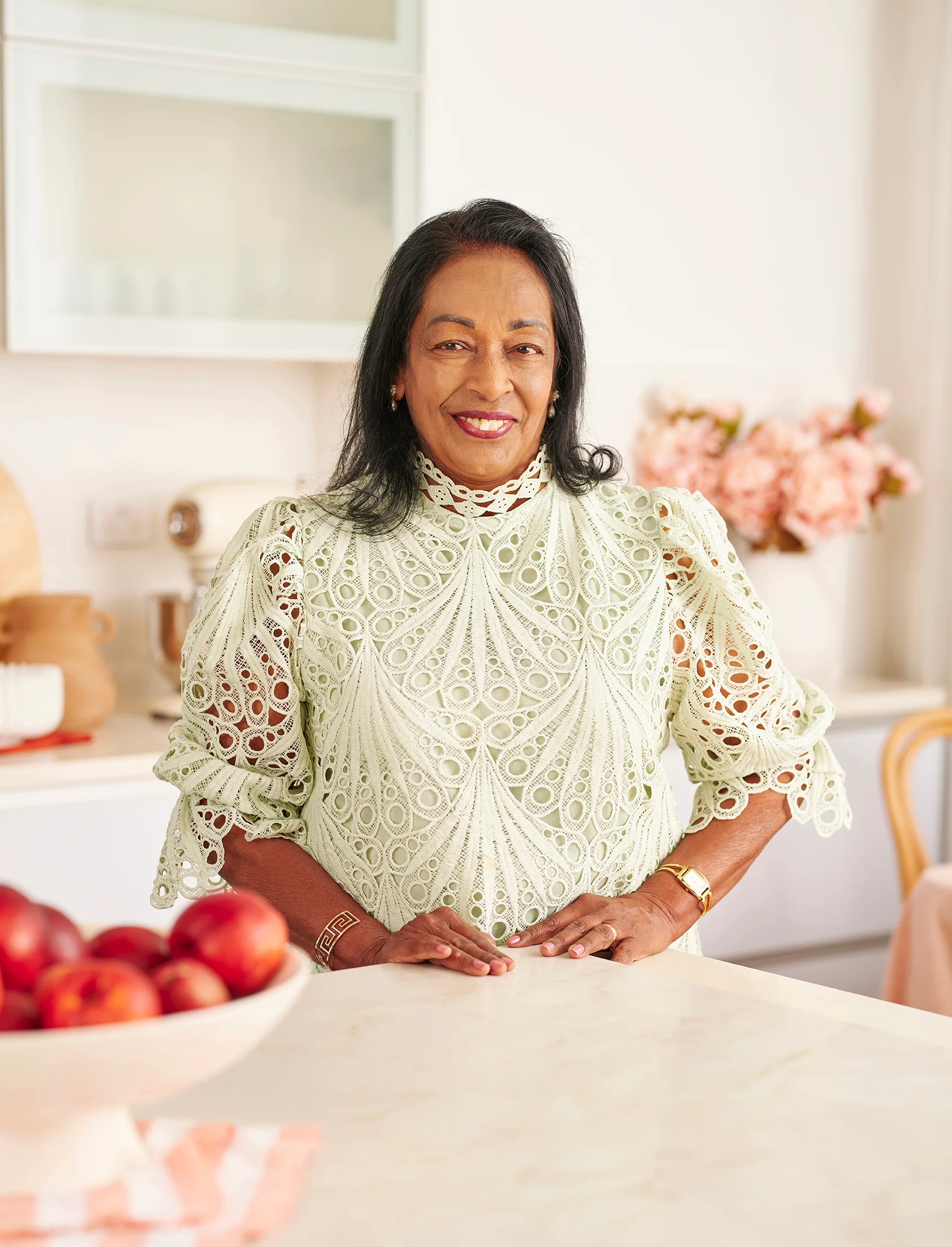
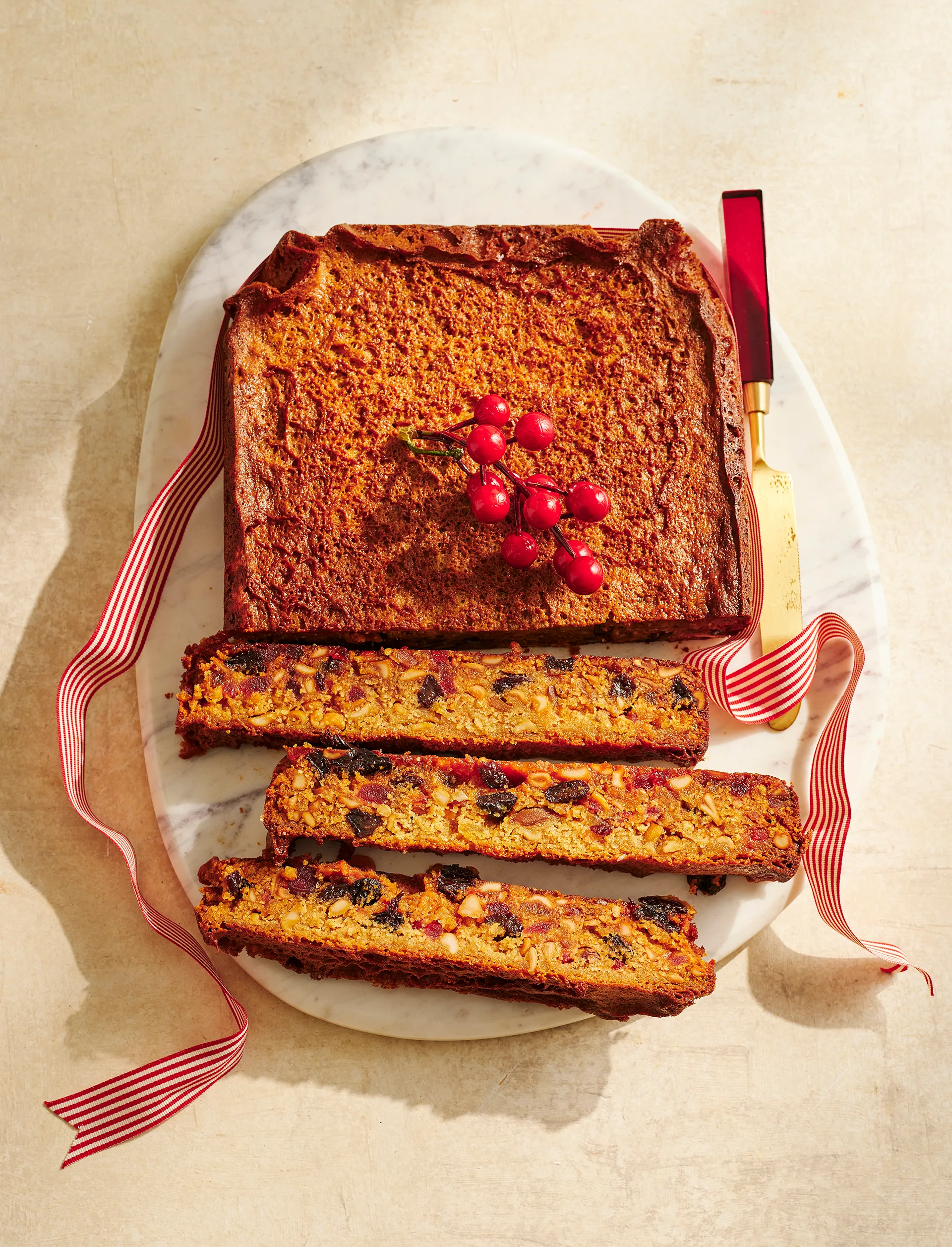
Like Australia itself, it’s all the richer for its diversity. “This is a special hybrid version,” Shiranie confides with a smile.
“We use Australian raisins, sultanas and cherries, and local semolina instead of flour. There’s freshly ground cinnamon, freshly grated nutmeg, cardamom and cloves. Almond and rose essence, along with vanilla. And we use ginger preserve and chow chow [another preserve made from choko] from home.” These latter ingredients were important tributes to the women who taught her to cook.
Shiranie’s mother is from Batticaloa, a coastal city in the east known in Tamil as Mattakkalappu (‘muddy swamp’) and famously nicknamed the ‘The Land of the Singing Fish’ due to the mysterious musical harmonies heard from its lagoon at night.
“My mother and mother-in-law, who was from Colombo, influenced my interpretation,” Shiranie says.
But there’s another powerful woman who made this cake so fabulous: Oprah Winfrey. “One day on TV, I saw her talking about ‘paying it forward’, how she would join a queue to buy something but pay for the people at the back as a good deed, a random act of kindness. I thought, ‘Oh my, isn’t that a lovely, wonderful thing.’”
Shiranie told her sons about paying it forward when they rushed in the door from school. True to the wily ways of mothers, she did so while they helped with small kitchen tasks. “But boys are boys,” she laughs. “They listened, they helped, they ate. Then they ran.”
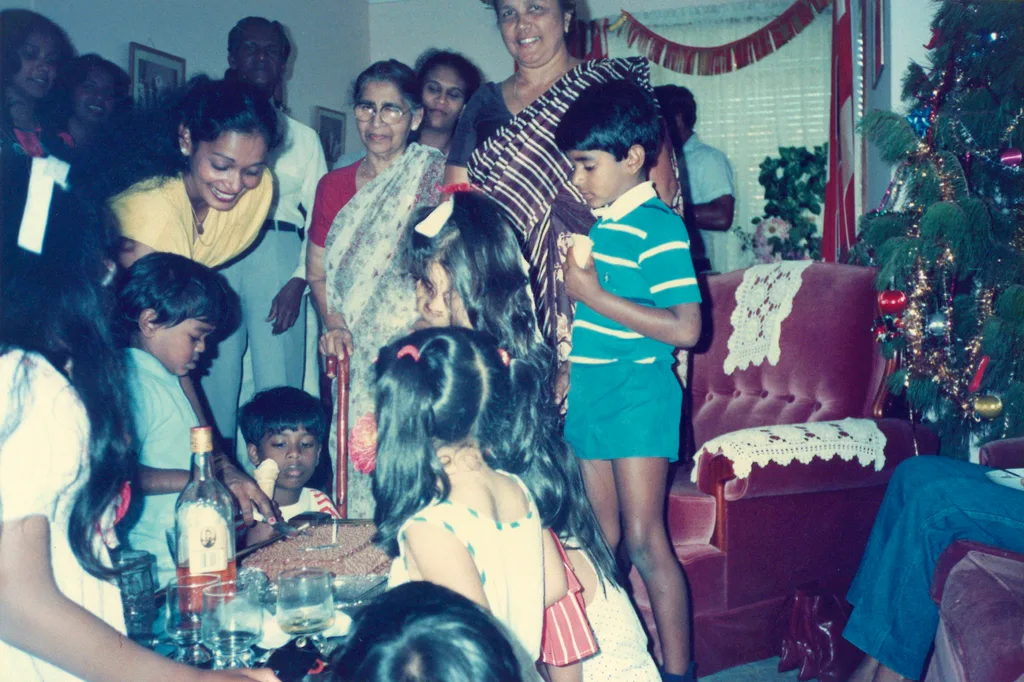
Shaun is the youngest of Shiranie’s sons. Unlike his brothers, he was born in Australia. Sitting beside his mother in The Weekly’s Test Kitchen, he’s like a kid in a candy shop. “Ah man, Mum made me and my brothers all these birthday cakes when we were kids,” he laughs, looking at the famous images of jelly swimming pools and choo-choo cakes. “These are more than just cakes; these recipes helped us fit in and feel truly Australian.”
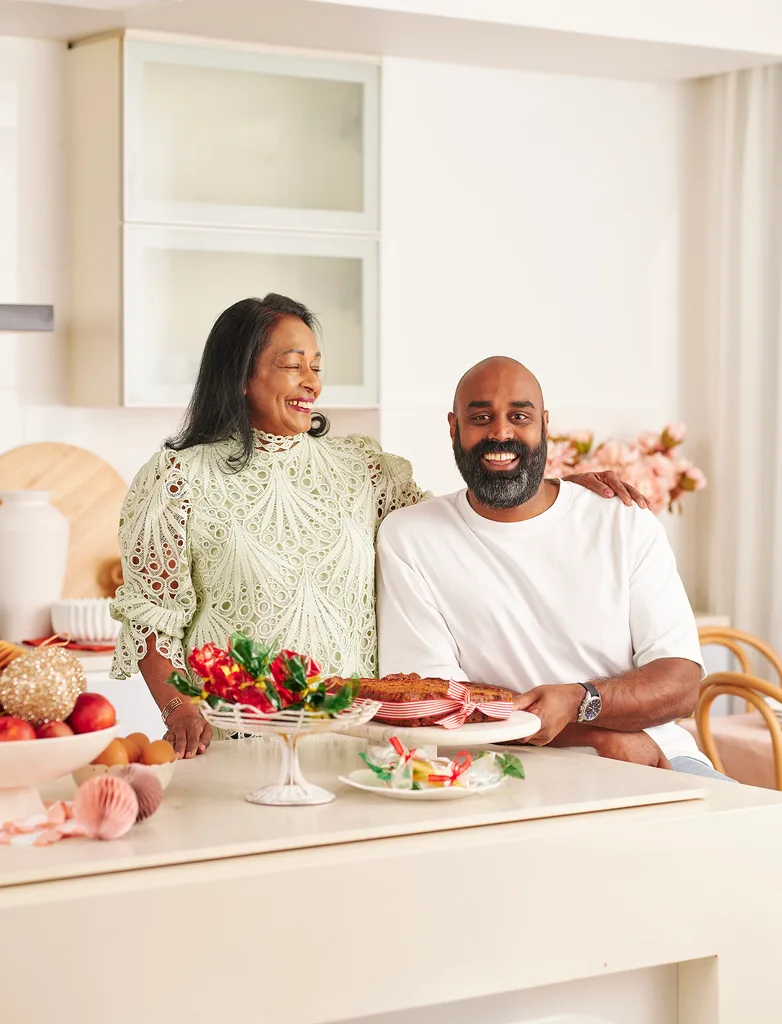
So much so, Shaun is willing to share a never-before-revealed secret to his mum today. “Those curry and dal sandwiches you put in my school lunch box … I’d throw them out,” he tells her cheekily.
Shiranie just laughs, but Shaun’s story is that of many migrant kids. “We wanted to fit in, so we’d turf our mum and dad’s food and buy a Chiko Roll or a meat pie at the canteen. I realise now that none of us appreciated how lucky we really were.”
The ‘Lucky Country’ came with a few caveats. To fit in, you had to be like everyone else, even when ‘everyone else’ was from somewhere else.
“Whether you’d come to Australia from the Middle East or Asia or Europe, kids were embarrassed taking their parents’ food to school,” Shaun says. “I was a ’90s kid, but I imagine it was the same for every migrant wave. Assimilation was survival and food was a big part of assimilation.”
But even a country of such diversity, in languages, cultures and cuisines, needs a common song sheet. “That’s the power of The Weekly,” Shaun says. “It allowed our mums to assimilate as equals and gave us a gateway to understand Australian culture that you couldn’t get anywhere else.
“There was no internet, no way to find recipes online or on social media. There was only that monthly magazine or hard-copy book, and all our mums had them.”
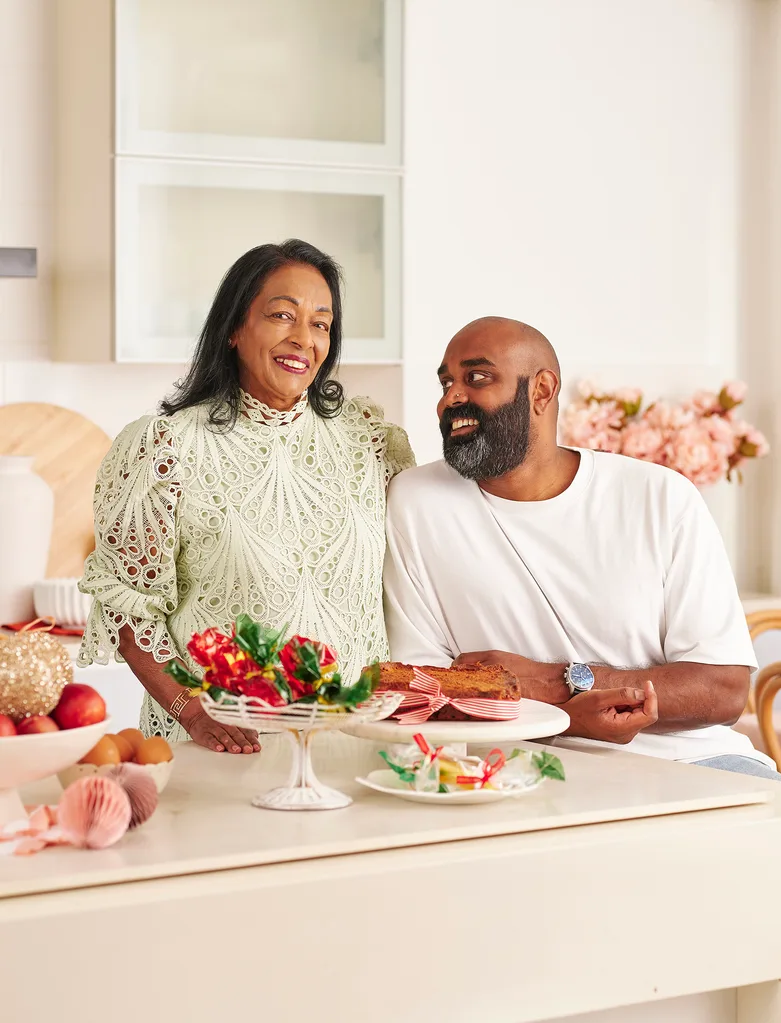
After fleeing Sri Lanka and being sponsored by her sister-in-law, who had already settled in Sydney, Shiranie and her husband found a home in the city’s southwest. “We lived in a cul-de-sac in Belmore,” she explains. “There was a Maltese family next to us, Vietnamese over the road, Croatians and Chinese nearby. There really were quite a few different nationalities down that cul-de-sac, but we were a community.”
A young Shaun always knew his friends’ parents were from far-flung and often war-torn lands. But he was also instinctively sure that Australia was a melting pot which nourished all.
Since the late 1940s, Australia has welcomed more than six million new citizens, including post-war ‘Ten Pound Poms’ and those displaced from the Baltic states, followed by refugees from Vietnam, Chile, Lebanon, Afghanistan, parts of Africa and many more nations. There are estimated to be more than 170,000 Sri Lankan Australians living in Australia – making it one of the largest hubs for the Sri Lankan diaspora. None are prouder to be a part of it than Shiranie and Shaun.
“Our history is there, but our future is here,” Shaun explains. “We still have our recipes and culture, and we still love our country. But Australia is our home, and we love it. We’re super grateful to it, so we work hard to give back to a place that has given us so much.”
This brings us to Plate It Forward, a concept inspired by Oprah, cherished by Shiranie and brought to life by Shaun and a cast of migrant mums. Like most of multicultural Australia, the idea came from fascinating origins. Shaun didn’t find his post-university life working in finance fulfilling. Disillusioned by the corporate world, he craved the values Shiranie had instilled in him: family, generosity, shared meals and stories, and the experience of many cultures unified as community.
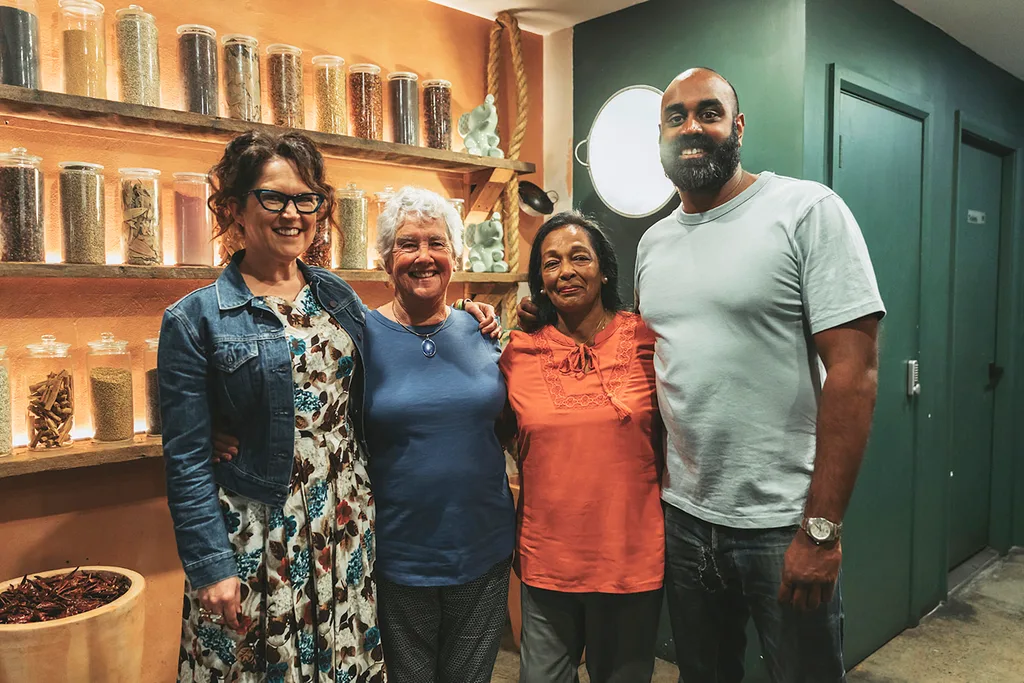
“A Sri Lankan concept of Mum’s that resonated with me was: ‘You never eat alone,’” Shaun remembers. “When we got home, Mum would always have a meal and a chat. Eating with conversation was so important. My brothers and dad would all come home at different times, but Mum would always stop what she was doing and have a cup of tea, or eat something with us, so that we could share our stories together over food.”
Shiranie’s kindness and culinary skill had by now made her something of a local legend. “Mum was renowned throughout the community,” Shaun says.
“So, whenever a family member or friend would get married, Mum would make their cake. She was the best. When those rich and powerful smells would start wafting through our house, all those amazing ingredients coming together, we knew there was a big celebration on the horizon.”
When it came to cooking, Shaun was built more like his father, an engineer and tradie. “I worked the mortar and pestle for Mum, peeled onions and potatoes, did the washing up. My brother Aaron studied hospitality, got a degree and everything, so when I had the idea for the restaurant, he was the one who said, ‘Why not call it Plate It Forward?’”
Since then, Shaun has built a charity empire of restaurants and kitchens operating under the Plate It Forward model of ‘buy one, give one’. In other words, for every meal that is sold, another is donated to someone facing food insecurity. The initiative has donated more than one million meals locally and internationally.
Not only are the mother-and-son duo feeding the world, but they are also training an old generation of chefs for a new era. Again, Shiranie was Shaun’s inspiration. Growing up, he’d seen many asylum seekers arrive in Australia and struggle to find work.
“Most were told, ‘You don’t have experience.’ But these women were matriarchs. They’d raised children for years and overcome incredible barriers to feed their families. That’s a CV,” he says.
When Shaun opened his first restaurant, Colombo Social, in 2019, these women got their chance. “Mums, Maas, Mamas, Mādars … mothers and grandmothers are not represented in commercial kitchens. Yet in most cultures, they are the only ones cooking at home. We recalibrated that.
“Today, over 70 per cent of our workforce are migrant women who have never worked in a commercial kitchen. We know different; we say, ‘You can do it.’”
Today, Shaun has three thriving kitchen school-restaurants in Sydney: Colombo Social (Sri Lankan), Kabul Social (Afghan) and Kyiv Social (Ukrainian).
“Every week, we pump out thousands of meals for migrant families and Indigenous families who’d otherwise go hungry, while providing work for hundreds of people who deserve jobs,” he says.
“Food is the connection point. Food is the love language. And love is the secret ingredient we cook with in all our food. Mum taught me that.”
Shaun happily practices what he preaches too. “I’ll still go to Mum’s house, and she’ll have 15 different dishes ready, all sorts of decadent flavours,” he laughs. “Not everyone has access to such food, so I’m always reminded how privileged we are. Even our access to clean tap water is something so many people do not have. But here we have water quality and quality of life, security and safety. We are immensely lucky.”
Although Shiranie helped train many of the chefs in the business, she now saves her skills for special events like ‘Mum Cha’ or Colombo Social’s high teas. “We often still use The Weekly as a baseline when we’re creating fusion food,” Shaun explains.
“Mum will encourage the women to work in their traditional cooking styles … it creates a beautiful sense of commonality between our staff. Food is an extension of who we are, so they realise their methods and dishes are often the same and that we’re not that different.” For a country that has given so much to so many, it’s a delicious way to give back.
Shiranie puts it simply: “We all miss family, so we cook to keep those memories alive.”
Shiranie has shared her special Sri Lankan Christmas Cake recipe with The Weekly. Find it here.
Find out more about Plate It Forward here.
This article was originally published in the December 2026 issue of The Australian Women’s Weekly. Subscribe so you never miss an issue.

