




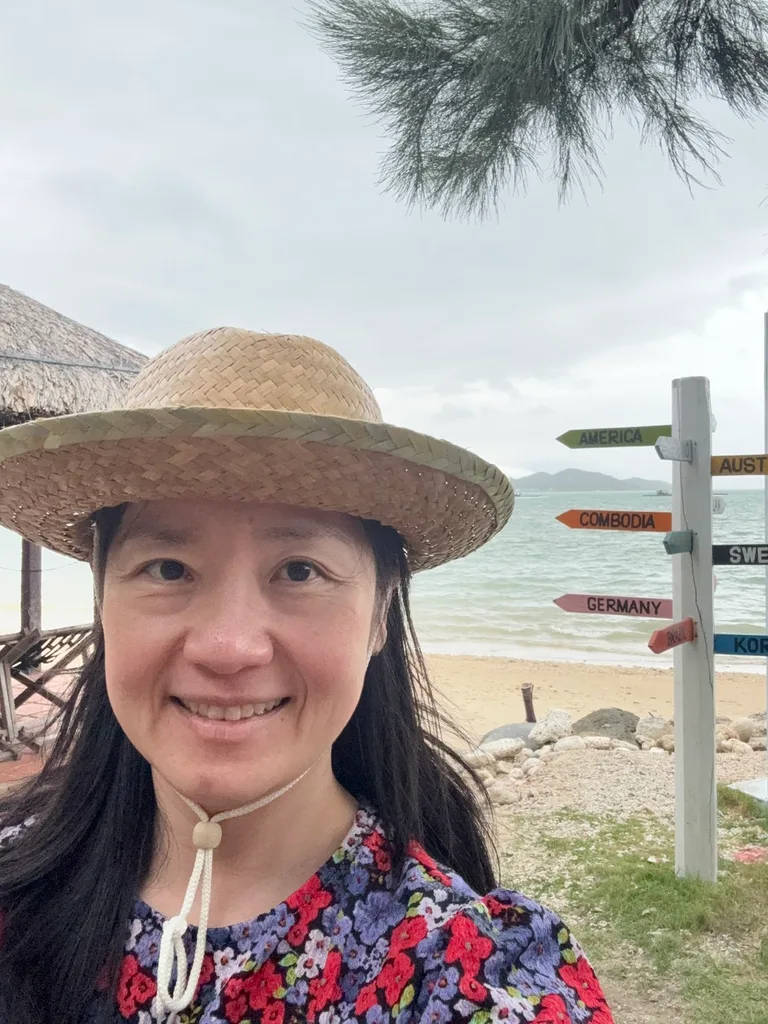
For years, Joyce Soh knew something wasn’t quite right.
“My first major sickness which felt very odd at that time was my first holiday in Australia back in 1998,” Joyce recalls to The Weekly.
She was visiting the Great Ocean Road in Victoria when she developed a severe migraine.
“I don’t remember much except staying in bed for days with ice packs behind my ears to soothe the pain.”
Over the years, the migraines kept coming back. After having children, they became worse but like many busy mums, she was too caught up caring for everyone else to keep track of what was happening in her own body.
Then, in 2019, a routine blood test seemed to give her an answer.
“The GP said I have lupus, which we both found odd, as I did not show the regular symptoms of joint pain and butterfly rash,” Joyce says.
Without the typical symptoms, nothing more was done at the time.
“The GP didn’t think we needed to take any precautions with my results.”
It wasn’t until the end of 2023, after another severe migraine landed her in emergency, that Joyce pushed for more answers. This time, doctors confirmed she had systemic lupus erythematosus, often known as SLE.
The long road to diagnosis
Lupus is an autoimmune disease, which means the immune system mistakenly attacks the body’s own healthy tissues.
It affects many parts of the body, including the joints, skin, kidneys, blood vessels and brain. It can look different from person to person, which is one reason it’s often so difficult to diagnose.
Common symptoms include fatigue, pain or swelling in the joints, headaches, rashes and brain fog.

Davina’s symptoms were different to Joyce’s, but they were no less confusing.
She first started feeling unwell in early to mid-2020, with unexplained joint pain, dry eyes, redness around her eyelids and cheeks, and an itchy scalp that felt “like it was on fire”.
Because she had recently broken her wrist and been sick with COVID, she put “both the joint pain and the scalp itching down to COVID symptoms”.
“At first my GP thought it was long COVID as the symptoms were unpredictable,” Davina tells The Weekly. “The joint pain continued, and to this day it has not stopped.”
It took Davina six years to receive a diagnosis of lupus and fibromyalgia.
“The process of getting diagnosed was a very, very long road.”
While Davina credits her GP with listening and ordering repeated blood tests, the emotional toll of living in pain without an answer was enormous.
“Because lupus is an invisible illness, no one else can appreciate the suffering you go through each day,” Davina says. “When people can’t see your illness, it’s often assumed you’re exaggerating or making it up. I felt completely misunderstood, unacknowledged, and ignored.”
Why women are more affected
Lupus affects women far more often than men, with around nine women diagnosed for every one man.
Now, new Australian research may help explain why. Researchers from the Garvan Institute of Medical Research and UNSW have uncovered more than 1000 genetic switches that operate differently in female and male immune cells.
The study, published in The American Journal of Human Genetics, mapped more than 1.25 million immune cells from nearly 1000 healthy people and found female immune cells showed higher activity in inflammatory pathways.
The female immune system appears more primed to respond strongly – something that helps fight infection, but can also carry risks.
“While this highly reactive immune profile gives females an advantage in fighting viral infections, it comes with a biological trade-off: a greater predisposition to autoimmune diseases,” says co-senior author Dr Sara Ballouz, Senior Lecturer at UNSW.


Dr Seyhan Yazar, first author of the study, says the findings show why sex differences need to be considered in medical research.
“Even though we know men’s and women’s immune systems differ, many studies still overlook these differences, which can limit how well we understand disease, and in turn bias treatment options,” Dr Yazar says.
The reality of living with lupus
For people living with lupus, the condition affects every part of their life.
“There are many considerations and decisions to make every day,” Joyce says.
Heat and UV light affect her badly, so in summer Joyce tries to get important outdoor tasks done before 8am. Medical appointments are scheduled as early as possible, or switched to phone consults when they can be.
Every outing, task and commitment has to be weighed against how much it might cost her body.
“Because of the tight restrictions on when I can go out safely and energy limitation, I do feel isolated and sad that I am unable to do a lot of things that normal people can do,” Joyce admits.
Davina knows that calculation all too well. Lupus has changed the way she works, socialises and goes about her life. She describes the pain as “burning and stabbing – all day, every day”.
“If I want to go out, I have to plan ahead,” she explains. “I need to make sure I can sit down if needed or go home early if I have to.”
Even catching public transport is difficult. “People will offer a seat to a pregnant woman because they can see she needs it,” Davina says. “But with an invisible illness, people can’t see your pain.”
She has close friends but is far less social than she once was.
“I prefer to stay at home, curled up where I’m comfortable,” Davina says. “I am fatigued from the moment I wake up, and I get very tired towards the end of the afternoon at work.”
One of the hardest parts, both women say, is that lupus is still so poorly understood.
“The pain associated with lupus is due to the inflammation happening inside,” Joyce says. “An understanding of lupus would definitely go a long way in assisting those with lupus. Most of us do not have the energy to explain lupus in detail.”
Davina adds: “Just because you can’t see the illness doesn’t mean it isn’t real.”
Learning to advocate for answers
Since her diagnosis, Joyce has had to change the way she thinks about her health.
“I have learnt to accept my limitations, and be prepared to ask for help such as asking my kids to help with chores or giving me some rest time,” she says. “I have also learnt that there are actually only a few important things in life, so to prioritise those.”
Her experience has also turned her into an advocate. After discovering Australia had no dedicated foundation supporting people with lupus, Joyce founded Lupus Foundation Australasia to raise awareness, support others living with the condition and push for more research.
Davina has since joined the foundation and online support groups too, which has helped her feel less alone.
“There are so many unknowns and uncertainties with lupus and other autoimmune conditions,” Davina says. “You have to take time for yourself. Self-care is important. Maintaining your social circles is important.”
Her advice to anyone struggling to get answers is to trust that instinct.
“You know your own body better than anyone else,” Davina says. “You know when something isn’t right.”
Joyce agrees. “Keep looking for answers.”

