




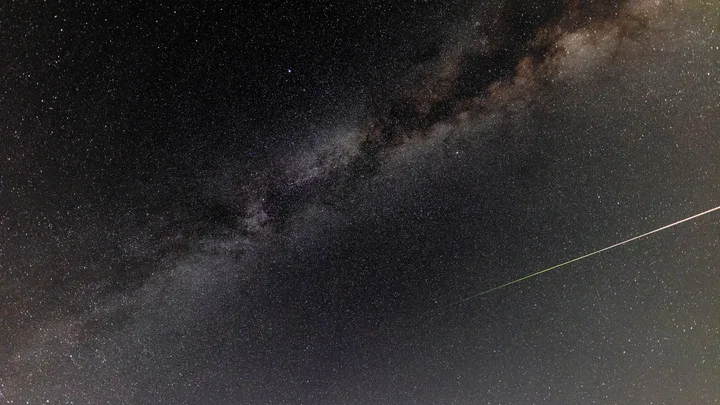
At a glance…
- One of the brightest annual meteor showers is coming this July and August.
- The Perseid meteor shower happens when Earth passes through the tailstream of comet 109P/Swift-Tuttle (what a name, amirite?)
- In 2026, it will peak in mid-August for Australians.
If you’re not an early riser, we suggest a break from your regular schedule because one of the most beautiful meteor showers, Perseid, is crossing.
The Perseid meteor shower is every stargazer’s dream. Even NASA has labelled the cosmic event as “the best meteor shower of the year.”
Ahead of the natural event, we’ve listed everything you need to know about the Perseid meteor shower below.
Is the Perseid meteor shower visible in Australia?
Unfortunately, the shower won’t be visible to all of Australia.
Those residing in the Northern Hemisphere will have the best seats in the house. Therefore, those in Northern Australia, including Western Australia, Northern Territory, and northern Queensland, will have the best opportunity to glimpse the Perseid meteor shower.
However, it’s not impossible for those of us further south to see the shower. There’s a new moon at the time of the peaking, so moonlight won’t wash out the fainter meteors.
What is the best time to watch the meteor shower?
Those keeping a watchful eye on the night sky should see the Perseid meteor shower in the early hours of Thursday, August 13 2026. International Meteor Organization puts the sharpest maximum at 02:00–04:00 UTC on August 13, which is 12:00–2:00pm AEST — unfortunately, that’s daytime in eastern Australia.. You can check your location for the best viewing positions and times at Time and Date.
Unlike some other showers, stargazers won’t need to watch from any specific direction. According to EarthSky, the meteors will be “shooting [from] all different directions.”
As for equipment, you’ll need nothing but a warm rug to beat the Australian winter. No binoculars or telescope is necessary, but it is suggested that viewers avoid any artificial lighting roughly 30 minutes before gazing.
What is the Perseid meteor shower?
The Perseid meteor shower is one of the most frequent showers, with 50 to 1000 meteors spotted per hour, which is why it’s so popular.
It’s also well-known for its fireballs! Fireballs are an astronomical term for incredibly bright meteors that even outshine Venus. It is a natural phenomenon that occurs when a meteor larger than a meter enters the atmosphere at incredibly high speeds to generate intense heat and light.
Perseid originates from the 109p/Swift-Tuttle come,t which takes 133 years to orbit the Sun once.
Are there any superstitions regarding the Perseid meteor shower?
Many natural events have some sort of supernatural or mythical link, and the Perseid meteor shower may just have the most interesting.
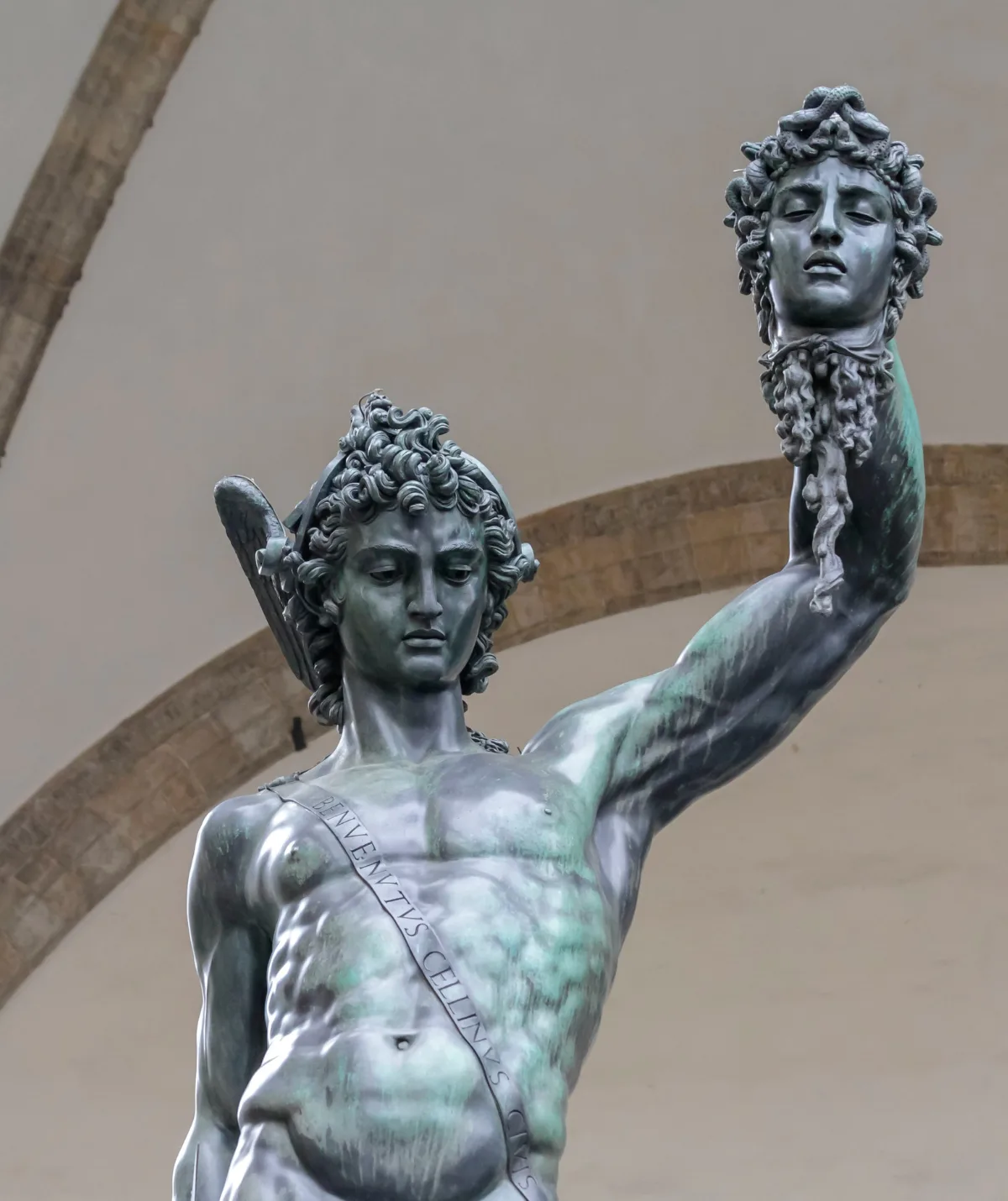
Perseid derives from the Greek word Perseides, which refers to the descendants of the ancient Greek hero Perseus and his wife Andromeda.
The shower is also known as “The Tears of St Lawrence” due to its coincidental timing with his death on August 10, 258 AD.
Furthermore, it is associated with the Roman god Priapus.

