


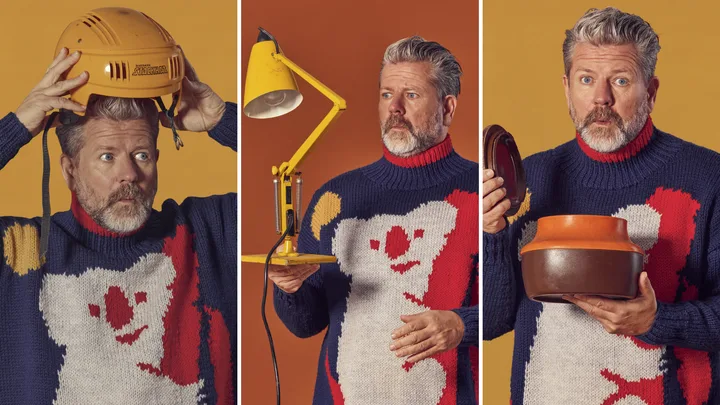
With his new book, What a Ripper! Tim Ross has gone on a jaunt down memory lane to revisit some of the classic everyday objects that shaped our cultural history. He shares his insights into the larrikin nature of some of these designs – and why the land Down Under reigned as the world leader in innovation.
There was a time when a lot of things were designed and manufactured in this country.
In 2019, I did a small exhibition at the Powerhouse Museum in Sydney called Design Nations. It had a Ken Done placemat, a Dolphin torch, a Sebel Integra chair – a few things like that. I did a talk, and it struck me how much people liked the stories of these things. But also, how, back in the day, we had fewer choices. For example, there were four different torches you could buy. But the Dolphin torch reigned supreme – it was the highest selling torch not just here in Australia, but for a period of time, the world.
There’s an important story to tell about nostalgia and how ‘things’ can connect us to place and time.
It’s also a story about a time when we could manufacture here, when we designed a lot of our everyday items, and how that meant something to us. The idea of Australian-made was a source of pride.
We were manufacturing here because we had tariffs, which made things made elsewhere incredibly expensive. We also had a population boom, and we were inventive because we needed to be.
Plus, the idea in the post-WWII period was, “What sort of nation can’t design and manufacture its own things?”. During the war, we got stuck because our supply chains had disappeared, and we had to suddenly make our own things. We felt like we needed to be self-sufficient.
From the 1970s, our national identity had been on the rise.
And we found our feet in a lot of ways in the 1980s. We took what I call “the warm shadow of the Opera House” – our culture – to the world. There was also a huge amount of confidence in people like Ken Done, Paul Hogan and Olivia Newton-John to take that sense of Australiana to the world and not be ashamed of it. It was a pre-globalisation time when things happened here in isolation that were really different and interesting.
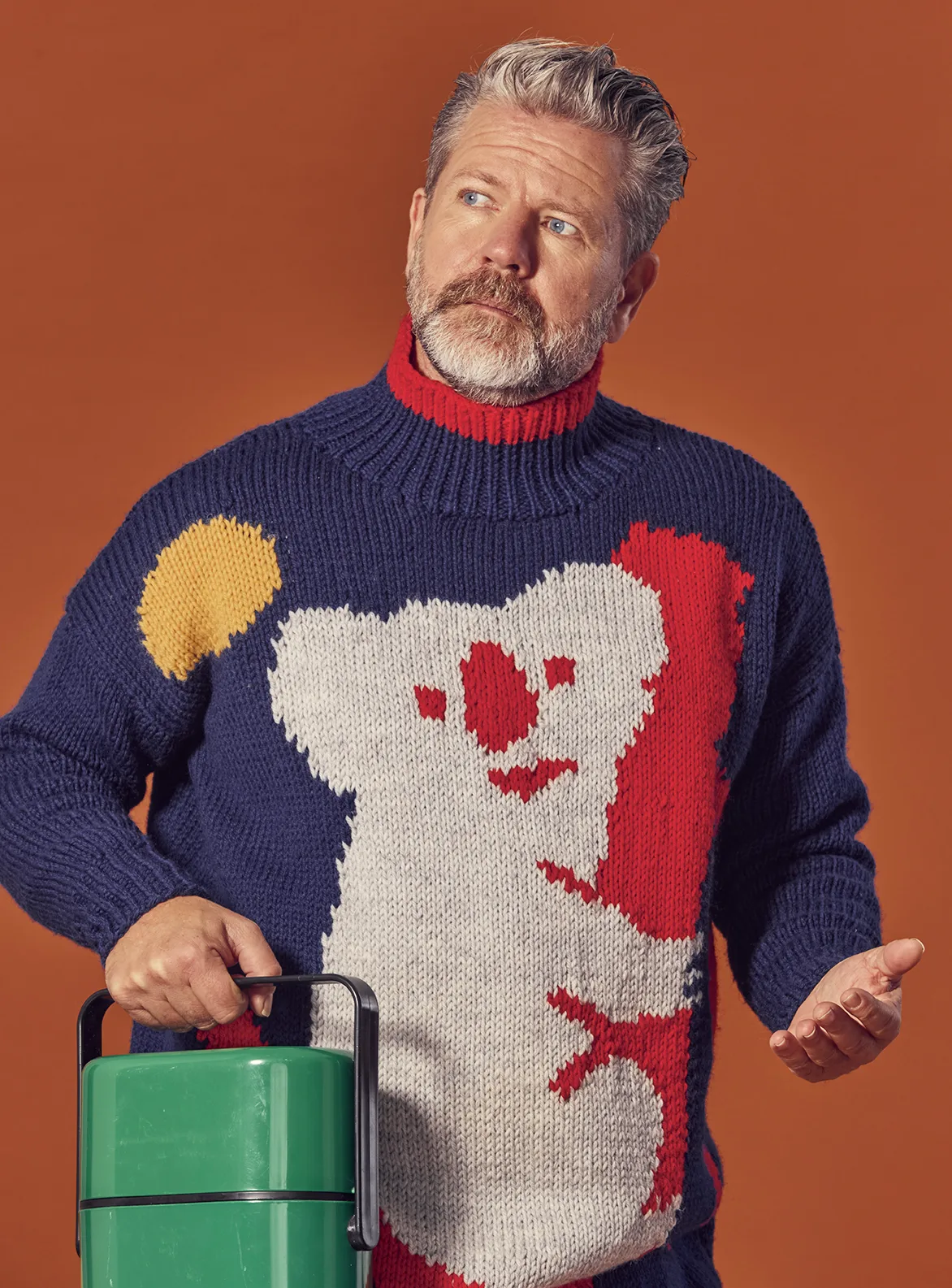
The Blinky-Di jumper is a great example of that.
In 1981, thousands of gifts were sent to Princess Diana from all over the world. And the koala jumper by Jenny Kee was one she actually liked. The fact that she wore it at the polo when she was pregnant with William saw it go all over the world. It’s Australian wool, Australian bush colours, clearly an Australian animal. It was a pivotal moment in terms of the way that we saw how the world could view us: That we could be innovative, we could be fashionable in our own way and in our own image.
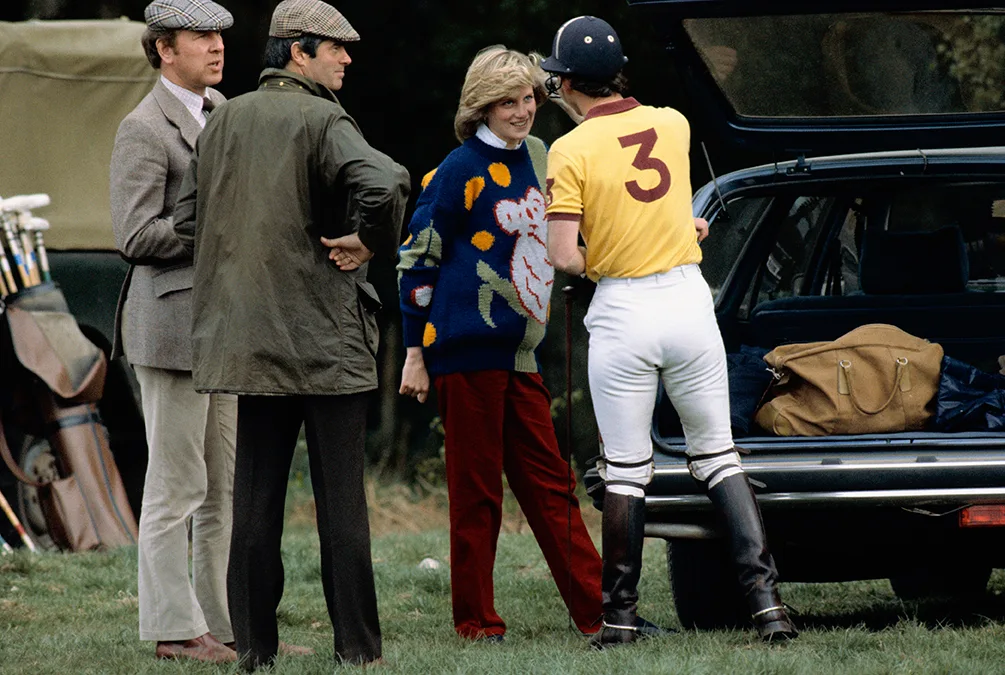


People all over the world wanted to wear this jumper. And because it was so popular, The Australian Women’s Weekly got Jenny Kee to create a version of it – the Blinky Di. They ran the pattern in the magazine, and every single one sold out.
In the early ’90s, there was a shift. The idea that everyone wanted a Ken Done doona cover started to fade. It was the early days of globalisation – the fashion at that time made all those things just look a little bit naff.
We got a little cynical in the ’90s. It was also a pretty dark time in terms of the economy.
We went into recession, a lot of business went out of work, a lot of people too. It took a while for all the tariffs to be phased out, but we couldn’t compete.
The manufacturing disappeared at that time. It was too small a market. What a Ripper! is supposed to be a rollicking ride through the past, and hopefully, it can trigger some memories, or people can be bemused by things that once were.
Read on for some of Tim Ross’s favourite nostalgia picks from his book, What a Ripper!

Aeroguard
One of my favourite stories, which I’d never heard, was about Aeroguard.
There was a dude, Doug Waterhouse, from the CSIRO, who had been working on a fly repellent for sheep to stop them getting fly blown. But during World War II, we were worried about the troops getting malaria, so he worked on a version for them. After the war, he went back to making it work for sheep – he didn’t worry about us. When the Queen was here on a royal tour in the 1960s, people were worried about her with the flies. They didn’t want her to be seen on TV doing the “Australian salute,” waving them away from her face. So, they went to the CSIRO and said, “Have you got anything like a fly repellent?”
Doug made up a batch and sent it to the Queen’s aide.
And when she was on television, people noticed she was the only one not swiping away flies. In those days, whatever the formula the government was working on, they would hand it over if you asked. Mortein rang them up, the government handed it over, and they made a fortune out of it.

Decor wine cooler
Prince Philip, meanwhile, loved the Decor wine cooler so much, he took one home.
He’d come over for the Prince Philip Prize for Australian Design in 1980, where it won. He took one back to Buckingham Palace. It’s also now in the permanent collection of the Museum of Modern Art in New York.

Stackhat
A Stackhat was always going to be in the book.
I remember getting one when I was a teenager, when they became compulsory. You’d have to wear it to school, but you’d feel embarrassed. So kids would wear them out the front of their house and then just chuck them in the bushes to ride to school without them on.

Stubbie shorts
I’ve also spent serious time in Stubbies shorts.
Sometimes, you’d go, I’ve got 50 cents and I need somewhere to put it. Oh, lucky Stubbies have got this little pocket right up front to put it in. Just near the… well, where there’s not much to hide.
Incredible story though, because nobody has ever really liked them – nobody’s ever really looked good in them – but they have sold millions of pairs, not just here. A big export market was New Zealand.

Nightmare board game
When I was looking for Australian inventions to include, I stumbled across the Nightmare board game.
I’d never played it, never understood it, but it was huge when I was a kid.
There were always ads on TV about it. “Yes, my Gatekeeper”.
It’s got a good story as well. It was sold all over the world in different languages. For a period of time, it was the biggest board game in the world – it outsold Trivial Pursuit.

The Frij
I’d almost forgotten about The Frij. What a brilliant idea!
Mums in the ‘80s needed somewhere to put one bottle of chardonnay, and well, why not an esky-meets-beanbag? You could put it over your shoulder like a handbag and get to the party and ask, “Would anyone like a glass of Chardy?” “Oh yes please, Jan!”
The best mums didn’t even take the booze out of The Frij, they just poked the top of the bottle out and poured it straight from the bag.

Kambrook powerboard
I also love the story of the Kambrook powerboard – it’s something we all use.
It’s extraordinary. Before that, people were just putting double adapters on top of double adapters.
Then this idea of a power board where you can plug in five or six things at once happened.
But in 1979, Kambrook didn’t patent it, so now they are all over the world.
What a Ripper! is currently on sale now.
This article originally appeared in the September 2025 issue of The Australian Women’s Weekly. Subscribe so you never miss an issue.

